


Old, mouldy silicone in your bathroom? Reseal it yourself in one weekend: tools, 12 clear steps, mould prevention and sa...

Your online building supplies store for building and renovation
 English
✓
English
✓
 Nederlands
✓
Nederlands
✓
-1.webp)
Ever tiled over a concealed frame only to find the flush plate sitting a centimeter off-center?
It happens more often than manufacturers like to admit, and it's almost never the frame's fault. A Cersanit concealed frame is a precision component disguised as a simple bracket: get the cavity depth, the anchoring, or the cistern spec wrong, and the mistake gets sealed behind tiles before anyone notices.
This guide walks through what a Cersanit concealed frame actually does, how the main models compare, and what to check before you order one.
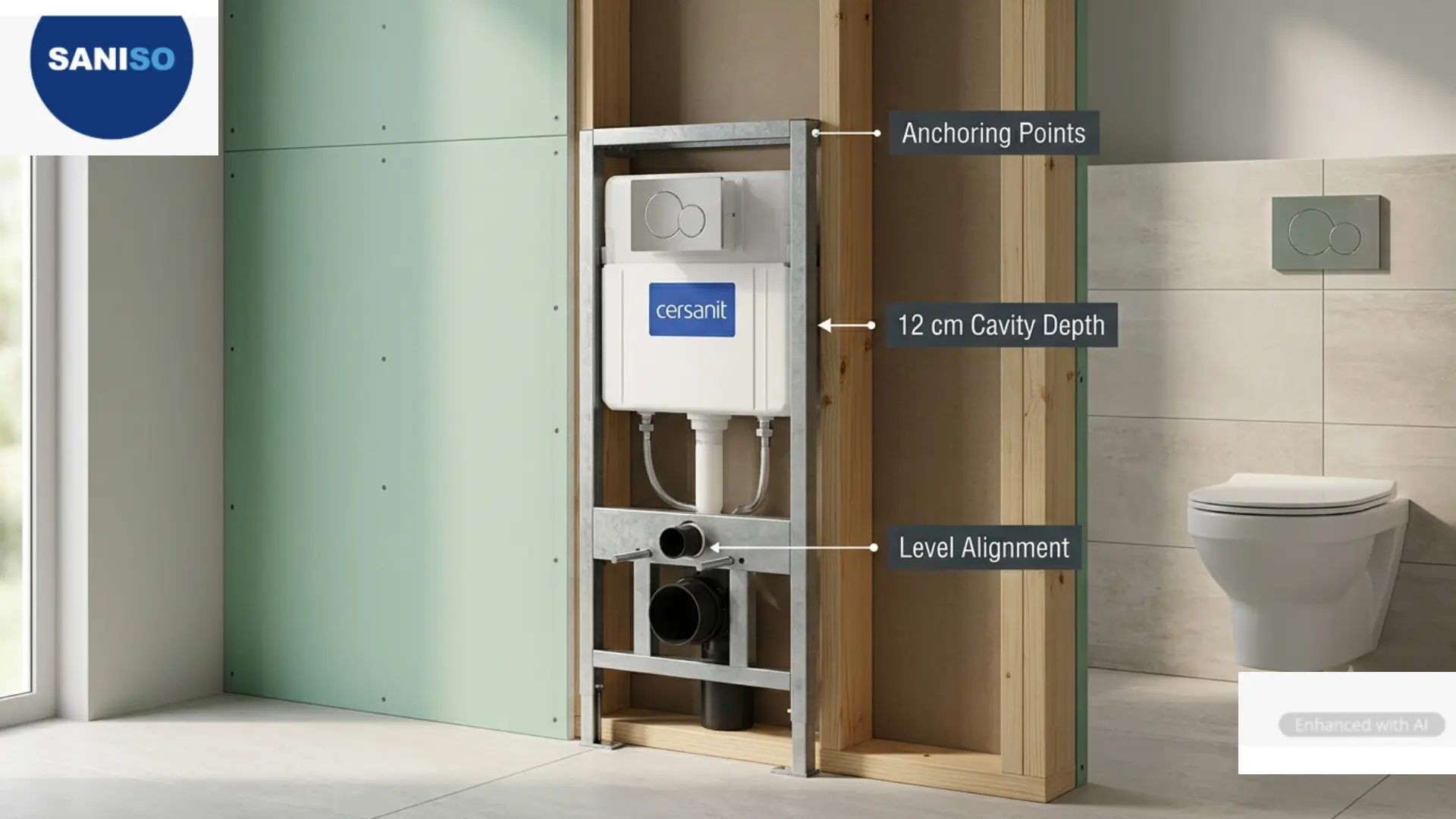
A Cersanit concealed fram e, also known as a Cersanit on-wall frame , is a steel or galvanized carrier structure that mounts inside a stud wall or furniture unit. It holds the concealed cistern, the flush mechanism, and the bracket that supports a wall-hung toilet bowl . Once tiled or panelled over, only the flush plate remains visible.
Three things distinguish a good concealed frame system:
Cersanit builds its frame range around two core product lines: the Cersanit Aqua 50 and the Cersanit System 50. Both are designed for standard wall-hung WC installations, but they differ enough in construction and price point that the choice matters.
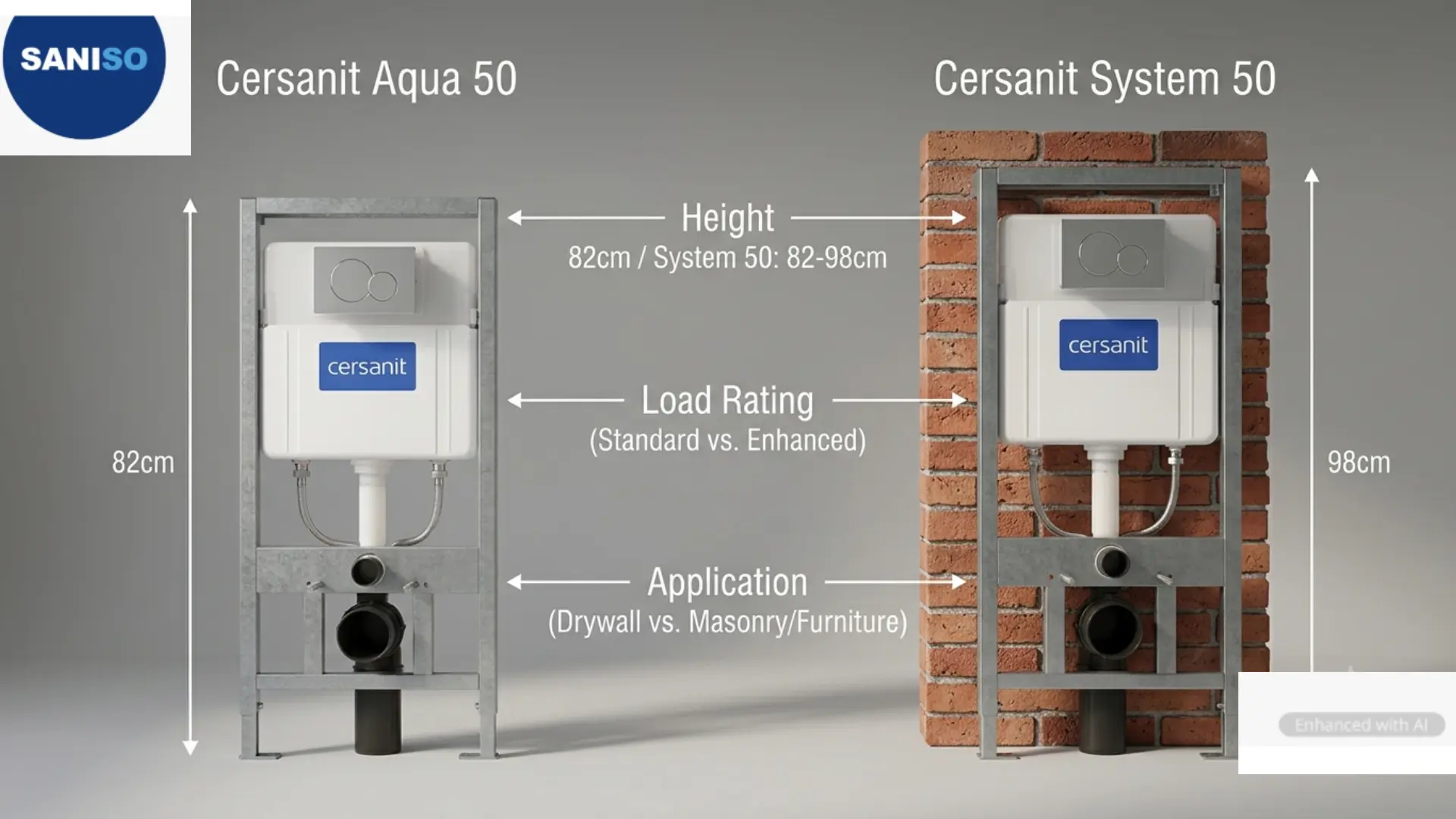
Here's how the two most requested Cersanit frame models compare for a residential bathroom project.
Feature | Cersanit Aqua 50 | Cersanit System 50 |
Frame height | 82 cm (standard) | 82–98 cm depending on the kit |
Cistern volume | 3/6 L dual flush | 3/6 L dual flush |
Installation depth | Approx. 12 cm frame profile | Approx. 12 cm frame profile |
Load rating | Suitable for standard residential use | Suitable for standard and light commercial use |
Typical use case | New builds, renovations with drywall cavity | Furniture-integrated or masonry wall installs |
Price positioning | Mid-range | Mid-range to upper mid-range |
The Cersanit Aqua 50 tends to be the more common pick for straightforward drywall renovations, while the Cersanit System 50 shows up more often in projects where the frame needs to sit inside furniture panelling or a masonry wall. Neither is objectively better. The right choice depends on your wall construction and how much depth you're working with.
Installation follows a fairly consistent sequence regardless of which Cersanit frame you choose. Here's the general process a plumber or experienced renovator would follow.
Before anything else, measure the available wall depth. Most Cersanit frame installation kits need at least 12 cm of clearance once tiling is accounted for. Cramming a frame into a shallower cavity is the single most common installation mistake installers report.
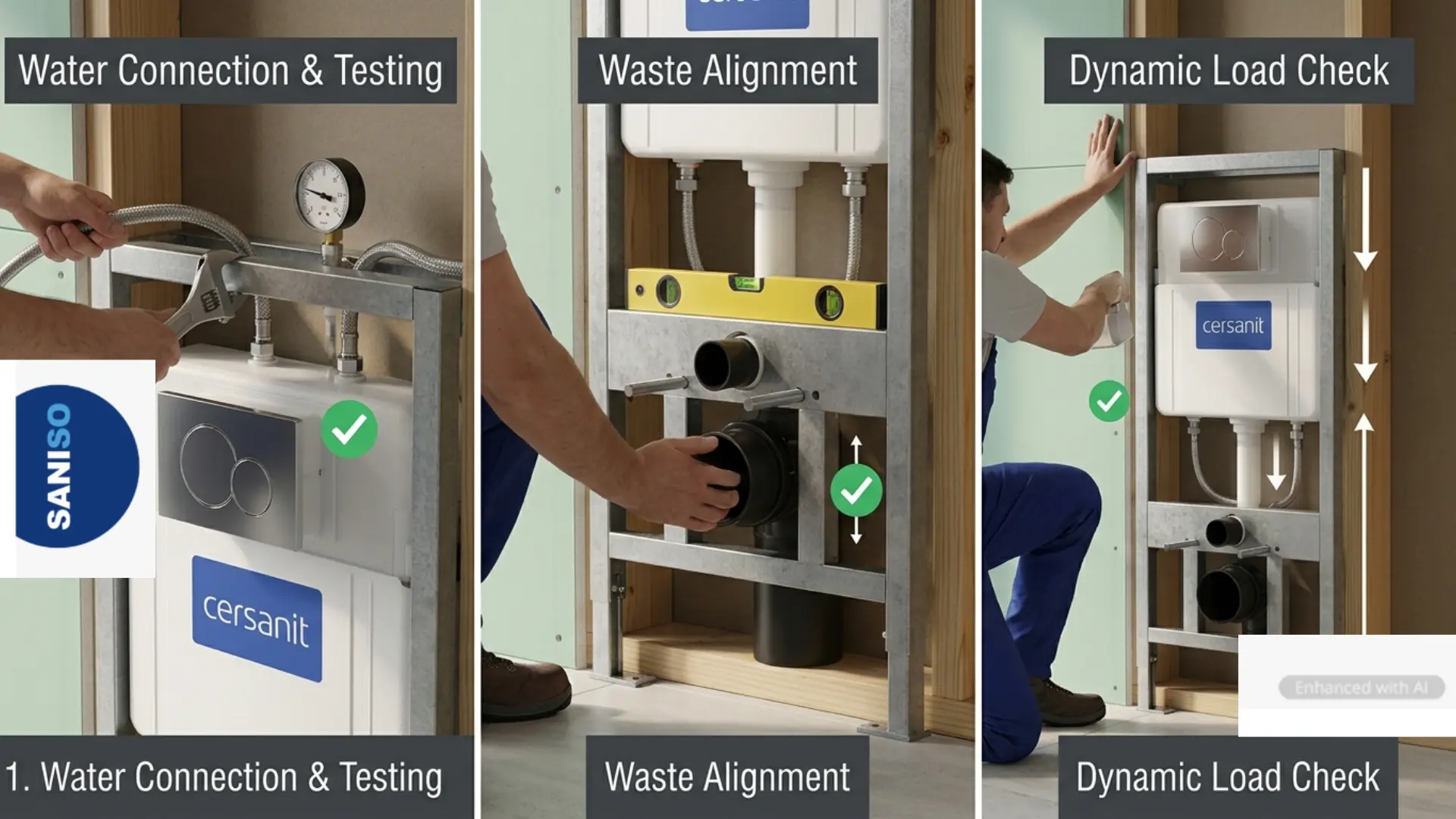
The frame's feet bolt or screw into the floor, and the top brackets fix to the stud wall or a horizontal support batten. Getting this level matters enormously. A frame that's even slightly off-plumb will telegraph into a crooked flush plate later.
The concealed cistern connects to the mains water supply, and the waste outlet lines up with the soil pipe. Most installers pressure-test the system at this stage before boarding it over, since fixing a leak after tiling means breaking tiles.
The wall-hung bowl bracket attaches to the frame at a height that puts the finished toilet rim at roughly 40 to 43 cm from the finished floor, in line with standard ergonomic guidance for adult use.
Once the frame passes its pressure test, it gets boarded, usually with moisture-resistant board, tiled, and the flush plate is fitted and calibrated to the correct flush volume.
If any of these steps feel outside your comfort zone, that's the point where a licensed installer earns their fee. A concealed frame that's improperly anchored is a structural problem, not a cosmetic one.
The concealed cistern is the component doing the real work inside a Cersanit concealed frame, and it's worth understanding on its own terms. A dual-flush concealed cistern typically fulfils the water-efficiency and durability requirements set out in EN 14055 , the European standard governing WC flushing cisterns and their components.
That standard covers flush volume accuracy, water-tightness, and mechanical durability, which is a reasonable proxy for whether a cistern will still be working reliably five years from now. Cersanit's dual-flush cisterns are built to this class of requirement, which is part of why they appear so often in renovation specifications across the Netherlands and Belgium.
What rarely gets mentioned is the failure pattern installers actually see on callbacks: it isn't the frame breaking; it's the tiling stage happening before the pressure test, or the frame anchored to a stud wall that wasn't reinforced to carry a wall-hung toilet's dynamic load. A concealed frame is only as good as the wall it's bolted into.
If you're renovating an older European property with lightweight partition walls, it's worth having a plumber confirm the stud spacing can take the fixing points before the frame goes in, not after the tiles are up. That single check prevents the majority of the "my toilet feels loose" complaints that circulate on renovation forums across the region.
SANISO stocks the Cersanit Aqua 50 and Cersanit System 50 within its concealed systems category , alongside compatible flush plates and wall-hung toilet bowls, so a complete concealed frame set can be ordered as a matched kit rather than pieced together from separate listings. For anyone comparing a Cersanit concealed frame review against other brands, checking that the frame, cistern, and bracket carry matching load and flush specifications is the fastest way to avoid a mismatched set.
A Cersanit concealed frame, correctly sized and properly anchored, is a component you install once and forget about for a decade or more. Spend the extra ten minutes on the cavity measurement and the wall check, and the rest of the installation tends to go smoothly.
What size concealed Cersanit frame do I need?
Most residential installs use the standard 82 cm frame height with a 12 cm profile. Larger frames (up to 98 cm) suit taller walls or commercial bathrooms.
Is the Cersanit System 50 better than the Aqua 50?
Not necessarily better, just built for different walls. The System 50 handles masonry and furniture-integrated installs with a higher load rating; the Aqua 50 suits standard drywall renovations.
Does the Cersanit concealed frame price include the cistern and flush plate?
Not always. Check the listing carefully, some suppliers sell the frame, cistern, and flush plate as separate line items rather than one Cersanit concealed frame set.
Can I install a Cersanit toilet frame myself?
The frame mounting is straightforward for an experienced DIYer, but the water connection and pressure test are best left to a licensed plumber, since a leak found after tiling means breaking tiles to fix it.
Share:
Old, mouldy silicone in your bathroom? Reseal it yourself in one weekend: tools, 12 clear steps, mould prevention and sa...
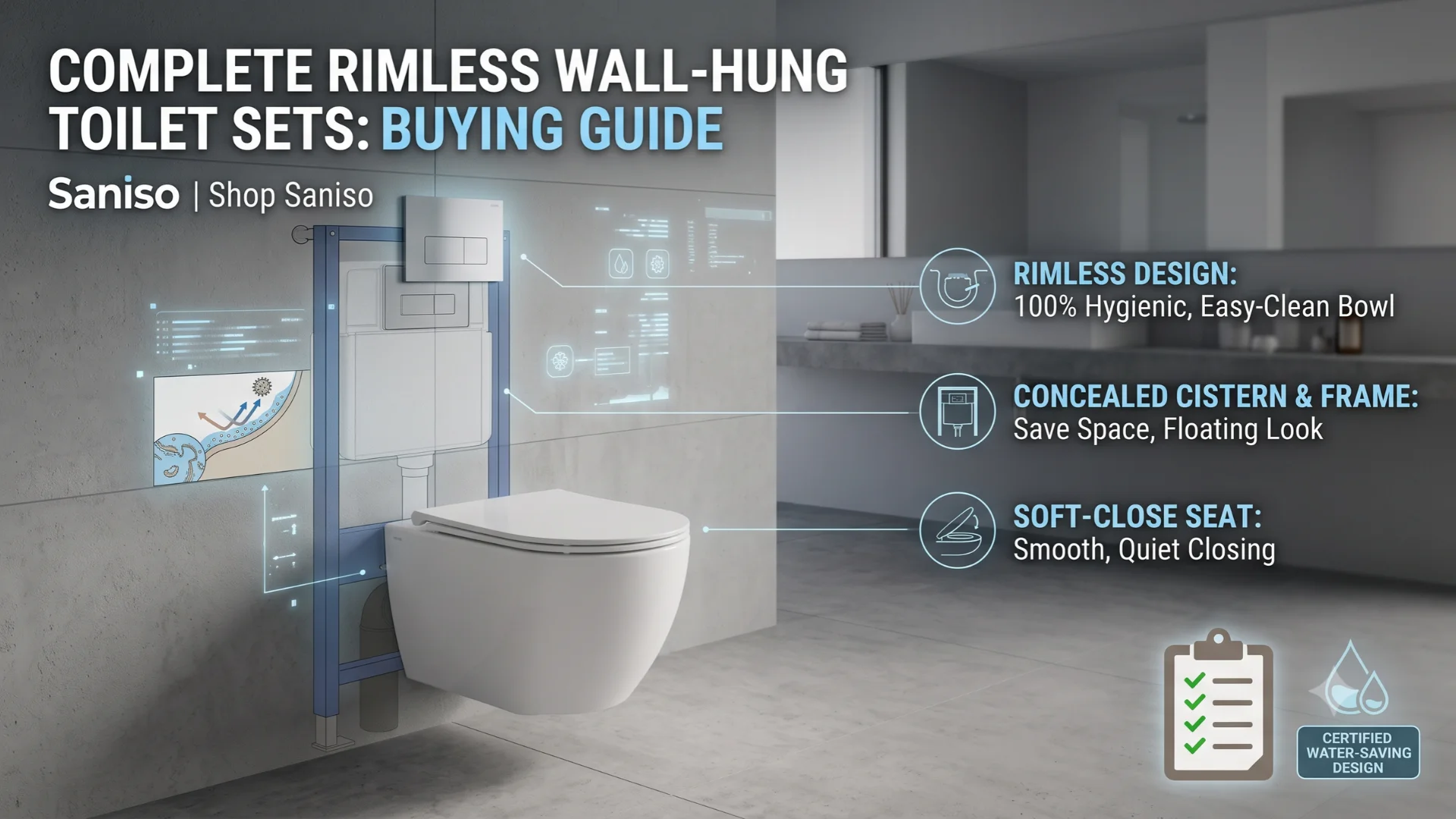
Buying a rimless wall-hung toilet set? Learn what's included, how to match the cistern, frame, and seat, and what to che...
Need an LED bathroom mirror? Explore the Saniso range: sizes, dimmable LED, anti-fog and IP44. See tips and all 6 models...
Buying a toilet bowl isn’t something you do often. However, it is one of the most frequently used fixtures in your home....