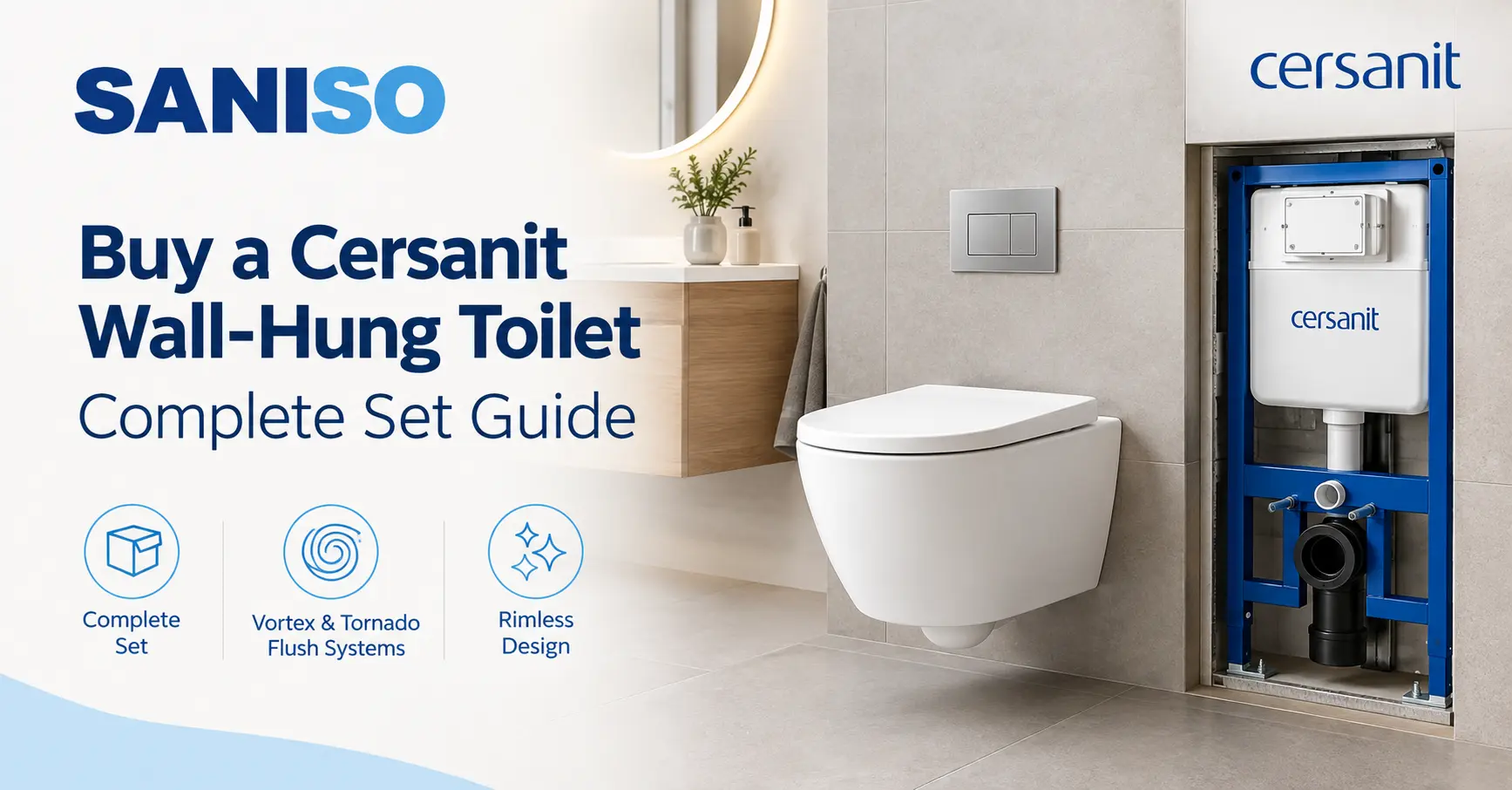
Buying a Cersanit wall-hung toilet? See what's in a complete set, how Vortex and Tornado flush systems work, and what to...

Wholesale supplier of building materials
 Werk Kleding & Veiligheid
 Keramische Tegels
 Badkamer Apparatuur
 Bouw Materialen
 Gereedschap
 Workshops equipment
 Tuin
Tuin
 Accessoires voor elektrisch gereedschap
 Bevestigingssystemen
 Technische chemicaliën en bouwchemicaliën
 Kleding en accessoires voor arbeidsveiligheid en -gezondheid
 Sale
Sale
 English
 Nederlands
✓
✓
Nederlands
✓
✓

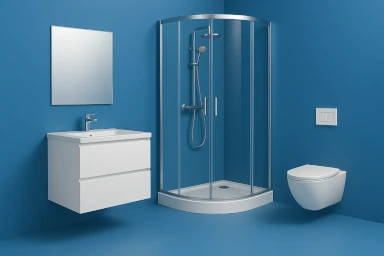



Choosing a concealed cistern is one of those decisions bathroom renovators only think about once, then live with for the next fifteen to twenty years. That's roughly how long a well-installed frame and tank should last before anything inside it needs replacing.
Get it wrong, and you're opening up tiled walls to fix a leaking valve. Get it right, and you forget the cistern exists.
Cersanit has become one of the most searched names in this category across the Netherlands, and for good reason. The brand offers a genuinely wide range of frames at price points that undercut the premium German brands without cutting corners on the parts that actually fail.
If you're trying to find the best concealed cistern from Cersanit for a renovation, new build, or bathroom refresh, this guide walks through what separates a good choice from a regrettable one.
Not every concealed cistern suits every wall. Before comparing models, it helps to know the variables that actually determine fit. A Cersanit concealed cistern is designed to sit inside a false wall or stud partition, with only the flush plate visible once tiling is complete. So getting these measurements right before ordering saves a second trip to the merchant.
Dutch new-build bathrooms increasingly favour thinner partition walls to maximize floor space, which is part of why depth-flexible frames have overtaken fixed-depth models in sales over the past few years.
Industry data from the European Association of Ceramic Sanitaryware Manufacturers shows that wall-hung toilet installations, which all require a concealed cistern, now account for well over half of new toilet installations in Western Europe, up from roughly a third a decade ago. That shift alone explains the surge in searches for the best concealed cistern Cersanit has to offer.
See our full range of wall-hung toilets to pair with your chosen frame.
The Cersanit Aqua 50 frame is the model most Dutch installers reach for first, and it's a strong starting point if you're comparing options for the best concealed cistern Cersanit sells.
Specification | Cersanit Aqua 50 |
Adjustable installation height | Approx. 112 to 133 cm |
Depth range | Approx. 14 to 23 cm |
Frame material | Steel, static load rating well above household toilet requirements |
Flush mechanism | Dual-membrane, reduces clicking and hissing common in budget cisterns |
Wall compatibility | Stud partition and solid masonry |
This range covers the vast majority of stud and masonry wall configurations found in Dutch homes.
Where this model earns its reputation is consistency. Reviewers and installers across Dutch sanitary forums repeatedly note that the flush valve rarely needs adjustment after the first few months, which is the single biggest source of callbacks for plumbers working with budget frames from other manufacturers.
Browse the full Cersanit Aqua 50 product listing for current stock and pricing.
Searches for Cersanit concealed cistern noise insulation have become far more common over the past two years, and this reflects a real shift in buyer priorities. Apartment living and open-plan Dutch floor plans mean a noisy flush is no longer a minor annoyance, it's a shared-wall problem.
How Cersanit addresses noise:
If noise insulation matters to your project, pair the frame with acoustic decoupling strips between the frame and the stud wall. The cistern itself only solves part of the noise problem; the wall construction handles the rest. See our concealed-system accessories for compatible options.
Every current Cersanit set ships with dual flush functionality as standard offering a 3-litre and 6-litre option on the flush plate.
Flush type | Volume | Notes |
Old single flush | 9 litres | Standard on older toilet systems |
Cersanit dual flush (low) | 3 litres | For liquid waste |
Cersanit dual flush (high) | 6 litres | For solid waste |
Estimated water savings | Approx. 40% | Based on EU water-fixture consumption benchmarks, for a typical household switching from single to dual flush |
This matters more than it might seem: the Dutch drinking water sector (Vewin) has flagged household water consumption as a growing concern, and toilet flushing remains one of the largest single uses of clean water in an average home.
That efficiency gain is one reason installers increasingly recommend this flush technology even in budget-conscious renovations, since the water savings partially offset the frame's purchase price over several years.
Geberit remains the best-known name in this category, and its UP100 frame is a fair comparison point.
Feature | Cersanit Aqua 50 | Geberit UP100 |
Height adjustment | Similar range | Similar range |
Minimum depth | Approx. 14 cm | Approx. 12 cm |
Flush reliability | Strong | Strong |
Noise performance | Close to Geberit | Slightly ahead |
Price | Noticeably lower | Premium |
Longevity reputation | Strong | Strong |
For most homeowners outside of extremely tight wall cavities, the price difference between the two brands is hard to justify paying for. Compare pricing directly on our concealed cistern frames page.
When you're ready to buy a Cersanit cistern, price alone shouldn't be the deciding factor.
Check before you buy:
Check current availability and full-set pricing on our Cersanit shop page.
At SANISO, our concealed systems selection is built specifically around the depth and height ranges that Cersanit's concealed cistern models cover, so frame, tank, and wall-hung toilet all match without guesswork on your part.
Our advice for anyone choosing the best concealed cistern Cersanit for a Dutch bathroom in 2026:
If you'd like help matching a specific frame to your wall type or toilet model, our concealed systems range is a good starting point. We connects you directly with our team to confirm compatibility before you buy.
What is the best concealed cistern Cersanit currently offers?
The Cersanit Aqua 50 is the top pick for most Dutch bathrooms, thanks to its reliable flush mechanism and wide depth range.
How much does the best concealed cistern Cersanit model cost compared to Geberit?
Cersanit's frames cost noticeably less than Geberit's UP100, with only a slight trade-off in noise performance.
Does the best concealed cistern Cersanit sells fit narrow wall cavities?
Cersanit's standard range starts at 14 cm depth, so it may not suit extremely shallow cavities without a specialist check.
Delen:
Buying a Cersanit wall-hung toilet? See what's in a complete set, how Vortex and Tornado flush systems work, and what to...
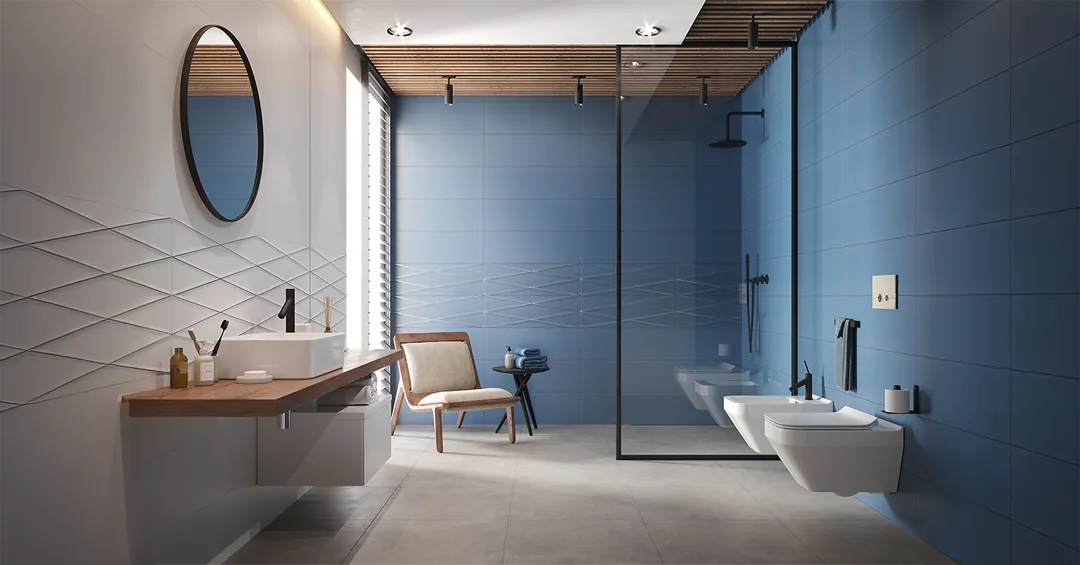
Ontdek deskundige tips en praktische adviezen voor het succesvol plannen en uitvoeren van je badkamer renovatie project.
These cookies are essential for the website to function properly.
These cookies help us understand how visitors interact with the website.
These cookies are used to deliver personalized advertisements.