





Witte vlekken en een doffe waas op het glas? Zo maak je je douchecabine stap voor stap kalkvrij, van glas en profielen t...

De online bouwmarkt voor bouwen en verbouwen
 English
 Nederlands
✓
✓
Nederlands
✓
✓
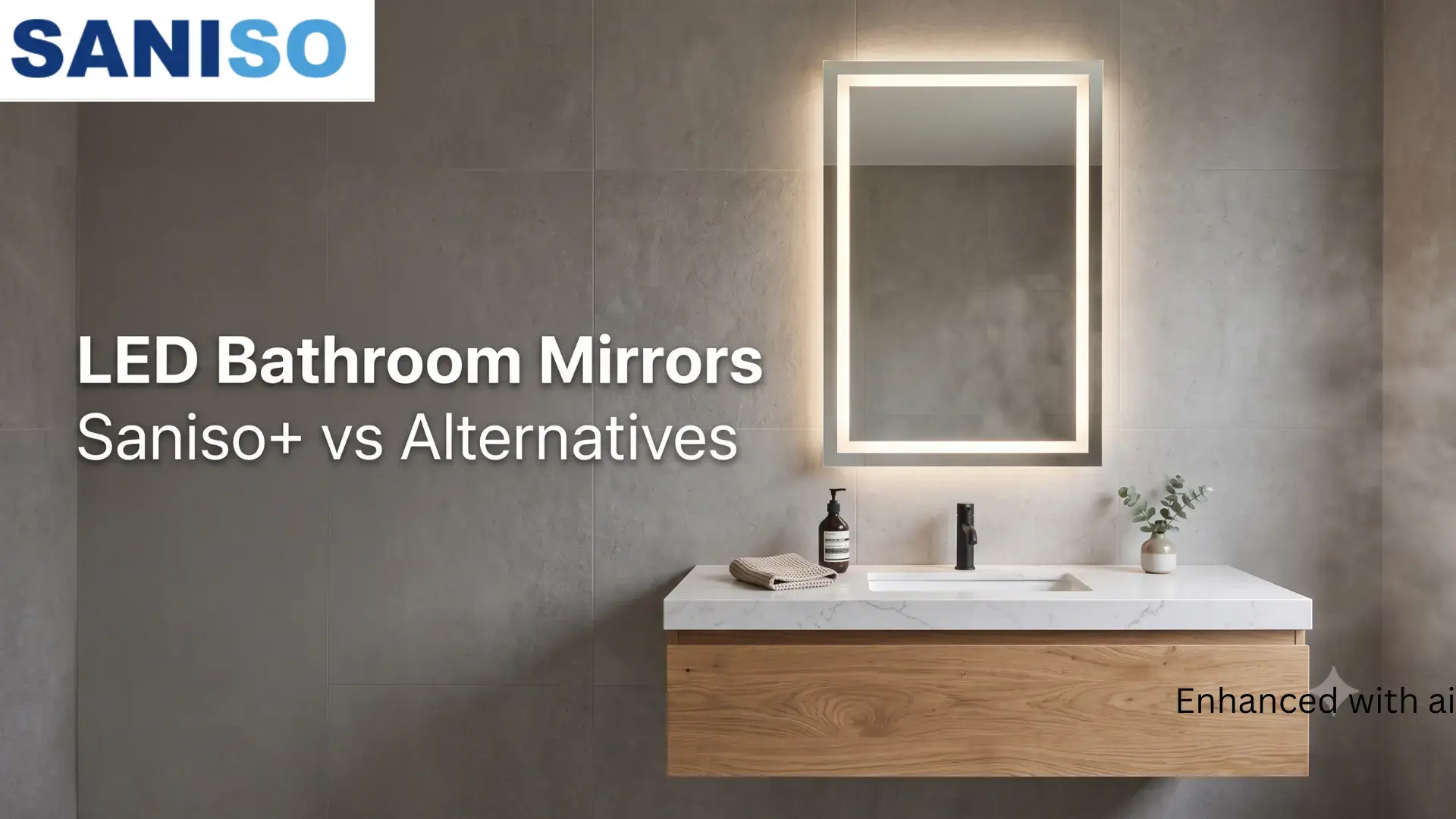
A bathroom renovation tends to succeed or fail on the small decisions, and the mirror is one of the most underrated.
For years, a plain glass panel and a separate wall light were treated as good enough. That's changed.
An LED bathroom mirror now does the job of three fixtures at once: it reflects, it lights your face evenly for shaving or makeup, and in many rooms it replaces the need for a second ceiling spot altogether.
If you're comparing a Saniso+ mirror against generic alternatives before you buy, here's what actually matters and where I think the money is well spent versus where it isn't.
-1.webp)
Bathroom lighting used to be an afterthought bolted onto the ceiling plan. The problem with that approach is simple: overhead light casts shadows under the eyes and chin, which is exactly the wrong place for a mirror you use every morning. An LED bathroom mirror solves this by putting the light source at eye level, around or behind the glass, so it illuminates your face directly rather than from above.
Three things pushed this shift:
I'd argue the demisting feature alone justifies the upgrade in most Dutch bathrooms, where showers run hot, and ventilation is often limited.
The Saniso+ mirror line was built around the idea that a bathroom mirror shouldn't need a second thought once it's installed. That means a warm-to-cool colour temperature range, IP44 splash protection as standard, and a control method that doesn't feel like an afterthought.
Feature | Saniso+ Mirror | Typical Budget LED Mirror |
Colour temperature | Adjustable 3000K–6500K | Fixed, usually 4000K |
Dimming | Stepless touch dimmer | On/off only, or absent |
Demister pad | Included | Often optional extra |
Water resistance | IP44 | IP20–IP33, varies |
Frame options | Backlit and frame-lit variants | Frame-lit only |
Warranty | Standard manufacturer cover | Often shorter or unclear |
A dimmable LED mirror isn't a luxury add-on so much as a practical necessity once you've lived with one. Full brightness is right for grooming tasks in the morning, but a bathroom mirror with touch control lets you drop the light down for an evening routine without flooding the room. The touch sensor sits flush in the glass, so there's no separate switch to wire in or clean around, which also keeps the installation simpler for anyone doing this themselves.
It's worth being honest about when the upgrade isn't worth it. A guest toilet with no natural light and minimal daily use rarely needs a full LED setup. But for a main bathroom, the comparison tends to go one way.
Option | Light Quality | Running Cost | Best For |
LED bathroom mirror | Even adjustable, shadow-free | Low | Main bathrooms, daily use |
Mirror + separate wall light | Uneven, fixed | Moderate | Budget renovations |
Plain mirror, ceiling light only | Poor, shadowed | Low | Guest toilets, low-use spaces |
If the bathroom already has strong, well-placed ceiling or vanity lighting, a plain mirror can still work perfectly well. Spending on an LED bathroom mirror where the room is already lit properly is money that would be better put toward tiling or fixtures elsewhere. This is a case where the honest recommendation is to skip the upgrade, not force it.
-1.webp)
Sizing is where most people either overspend or under-light the space. As a rule, the mirror should sit roughly 10–15 cm narrower than the vanity unit below it, and its center should land close to eye height for the average household user.
Measure the vanity width first, then work backward to the mirror size, not the other way round.
Buying sight-unseen means the spec sheet has to do the work a showroom visit normally would. Check the IP rating before anything else, since this determines how close the mirror can safely sit to a shower or basin splash zone. After that, confirm the transformer is included in the box, since some budget listings sell it separately without saying so clearly.
Most LED bathroom mirrors are hardwired rather than plug-in, which means either an existing spur point behind the mirror location or a qualified electrician for a new one. That's not a reason to avoid the purchase, but it is something to plan into your renovation timeline rather than discover on install day.
A backlit mirror at full brightness next to glossy tile can throw a hard reflection back at you, which is why the dimming range matters more than the peak brightness number on a spec sheet. A stepless dimmer lets you tune the light to your tile choice rather than fight it.
LED strips also shift slightly warmer over a few years of daily use. It's subtle, but it's why a mirror bought to match warm-white fixtures can look mismatched by year three. A mirror with a wider adjustable colour range ages into this drift gracefully, since you can simply nudge the setting back rather than replace the unit.
For a main bathroom that gets daily use, I'd steer most buyers toward a Saniso+ mirror in the dimmable, touch-controlled configuration. The adjustable colour temperature is the feature people underestimate before they own one and rely on daily afterward. Where budget is tight, it's a better trade-off to size down the mirror than to drop the dimming or demister functions entirely, since those are the parts that shape daily use.
Browse the full LED mirror range on the Saniso bathroom mirrors page, and pair your choice with matching pieces from the bathroom furniture collection for a vanity setup that's planned as one unit rather than assembled piecemeal.
Delen:
Witte vlekken en een doffe waas op het glas? Zo maak je je douchecabine stap voor stap kalkvrij, van glas en profielen t...
Een badkamer verbouwen bestaat uit veel verschillende klussen. Welke kun je zelf doen en welke laat je over aan een vakm...
Zelf een douchekraan vervangen? Lees welk gereedschap je nodig hebt, hoe je water afsluit, de oude kraan verwijdert, de...
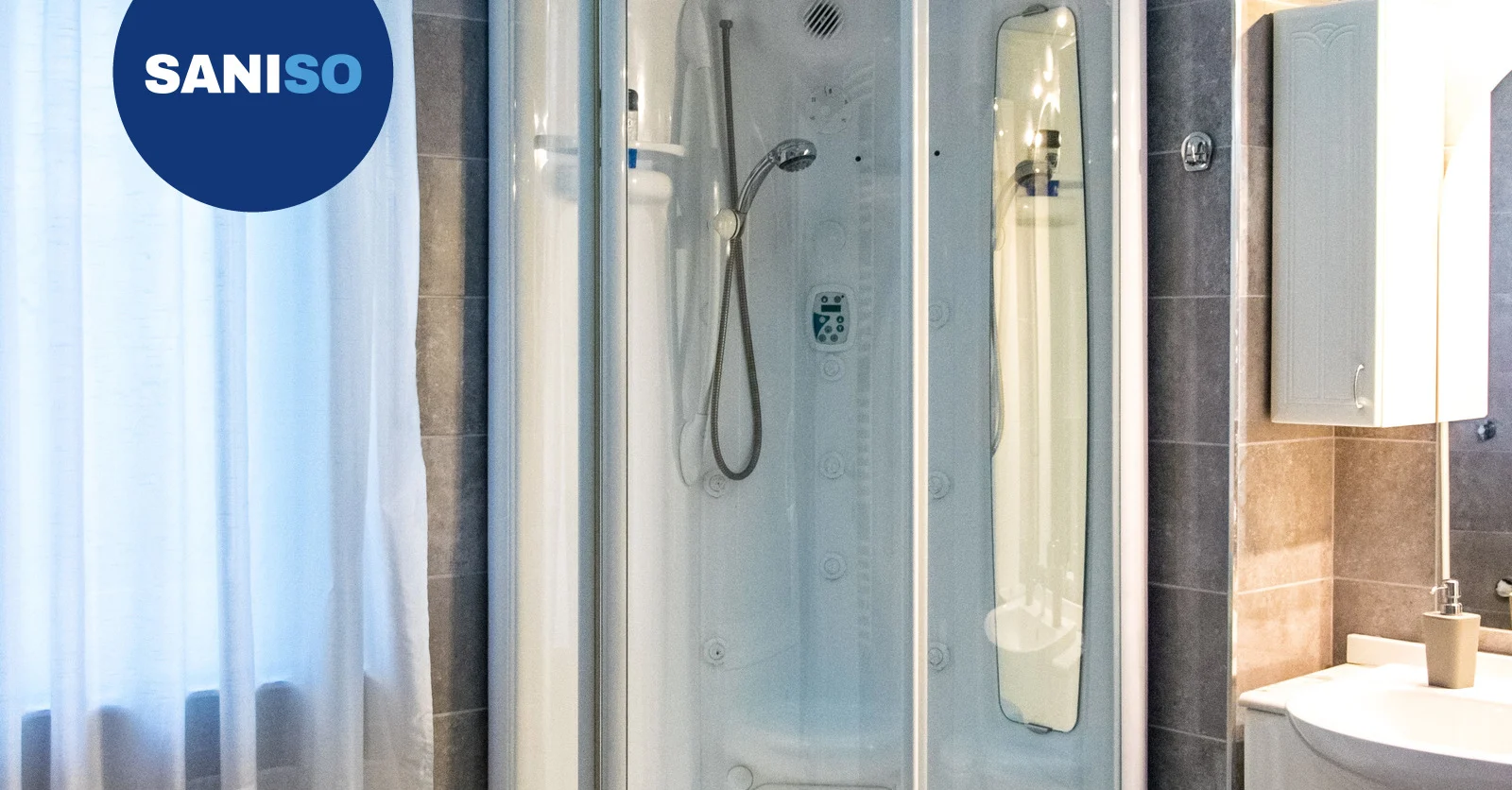
Zelf een douchecabine plaatsen? Lees hoe je meet, de bak waterpas zet, de wanden en deur monteert en alles afkit. Met be...