




Buying Nitrile Work Gloves for Professionals: What Should You Actually Look For? - SANISO
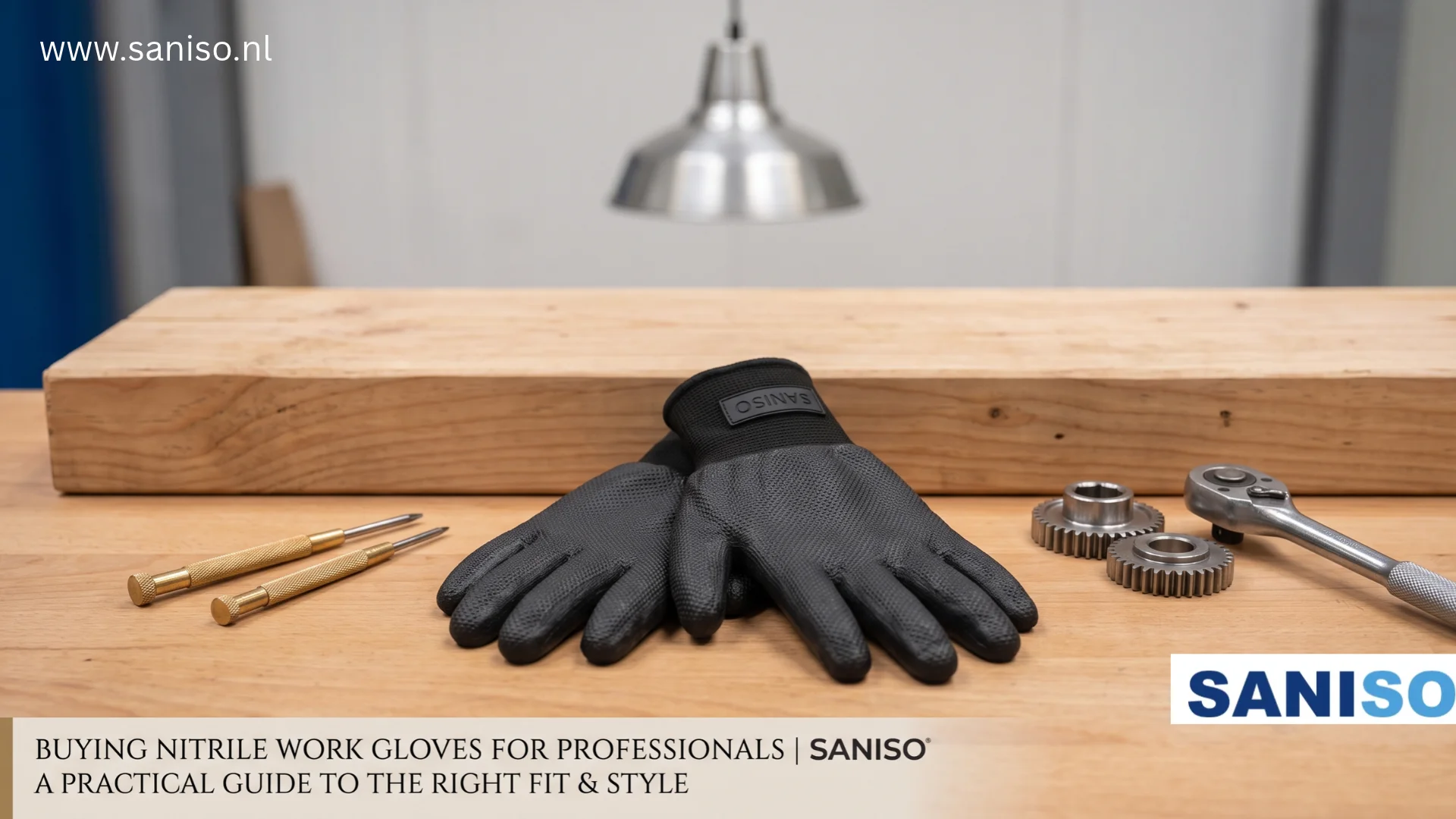
How many gloves has your crew gone through this month? If the honest answer is "more than we'd like," the problem probably isn't bad luck. It's the glove.
Hands take the most punishment on any job site, and a single tear at the wrong moment can mean a cut, a burn, or a chemical exposure that sends someone home early.
So what separates a glove that survives a full shift from one that splits by lunchtime?
For most contractors, technicians, and warehouse teams, the answer has been the same for years: switch to nitrile gloves and stop replacing them every other day.
This guide covers what makes nitrile gloves different, where they perform best, and how to pick the right pair for your trade.

Why Professionals Choose Nitrile Gloves?
Nitrile is a synthetic rubber, so it skips the allergy risk that comes with natural latex. Beyond that, it simply holds up better under daily wear.
- Resists punctures, abrasion, and tearing better than latex or vinyl
- Stands up to oils, solvents, and many industrial chemicals
- Keeps its grip even when the surface is wet or oily
- Fits snugly without restricting finger movement or dexterity
- Available in thicker coated versions for heavier manual work
Anyone shopping to buy nitrile gloves for daily use will notice the difference within the first few shifts. They simply last longer than the alternatives.
Where Chemical-Resistant Gloves Make the Difference
Not every job needs the same level of protection. Painters, cleaners, and lab technicians handle a different set of substances than someone pouring concrete or mixing adhesives.
Chemical-resistant gloves matter most when the job involves:
- Solvents, thinners, and industrial cleaning agents
- Adhesives, resins, and sealants
- Oils, fuels, and lubricants
- Acidic or alkaline cleaning solutions
Nitrile's resistance to these substances is well documented by occupational safety bodies. The EU-OSHA guidance on chemical protective gloves outlines how glove material should match the specific hazard on site, not just the general job title. A glove rated for solvents will not necessarily protect against acids, so checking the EN 374 rating on the packaging is worth the extra minute before ordering in bulk.

Coated Gloves for Construction and Heavy Handling
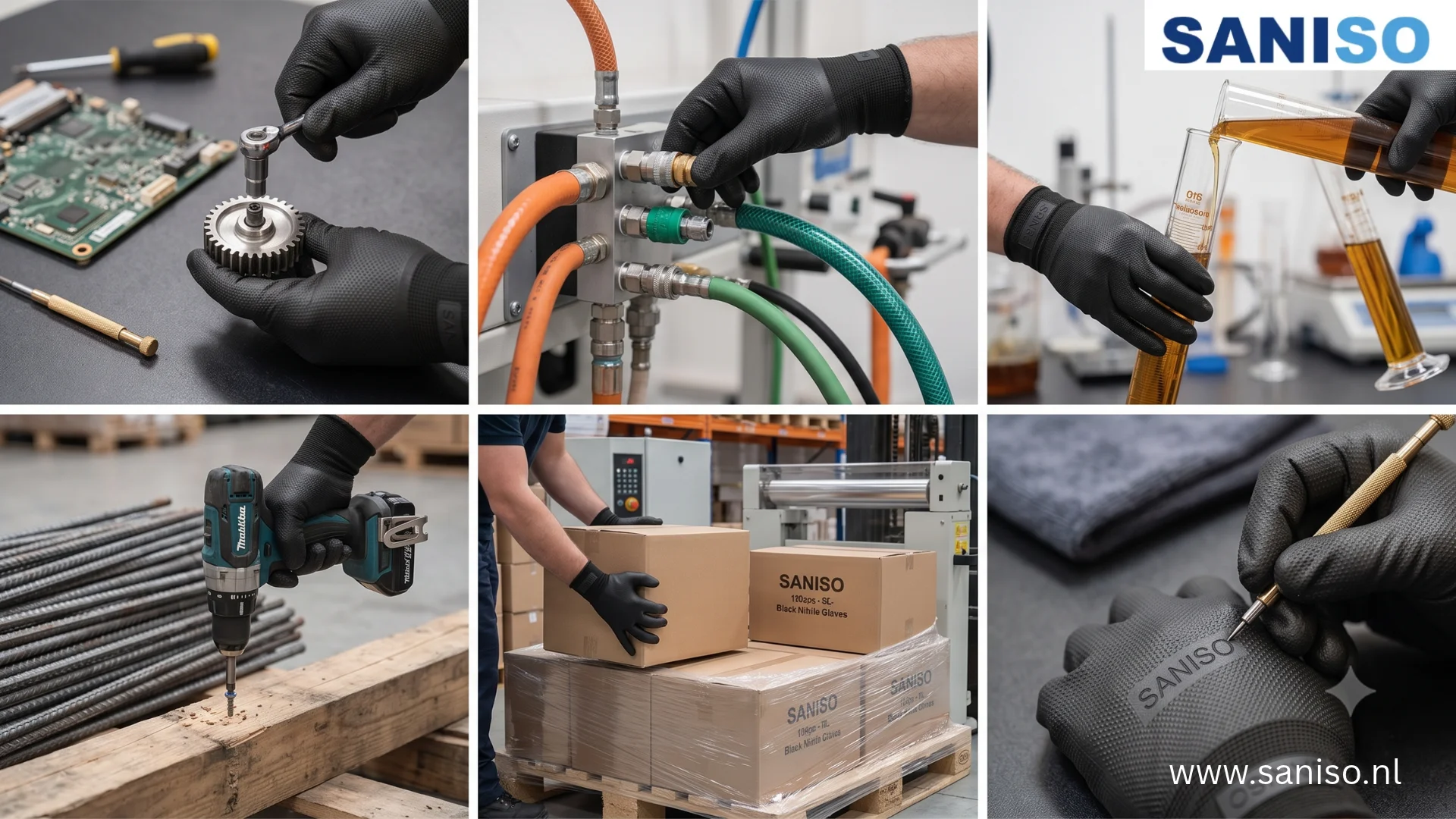
On a construction site, bare nitrile film alone is often not enough. This is where coated gloves come in, usually a knitted cotton or polyester shell dipped in a nitrile coating on the palm and fingers.
- The knit lining adds breathability for long shifts
- The nitrile coating adds grip and abrasion resistance where it counts
- Palm-coated styles work well for handling brick, block, timber and rebar
- Fully coated styles suit wet or oily handling tasks
Construction crews in particular tend to reach for coated gloves over the thin disposable type, simply because they survive rough handling for weeks rather than hours.
Powder-Free Nitrile Gloves for Precision Work
Not every task calls for a heavy-duty coated glove. Powder-free nitrile gloves are the better fit for work that needs a lighter, closer feel.
- Better tactile sensitivity for detailed or fine-motor tasks
- No powder residue left on surfaces, tools or materials
- Common in food handling, automotive detailing, and light maintenance
- Easier on the skin during extended wear
Technicians who spend hours with small parts or precision instruments usually prefer this lighter style over the thicker coated gloves used on a building site.
How to Choose the Right Size and Fit?
A glove that is too loose slows you down and increases the risk of it catching on something. Too tight, and hands tire faster, and circulation suffers over a long shift.
- Measure hand circumference at the widest point, just below the knuckles
- Match that measurement against the supplier's size chart rather than guessing from shoe size or shirt size
- Order one size up for thicker coated gloves, since the lining adds bulk
- Keep a couple of sizes in stock for teams, since hand size varies more than people expect
Getting the size right the first time also avoids the cost and delay of returning a bulk order.
Buying in Volume: What to Check Before You Order
Teams ordering nitrile gloves wholesale for a crew or a facility should look past price per box and check a few other details first.
- Glove thickness in mils, since thicker isn't always necessary for every task
- EN 388 and EN 374 ratings for mechanical and chemical resistance
- Whether the batch is powder-free, since many sites now require it
- Lead time and stock availability, especially for ongoing monthly orders
Facilities looking to buy nitrile gloves on a recurring schedule should also confirm the supplier can hold pricing across repeat orders, rather than renegotiating each time stock runs low.
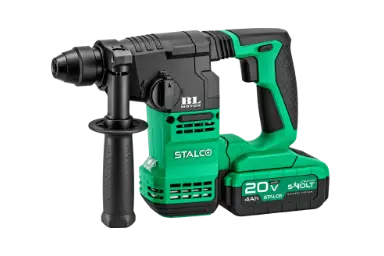
SANISO's PPE and workwear range covers glove sizes and styles for construction, maintenance and industrial teams, alongside the Stalco tools many of the same crews already order. Buying gloves and tools from one supplier also simplifies invoicing for firms managing several job sites at once.
Expert Insight
Glove failure on site is rarely about the brand, it almost always comes down to picking the wrong thickness or coating for the actual hazard being handled.
Final Thoughts
Nitrile has become the default choice for professionals who need hand protection that survives a full workday without cutting corners on dexterity or grip. Whether the job calls for a lightweight powder-free pair or a heavy coated glove built for concrete and timber, matching the glove to the actual task remains the deciding factor. Check the size chart, confirm the resistance rating, and order enough stock to keep a crew covered without a mid-week reorder.
+Ready to order? Browse the nitrile glove and coated work glove range in the SANISO catalogue and get your team properly equipped for the next job.
Frequently Asked Questions
Are nitrile gloves better than latex gloves?
For most trade and industrial use, yes. Nitrile resists punctures and chemicals better than latex, and it carries no natural rubber allergy risk. Latex gloves still offers a slightly closer fit for very fine detail work, but nitrile has become the safer default for daily use.
How long do nitrile work gloves last?
Disposable powder-free gloves are usually a single-task, single-use item. Coated nitrile gloves built for construction and trade work can last several weeks to a few months, depending on how rough the handling is and how often they're washed or exposed to sharp materials.
Can nitrile gloves be reused?
The gloves that are coated can be cleaned and reused, provided the coating and stitching are still intact, whereas disposable gloves made of nitrile should ideally be thrown away after they are used just once.
What thickness of nitrile glove is right for my job?
Lighter gloves (around 4 to 6 mils) suit precision or food-handling tasks. Mid-range thickness works well for general maintenance and cleaning. Heavier coated gloves, often 10 mils or more with a knit shell, are better suited to construction, demolition and rough material handling.
Delen: