






Grinding, sawing or breaking? Find out when noise is too loud for your ears, what the Dutch rules say, whether to choose...

Your online building supplies store for building and renovation
 English
✓
English
✓
 Nederlands
✓
Nederlands
✓
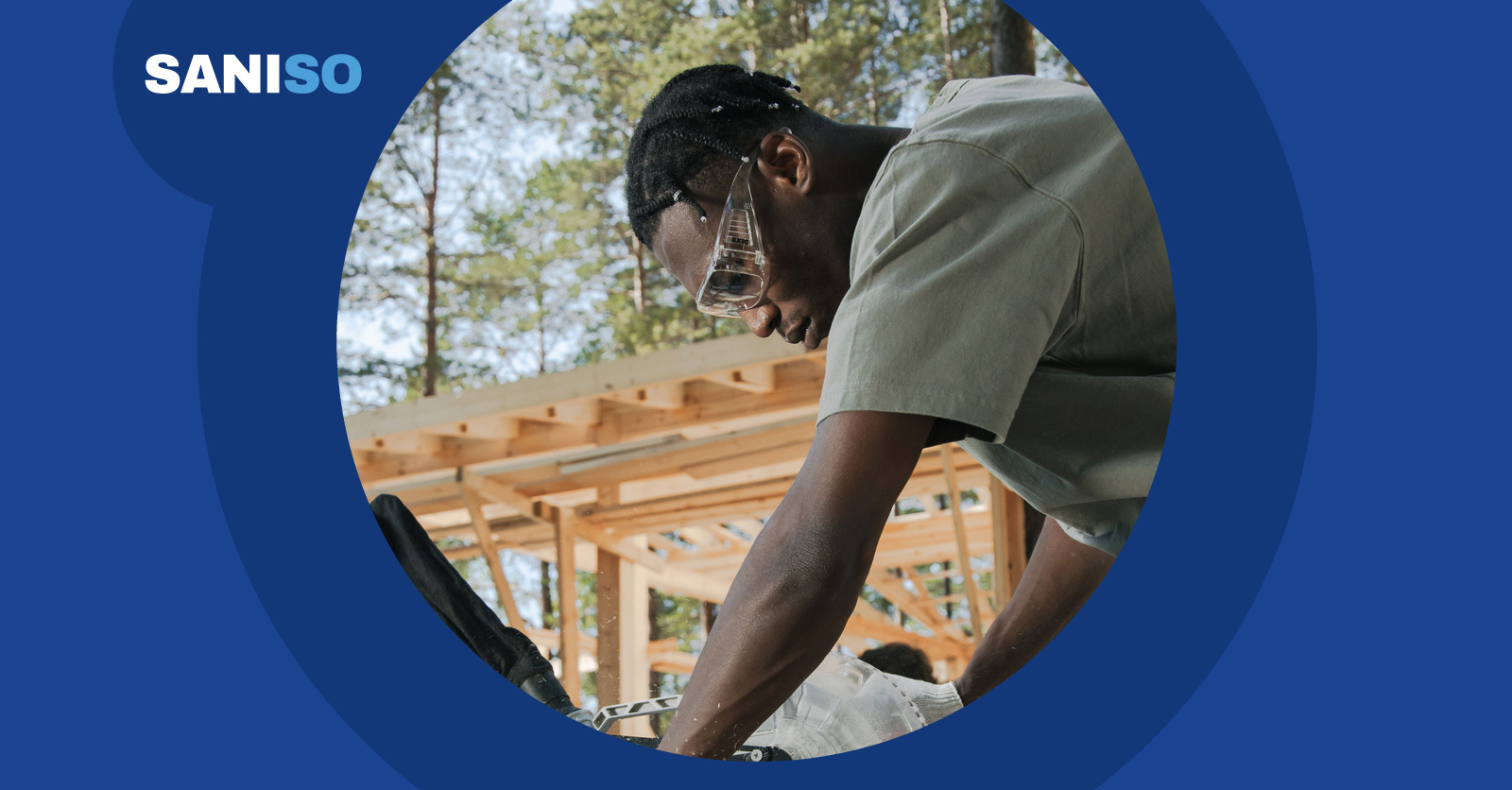
A splinter from a tile, a chip from a plank or a spark from the grinder: grinding, sawing, chiselling and drilling send all kinds of particles flying. A tiny metal splinter or a chemical splash can cause painful and sometimes permanent eye damage. In this safety tip, you'll find out which eye protection suits your job and how to use it properly.
It is often something small:
Particles can also come from the side, from above or from below, so protection that only covers the front is not always enough.
The packaging or instructions state which risks the eyewear protects against. Glasses that look the same do not always protect against the same things. Check for the CE marking and the stated standard, such as EN 166. Also make sure it fits closely, does not fog up quickly and gives a clear view in every working position. Going to weld? Then you need special welding protection.
Ordinary glasses are not safety glasses: the lenses and frame are not made to stop a flying particle, and the sides stay open. So choose over-glasses that fit over your own spectacles, such as the NIRO safety glasses from STALCO PERFECT, or prescription safety glasses.
💡 Tip: safety glasses on your forehead or in your jacket pocket protect nothing. Keep a pair next to your drill or grinder, also for that one hole that takes "only a moment".
Does the job also make noise and dust? Combine your eye protection with hearing protection and respiratory protection. Note: glasses arms under an earmuff's seal stop it from sealing properly. Also read our tip on hearing protection when grinding, sawing and breaking and our guide to safe working on the construction site.
When not only your eyes but also your face are at risk, for example during heavy grinding or when splashes can occur. Where needed, wear safety glasses or goggles underneath.
Don't rub your eye. Rinse it gently with lukewarm water. Don't try to remove a splinter yourself, for example with tweezers. Do you think a metal splinter has got into your eye, does your eye hurt, is your vision worse or are you sensitive to light? Then call your GP or the out-of-hours GP service straight away.
Yes. One splinter is enough to injure your eye, and it can fly off just as easily when drilling a single hole as during a full day's work.
Saniso, the online DIY store for building and renovating, helps you work safely.
Saniso – Build your home with Saniso.
Share:
Grinding, sawing or breaking? Find out when noise is too loud for your ears, what the Dutch rules say, whether to choose...
SB, S1P, S3 or S5? How to choose safety shoes that suit your job. With the changes in the 2022 standard, tips on fit and...
Falls, silica dust, noise and heavy lifting: how to work safely on the construction site. With PPE per job, tips for DIY...