Cart (0)
No products in the cart.

 English ✓
 Nederlands ✓
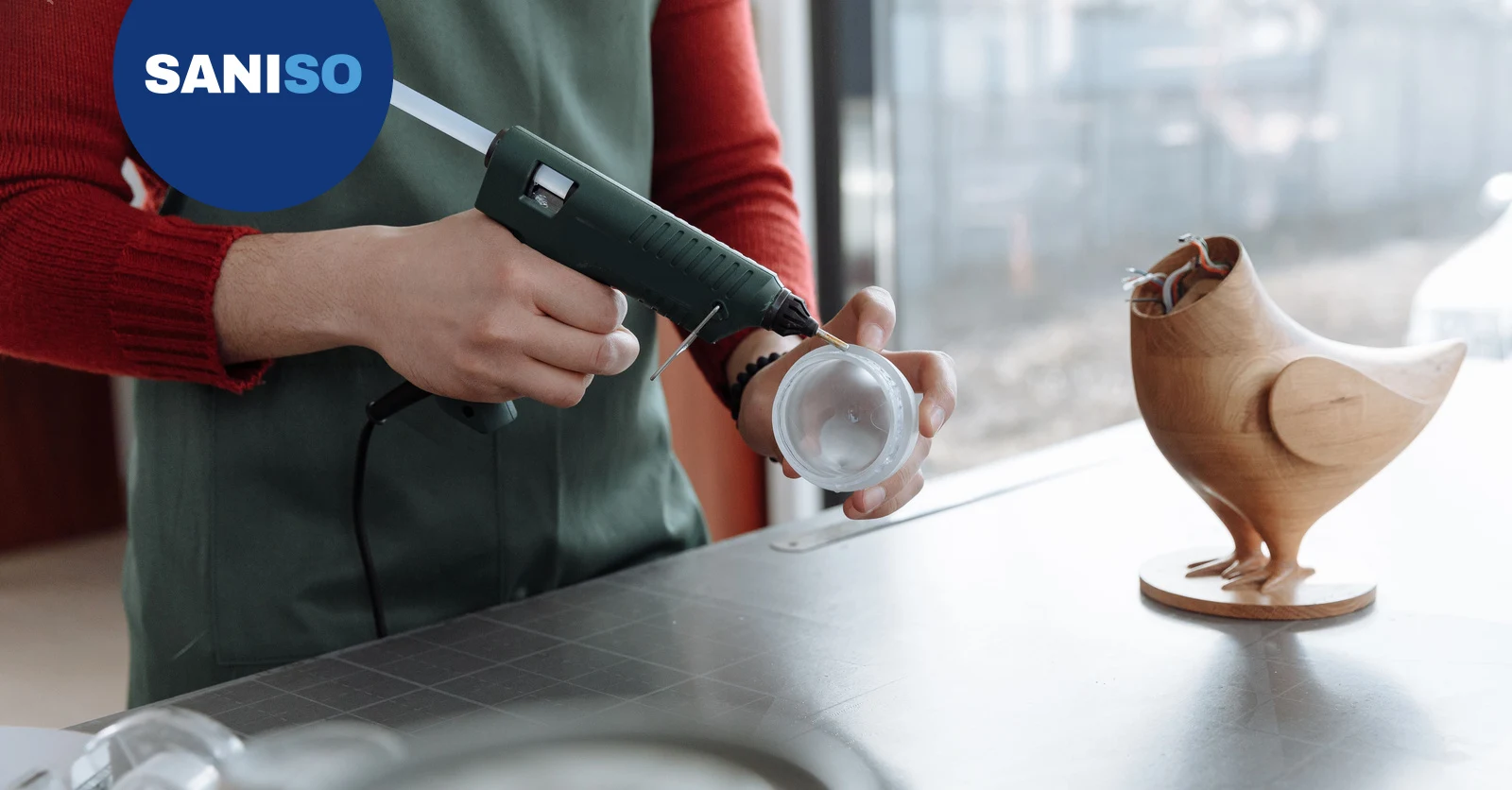
Short answer: for most jobs at home and in the workshop, choose a glue gun that takes 11.2 mm glue sticks. A lighter gun of around 55 W is enough for small repairs, crafts and precise glue lines. A gun of 80 to 100 W melts faster and keeps up with longer glue lines, wood and larger parts. If you want to work without a cable, a cordless glue gun is handy. Hot glue is strong for light joints, but it is not meant for heavy, load-bearing or wet applications.
Read this article in Dutch too: Welke lijmpistolen kies je? Keuzegids.
A glue gun heats a stick of thermoplastic glue (a glue stick) until it becomes liquid. The trigger pushes the stick through the gun and the molten glue comes out of the nozzle. Within half a minute to a minute the glue cools and the joint holds. That makes a glue gun ideal for work where you want a quick result and do not want to leave clamps on for hours.
Typical uses:
The power mainly determines how quickly the gun heats up and how much glue it can melt per minute. More watts does not make the glue stronger, but it does let you keep working longer without the glue becoming sticky and slow.
| Power | Suitable for | Example |
| ± 55 W | small repairs, crafts, precise glue dots | 55 W glue gun |
| ± 80 W | everyday jobs, wood, cardboard and plastic | 80 W glue gun |
| ± 100 W | long glue lines, larger parts, assembly work in the workshop | 100 W glue gun |
| cordless | working away from a socket, on a ladder or away from the workbench | cordless 80 W glue gun |
💡 Not sure? An 80 W gun is the best middle ground for most DIYers. If you often glue wood or larger pieces, choose 100 W.
Glue sticks come in different diameters, and a gun only fits one size. The glue guns above use 11.2 mm sticks, such as 11.2 mm glue sticks (pack of 10) or the larger 11.2 mm glue sticks (pack of 35). Always check the size in the product description before you reorder sticks. A stick that is too thin leaks back, and one that is too thick jams.
If you glue a lot, a larger pack of sticks saves a lot of interruptions.
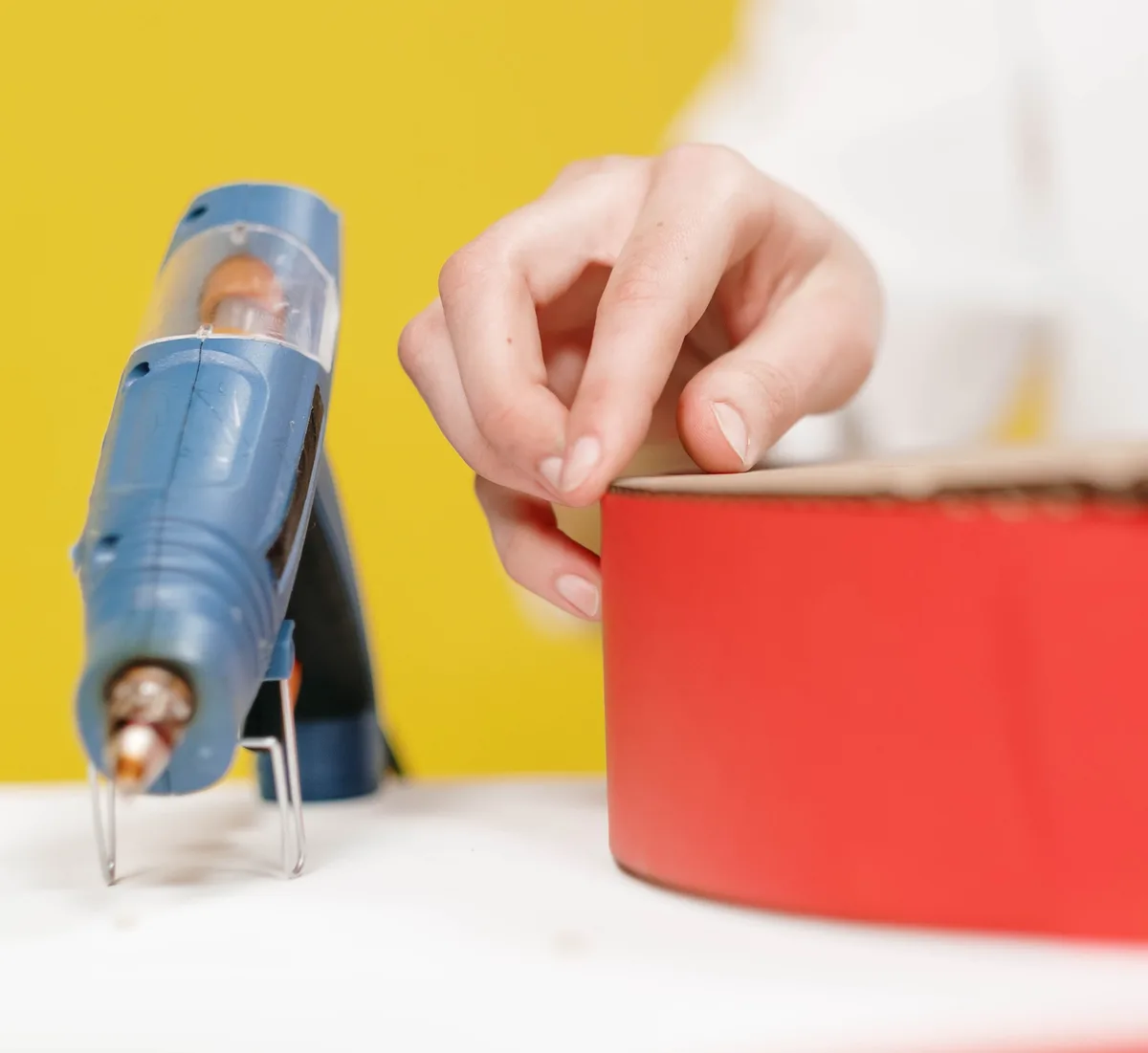
A corded glue gun stays hot for as long as you need and works best at the workbench. A cordless glue gun gives you freedom: no cable pulling at your workpiece and no extension lead on the ladder. According to the product description, the cordless 80 W glue gun runs for about 10 to 15 minutes continuously on a full battery and recharges in a few minutes. That is ideal for short jobs around the house, less so for an afternoon of gluing.
⚠️ The nozzle of the gun and the molten glue get very hot. Never touch the nozzle, and always put the gun on its stand between uses, never on its side on the workbench.
Hot glue is strong for light joints, but it has limits:
Read more about choosing the right clamp in our blog on carpenter's clamps. Looking for a fixed place for your glue gun, sticks and clamps? Have a look at our blog on organising a workshop or garage.
Read more about the right glove for each job in our buying guide for work gloves.
👷 A glue gun is ideal for quick, light jobs. When it comes to furniture that has to carry weight, fixings in wet areas or assembly at height, calling in a professional is never unnecessary. They choose the right adhesive or fixing and make sure it still holds years from now.
Workshops, schools, packing departments and construction companies often use glue guns and glue sticks in large numbers. Saniso is a wholesaler and also supplies tools and consumables in larger quantities. Feel free to request a tailored quote via the contact form.
A gun of 80 to 100 W with 11.2 mm sticks. It melts enough glue for a full bead. For load-bearing wood joints, wood glue and screws are a better choice.
No. A glue gun fits one diameter. Check the product description to see which size your gun uses.
A little dripping is normal when a gun is hot. Put it on its stand with the nozzle down above a piece of cardboard. If it drips a lot, the stick is often too thin for the gun.
Carefully trim small glue residue with a sharp knife once it has cooled. Cut away from yourself and wear gloves.
Hot glue tolerates a little moisture, but it is not meant for permanently wet spots or outdoor work in the sun. In that case, choose a construction adhesive that is suitable for it.
At Saniso, the online store for DIYers and professionals, you will find tools, materials and personal protective equipment for your job.
In doubt about the approach? Feel free to call in a professional.
Saniso – Build your home with Saniso.
Share:
Does the shower keep changing temperature? Limescale, filters or the thermostat often play a part. Read what you can cle...
Which jigsaw fits your work? Compare corded and cordless, pendulum action, variable speed and blades for wood, metal and...
Cleaning windows and frames yourself without streaks? This guide shows which supplies you need, in which order to clean...

Grouting tiles yourself? This guide explains when you can start, how to clean the joints, mix the grout, work it in and...