


Which work light for which job? Lumen vs watt, Kelvin, CRI, IP rating and placement tips, plus STALCO headlamps, work la...

Your online building supplies store for building and renovation
 English
✓
English
✓
 Nederlands
✓
Nederlands
✓
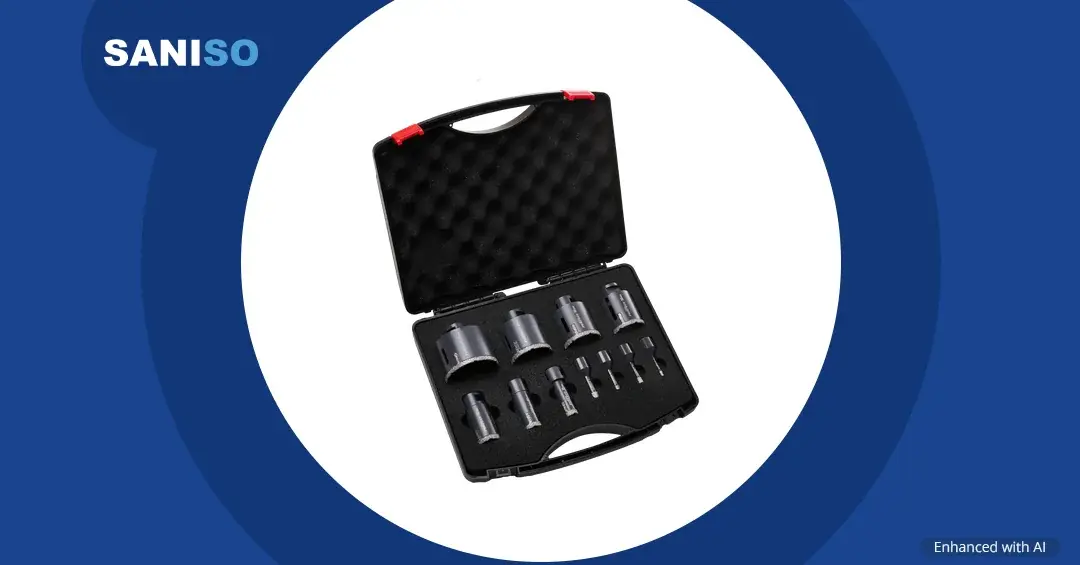
Choose material and diameter first, then the right diamond bit or hole saw, and drill without hammer/impact mode and within the maximum speed of the bit. On tile: start at an angle or use a guide, cool, and apply light pressure. In concrete or masonry: match the connection and wet or dry to the bit — in reinforced concrete with a wet core bit, wet only.
Stalco and Stalco Perfect supply diamond bits, hole saws and box hole saws for tiling, renovation and construction at Saniso. Saniso B.V. in Zwaag sells the Stalco brand as a wholesaler and webshop.
A diamond bit or hole saw cuts hard materials with diamond grit or segments. Stoneware and porcelain tiles (gres) are too hard for a tungsten or carbide tile saw; those call for diamond. Bits with a cylindrical or HEX shank go in the drill, M14 hole saws on the angle grinder, and box hole saws via an adapter to SDS-plus or HEX.
Hard tiles, gres and stone wear out an ordinary bit quickly. Diamond keeps cutting if you cool, limit the speed and do not use impact on the tile. That helps prevent cracks from heat or vibration, and keeps the hole round.
Tilers, installers, renovation tradespeople and serious DIY users who make holes for plugs, pipes, drains or flush boxes. Anyone who has to go through load-bearing or heavily reinforced concrete consults the structural engineer beforehand.
Never use hammer or impact mode on the tile. Work at low speed: the larger the diameter, the lower. When in doubt, go lower.
Start at an angle (about 15–30°) and then straighten, or use a guide. Mark with painter's tape and locate pipes and cables first.
Cooling is crucial. Water or cutting oil prevents overheating.
Stalco Perfect HEX hole saws have paraffin filling for dry cooling according to the product page, for example the HEX hole saw ø6 mm (max. 3000 rpm). Cylindrical Stalco bits such as the diamond drill bit ø6 mm and the hole saw ø18 mm (max. 1000 rpm) belong with glass, marble, granite, gres and ceramics — impact-free.
A set with guide and suction cup, such as the 7-piece diamond drill bit set, helps with centring and cooling. Once you are through the tile (often 8–11 mm), only then switch to a masonry bit for the wall behind. Check that there is no cavity behind the tile.
| Connection | Typical machine | Example | Note |
|---|---|---|---|
| Cylindrical shank | Cordless or mains drill | Stalco diamond bits ø6–12 mm, hole saw ø18 mm | Impact-free; speed per product page |
| HEX (hexagon) | Drill with HEX chuck | Stalco Perfect HEX ø6–12 | Dry, paraffin, max. 3000 rpm |
| M14 | Angle grinder | Stalco Perfect M14 range | Dry, impact-free; max. often 11,000 rpm |
| SDS-plus / HEX → M16 | Drill + adapter | Turbo box hole saws 68/82 mm | Adapter with centre drill; impact-free drilling |
| SDS-max → 1¼″ | SDS-max rotary hammer | Micro-hammer core bits | Only bits designed for micro-impact |
On the angle grinder, for example, the M14 hole saw ø6 mm fits, or the 11-piece M14 set in a case. Do not mix up cylindrical, HEX and M14: the maximum speed on the product page applies per product.
For a solid flush box in stone or concrete you usually drill ø68 mm in practice. Always check the packaging of the box: cavity-wall boxes sometimes need 76 mm, and 82 mm bits also exist.
Stalco Perfect has dry, impact-free turbo box hole saws, such as the box hole saw ø68 × 80 mm (max. 1450 rpm), for concrete, brick and stone. You fit it to the machine with an adapter to SDS-plus or HEX, with an ø8 centre drill.
The segmented box hole saws with M16 connection are a different line: according to the product page those are intended for the micro-impact function, including in reinforced concrete. Do not confuse them with the impact-free turbo version.
Start in a low gear until the bit runs without vibration. Pull back lightly now and then so dust or slurry can clear from the segments.
Small core bits with a 1¼″ connection, such as the core bit ø22 mm, may be used wet or dry in concrete, Porotherm and brick. In reinforced concrete, wet only. Micro-hammer core bits (for example ø52 mm) are dry only, intended for reinforced concrete in finished interiors, without water.
On an SDS-max rotary hammer with normal impact mode you only use bits designed for micro-impact, with the matching adapter.
If you hit steel, stop first. Diamond can cut through reinforcement, but drilling through a bar in a load-bearing floor or wall can weaken the structure. Therefore only drill through reinforcement after approval from the structural engineer. Check for pipes and cables beforehand as well.
The principle is simple: larger bit, lower speed. Manufacturers give tables per machine; Stalco puts limits on the product page (for example max. 1000 rpm at ø18 cylindrical, max. 3000 for HEX, max. 11,000 for many M14 sizes). When in doubt, start lower and apply light pressure.
If the bit drills ever more slowly as if the segments are "closed", it is often glazed. Dressing on a dressing plate can open the diamond again.
Too high a speed without cooling "burns" small tile bits quickly. Clear debris from the hole saw before the next hole; never hit the bit with a hammer to remove the core.
Drilling in stone-like materials produces silica dust. Wet drilling or source extraction reduces exposure; dry drilling indoors without extraction is a classic mistake. Take up dust wet or vacuum it rather than sweeping dry. Personal protection (eye, hearing, gloves, suitable respiratory protection) remains additional.
Which mask suits silica dust is covered in our article on safe working on the construction site.
Start at an angle and then straighten, or use a guide with suction cup. Painter's tape on the drill point helps too. Start at low speed, without impact.
Not on the tile itself. Only behind the tile, in stone or concrete, do you choose a suitable masonry bit — and only then impact if at all, if that bit allows it.
Usually 68 mm for solid boxes in stone or concrete. Check the packaging of your box; cavity-wall and other types differ. Stalco Perfect also has 82 mm.
Yes, with a diamond bit or hole saw, without impact, with speed control. Start low, cool, and press lightly. M14 hole saws are for the angle grinder.
M14 is the thread of many angle grinders. HEX fits a drill with a hex chuck. Cylindrical shanks fit a standard drill chuck. Check the product page for which type you are buying.
On tiles: cool with water, oil or — with Stalco Perfect HEX — paraffin in the bit. With core bits 22–40 mm in reinforced concrete: wet only. Micro-hammer core bits are dry. Follow what the product page says.
Often it is glazed. Dress it on a dressing plate, or replace it if the segments are worn out. Check whether speed and cooling were correct.
Contact: Saniso B.V., De Corantijn 95, 1689 AN Zwaag · +31 85 488 5920 · [email protected] · Contact.
Share:
Which work light for which job? Lumen vs watt, Kelvin, CRI, IP rating and placement tips, plus STALCO headlamps, work la...
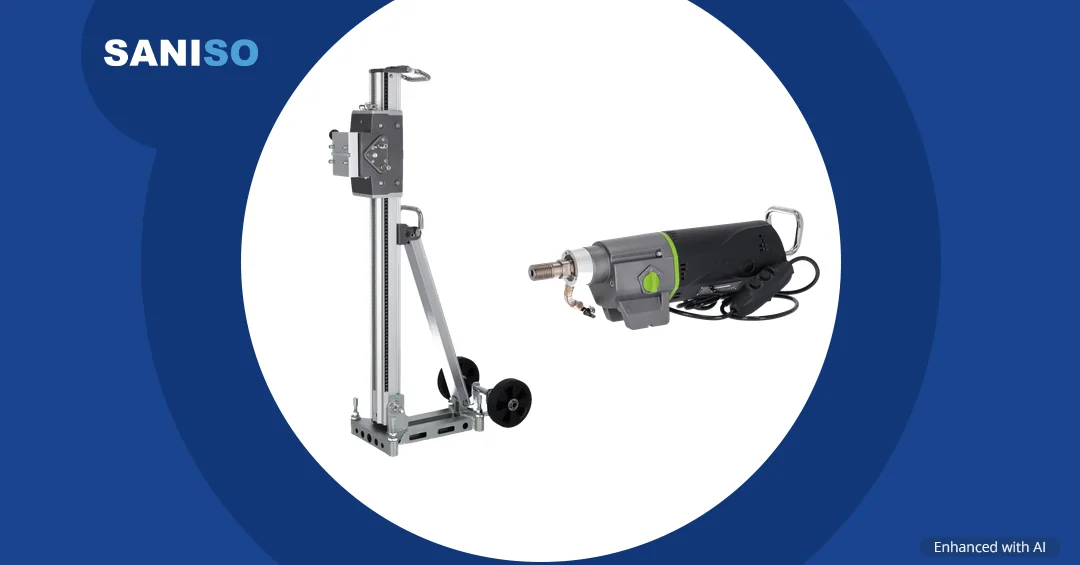
When do you mount a core drill on a stand? Machine choice, anchor, wet drilling and rpm. Stalco Perfect at Saniso in Zwa...
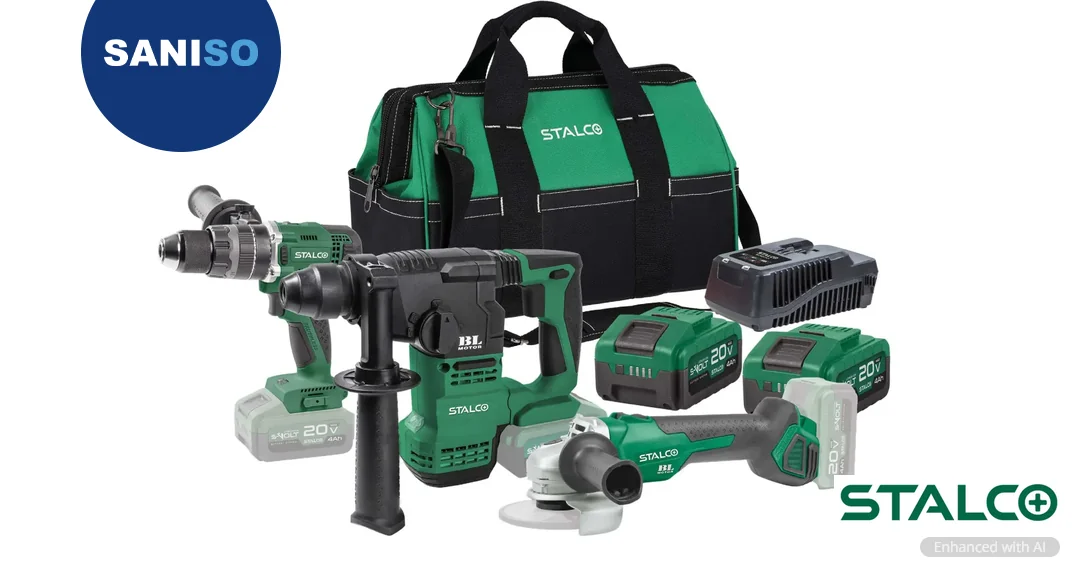
Tool trends 2024–2026: battery platforms, ergonomics, dust-free work and large-format tiles. A guide for tradespeople vi...

Choose STALCO painter’s masking tape, plastering tape and protective foil for clean paint lines and covered floors at Sa...