Winkelwagen (0)
Geen producten in de winkelwagen.

 English
 Nederlands ✓ ✓
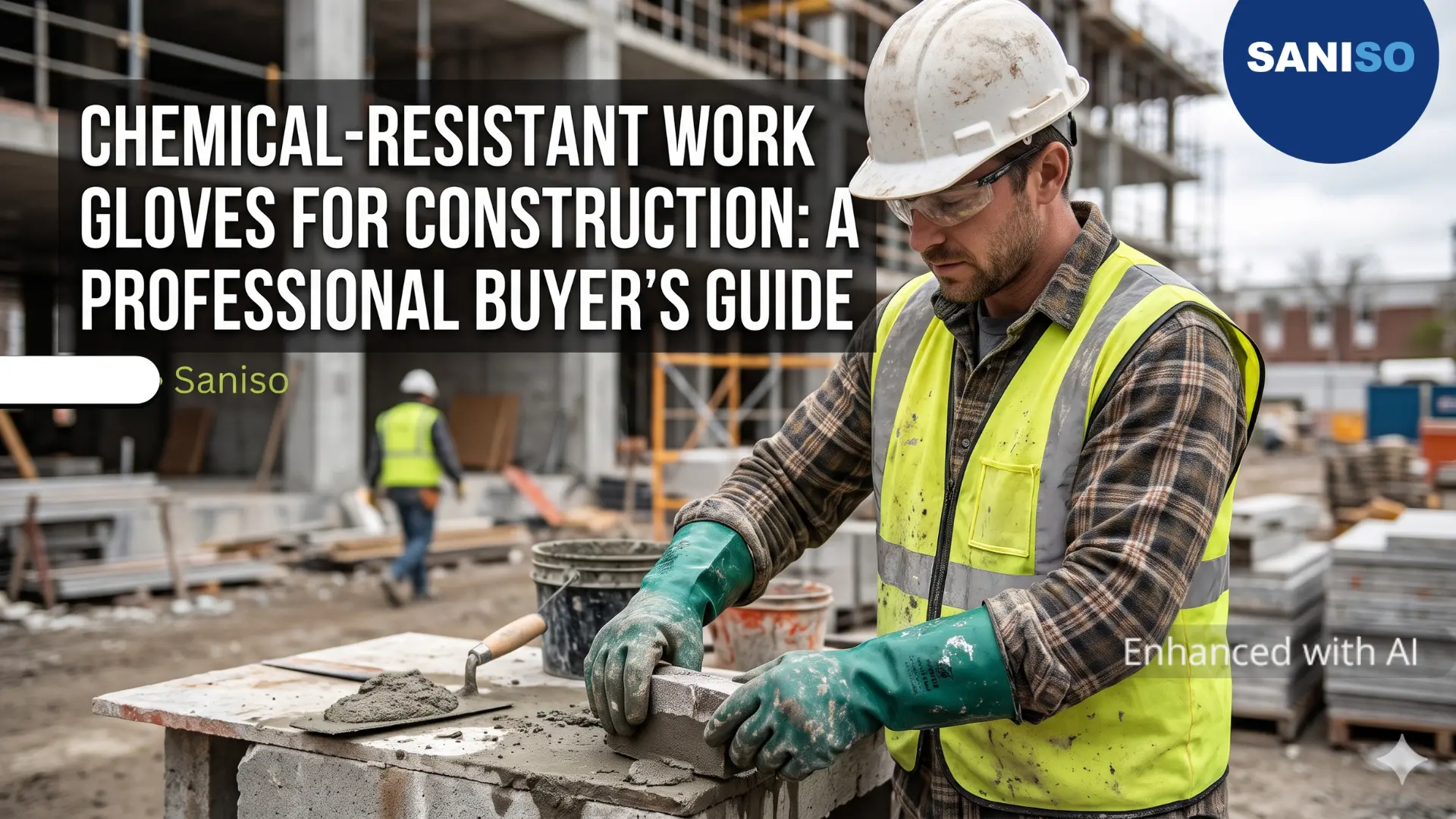
How long does it take for one careless splash of wet cement to start damaging unprotected skin? Often a single shift, and the harm rarely shows until days later, when the burn or rash is already established.
Wet cement, epoxy resin, solvent-based adhesives, and acidic cleaners all end up on a site worker’s hands sooner or later. Leather and cotton gloves stop almost none of it. Chemical-resistant gloves separate a normal shift from weeks of dermatitis. Yet many crews still grab whatever pair is closest.
This guide explains how to match the glove to the hazard, what the standards promise, and how to build a sensible glove stock for a working site. You can see the full range in the Gloves category at Saniso.
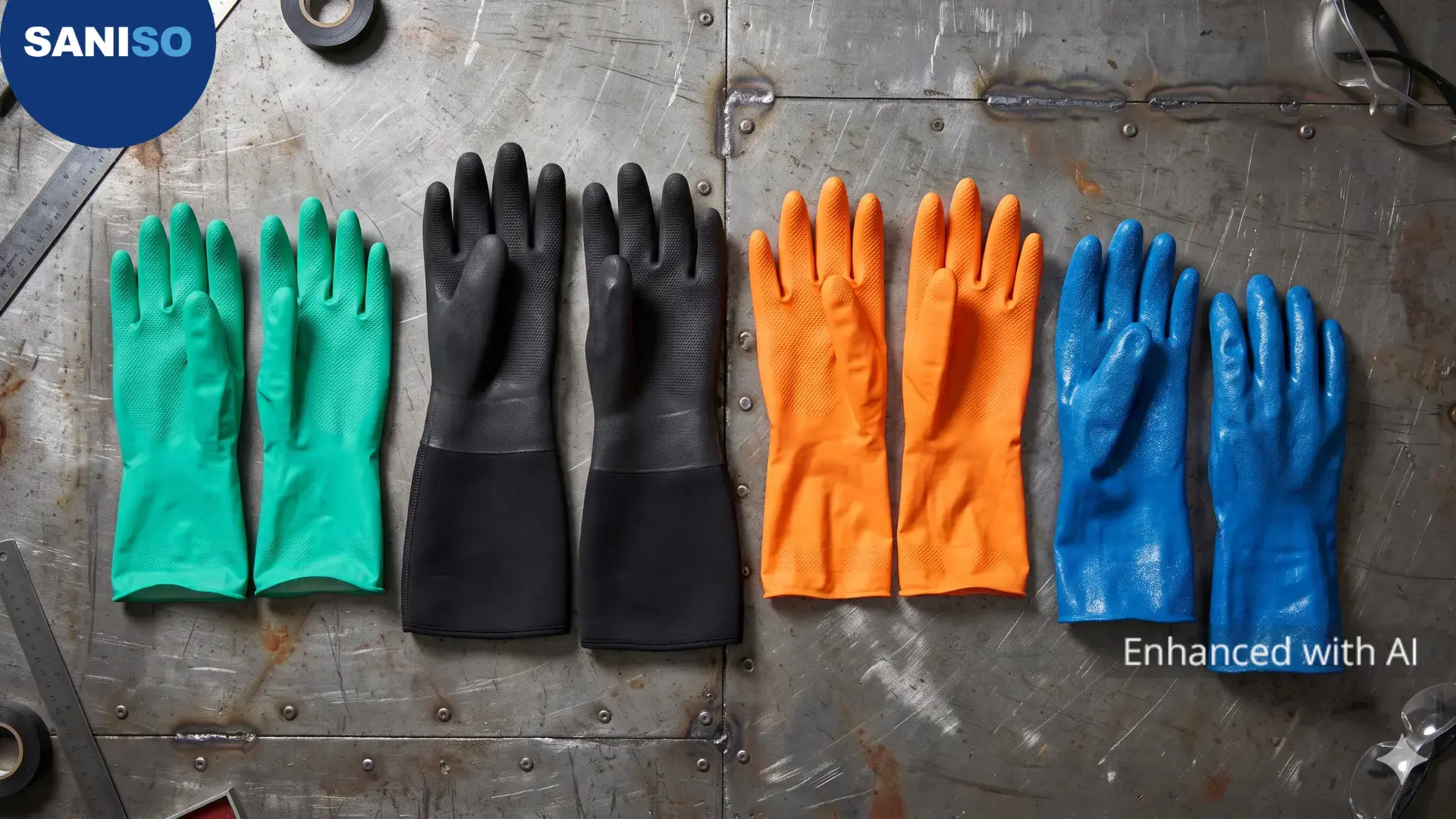
Construction exposes hands to a wider chemical mix than most people expect. Cement is strongly alkaline and can cause burns and long-term skin conditions with repeated contact. Resins and sealants sensitise skin over time. Solvents strip natural oils and pass straight through thin glove materials. Gloves are one part of a wider kit, so plan them alongside the rest of your site workwear and PPE.
Packaging claims can be vague, so rely on the markings. Two standards do most of the work.
Look for the flask pictogram followed by letter codes showing which chemicals were tested. A pair sold as chemical-resistant gloves without an EN ISO 374-1 marking is a sales claim, not verified protection.
Level | Minimum breakthrough time |
1 | More than 10 minutes |
2 | More than 30 minutes |
3 | More than 60 minutes |
4 | More than 120 minutes |
5 | More than 240 minutes |
6 | More than 480 minutes |
A glove tested at level 2 against one chemical is a splash-protection product. It is not built for immersion.
Chemical protection alone is not enough on a building site. EN 388 rates abrasion, cut, tear and puncture resistance. Gloves that handle both chemicals and rough surfaces tend to last longer and cost less over a project.
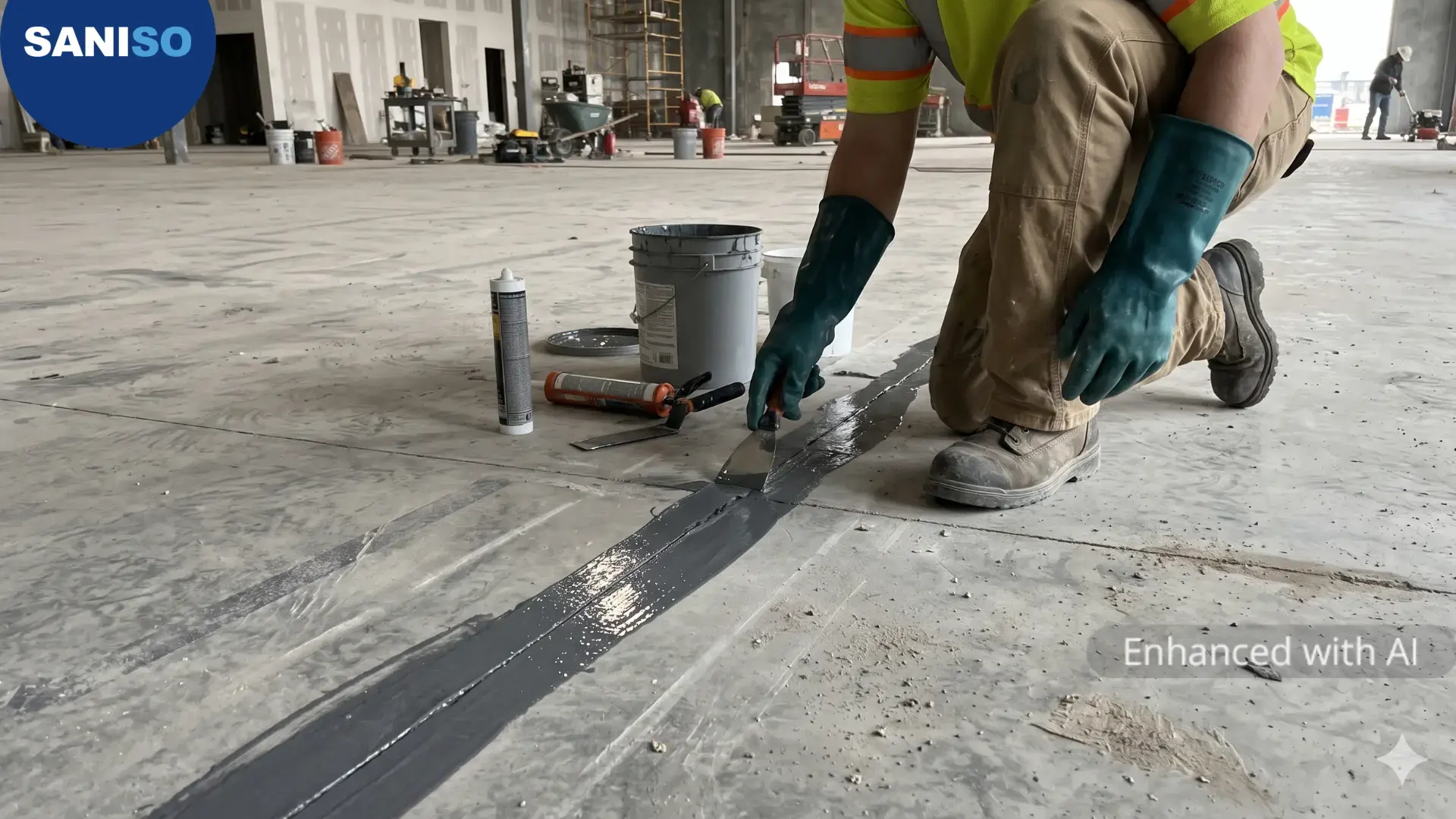
Nitrile resists oils, greases, many solvents and diluted acids, and it holds up against punctures better than latex. It comes as thin disposables and as thicker reusable gauntlets with textured grip for wet work. Its weak spots are ketones and some strong solvents, so always check the chemical against the manufacturer’s permeation data.
Natural latex is elastic and handles alkalis and diluted acids well, which suits cement and mortar. It performs poorly against oils and many solvents, and latex proteins cause allergic reactions in some users. Our advice on chemical gloves latex: reserve them for masonry and wet-trade tasks, check for allergies before issuing them, and keep a nitrile alternative available.
Material | Strong against | Weak against | Best construction use |
Nitrile | Oils, greases, many solvents, diluted acids | Ketones, some chlorinated solvents | Adhesives, resins, general handling |
Natural latex | Alkalis, cement, diluted acids | Oils, many solvents, allergy risk | Masonry, concrete, mortar |
Neoprene | Acids, alkalis, some oils | Some aromatic solvents | Mixed hazards, cleaning products |
Butyl | Ketones, esters, strong acids | Hydrocarbon solvents | Specialist solvent work |
PVC | Acids, alkalis, aqueous solutions | Many solvents, stiff in cold | Heavy washdown, cleaning |
Coated gloves, such as PU-coated knit and ESD types, are excellent at what they do, which is dry grip and static control. Neither is a chemical barrier, so keep them away from liquid hazards.
The most common mistake we see is relying on one glove type for everything. A single thin disposable pair either loses protection against solvents or sacrifices dexterity on fine work.
For chemical gloves for construction, we recommend a two-tier setup: a nitrile glove with an EN ISO 374-1 Type A or B marking for daily handling, plus a heavier gauntlet for wet cement and washdown. For most mixed-trade crews, nitrile gloves for chemicals cover the widest range of daily tasks, with a second material added for the exceptions. Saniso’s chemical gloves range is a good place to compare both tiers.
A one-page glove matrix pinned in the site cabin does more for compliance than a toolbox talk about chemical-resistant gloves. The safety data sheet should always overrule habit.
Task | Recommended glove | Why |
Mixing cement or mortar | Long-cuff latex or nitrile gauntlet | Alkali resistance and wrist coverage (see the HSE skin protection FAQ) |
Applying resin or adhesive | Nitrile, Type A or B | Splash protection with dexterity |
Painting and degreasing | Thicker nitrile or neoprene | Better solvent tolerance |
Acid cleaning tiles and sanitary ware | Neoprene or PVC gauntlet | Acid resistance, longer cuff |
Handling dry boards and sheets | PU-coated knit | Grip with no liquid exposure |
A cheaper pair that tears before lunch costs more than a sturdier pair that lasts the day. Compare cost per working day, including discarded pairs, rather than the price on the pack.
Teams of five or more usually benefit from ordering in volume. Bulk orders keep batches consistent, make size runs easier to manage, simplify reordering and keep the certification documents in one place. Saniso lists gloves for professional use in its Gloves category.
Professionals can register a wholesale account to order in volume.
Good protection starts with the hazard list, then the EN ISO 374-1 marking, then the material. Choosing chemical-resistant gloves this way takes a few minutes and prevents the skin problems that cost sites time and money.
Whether you buy chemical gloves for a single project or arrange chemical gloves wholesale for a rolling programme, browse the Gloves category at Saniso to compare options and order for your team.
Delen:

Wat is VCA, wat is het verschil tussen B-VCA en VOL-VCA en welk diploma heb jij nodig? Een uitleg op hoofdlijnen, met de...
Werk je dagelijks met een boorhamer, breekhamer of slijper? Lees wat handarmvibratie is, welke klachten erbij horen en h...
Welke PBM heb je nodig bij het lassen? Een overzicht van lashelm, lashandschoenen, laskleding, schoenen, gehoor- en adem...