
Met een thermostatische douchekraan stel je de temperatuur een keer in en blijft het water op die temperatuur. Dat is co...

De online bouwmarkt voor bouwen en verbouwen
 English
 Nederlands
✓
✓
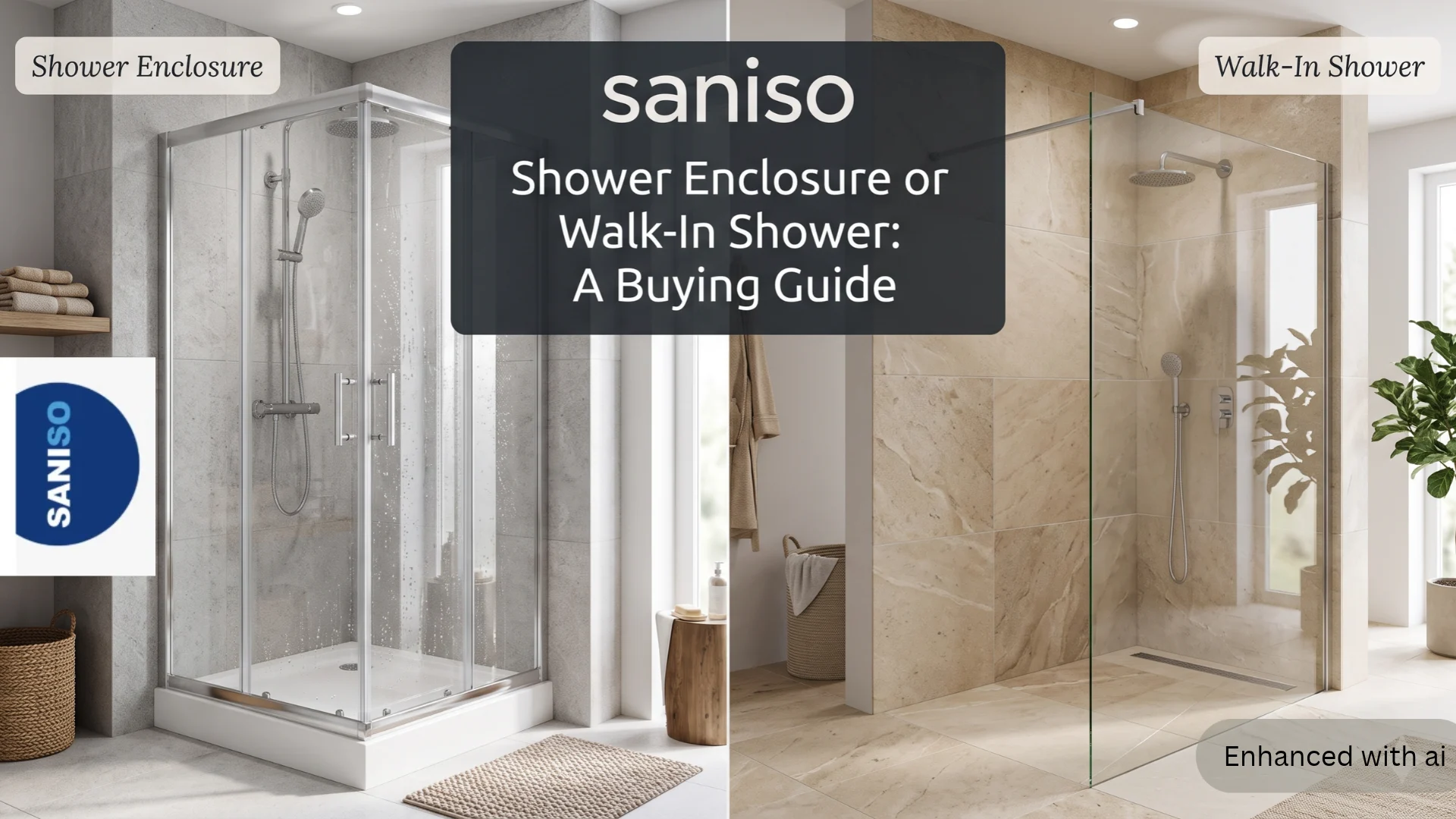
Standing in a bathroom showroom comparing glass thicknesses, tray sizes, and drainage options, one question tends to surface first: does a fully enclosed shower actually serve you better than an open, walk-in design, or is that just the layout you're used to?
Both formats have genuine strengths, and the right pick usually comes down to your bathroom's layout, your household's habits, and how much water containment you actually need day to day.
This guide breaks the decision down practically, based on what we see customers ask most often when they buy a shower enclosure or shower system for a renovation or new build.
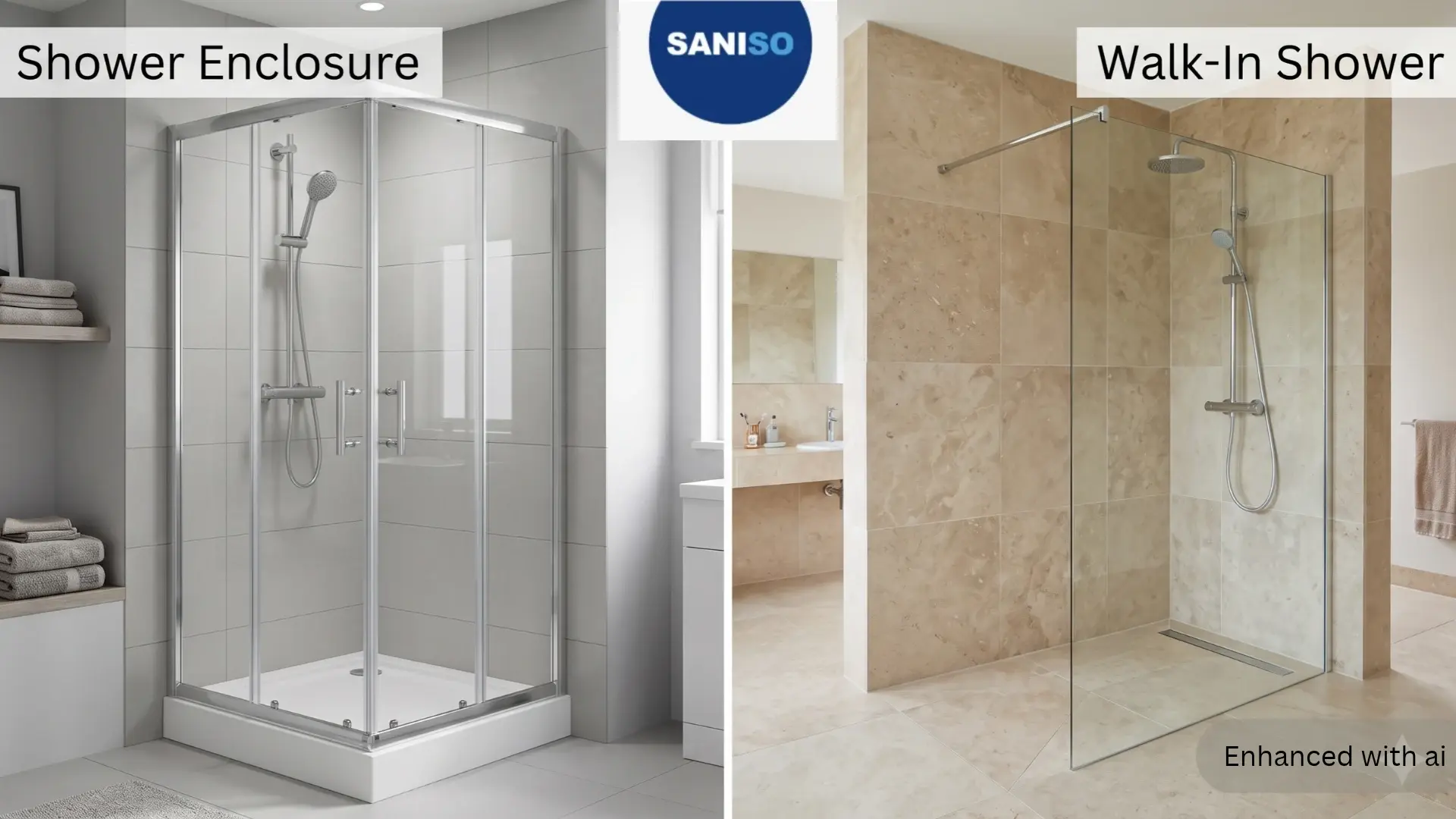
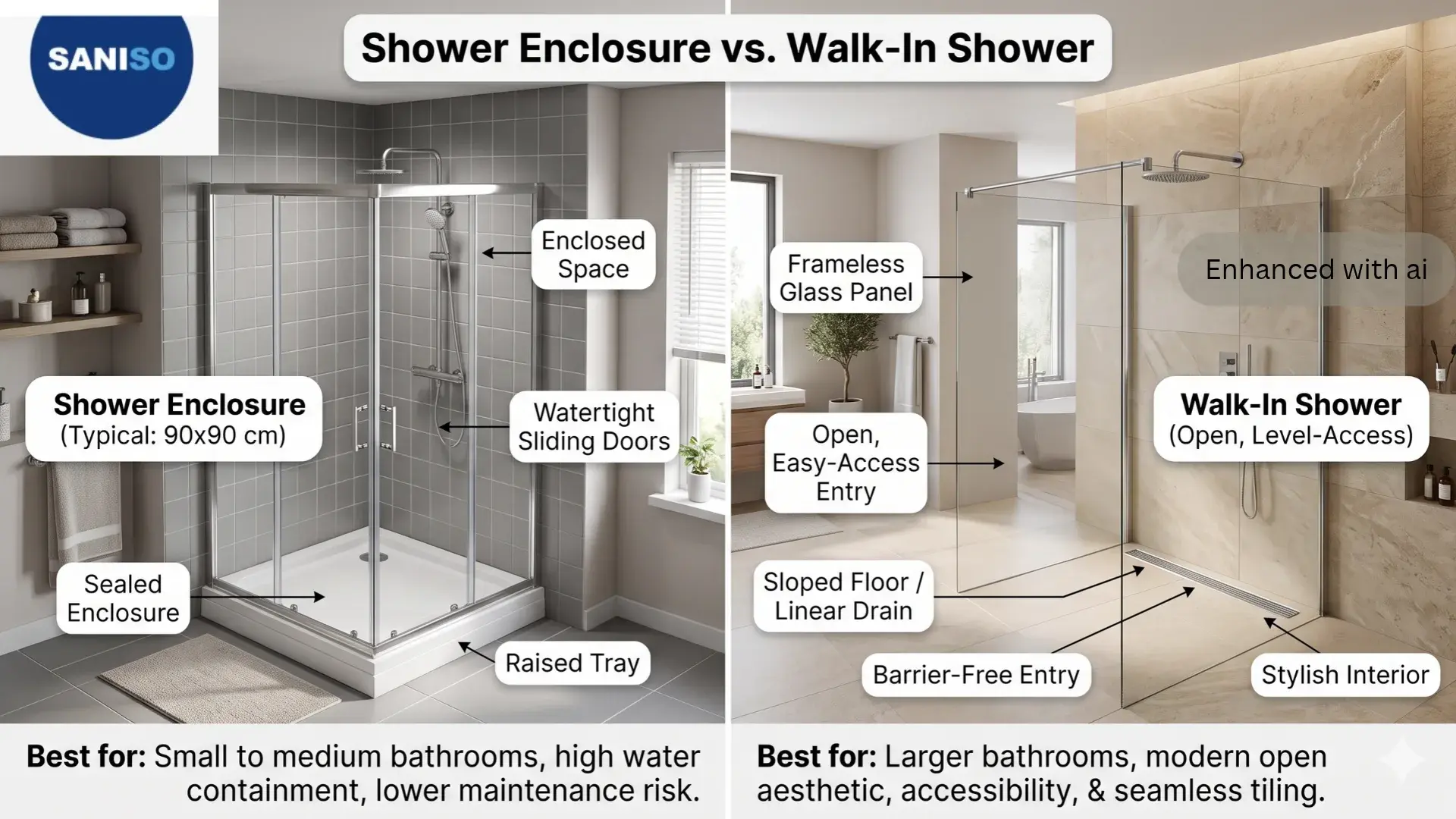
A shower enclosure is a fully framed or semi-framed glass unit with hinged or sliding doors that fully seal off the shower area. A walk-in shower is open on one or more sides, using a single glass panel rather than a full door system.
Feature | Shower Enclosure | Walk-In Shower |
Water containment | Very high | Moderate, depends on drain placement |
Space needed | Fits smaller bathrooms well | Best in medium-to-large bathrooms |
Cleaning | More corners and seals | Fewer edges, easier to wipe down |
Look | Classic, boxed-in | Open, modern |
Typical price band | Mid-range | Slightly higher for equivalent quality |
If you're renovating a compact bathroom, the enclosure format tends to be the more forgiving choice, because it doesn't rely on floor slope or drain positioning the way an open walk-in does.
When customers come to us ready to buy a shower enclosure, three concerns come up again and again: leakage, cleaning effort, and how the unit fits an existing floor plan. A well-built shower enclosure with a shower tray solves the first two by design.
The tray creates a raised lip that keeps water inside even with a lower-pressure seal, and because the whole unit is boxed in, you're not relying on floor gradient to carry water to a drain.
This is part of why, in our own product feedback, a shower enclosure with a shower tray is consistently the safer recommendation for households with children or older residents. Full containment reduces slip risk on the surrounding floor, which matters more than most buyers initially think.
Sizing is where a lot of buying decisions stall. The most requested footprint by a clear margin is the shower enclosure 90x90 configuration, which fits standard Dutch bathroom layouts without forcing a full retile. Other common sizes include 80x80, 90x120, and corner-fit variants for awkward layouts.
Practical sizing tip: measure your available floor space and subtract at least 5 cm on each side for tiling tolerance and door swing clearance before you commit to a size.
A walk-in shower earns its popularity in larger bathrooms where the open sightline actually makes the room feel bigger, not smaller. It also tends to be the pick for anyone prioritizing accessibility, since there's no step or door frame to navigate.
The trade-off is drainage. An inloopdouche-style walk-in shower with a drain needs either a sloped floor or a linear drain channel to keep water from spreading across the bathroom. This isn't a dealbreaker, but it does mean walk-in installations usually need more planning at the tiling stage than a boxed enclosure does.
Price varies more by glass thickness and hardware quality than by brand name alone. As a rough guide for the current Dutch market:
Factor | Budget impact |
Glass thickness (6mm vs 8mm) | 8mm typically costs 15-25% more |
Frameless vs semi-framed | Frameless is the pricier finish |
Tray material (acrylic vs stone resin) | Stone resin adds noticeably to cost |
Brand and hardware warranty | Established brands cost more upfront, less over time |
If walk-in shower price is your main filter, it's worth comparing total cost including the tray or drain kit, not just the glass panel. A cheap panel paired with a poor drainage solution often costs more to fix later than it saved at checkout.
Having reviewed a wide range of options in this category, our honest opinion is that a Cersanit shower enclosure hits a sweet spot that's hard to beat at its price point. The glass shower enclosure lines from Cersanit use tempered safety glass with consistent seal quality, and the hardware holds up well over years of daily use, not just in the first six months.
We wouldn't recommend going below a certain glass thickness purely to save money. A thin, loosely-sealed shower enclosure glass panel is one of the most common complaints we see in shower enclosure review discussions, usually a year or two after installation, once the seals start to wear.
Whether you buy a shower enclosure online or in person, the buying process itself is straightforward if you follow a set order:
Shower enclosure installation is one area where DIY confidence can outpace DIY skill. Getting the frame level and the seals watertight on the first attempt matters more for this job than most bathroom fittings, because a poorly sealed enclosure won't show its problems until months later, when water has already found its way behind the tiles. If you're not fully confident in your own tiling and sealing work, booking a professional installer upfront is cheaper than a repair later.
If your bathroom is on the smaller side, or you want the strongest water containment with the least ongoing maintenance worry, a shower enclosure with a shower tray is the more dependable choice. If you have the floor space and want a more open, contemporary feel and don't mind planning drainage properly, a walk-in shower is worth the extra setup effort.
Either way, don't let price alone decide the glass thickness or brand. A shower enclosure is a fixture you'll use daily for a decade or more; the modest saving from a lower-spec panel rarely holds up against the cost of an early replacement.
Delen:
Met een thermostatische douchekraan stel je de temperatuur een keer in en blijft het water op die temperatuur. Dat is co...
Sputtert je douche of wijken de stralen af? Lees hoe je een douchekop ontkalkt, de gaatjes schoonmaakt en controleert of...
Blijft het water na het spoelen doorlopen? Controleer eerst de bedieningsplaat en het reservoir. Lees wat je zelf kunt d...