Cart (0)
No products in the cart.

 English ✓
 Nederlands ✓
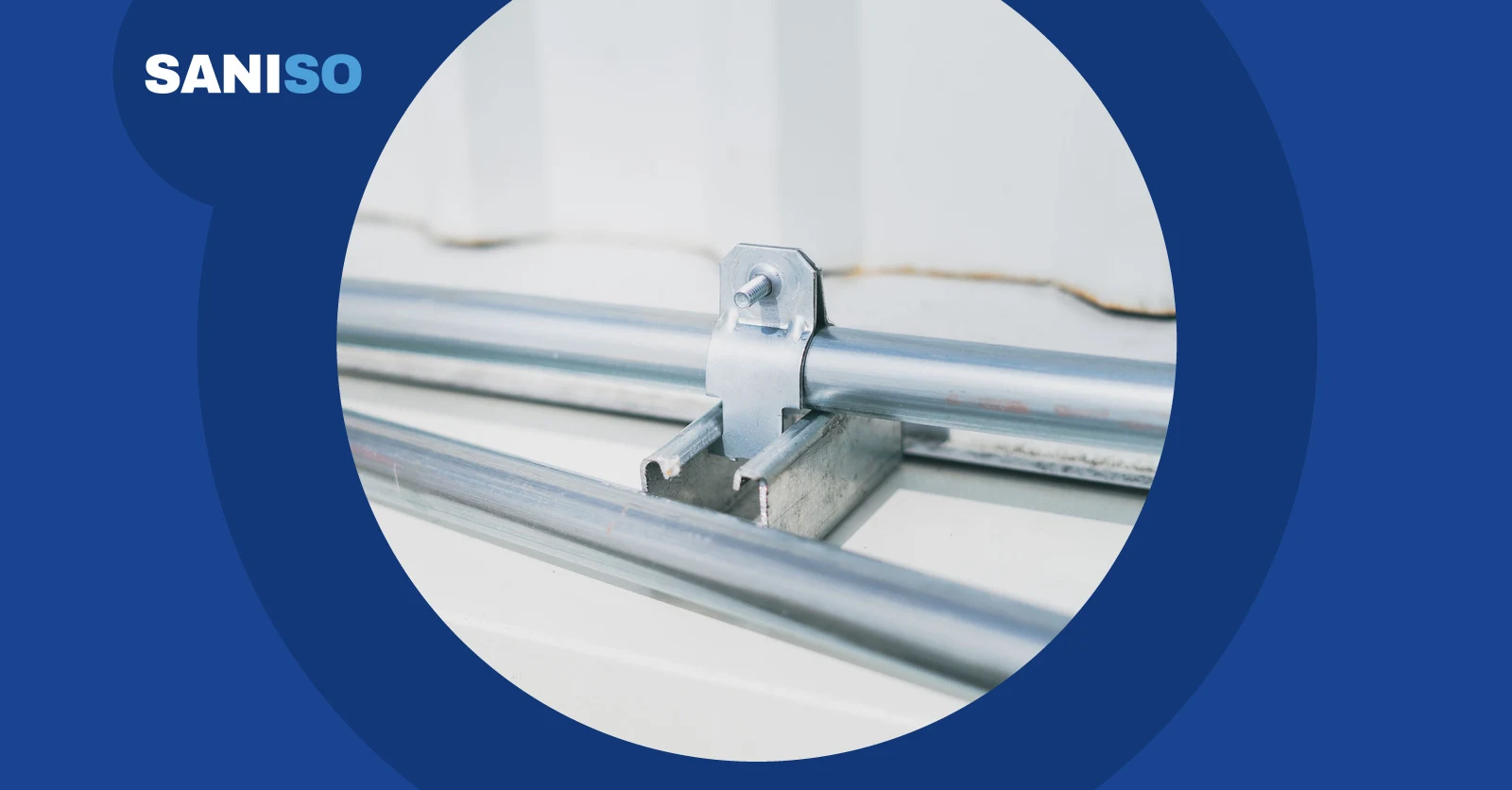
Short answer: size the clamp to the outside diameter of the pipe, not the nominal inch size. For water and heating pipes a steel clamp with a rubber lining is the better choice, because it dampens vibration, reduces noise and protects the pipe. Measure the pipe, pick the matching clamp size, drill a clean hole in solid masonry and fix the clamp square, with the right spacing between clamps. This guide explains how to choose the size, when you need a single or a double clamp, and when a qualified installer is the smarter choice.
Also read this article in Dutch: Leidingbeugels kiezen: maat, rubber inlage en bevestiging van leidingen.
A pipe that hangs loose, rattles or sags just beside a fitting is more than a nuisance. The joint comes under stress, the pipe can creep, and in a living room you hear the water or the boiler along with it. You do not prevent that with a cable tie or a loose screw in the wall, but with a clamp that really fits the pipe and sits firmly in the substrate.
Saniso is a wholesaler in fixing materials for pipework. You will find single and double clamps, versions with and without a rubber lining, and the matching plugs, anchors and M8 threaded rod. With those you can fix water, waste and heating pipes to the wall as well as under the ceiling.
⚠️ Work on gas pipes always belongs with a qualified installer. The same applies if you are unsure about drinking water, heating or an existing installation: have it assessed by a professional. Calling in a tradesperson is never unnecessary.
The size on the clamp packaging is the outside diameter of the pipe, often given as a range. A typical example is ø 20–24 mm, which in practice fits many ½-inch pipes. A 16 × 2 mm multilayer pipe has an outside diameter of 16 mm and therefore needs a smaller clamp, for example ø 15–19 mm. A 20 mm multilayer pipe often fits the 20–24 mm clamp.
So always measure the outside of the pipe, or check the product page of the pipe. Do not go by the nominal inch size and do not guess by feel. A clamp that is too tight damages the pipe or will not close; one that is too loose lets the pipe slide.
A few examples from the range:
💡 Write down the measured diameter before you order, especially if you are fixing different pipes in one room. A 16 mm water pipe and a 32 or 40 mm waste pipe each need their own clamp.
The choice between a bare steel clamp and a clamp with a rubber lining is not a matter of taste.
With a rubber lining (for example pipe clamp with rubber and plug ø 20–24 mm or pipe clamp with rubber without mounting set ø 20–24 mm): the rubber insert, often EPDM, dampens vibration, reduces structure-borne noise and protects the pipe from damage by the steel clamp. That is the standard choice for water and heating pipes in the home, and for pipes against a living-room or bedroom wall.
Without a rubber lining (for example steel pipe clamp with plug ø 20–24 mm or steel pipe clamp URP ½ inch): a steel clamp without an insert, often supplied with a plug, for situations where damping matters less, such as some waste pipes or workshop installations. Always check that the pipe can take the steel clamp; a soft plastic pipe is damaged more easily.
A double clamp such as double pipe clamp with rubber ø 20–24 mm has the same rubber lining, but holds two pipes at once. That is tidier than two single clamps side by side, as long as both pipes have the same outside diameter.
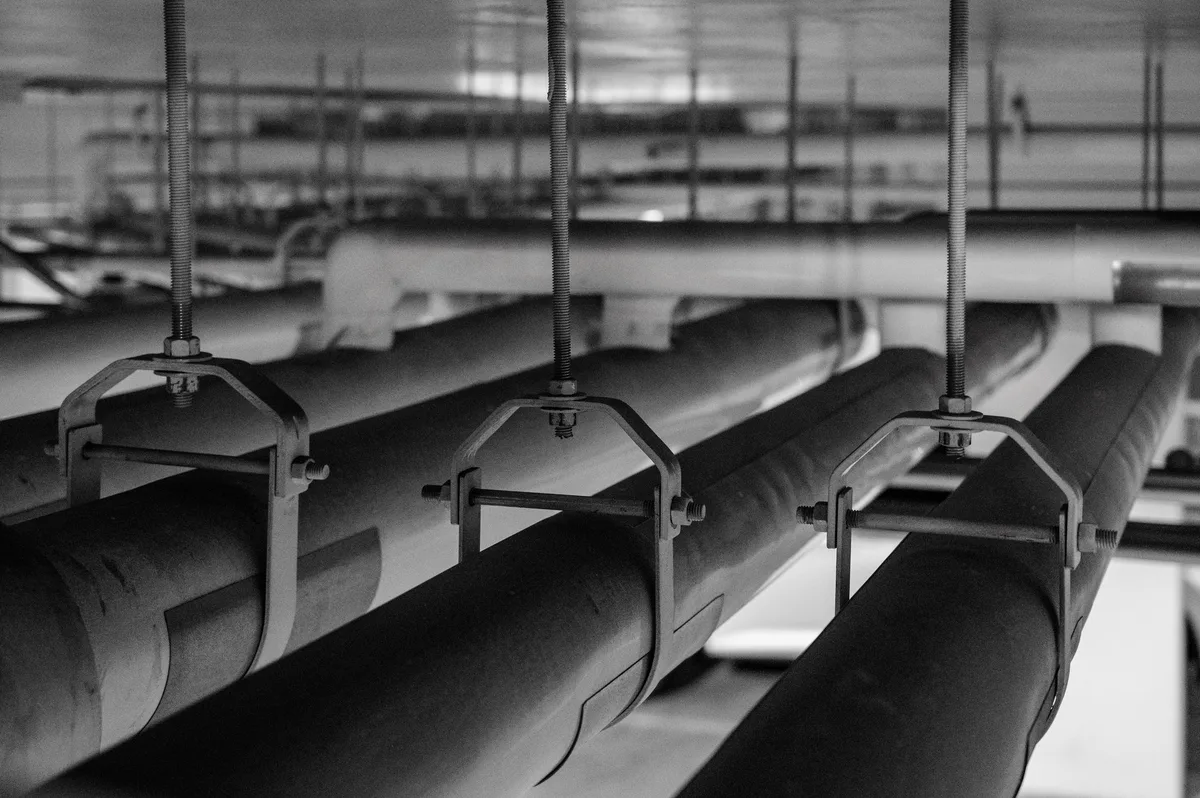
The clamp is only as strong as the fixing behind it. Always work in a solid, sound substrate.
⚠️ Never fix only into plasterboard, a thin stud wall or a mortar joint. An expansion plug or anchor will not hold reliably there. Find the structure behind, use a fixing made for hollow walls, or let a professional design the support.
Too few clamps is a typical mistake. The pipe then sags between two points, especially with a warm heating pipe or a full waste pipe. Manufacturers’ guidelines differ by pipe type, diameter and whether the pipe is exposed or concealed. Always check the installation instructions for the pipe. As a rule of thumb:
Unsure about the spacing, or about a long, heavy pipe under a ceiling? Ask an installer to look with you. That is wiser than repairing cracks or leaks afterwards.
Drilling in masonry and concrete produces dust and sharp fragments. Wear safety goggles and, when dust forms, an FFP2 dust mask. Use work gloves with nitrile coating when handling steel clamps, threaded rods and anchors, and earplugs or earmuffs if you work with a rotary hammer for a long time. Before you drill, check that there is no pipe or electricity in the wall, for example with a multifunction wall detector. Work at height only from a stable folding ladder with handle, never from a loose chair. Which machine suits which substrate is explained in our blog on cordless drill, impact drill or rotary hammer; more safety tips are in our blog on safe working on the construction site.
👷 Fixing pipes may look like a small job, but the consequence of the wrong clamp or a weak substrate is serious: leaks, noise or damage to the structure. A qualified installer knows which clamp belongs with which pipe, allows for expansion and chooses the right fixing in concrete, masonry or a hollow wall. For gas, if you are unsure about drinking water or heating, and for ceiling hangers, a professional is never unnecessary. Are you a tradesperson or contractor looking for clamps, anchors or threaded rods for a project? Saniso is a wholesaler and can also supply larger quantities; get in touch for advice or a quote.
By the outside diameter of the pipe. A 16 mm multilayer pipe is 16 mm on the outside; a ½-inch steel or copper pipe is often thicker and typically fits a 20–24 mm clamp. Always measure.
For water and heating pipes in the home, and anywhere you want to reduce structure-borne noise. The rubber ring dampens vibration and protects the pipe.
No. A cable tie is not a pipe fixing: it will not reliably take the load, it pinches the pipe and it does not allow for expansion. Use a matching pipe clamp.
Often with a clamp on a threaded rod, set in an anchor or plug in the concrete or the structure. Match the strength of the anchor and rod to the weight of the filled pipe, or let a professional determine the support.
Do not use a standard plug or wedge anchor in plasterboard alone. Choose a fixing made for hollow walls, find the structure behind, or let an installer design the support.
A single clamp for one pipe, a double clamp if two pipes of the same diameter run side by side, such as flow and return. Different diameters each get their own clamp.
At Saniso, the online store for DIYers and professionals, you will find tools, materials and personal protective equipment for your job.
In doubt about the approach? Feel free to call in a professional.
Saniso – Build your home with Saniso.
Share:
Choosing marble-look tiles: how to recognise Carrara, Calacatta, Statuario and travertine, which finish to pick for wall...
Does the shower keep changing temperature? Limescale, filters or the thermostat often play a part. Read what you can cle...
Which jigsaw fits your work? Compare corded and cordless, pendulum action, variable speed and blades for wood, metal and...

Cleaning windows and frames yourself without streaks? This guide shows which supplies you need, in which order to clean...