Cart (0)
No products in the cart.

 English ✓
 Nederlands ✓
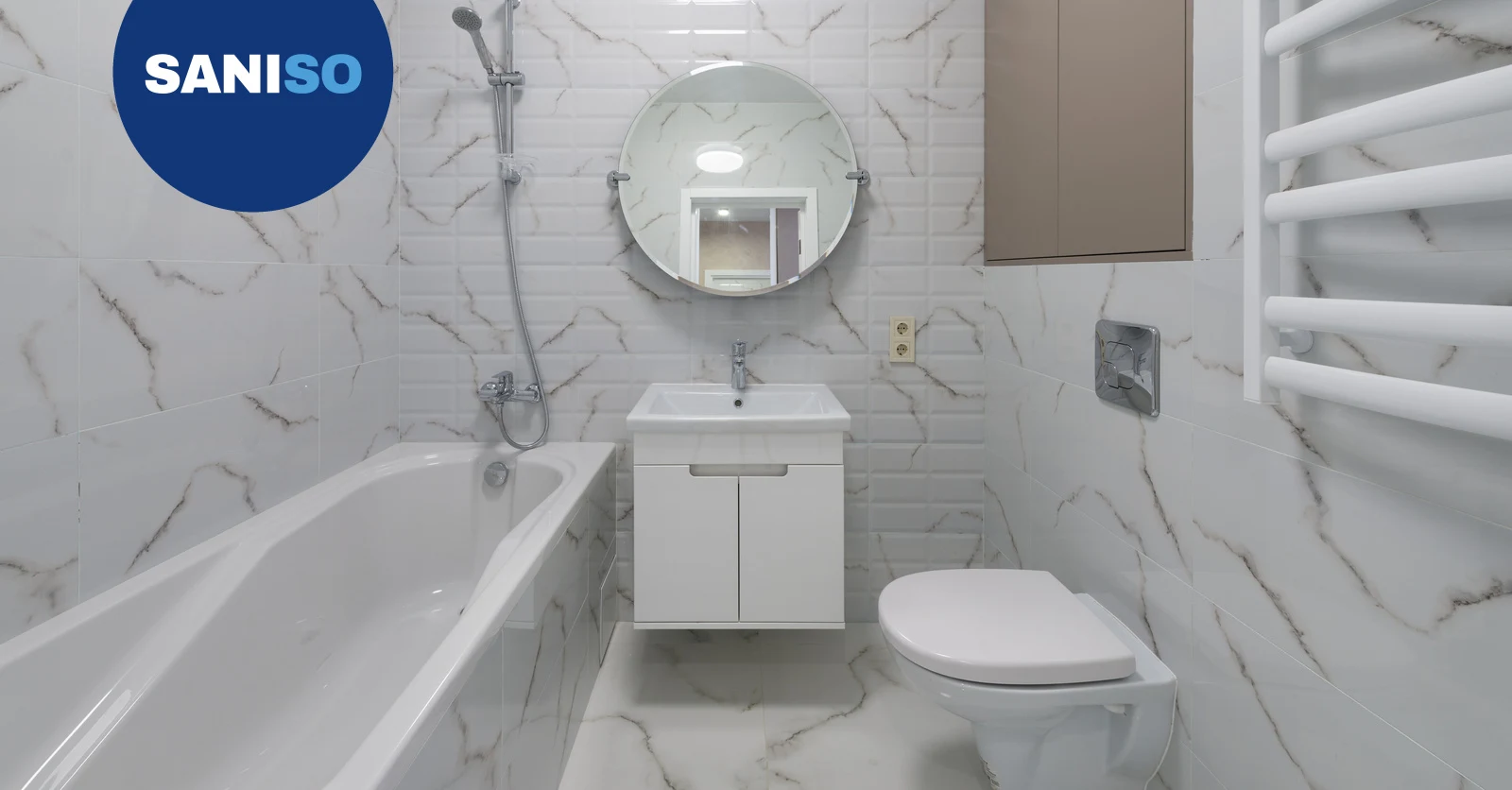
Short answer: marble-look tiles are ceramic tiles with the look of natural stone, but without the delicate upkeep of real marble. The main differences are the pattern (Carrara, Calacatta, Statuario, travertine or a coloured marble), the finish (polished, satin or matt) and the size. On the wall you are free to choose; for the floor and the shower you pick a matt or satin tile with enough slip resistance. In this guide you will read which pattern suits your room and what to watch for when laying the tiles.
Read this article in Dutch: Marmerlook tegels: Carrara, Calacatta, Statuario of travertin?.
Real marble is beautiful, but it is also soft and porous. Acidic products such as limescale remover, lemon juice or vinegar etch the surface, and it needs regular sealing. A marble-look tile made of porcelain stoneware (porcellanato) does not have those drawbacks: it hardly absorbs water, it is scratch resistant and you keep it clean with an ordinary, neutral cleaner. That means you can use the look of marble where real marble is difficult, such as in the shower, on the kitchen floor and in the hallway. A general explanation of tile types is in our buying guide for ceramic tiles.
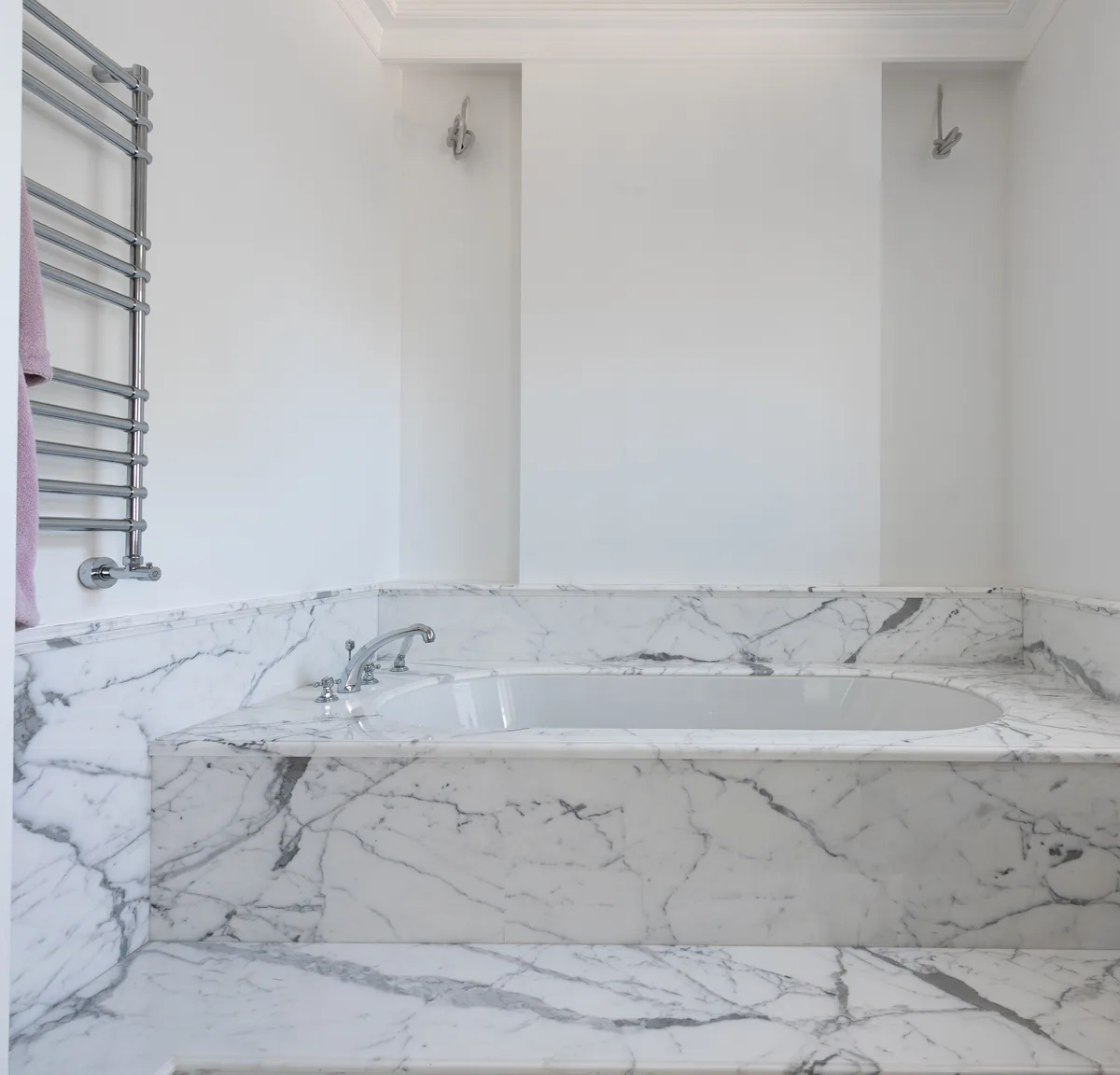
The names come from famous types of marble from Italy and Turkey. Manufacturers use them loosely, so mainly look at the image of the tile itself.
Carrara has a light grey to white background with fine, soft grey veins. It is the calmest marble pattern and suits almost any style. Ideal if you want the whole bathroom in marble-look without it becoming busy. Examples: Carrara Premium White polished 60 x 120 and, for the wall, Carrara Chic White glossy 29 x 89.
Calacatta is whiter than Carrara and has wider veins, often with a warm grey or gold tint. It gives a luxurious look and works well as a feature wall behind the bath or basin. You can choose from different finishes, such as Calacatta New White matt 60 x 120 and Calacatta New White polished 60 x 120, or a satin version such as Calacatta Mistari White satin 60 x 120. For smaller walls, Calacatta Tone White matt 30 x 60 in 30 x 60 cm is handy.
Statuario has a very white background with sharp, dark grey veins. The contrast is greater than with Carrara, so the tile stands out more. Beautiful in large formats on the wall, for example Aversa Statuario White polished 60 x 120 or the slightly warmer Statuario Warm White polished 60 x 120.
If you want a warmer look, choose travertine: beige to cream with horizontal lines and small pores in the print, such as Liv Travertino Classico Beige matt 60 x 120. A grey marble pattern such as Marble Skin Grey matt 60 x 120 gives a calm, modern floor. For a real statement there are also coloured or translucent-looking patterns, such as Marble Blue polished 60 x 120 and Brave Onyx White polished 80 x 80.
| Pattern | Look | Works well in | Watch out |
| Carrara | calm, light grey, fine veins | whole bathroom, small rooms | can look cool, combine with wood or warm light |
| Calacatta | white, wide warm veins | feature wall, basin wall, kitchen | on large surfaces choose veins that continue |
| Statuario | bright white, sharp contrast | large walls, luxury bathroom | strong veins call for a calm floor |
| Travertine | beige to cream, warm | floors, rustic and warm styles | match the grout to the beige tone |
| Coloured or onyx | outspoken | one feature wall or niche | not on every wall at once |
Many series come in several finishes. Then you can lay the wall glossy and the floor matt in the same pattern. That keeps the whole room calm while the floor stays safe.
Marble-look looks its best in large formats, such as 60 x 120 cm. The larger the tile, the fewer the joints and the more it looks like a real stone slab. Large tiles do need a flat substrate and a good adhesive; read more in our blog on laying large-format tiles. Smaller formats and mosaic, such as Marble Room mosaic mix 20 x 20, are handy in a niche or for a shower floor with a fall.
💡 Dry-lay the tiles first and look from a distance. Tiles from a marble-look series have different prints. Spread striking veins over the wall, so you never see the same image twice side by side.
Keep marble-look tiles clean with a neutral cleaner, such as Fila Brio universal cleaner, and a soft cloth or sponge. Do not use abrasive products on polished tiles: they make the surface dull. Remove limescale regularly so you never have to scrub.
Sawing and grinding porcelain releases fine quartz dust. Preferably cut wet or with dust extraction and wear an FFP3 dust mask. Read more in our blog on dust and quartz on site. Also wear:
A wall with 30 x 60 cm tiles is quite doable for an experienced DIYer. Large 60 x 120 cm tiles, glossy floors, a shower with a fall or a bathroom where the waterproofing has to be right call for more experience. Calling in a professional is never unnecessary. A tiler makes sure the veins are nicely spread, that no height differences show up in the light and that the wet zones are watertight. For the full step-by-step plan, also see our blog on tiling a bathroom.
👷 Unsure about the substrate, the finish for the floor or the waterproofing? Have a tiler take a look. Are you a professional or contractor and do you need larger quantities for a project? Saniso is a wholesaler and also supplies large volumes; get in touch for advice or a quotation.
Carrara is light grey with fine, soft veins and looks calm. Calacatta is whiter and has wider, more striking veins, often with a warm tint.
Polished tiles are slippery when wet. For the bathroom floor and the shower, choose a matt or satin finish and check the slip resistance.
Yes. On the wall any finish works; on the shower floor choose a matt tile or mosaic with enough slip resistance. Always make the substrate watertight.
Usually a grout in the colour of the tile background, so white, off-white or light grey. A dark grout actually makes the tile pattern stand out.
Porcelain tiles themselves usually do not, because they hardly absorb water. Always follow the manufacturer's advice. Real marble does need protecting.
At Saniso, the online store for DIYers and professionals, you will find tools, materials and personal protective equipment for your job.
In doubt about the approach? Feel free to call in a professional.
Saniso – Build your home with Saniso.
Share:

Choosing pipe clamps? Learn how to find the right size, when you need a rubber lining and how to fix pipes firmly to a w...
Does the shower keep changing temperature? Limescale, filters or the thermostat often play a part. Read what you can cle...
Which jigsaw fits your work? Compare corded and cordless, pendulum action, variable speed and blades for wood, metal and...

Cleaning windows and frames yourself without streaks? This guide shows which supplies you need, in which order to clean...