Cart (0)
No products in the cart.

 English ✓
 Nederlands ✓
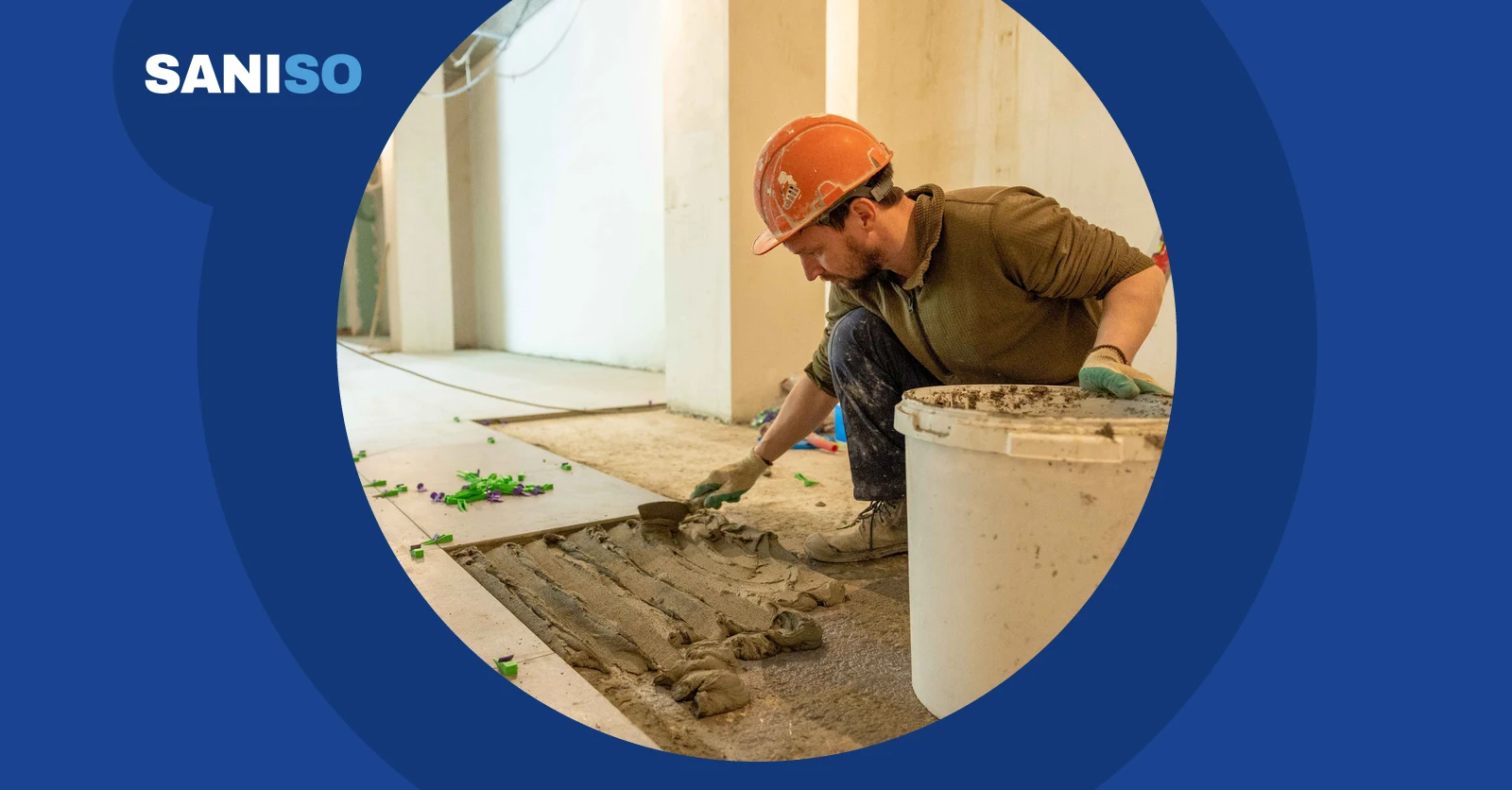
Short answer: EN 12004 classes cementitious tile adhesives. C1 is standard bond strength, C2 is improved. S1 and S2 describe deformability (flexibility) — needed with underfloor heating, wood-based substrates and large formats. T means reduced slip (useful on walls). Choose substrate and tile first, then the class — not the other way round.
Also available in Dutch: Tegellijm kiezen: C1, C2, S1, S2 en T uitgelegd (EN 12004).
The wrong adhesive class shows up later: hollow sounds, cracks when heating starts, or tiles sliding down a wall. For professionals, EN 12004 is the shared language on site and in specifications. General product choice is also in our blog on choosing tile adhesive and grout and our blog on the Kerakoll tile system; below we focus on the letters.
In practice many tilers default to C2 for bathrooms and floors. Range examples: Kerakoll Bioflex tile adhesive 25 kg, Kerakoll Bioflex S1 tile adhesive, Kerakoll H40 white gel 25 kg, Kerakoll H40 grey gel 25 kg and Kerakoll Superflex tile adhesive. Always check the technical data sheet for the exact class.
The S class is about deformability:
💡 Underfloor heating without a flexible adhesive invites cracks. Think at least S1 unless the manufacturer specifies otherwise.
A typical bathroom wall adhesive might read C2TE S1: improved bond, reduced slip, extended open time, flexible.
Powder adhesives are mixed with water and cure chemically — suitable for floors, wet zones and most serious jobs. Paste is ready to use but mainly for small wall tiles in dry areas; for floors and showers, powder is usually right. Mix with a Raimondi mortar mixer or mortar mixer Ø100 mm in a 12-litre bucket or construction bucket.
Adhesive class will not rescue a poor substrate. Assess flatness, moisture and strength before you glue. In wet zones a waterproofing system belongs under the tiles. Tools: 6 mm glue comb, Raimondi notched trowel or 10 mm glue comb matched to tile size; levelling aids such as levelling wedges reduce lippage on large formats. See our blog on tiling a floor, our blog on tiling a wall and our blog on Raimondi tile tools.
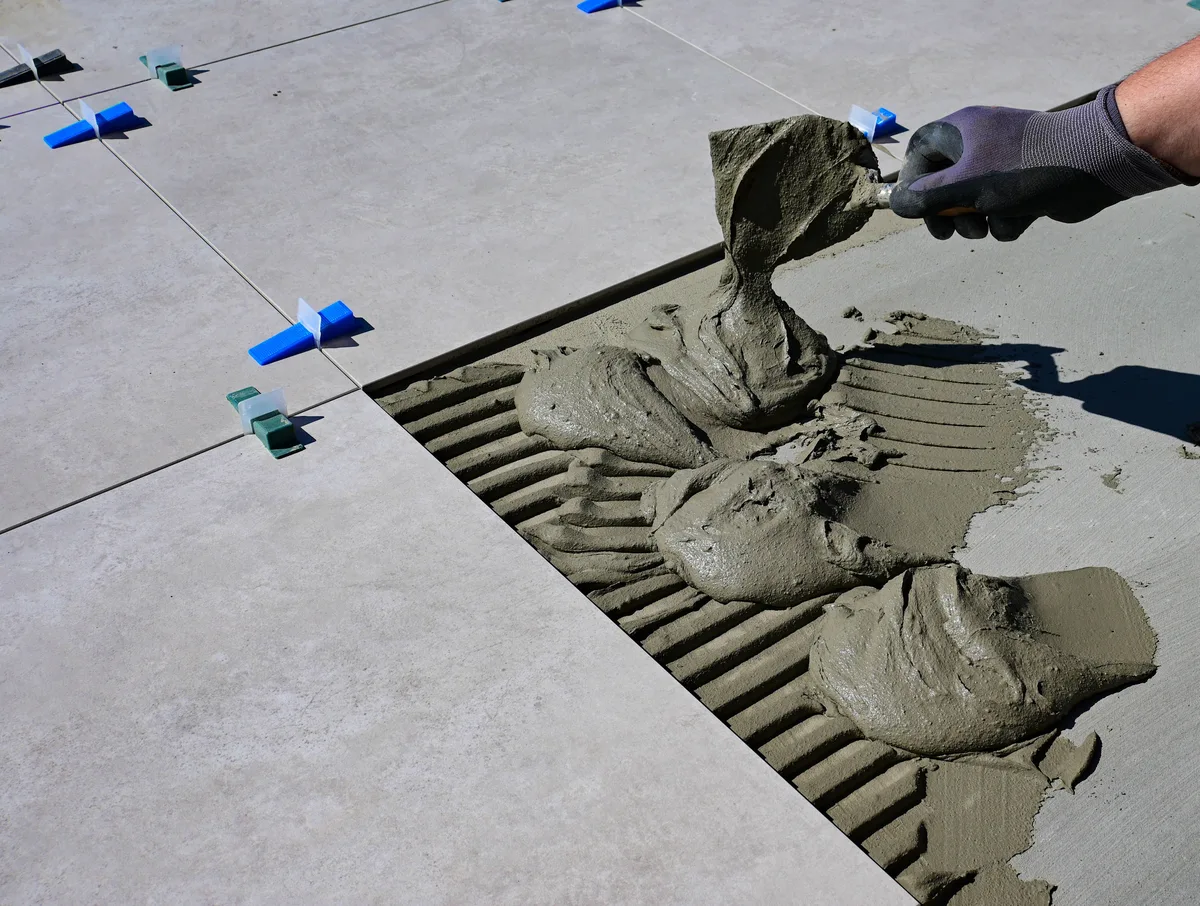
👷 On critical substrates (timber, anhydrite, tiling over old tiles, large format with heating) a professional tiler is never unnecessary. The wrong class or build-up leads to more rework than the adhesive ever avoids.
| Situation | Typical class |
| Small wall tile, dry room, stable substrate | C1 or C2, often with T |
| Floor tile, bathroom, porcelain | C2, often S1 |
| Underfloor heating / slight movement | C2S1 or C2S2 |
| Large format on walls | C2TE (S1) |
| Fast renovation (short closure) | note F; plan the pace |
C2 bonds more strongly, but is not automatically "better" if C1 matches the manufacturer and substrate. Over-specifying is fine; under-specifying is not.
No. Flexibility handles movement; primers and levelling are still required when the substrate needs them.
Usually not: paste dries by moisture loss and floor tiles hardly allow that. Choose powder unless the data sheet explicitly allows floors.
Read also: Choosing grout: cementitious or epoxy, CG1, CG2 and RG
At Saniso, the online store for DIYers and professionals, you will find tools, materials and personal protective equipment for your job.
In doubt about the approach? Feel free to call in a professional.
Saniso – Build your home with Saniso.
Share:
Install multilayer pipe and press fittings yourself or call in an installer? What you can do yourself, how pressing work...
Cement, hybrid or epoxy grout? CG1, CG2, W, A and RG explained according to EN 13888, and which grout to choose for wall...
From bath to shower: how to go about it. Shower tray or walk-in shower, drainage, waterproofing, a step-by-step plan and...
Combination pliers, side cutters or long nose? Buying guide with sizes, locking, circlip and VDE pliers, plus tips for w...