
Straight cut or awkward corner? Read when to use a tile cutter, when an angle grinder fits better and how to cut cleanly...

Your online building supplies store for building and renovation
 English
✓
 Nederlands
✓
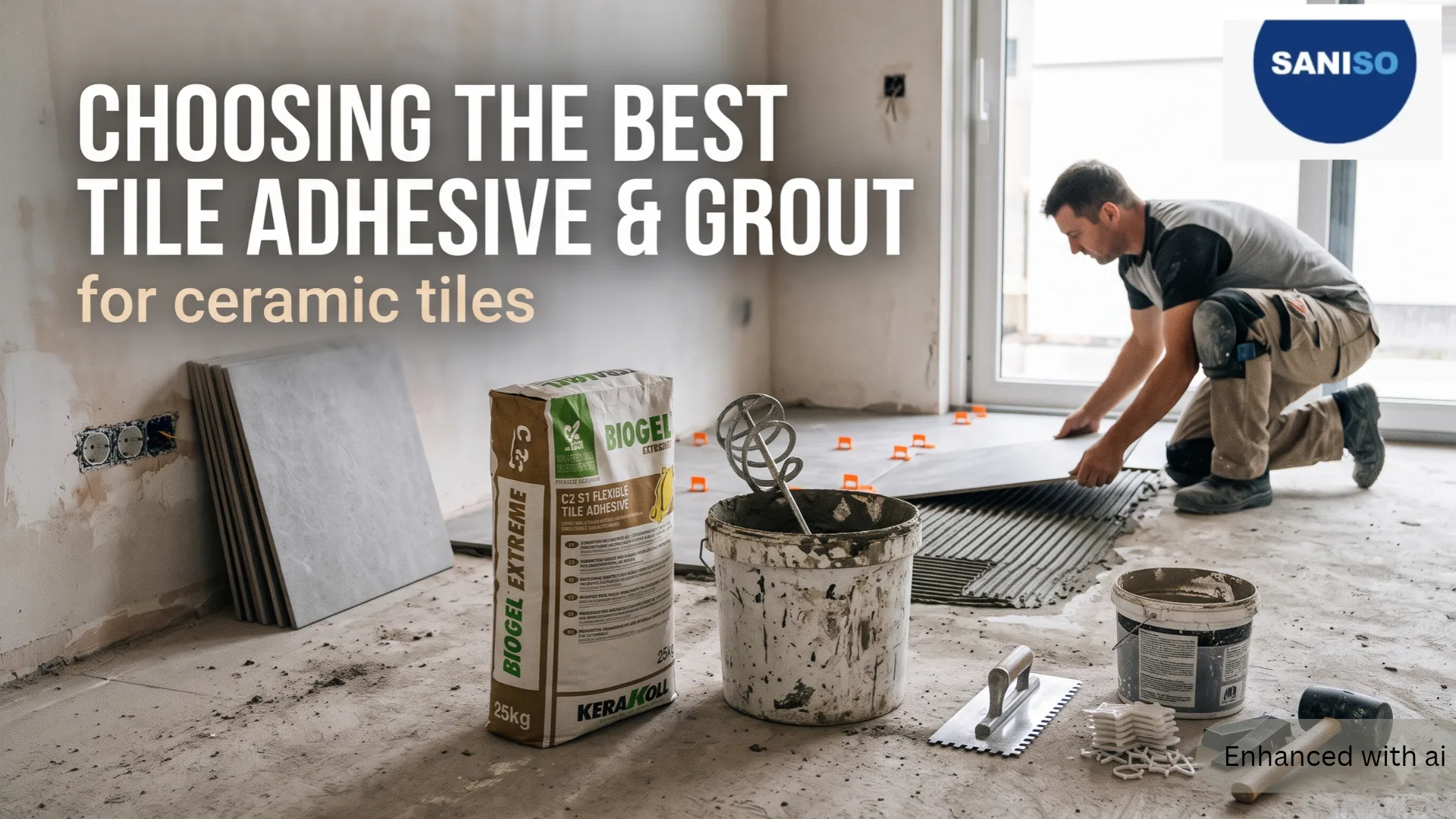
Is one tube of adhesive really as good as the next, or does the gap between a mediocre tile adhesive and a genuinely strong one only show up two winters later, when the first tiles start to hollow-sound under your feet?
For anyone planning a tiling job, that question is worth sitting with before checkout, because adhesive and grout are the two products in a tiling project that are almost impossible to fix without ripping everything back up.
This guide walks through how to pick the best tile adhesive for your project, how grout fits into that decision, and where the Dutch market's better-known brands actually earn their price premium.
There's no single best tile adhesive that works for every job. The right choice depends on tile size, substrate, and where the tiles are going. That said, a handful of properties consistently separate a reliable product from a disappointing one:
That last point matters more than most buyers realize. Reputable manufacturers test and classify their products against the ISO 13007-1 standard, which defines terminology, working methods, and performance requirements for ceramic tile adhesives. If a product doesn't list a classification (C1, C2, S1, S2, and so on), that's worth treating as a red flag rather than an oversight.
Code | Meaning |
C1 / C2 | Normal / improved cementitious adhesive |
S1 | Deformable adhesive |
S2 | Highly deformable adhesive (flexible tile adhesive) |
F | Fast-setting |
T | Reduced slip, good for wall tiling |
A flexible tile adhesive (S1 or S2 rated) costs more, but it's close to non-negotiable for floor heating, exterior tiling, or any substrate prone to minor seasonal movement.
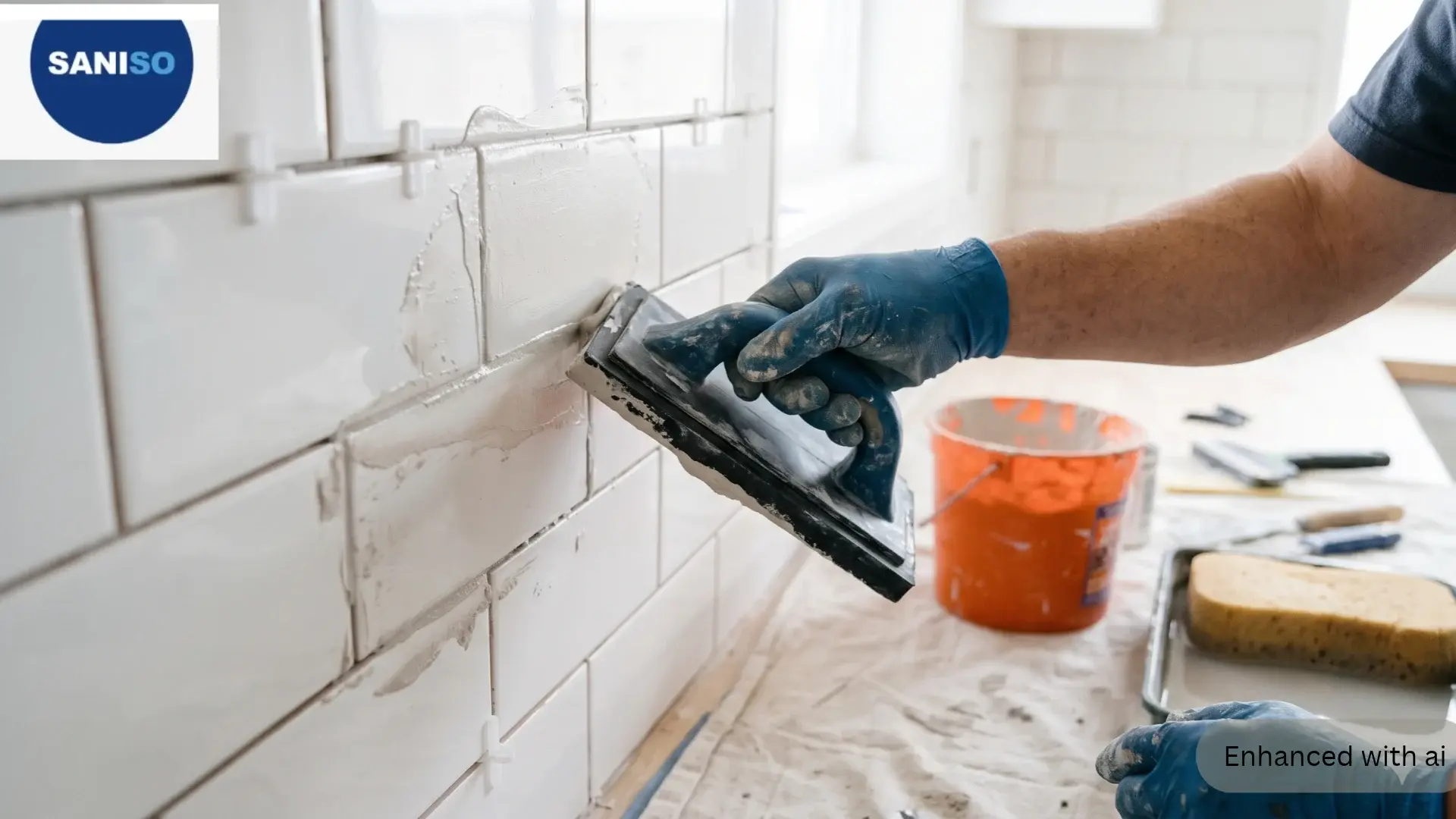
It's a common mix-up, especially for first-time renovators: tile adhesive and grout are not interchangeable, and they're not applied at the same stage.
Tile Adhesive | Grout | |
Purpose | Bonds tile to substrate | Fills the joints between tiles |
Applied | Before tile placement | After adhesive fully cures |
Thickness | Several millimetres | Fills narrow gaps (1-10mm typical) |
Water exposure role | Structural bond | Seals surface against moisture |
Buying grout that matches your tile adhesive's flexibility rating is a detail that gets skipped more often than it should. Pairing a rigid grout with a flexible tile adhesive system undermines the whole point of using a flexible product in the first place, since the grout will crack at the joints even if the tiles themselves stay firmly bonded.
Large-format tiles have become the default in a lot of renovation projects, and they genuinely change what you should buy. A standard adhesive mixed for smaller tiles often won't hold the weight and surface area of a large-format slab reliably. Look specifically for a tile adhesive for large tiles rated S1 or higher, with a longer open time to allow for the slower, more careful placement large tiles require.
Tile adhesive price varies more by performance class than by brand recognition, though brand does play a role in consistency and batch-to-batch reliability.
As a working rule, don't choose purely on tile adhesive price per bag. Coverage rate matters more than sticker price. A slightly pricier bag with better coverage per square metre often works out cheaper overall, and it reduces the risk of running short mid-job and mixing two different batches on the same wall.
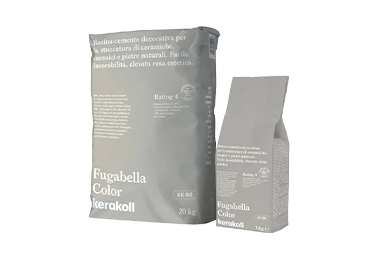
Among the higher-tier options available through SANISO's adhesives range, Kerakoll is one of the names that comes up most in professional tiling circles, and for reasonable cause. Kerakoll adhesive formulations are consistently well-regarded for their low-dust mixing and reliable open time, which matters a great deal on larger jobs where consistency across multiple bags is essential.
Biogel Extreme sits in a similar performance bracket, built around strong initial grab and extended workability, which makes it a reasonable pick for vertical tiling where slippage before set is the main risk.
If your project involves large-format tiles, underfloor heating, or an exterior application, it's worth paying for Kerakoll or a comparable S2-rated product rather than defaulting to the cheapest C1 bag on the shelf. The price difference per project is usually modest once you account for the area covered, while the failure cost of a poorly bonded floor is not modest at all.
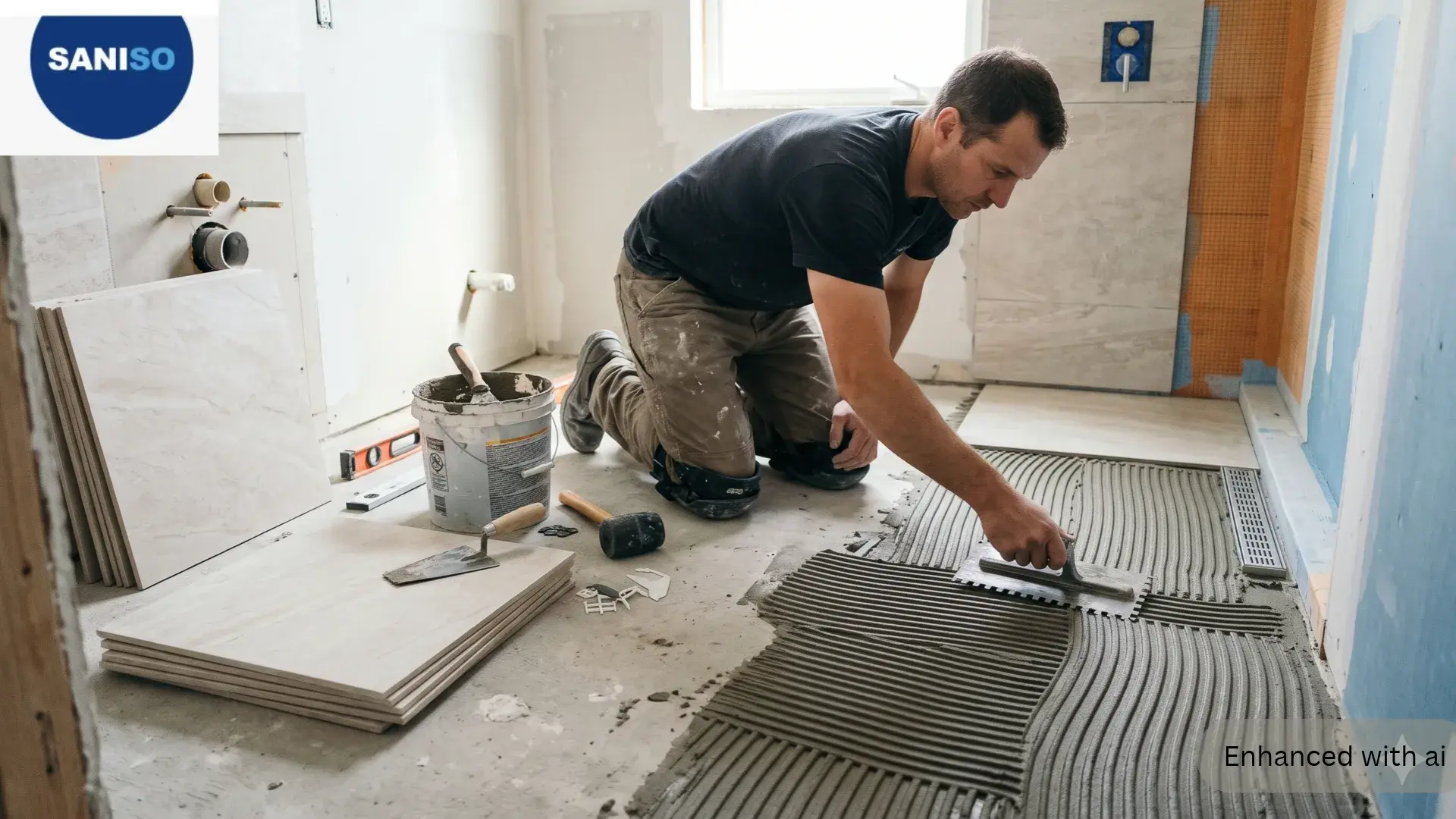
Once the adhesive has fully cured, which typically takes 24 to 48 hours depending on the product, it's time to buy grout. Cementitious grout remains the standard choice for most residential jobs, while epoxy grout offers better chemical and stain resistance at a notably higher price and more demanding application process.
A tile adhesive for bathroom use needs to prioritize water resistance and mold tolerance above all else, since bathroom walls and shower surrounds see near-constant moisture exposure. A tile adhesive for floor use, by contrast, needs to prioritize load-bearing strength and, where relevant, compatibility with underfloor heating systems.
The two aren't always the same product, even within one manufacturer's range, so it's worth checking the technical data sheet rather than assuming a general-purpose adhesive covers both situations equally well.
Looking at where the market stands heading into the next buying season, the best tile adhesive 2026 recommendation for most residential and light-commercial projects is a C2 S1-rated flexible formulation from an established manufacturer, paired with a matching flexible grout. For large-format tiles or exterior work specifically, step up to an S2-rated product.
If you'd rather not mix and match components yourself, a tile adhesive set that bundles adhesive, grout, and the right trowel size removes a lot of the guesswork for smaller DIY projects, though professionals tiling larger areas will usually still buy adhesive and grout separately for better bulk pricing.
Whether you order tile adhesive in person or buy tile adhesive online, the product specification matters far more than the packaging or the brand name on the front.
Get the classification right for your substrate and tile size, and the rest of the job becomes considerably more forgiving.
Share:
Straight cut or awkward corner? Read when to use a tile cutter, when an angle grinder fits better and how to cut cleanly...
Grout in one even colour across the whole wall or floor: that is what you want. In this blog we explain how the hybrid R...
Why Cersanit tiles at Saniso: wood, floral, stone, monocolour and outdoor collections for walls and floors, with 5 price...
A tiled splashback protects the wall against grease and splashes and instantly gives your kitchen a new look. This is ho...