
.jpg)


Draught-proofing, shutting off the outdoor tap, clearing gutters and bleeding radiators: how to get your home ready for...

Your online building supplies store for building and renovation
 English
✓
English
✓
 Nederlands
✓
Nederlands
✓
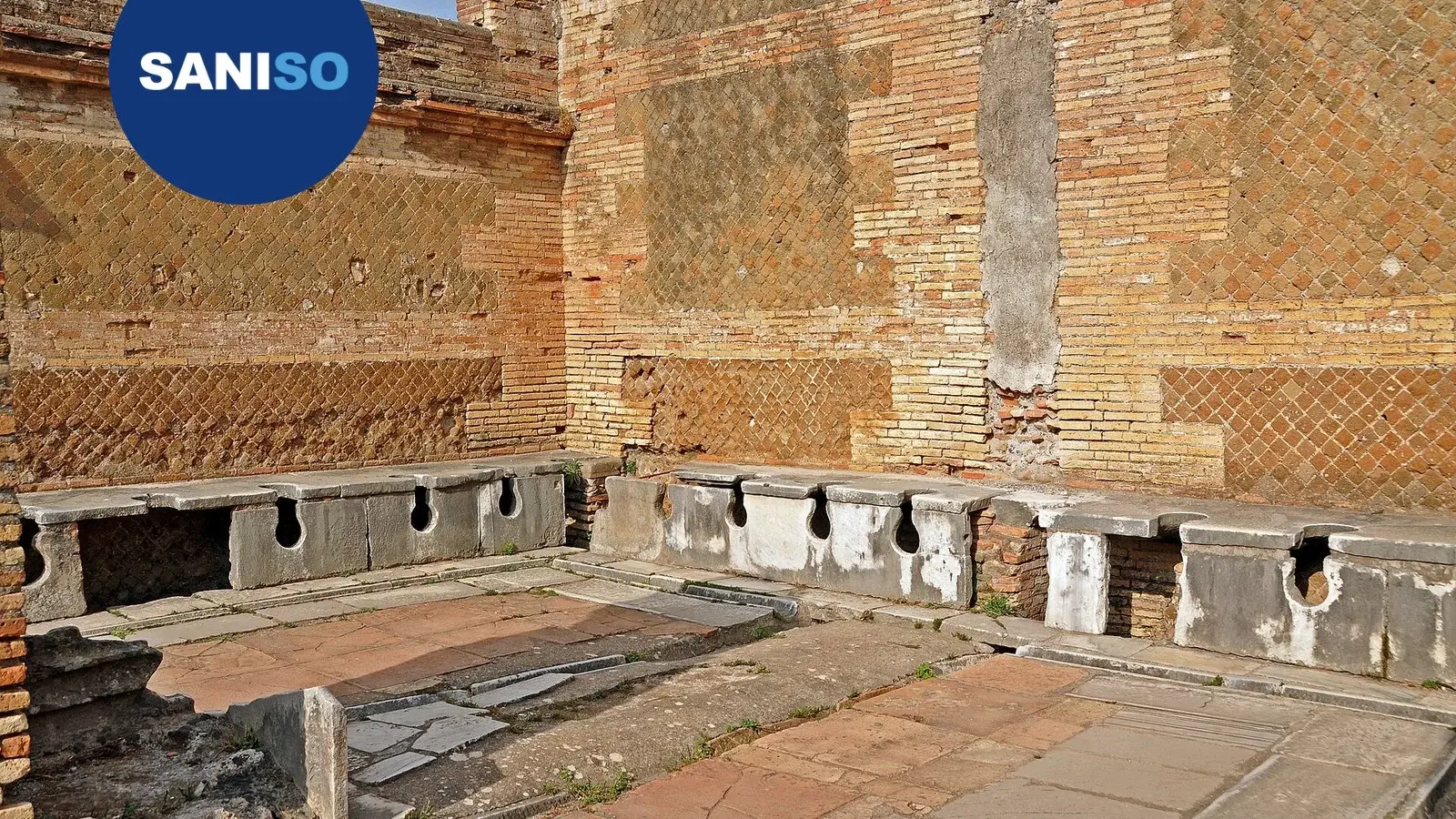
Photo: public latrine (forica) in Ostia Antica, near Rome. Dennis G. Jarvis, Wikimedia Commons, licence CC BY-SA 2.0 (cropped)
Building facts #2 · Every Monday and Thursday one building topic, examined in depth
You use it several times a day without thinking about it: you flush, and it's gone. But the flush toilet and the sewer under your street are surprisingly young inventions. In this second edition of Building facts we look at one topic: the history of the toilet and the sewer. We go from brick drains in the Indus Valley and Roman latrines, via cesspits and the 'Great Stink' of London, to the Dutch sewer system and the water-saving toilet of today. (Missed edition #1? Read the history of the brick.)
As long as people lived in small groups, it was simple: you went somewhere quiet and nature did the rest. The problems only started when people began living together in villages and towns. The solutions are older than you might think. The Mesopotamians already used clay sewer pipes around 4000 BC; the earliest examples were found at the Temple of Bel in Nippur and in Eshnunna. In the city of Uruk, archaeologists found the earliest known brick-built latrines, both squat and pedestal types, from 3200 BC.
Even in the Neolithic village of Skara Brae on Orkney, from around the 31st century BC, a stream and a connected drainage system were used to wash waste away.
The cities of the Indus Valley Civilisation, such as Mohenjo-daro and Harappa, had some of the most advanced sanitation of the ancient world, around 4,500 years ago. Several courtyard houses had a washing platform and their own toilet hole. That toilet was flushed by emptying a jar of water, which ran through a clay brick pipe into a shared brick drain and then into a soak pit (a kind of cesspit).
The house drains were connected to wider public drains along the main streets. Those drains had holes at regular intervals for cleaning and inspection: the ancestor of the manhole. In the second millennium BC the Minoans on Crete went a step further, with flushable pedestal toilets found at Knossos and Akrotiri.
Rome's most famous sewer is the Cloaca Maxima, the 'greatest sewer'. According to tradition it was started around 600 BC under King Tarquinius Priscus, to drain the marshy ground near the Forum and carry waste to the river Tiber. It began as an open channel lined with brick, was gradually covered over and grew into the city's main drain. By the first century AD all eleven aqueducts of Rome were connected to the sewer system, and parts of the Cloaca Maxima are still in use today.
From the first to the fifth century AD, communal latrines were in use throughout the Roman Empire: long stone benches with holes, often for many people side by side, as in the photo at the top of this article from Ostia. They didn't flush in the modern sense; a continuous stream of running water underneath carried the waste away. People cleaned themselves with a sponge on a stick, which they moistened in the gutter of running water in front of the seats.
Fun fact: Emperor Vespasian taxed the urine that was collected from public toilets and sold to laundries and fullers. When his son Titus objected, Vespasian let him smell a coin and said: Pecunia non olet, 'money doesn't stink'.
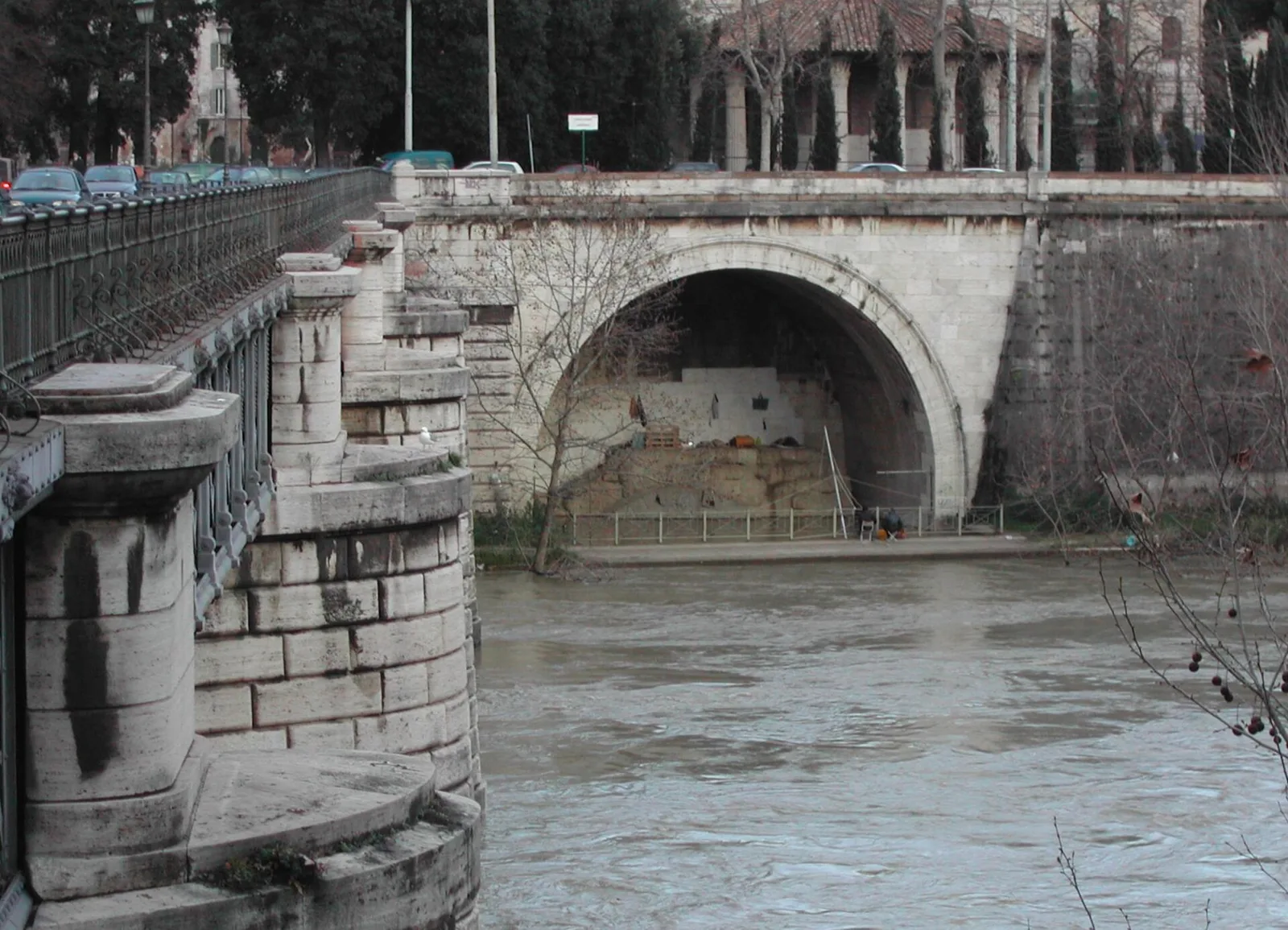
With the fall of the Western Roman Empire, the communal toilets and their sewers fell into disuse in the West; in the Eastern (Byzantine) Empire they were still maintained. In castles people used a small chamber built onto the outer wall. There was no flushing: the waste simply fell into the moat or down a slope.
Outside the castles, the toilet was usually a little shed above a cesspit or a ditch. In towns, wealthier households had a cesspit in the garden that was emptied from time to time, while in poorer neighbourhoods people used a bucket that was emptied into a collection cart. In Dutch towns the putjesschepper emptied the cesspits. The contents were valuable as manure: market gardeners around Utrecht fertilised their winter spinach with it, shipped in over the river Vecht.
For archaeologists an old cesspit is a treasure chest. Besides waste, people threw broken pottery, glass, metal, leather and food scraps into it, which tells us a lot about daily life and even the diet of the people who lived there.
Not Thomas Crapper, even though the story is popular. A famous early forerunner of the modern flush toilet came from the English courtier Sir John Harington. In 1596 he described his invention, the Ajax, installed at his house in Kelston. It had a flush valve to let water out of the tank and a wash-down design to empty the bowl. He also installed one for his godmother, Queen Elizabeth I, at Richmond Palace. What it lacked was a way to stop the smell.
That came in 1775, when the Scottish watchmaker Alexander Cumming patented a flush toilet with an S-shaped trap. Joseph Bramah improved the design: in 1778 he patented a version with a hinged flap at the bottom of the bowl and a float valve for the cistern. In the mid-19th century the flush toilet became a product for the middle class. George Jennings installed his toilets at the Great Exhibition of 1851 in London, where 827,280 visitors paid one penny to use them. That's where the English expression 'to spend a penny' comes from. In the 1880s Thomas Twyford sold the free-standing 'Unitas', made entirely of earthenware, and in 1885 Frederick Humpherson demonstrated the pedestal 'flush-down' toilet.
And Thomas Crapper? He held nine patents, three of them for improvements to the water closet such as the floating ballcock, and he introduced the U-shaped trap in 1880. But he did not invent the flush toilet. Even the word 'crap' is older than him; it may come partly from the Dutch word krappen.
| Year | Milestone |
|---|---|
| 1596 | John Harington describes his flushing toilet, the Ajax |
| 1775 | Alexander Cumming patents a flush toilet with an S-shaped water trap |
| 1778 | Joseph Bramah patents a hinged flap and a float valve for the cistern |
| 1851 | George Jennings installs pay toilets at the Great Exhibition in London |
| 1880 | Thomas Crapper introduces the U-shaped trap |
| 1885 | Frederick Humpherson demonstrates the pedestal flush-down toilet |
| 1980 | Caroma builds the first practical dual-flush toilet (11 and 5.5 litres) |
| 1994 | Redesign of the dual flush to 6 and 3 litres |
Thanks to the water seal. A bend in the pipe (an S-, U- or P-shape) always holds a little standing water. That water closes off the pipe, so foul air from the sewer can't come back into the house. Alexander Cumming's S-trap from 1775 used exactly this principle, and most modern toilets still have a similar trap. Crapper's U-bend from 1880 was an improvement because it couldn't jam and didn't dry out as easily.
You'll find the same trick under your washbasin, shower and sink: the sifon. It's also why a toilet or drain that hasn't been used for a long time can start to smell: the water in the trap evaporates, and the seal is gone.
In the 19th century London grew fast, but its waste still went into cesspits and old sewers that drained straight into the Thames. Around 1856 the city had some 200,000 cesspits and 360 sewers. Cholera struck several times: in 1831 (6,536 deaths), in 1848–49 (14,137) and in 1853–54 (10,738). Physician John Snow argued that cholera spread through contaminated water, not through bad air. After he removed the handle of a water pump in Broad Street in 1854, the number of deaths there fell; later it turned out that a leaking sewer ran near that well.
Then came the hot summer of 1858, with the 'Great Stink': the Thames smelled so badly that even Parliament could no longer ignore it. Engineer Joseph Bazalgette was given the job of building a new sewer system: about 132 km of enclosed, brick-built main sewers and some 1,800 km of street sewers, which carried the waste eastwards, away from the city. Work ran from 1859 to 1875, and the Crossness pumping station was opened in April 1865 by the Prince of Wales. Thanks to the use of Portland cement, the tunnels were still in good shape 150 years later, and the system still serves a city of more than nine million people.
The irony: the project was based on the wrong idea that bad air (miasma) caused cholera. But because the sewage no longer ended up in the drinking water, cholera disappeared from the areas the sewers served anyway.
Later than you might expect. Until the 1930s people in most Dutch towns still used a bucket. These poepemmers and beertonnen (night-soil buckets and barrels) were collected, emptied (often into the local river) and rinsed. In towns the canals served as open sewers, and for houseboats in Amsterdam that remained the case until 2013.
Around 1870 the Netherlands experimented with a remarkable invention by the Dutch engineer Charles Liernur: the Liernur system, a kind of vacuum sewer. After a trial in Leiden it was introduced in Amsterdam in the early 1870s, and around 1874 also in Dordrecht. It was a closed pipe network in which faeces were sucked to a central point using a vacuum, then processed into fertiliser. There was no flushing, because that would have made the manure too thin. The big problem: household water from washing, bathing and cleaning, in Amsterdam about 150 litres per person per day against 3.5 litres of faeces, still flowed into the ground or the canals. In 1902 Amsterdam decided to stop using the system and switched to a gravity sewer, the kind that is still the standard today.
In the Netherlands, the sewer is a task of the municipality: by law it has to collect and transport waste water, rainwater and excess groundwater. According to Stichting RIONED (Monitor gemeentelijke watertaken 2024), there are 163,000 km of sewer pipes under public ground, not counting the connections to drains and houses, which add at least another 75,000 km. Most of it, 109,000 km, is a gravity sewer: the water flows downhill by itself in closed pipes. Pumping stations then push it on; municipalities manage 23,000 of them. Every year about 800 km of gravity sewer is renewed.
There are two main types. In a combined sewer (gemengd stelsel), waste water and rainwater go through the same pipe to the treatment plant; in heavy rain, overflows release the surplus into surface water so that streets and houses don't flood. In a separate sewer (gescheiden stelsel), rainwater and waste water each have their own pipe, so the clean rainwater doesn't have to go to the treatment plant. More than 70% of Dutch sewer pipes are made of concrete and about 25% of plastic such as PVC.
Old toilets used a lot of water per flush. The idea of a large and a small flush is older than you might think: Japanese manufacturer TOTO built a dual-flush toilet in 1960, but it wasn't a commercial success. The first practical dual-flush design came in 1980 from the Australian company Caroma, with 11 and 5.5 litres. A redesign in 1994 brought that down to 6 and 3 litres.
In the Netherlands, according to the study Watergebruik Thuis 2021 (CBS for Vewin), we use 30.2 litres per person per day to flush the toilet. That's the second-largest use of water in the home, after the shower (46.2 litres). On average we flush fully 2.93 times a day (about 6.7 litres each time) and partially 3.65 times (about 3.7 litres).
Nice detail: we say doortrekken (literally 'pulling through') in Dutch because old toilets had a high cistern about two metres up the wall, operated with a chain or cord. Today the cistern is usually low or hidden in the wall behind a wall-hung toilet, which also makes the floor easy to clean.
Today's toilet is the sum of all these inventions: a ceramic bowl with a water seal, a cistern with a float valve, a flush button that lets you choose between a large and a small flush, and of course the connection to the sewer. Below are a few products where you can recognise that history. Want to choose a toilet yourself? We don't repeat the buying advice here; our guides explain it step by step: buying a toilet bowl, the complete wall-hung toilet set, choosing a concealed cistern and rimless wall-hung toilet sets.
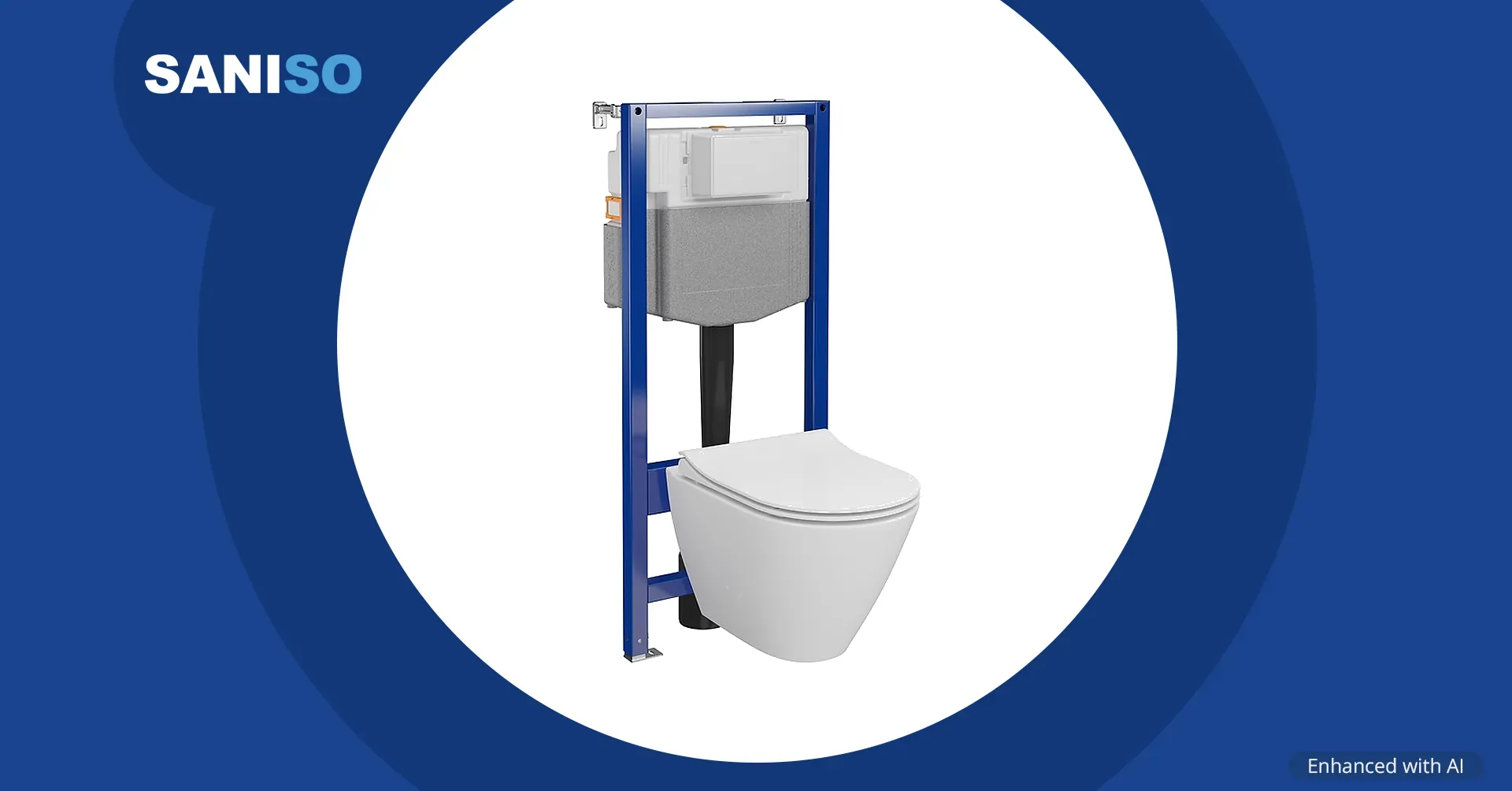
A complete set: the AQUA 50 MECH QF concealed frame, the rimless CITY by Cersanit OVAL CleanOn wall-hung bowl with hidden fixation and a slim duroplast, antibacterial soft-close seat.
What is it for? The modern descendant of the Victorian water closet: the bowl hangs on the wall and the cistern disappears behind it.
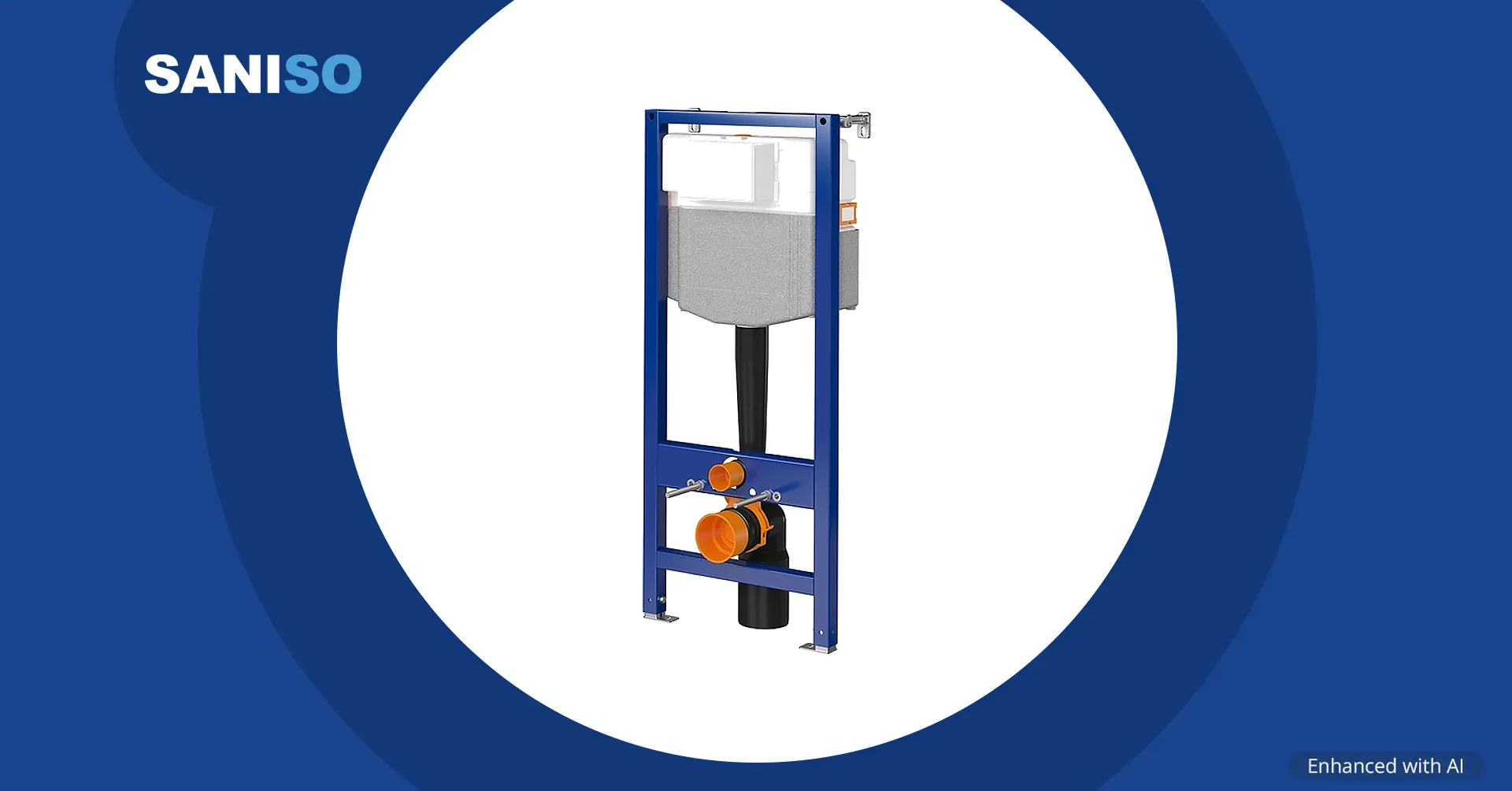
A concealed WC frame for dry installation, 50 cm wide, with mechanical flushing and adjustable flush-water pressure on the flushing valve.
What is it for? The cistern that used to hang high on the wall, now hidden inside the wall behind the toilet.
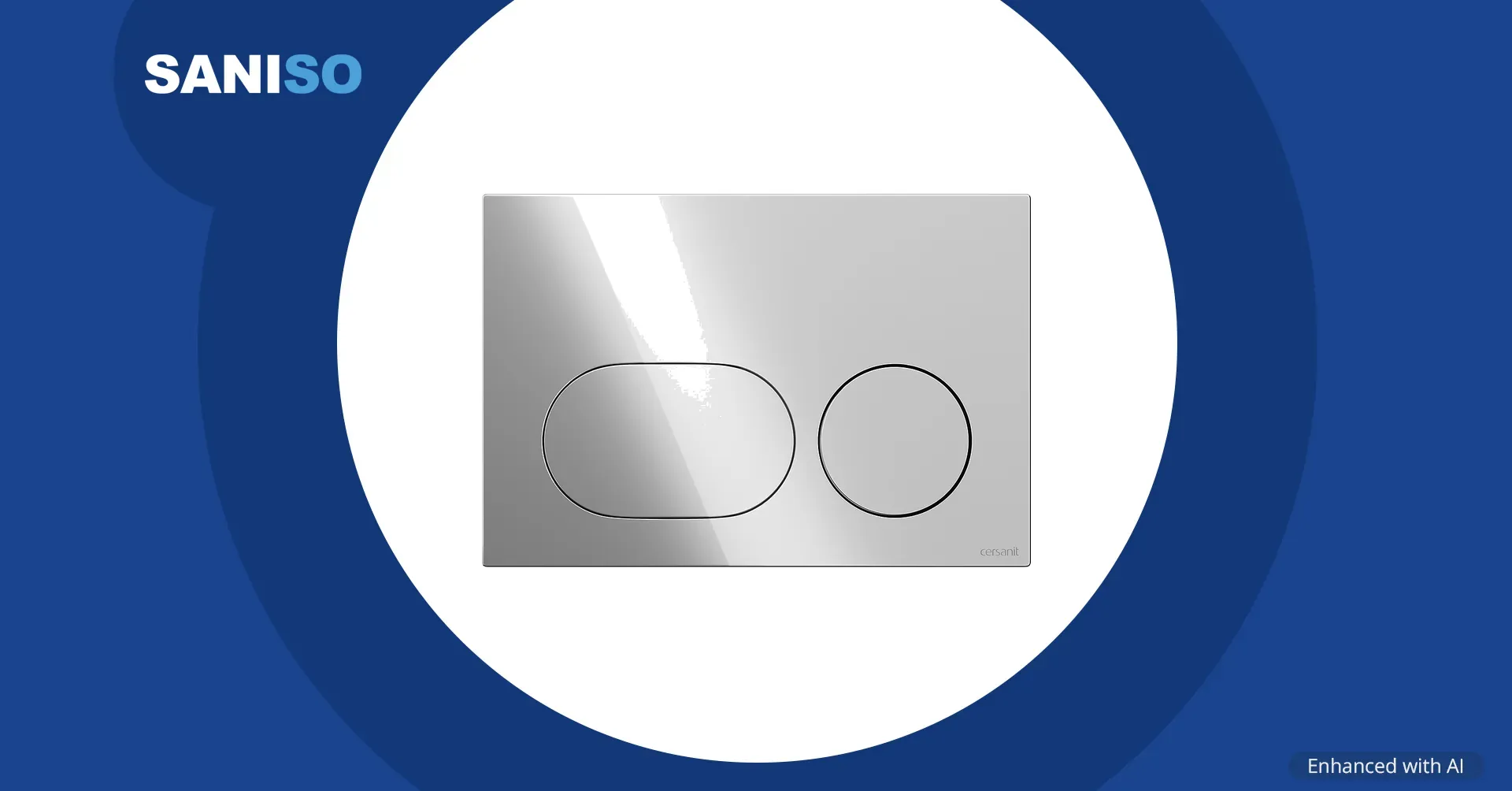
A minimalist flush plate with two flush buttons for a dual-flush system, so you use less water for a small flush.
What is it for? Choosing between a full and a small flush: the idea that Caroma made practical in 1980.
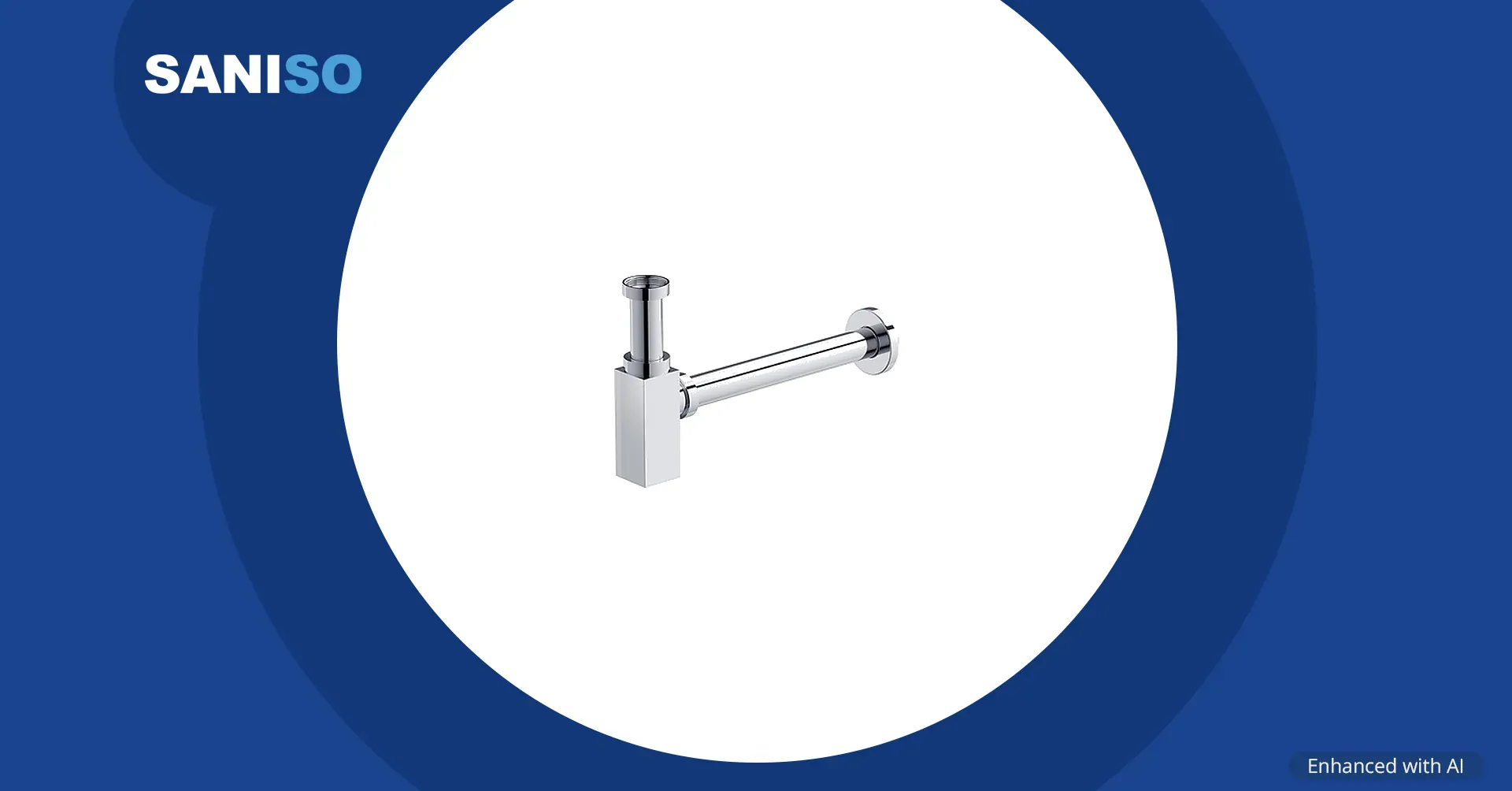
A decorative square washbasin siphon by Cersanit, in chrome.
What is it for? The same water-seal principle as Cumming's S-bend from 1775, under your washbasin: standing water keeps sewer smells out.
Order on a workday before 15:00? Then your order is delivered the next workday, as long as it fits in a parcel. Pallet shipments have a different delivery time. Saniso has thousands of products in stock in the Netherlands.
Your first order is easy to place:
Want to know when there are new offers? Sign up for the newsletter: scroll to the bottom of any page on saniso.nl, enter your email address under "Newsletter" and click "Subscribe". You'll get updates on offers and discount vouchers, and we don't spam. With an account you also collect loyalty points for a discount on your next purchase.
Questions about ordering, your account, payment, shipping or returns? Find all the answers in the Saniso FAQ.
Who invented the flush toilet?
Sir John Harington described an early forerunner, the Ajax, in 1596. Alexander Cumming patented a flush toilet with an S-shaped water trap in 1775.
Did Thomas Crapper invent the toilet?
No. Crapper held nine patents, including improvements such as the floating ballcock, and introduced the U-shaped trap in 1880, but he did not invent the flush toilet.
How old is the oldest sewer?
The Mesopotamians used clay sewer pipes around 4000 BC. Rome's Cloaca Maxima was, according to tradition, started around 600 BC, and parts of it are still in use.
How did the Romans go to the toilet?
In communal latrines: stone benches with holes above a stream of running water. They cleaned themselves with a sponge on a stick.
What is a cesspit?
A pit in which human waste was collected without treatment. Before the sewer, cesspits were common in towns and were emptied from time to time; the contents were used as manure.
Why does a toilet have a water seal?
The standing water in the bend of the pipe closes it off, so sewer gases can't come back into the house. That's the principle of Cumming's S-trap from 1775.
What was the Great Stink?
The summer of 1858, when the polluted Thames smelled so badly that London decided to build a new sewer system, designed by Joseph Bazalgette and built from 1859 to 1875.
What was the Liernur system?
A Dutch vacuum sewer by engineer Charles Liernur, introduced in Amsterdam in the early 1870s. It only removed faeces, not household water, and Amsterdam stopped using it in 1902.
Since when has the Netherlands had sewers?
Large-scale sewers are fairly recent: until the 1930s, most Dutch towns still used buckets and barrels that were collected. Amsterdam switched to a gravity sewer after 1902.
How long is the Dutch sewer system?
According to Stichting RIONED, 163,000 km of sewer pipes lie under public ground, not counting the connections to drains and houses.
How much water does a toilet use per flush?
In Dutch homes a full flush uses about 6.7 litres on average and a partial flush about 3.7 litres (Watergebruik Thuis 2021). Modern dual-flush systems are often 6 and 3 litres.
Where does the word 'wc' come from?
It's short for the English 'water closet'. Toilet comes from the French 'toilette', a small cloth.
What is the delivery time at Saniso?
Order on a workday before 15:00 and it's delivered the next workday, as long as it fits in a parcel. Pallet shipments have a different delivery time.
Do the prices include VAT?
This blog shows every price including and excluding VAT. At checkout on saniso.nl, prices are shown including VAT.
Building facts takes one building topic under the magnifying glass every Monday and Thursday. This is edition #2. Read edition #1 too: the history of the brick, from mud brick to waalformaat. Fun link: Bazalgette's London sewers were built of brick.
Share:
Draught-proofing, shutting off the outdoor tap, clearing gutters and bleeding radiators: how to get your home ready for...
Old, mouldy silicone in your bathroom? Reseal it yourself in one weekend: tools, 12 clear steps, mould prevention and sa...
Building facts #1: the history of the brick. From mud brick and Roman legion stamps to Dutch river clay, waalformaat and...

Saniso in property development: supply, bathroom installation, tiling and finishing from one partner. How we approach Th...