





What makes good tools different? Often it is in details you only truly appreciate after years of use. Using the STALCO P...

Your online building supplies store for building and renovation
 English
✓
English
✓
 Nederlands
✓
Nederlands
✓

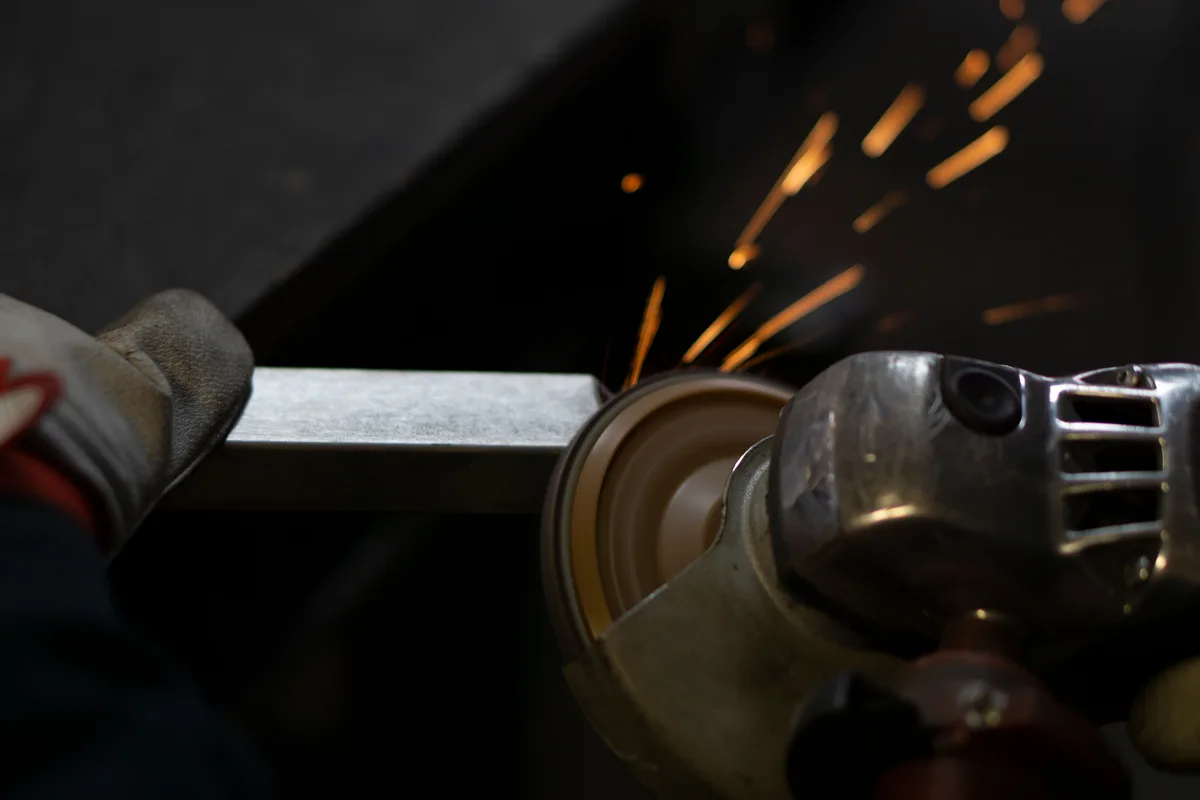
Cutting, deburring, chasing slots, removing rust: the angle grinder does it all. Precisely because it is so versatile, it is often used for work it was not designed for. A disc spins at a very high peripheral speed. When something goes wrong, it happens fast and the damage is serious. A professional knows the risks, chooses the right disc and works according to fixed habits. That craftsmanship is what makes the difference between a clean cut and an accident.
👷 Working with an angle grinder requires knowledge and experience. If you are new to the trade or work with a large 230-millimetre machine, get instruction from an experienced colleague first. Learning from a professional is never superfluous.
Choose a machine that suits the job. A 125 mm angle grinder is handy for most tasks. A 230 mm angle grinder has more reach, but also more power and a greater risk of kickback; use it only with two hands and plenty of experience. A cordless angle grinder is useful where there is no power supply, but calls for the same care. Always use the disc that matches the material:
⚠️ Check that the maximum speed and the diameter on the disc match your machine. Never use a disc that has been dropped, is cracked or has become damp, and never fit a wood saw blade on an angle grinder.
You can find more general rules for working safely on the construction site in our blog on safe working on the construction site.
No. The guard catches fragments if the disc breaks and directs sparks one way. If you cannot reach the work, choose a different machine or method.
Use the right disc, secure the workpiece, hold the machine with two hands, do not force it and make sure the cut does not pinch closed. Stand so that you stay out of the line of the disc.
There is no cable in the way, but the risks of the disc are the same. Use the same measures and PPE.
Safety glasses with a face shield, hearing protection, well-fitting work gloves, safety shoes and, for stony materials, an FFP3 dust mask.
At Saniso, the online store for DIYers and professionals, you will find tools, materials and personal protective equipment for your job.
Read also: Safety helmets for professionals: choosing and using them professionally
Read also: Dust and quartz on site: preventing silicosis
Read also: Safety glasses for professionals: how to choose and use them
In doubt about the approach? Feel free to call in a professional.
Saniso – Build your home with Saniso.
Share:
What makes good tools different? Often it is in details you only truly appreciate after years of use. Using the STALCO P...

Grout in one even colour across the whole wall or floor: that is what you want. In this blog we explain how the hybrid R...

Learn how to level a floor yourself: prepare the subfloor, prime, mix and pour self-levelling compound. Step-by-step wit...

Installing a kitchen: do it yourself or hire a professional? Read what is involved, which parts you can do yourself and...