






Learn how to level a floor yourself: prepare the subfloor, prime, mix and pour self-levelling compound. Step-by-step wit...

Your online building supplies store for building and renovation
 English
✓
English
✓
 Nederlands
✓
Nederlands
✓
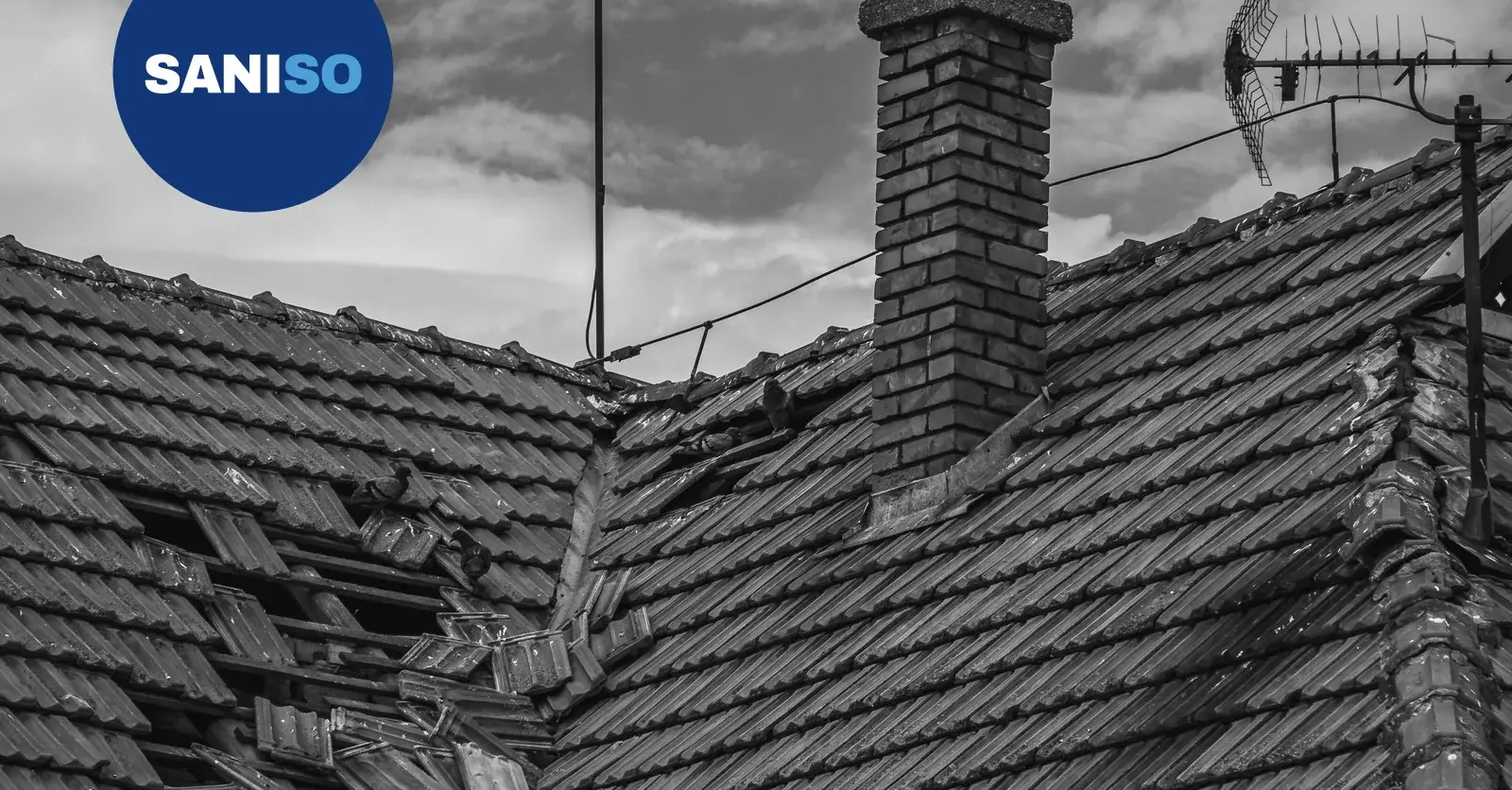
After a heavy storm, homeowners often head straight outside to see whether everything is still intact. Rightly so: a displaced roof tile or a loose lead flashing is small at first, but lets water in at the next downpour. Spotting damage early prevents wet insulation, mould and rot in the timber. In this blog you will read how to check your roof safely without going onto it yourself, what you can do as a temporary measure and when to call in a roofer straight away.
⚠️ Never go onto the roof yourself after a storm. Tiles may be loose, the roof is often still wet and slippery, and gusts of wind can throw you off balance. A fall from a roof often ends badly. Repairs on the roof are work for a roofer, with fall protection and the right equipment.
Wait until the storm has really died down. When you go outside, look up first: loose tiles, branches or pieces of gutter may still come down.
Walk around the house and look at the roof from a distance, preferably from across the street or from the garden. A phone with a zoom function helps you see details.
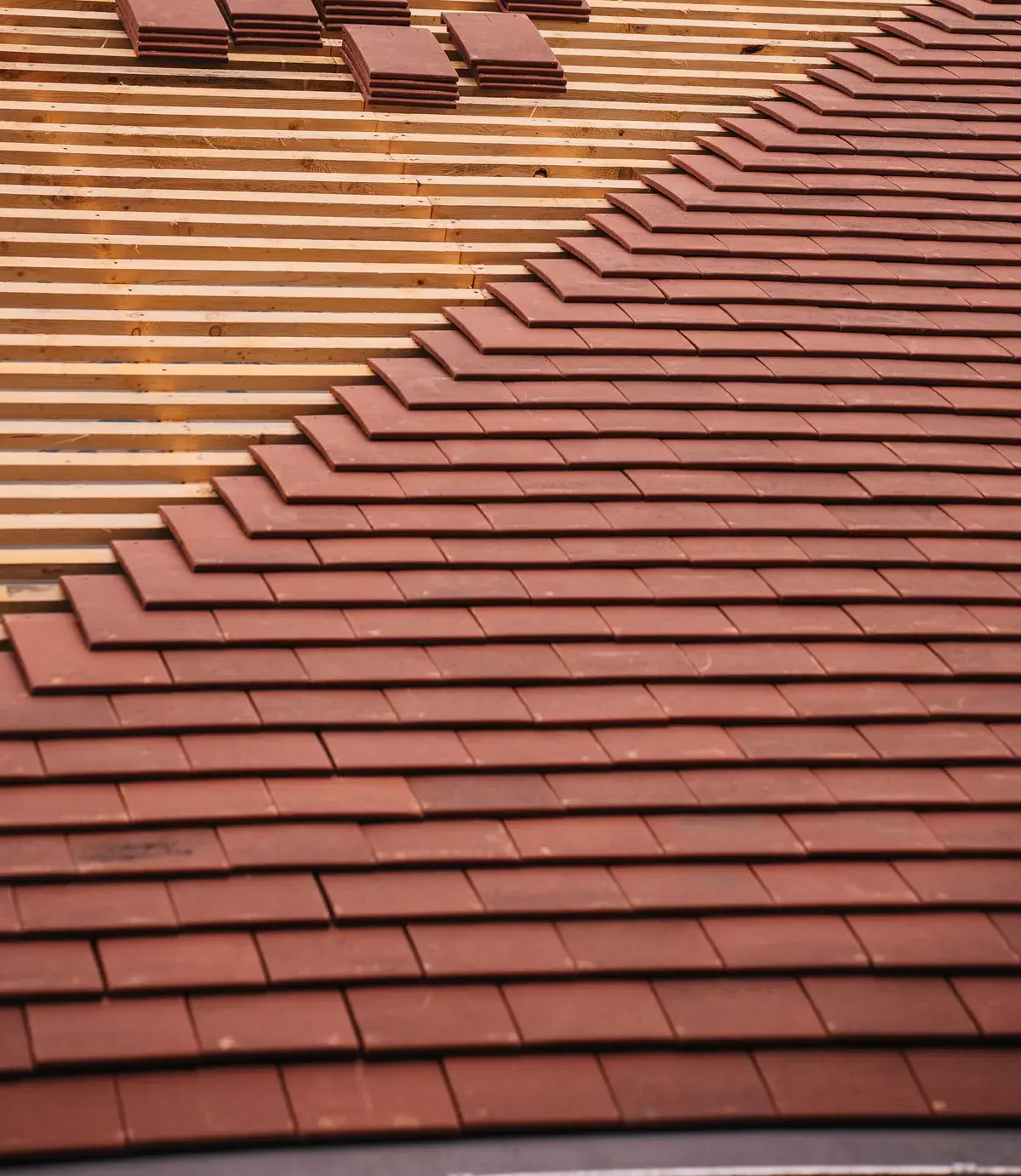
💡 Take photos of everything you see, even if you are unsure. Note the date and time. That helps the roofer assess the damage and is useful if you want to report it to your insurer.
The loft often tells you more than the outside. Go up during the day and take good light with you, such as a rechargeable LED flashlight, a LED headlamp or a rechargeable LED work lamp. Read more about choosing work lighting in our blog on work lights.
In the loft, only walk on the floor or sturdy parts, never between the joists over the ceiling of the floor below.
If water is coming in, you can limit the damage indoors until the roofer arrives:
Laying a tarpaulin on the roof is work for a roofer: on a wet, damaged roof it is life-threatening. With duct tape you can at most fix sheeting temporarily indoors, not repair the roof.
Calling in a professional after storm damage is never unnecessary. Call straight away in any case if:
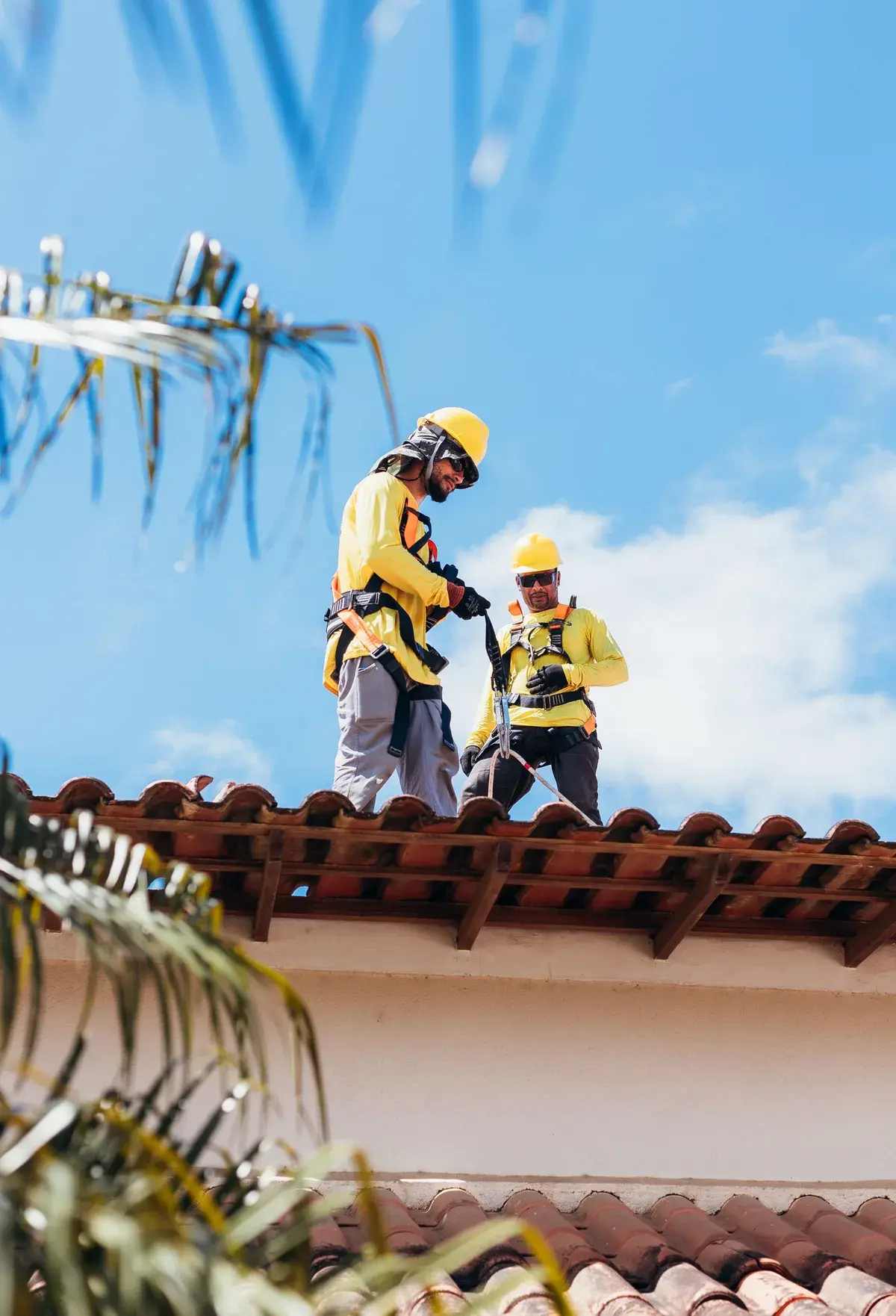
👷 A roofer works with a safety harness and fall protection, a safety helmet and the right ladders or scaffolding. He also spots damage you miss from the ground, such as broken battens or damaged underlay, and repairs the roof so that it lasts for years again.
Have your roof inspected regularly by a roofer, for example every autumn. He can secure loose tiles, check ridge tiles and press down lead. Keep the garden around the house tidy yourself: prune branches hanging over the roof and secure or bring in loose items. Read more autumn tips in our blog on getting your home ready for winter.
No, not after a storm and not without fall protection. Even putting back one tile means going onto the roof. Leave it to the roofer.
As soon as possible, especially if rain is forecast. Limit the leak indoors and call a roofer.
Have the roof inspected. Small damage to lead or battens is often invisible from the ground.
At Saniso, the online store for DIYers and professionals, you will find tools, materials and personal protective equipment for your job.
In doubt about the approach? Feel free to call in a professional.
Saniso – Build your home with Saniso.
Share:
Learn how to level a floor yourself: prepare the subfloor, prime, mix and pour self-levelling compound. Step-by-step wit...

Sandpaper looks simple, but the grit, the backing and the shape decide whether you work quickly and cleanly or leave scr...

Planks, beams and pipes are long and heavy. Read how to transport them safely on a roof rack or in the car, secure them...
The GreenBuilding Rating is Kerakoll's assessment system for the environmental impact of building products. Learn what t...