

Grinding, sawing or breaking? Find out when noise is too loud for your ears, what the Dutch rules say, whether to choose...

Your online building supplies store for building and renovation
 English
✓
English
✓
 Nederlands
✓
Nederlands
✓
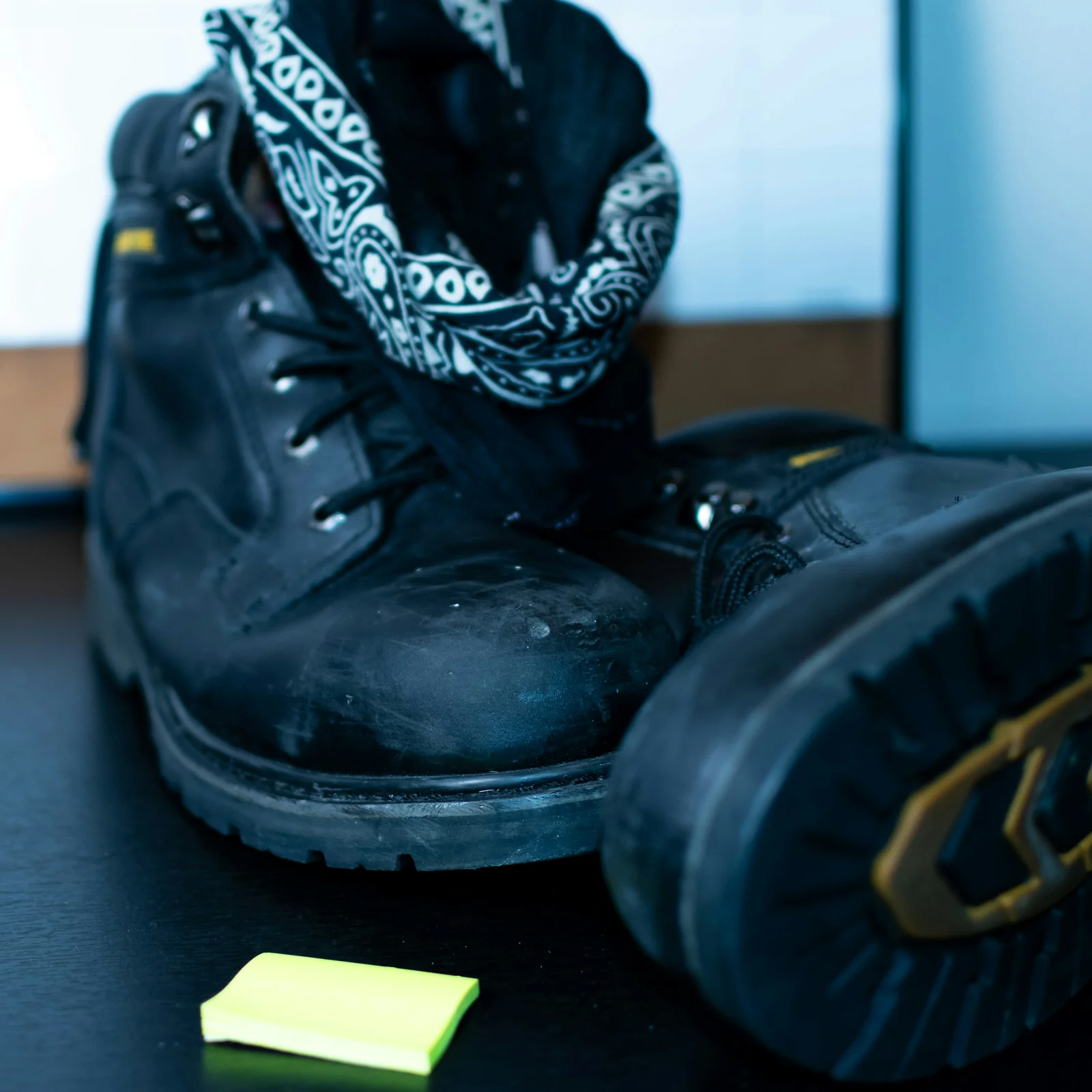
Your feet carry you all day, over rubble, wet ground and loose planks. Good work shoes protect them from falling materials, nails and slips, and keep you walking comfortably at the end of the day.
But what do SB, S1P, S3 or S5 actually mean? And what changed with the revised 2022 standard? In this guide you will learn which safety class suits your job, what to look for in fit and comfort, and when it is time for a new pair.
Safety shoes have a protective toe cap and meet the European standard EN ISO 20345. The toe cap is tested with a 200 joule impact test and a 15 kilonewton compression test. You can recognise the classes by the letter S: SB, S1, S2 and so on.
Work shoes without a protective toe cap fall under EN ISO 20347. Their classes start with an O, such as OB or O1. They do not protect your toes against falling objects.
So the first question is always: could something fall on or hit your toes? On a construction site the answer is almost always yes. In that case, choose a safety shoe.
💡 Tip: check that the shoe carries a CE marking and read the information supplied with it. It tells you what the shoe protects against, how to care for it and how long it lasts.
Each class builds on the previous one. The higher the class, the more protective features are added.
EN ISO 20345 was revised in 2022. The main changes for you:
Shoes certified to the older 2011 version may still be on sale for some time. So check the year of the standard on the label or in the product information.
Extra codes for specific risks can follow the class. A few you will often see in construction:
The class you need follows from the risks of the work. If you are employed, your employer chooses the protection based on the risk assessment and provides it free of charge. As a rule of thumb, ask yourself: is there a risk to your toes, are you working in wet conditions, and could sharp objects pierce the sole?
Construction sites are full of nails, screws and rubble, and you often work outdoors in changing weather. An S3 shoe or boot (or S3L or S3S) is the usual choice here: toe cap, penetration-resistant midsole, water-resistant upper and a cleated outsole. You will find low models among our low shoes and high models among our boots.
Demolition means lots of protruding nails, screws and sharp debris. An S3 shoe or boot is a logical choice here. If you prefer a flexible, metal-free midsole, look for the PS version (S3S), which is tested with the thinner nail. If heavy parts could fall, ask about metatarsal protection (M).
When tiling, you spend a lot of time on your knees and your feet flex constantly. A flexible, lightweight shoe is more comfortable. If there is still rubble or there are tile shards on the floor, choose a shoe with a penetration-resistant midsole (S1P, S1PL, S1PS or an S3 variant). Working on smooth tiles with water or adhesive? Then SR gives extra peace of mind. Protect your knees too with knee pads.
Working in a dry, tidy room with no risk of nails in the floor, for example when fitting or finishing? Then an S1 shoe is often sufficient. If there are screws or nails around, choose S1P, S1PL or S1PS.
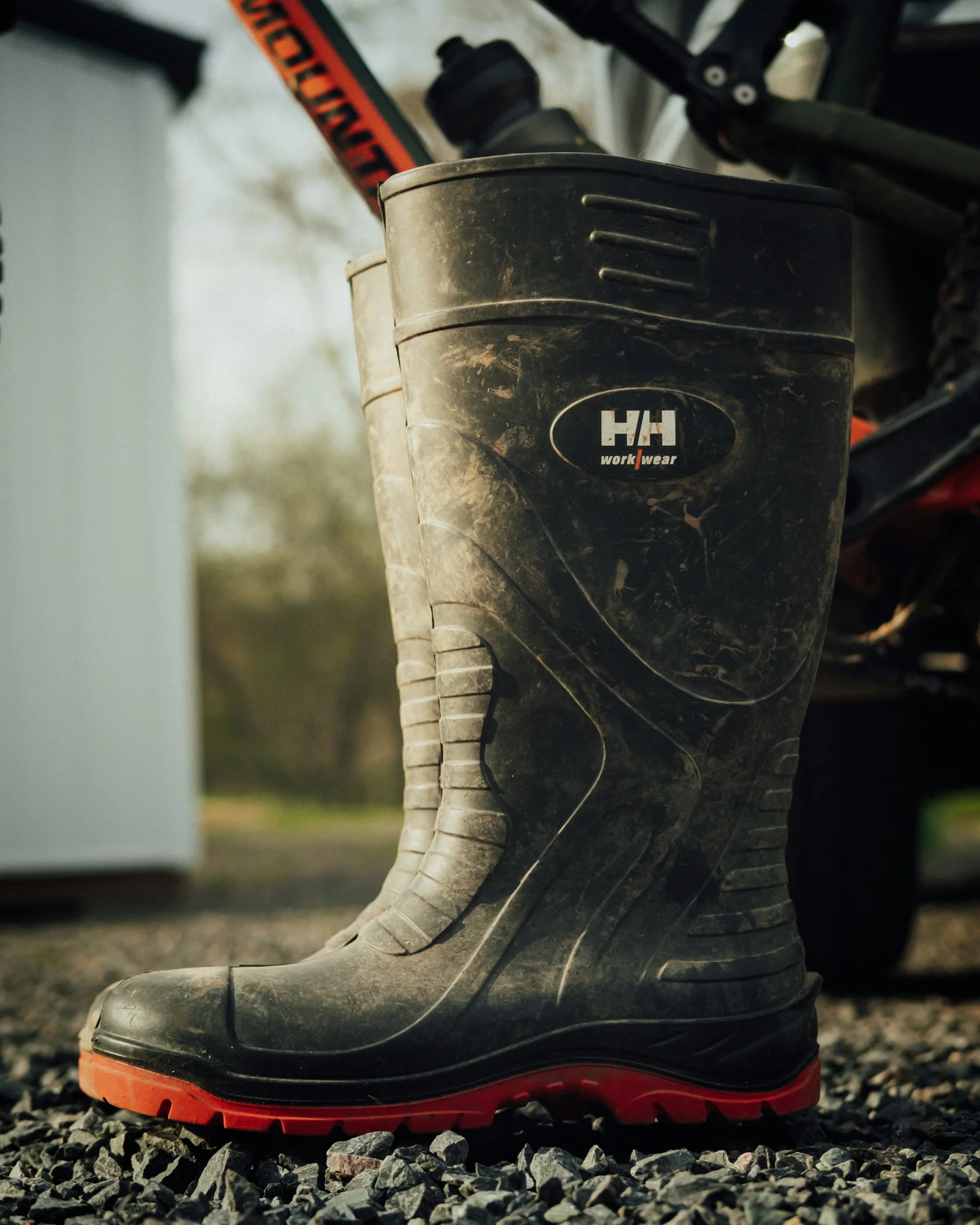
Standing in water, mud or wet concrete? Choose an S5 boot made of rubber or polymer, or an S7 shoe if you prefer leather. Wet cement is highly alkaline and can cause burns if it stays in contact with the skin. So choose a boot that is high enough and wear your trousers over the boot, not tucked in. See our rain boots, including rubber safety boots.
Both must meet the same EN ISO 20345 requirements: a 200 joule impact test and a 15 kilonewton compression test. With a certified shoe, you are well protected with either.
💡 Tip: do you walk a lot, or often work outdoors in the cold? Then you will soon notice the lower weight and insulation of composite.
Without protection, a nail in a plank or a sharp piece of metal easily goes through an ordinary sole. A penetration-resistant midsole stops that. S1 and S2 do not have one; S1P, S3 and S5 do.
No sole is impenetrable under all circumstances. So keep walkways as free as possible of nails and sharp debris.
You will not enjoy wearing a safety shoe that pinches. And a shoe you do not wear does not protect you.
Do you use orthotic insoles? A different insole changes the tested shoe. So choose an insole that the shoe manufacturer has approved for that model. Our shoe accessories include insoles; always check with the manufacturer's information that they suit your shoe.
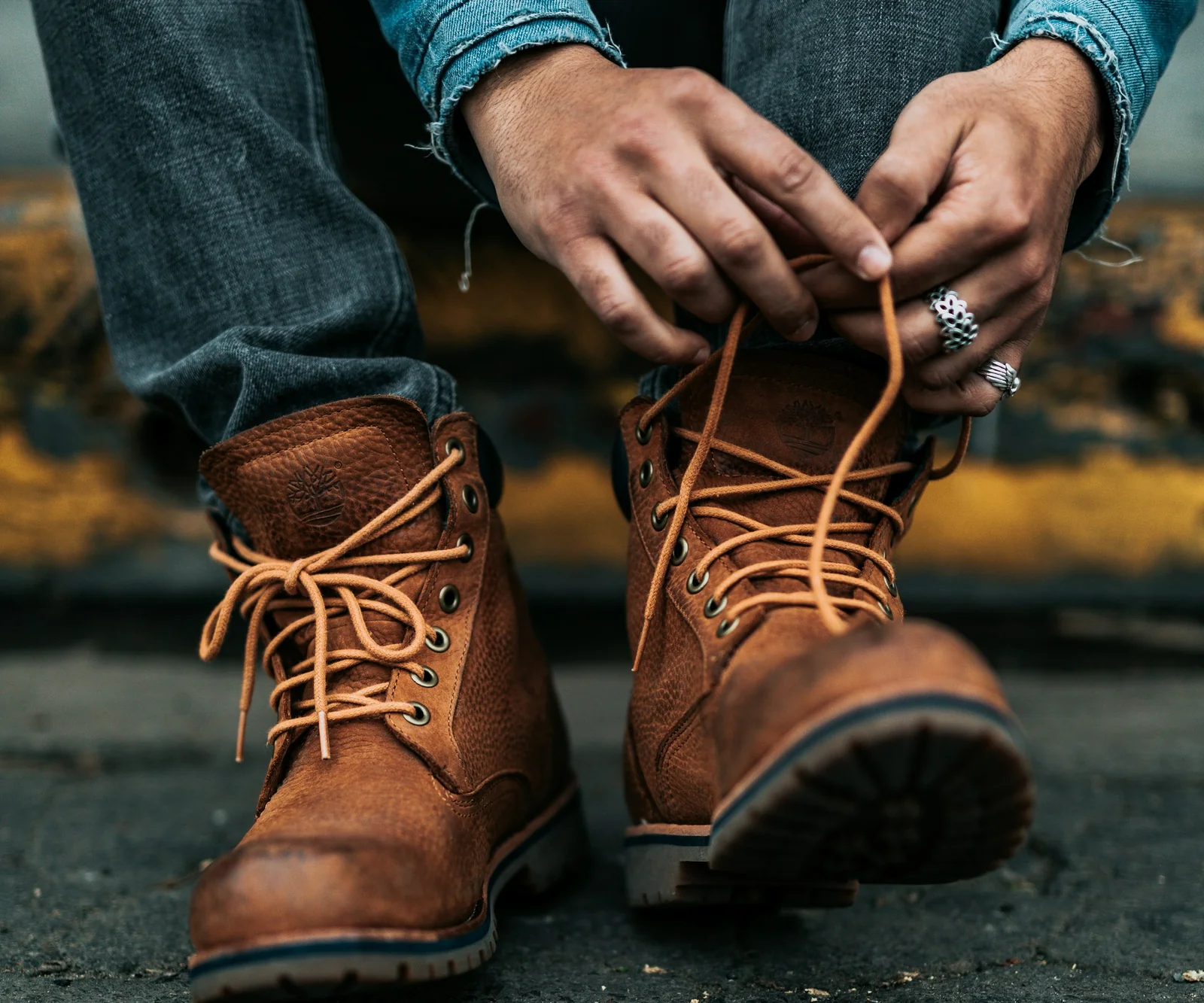
With good care, your shoes stay comfortable and safe for longer.
💡 Tip: do not store a spare pair for years in a damp shed or basement. Polyurethane (PU) soles can then start to crumble by themselves.
There is no fixed expiry date: how fast a shoe wears depends mainly on the work and the surface. Replace your shoes in any case if:
In doubt whether the shoe still protects you? Then it is time for a new pair.
Also read our guide to safe working on the construction site.
Both have a protective toe cap, a closed heel, antistatic properties, a shock-absorbing heel and a metal penetration-resistant midsole. S3 also has a water-resistant upper and a cleated outsole, which makes it better suited to outdoor and wet work.
The S or PS means the shoe has a non-metal penetration-resistant midsole tested with a 3.0 millimetre nail. With L or PL, the non-metal midsole has been tested with a 4.5 millimetre nail.
Since the 2022 standard, every safety shoe must pass a basic slip resistance test. SR means the shoe has also been tested on a ceramic tile with glycerine. SR replaces the old codes SRA, SRB and SRC.
Yes, both must pass the same 200 joule impact test and 15 kilonewton compression test. Composite is lighter and insulates better; steel is slimmer.
On a construction site, S3 (or S3L or S3S) is the usual choice. If you stand in water, mud or wet concrete, an S5 boot is more suitable.
When the toe cap is damaged or exposed, the sole is pierced or coming loose, the tread is worn or the shoe no longer fits well. If something heavy has fallen on the toe cap, replace the shoe as well.
A different insole changes the tested shoe. So only use an insole that the shoe manufacturer has approved for that model.
Saniso, the online building supplies store for building and renovation, offers safety shoes, workwear and PPE alongside building materials and tools.
Saniso – Build your home with Saniso.
Share:
Grinding, sawing or breaking? Find out when noise is too loud for your ears, what the Dutch rules say, whether to choose...
Falls, silica dust, noise and heavy lifting: how to work safely on the construction site. With PPE per job, tips for DIY...
Autumn is coming. Stay dry and warm at work with STALCO rainwear, warm workwear and lined work gloves from €2.81.
Buy nitrile work gloves built for construction, workshops, and industrial use. Chemical-resistant, durable, and availabl...