





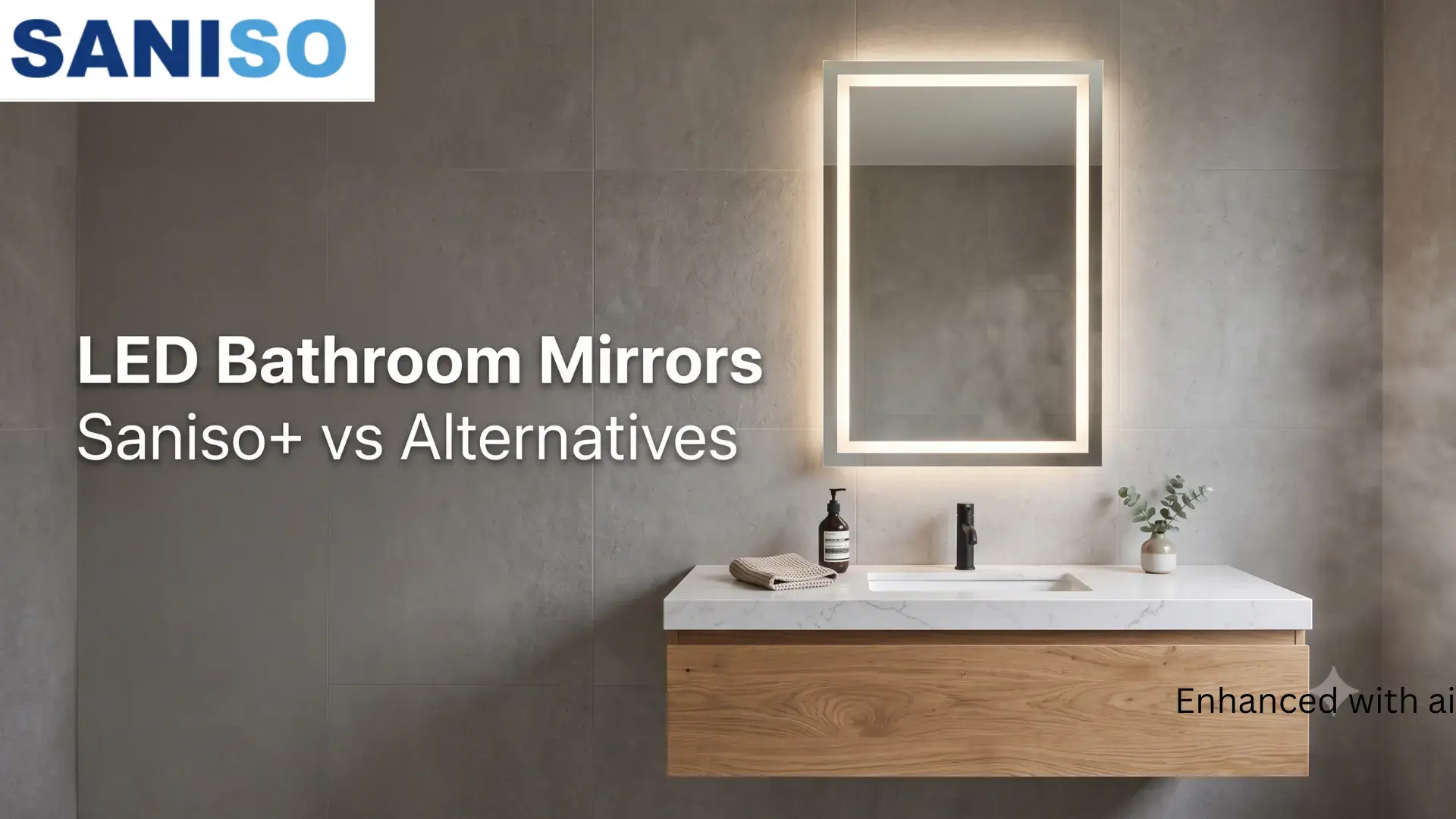
Comparing LED bathroom mirrors before you buy? See how the Saniso+ mirror stacks up on dimming, sizing, and water resist...

Your online building supplies store for building and renovation
 English
✓
English
✓
 Nederlands
✓
Nederlands
✓
A new mirror instantly makes a bathroom feel lighter and more spacious. Hanging it is a straightforward job, but in a bathroom the challenge is in the details: you often drill into tiles, there are pipes in the wall and a mirror is heavy and fragile. In this blog you will read step by step how to hang a bathroom mirror or mirror cabinet safely and level.
👷 Calling in a professional is never superfluous. If you have an LED mirror or a mirror cabinet with lighting that needs to be connected to the mains, always leave that connection to a qualified electrician. Strict rules apply to electrics near water in a bathroom.
For more inspiration on your bathroom layout, see our guide to planning a bathroom renovation.
A mirror usually hangs centred above the washbasin. The bottom edge is often about 20 to 30 centimetres above the basin or tap, so it stays free of splashes. Ideally the centre of the mirror is roughly at the eye level of the people using it. Also allow for the doors of a mirror cabinet, which must be able to swing open freely, and for lights or a socket nearby.
💡 Tape a piece of cardboard or paper to the wall in the size of the mirror. That way you can see straight away whether the height and position feel right before you drill.
Use the wall detector to scan the whole area around the drill holes. In a bathroom, pipes often run vertically above and below the tap and the washbasin. Never drill directly above or below a tap or socket. Also check what kind of wall you have: brick, concrete or a plasterboard wall. For plasterboard you use special plugs, and a heavy mirror cabinet needs a solid backing structure.
⚠️ If you are unsure whether there is a pipe behind the tile, or you hear something unusual while drilling, stop immediately. A damaged water pipe or cable is a job for a qualified installer.
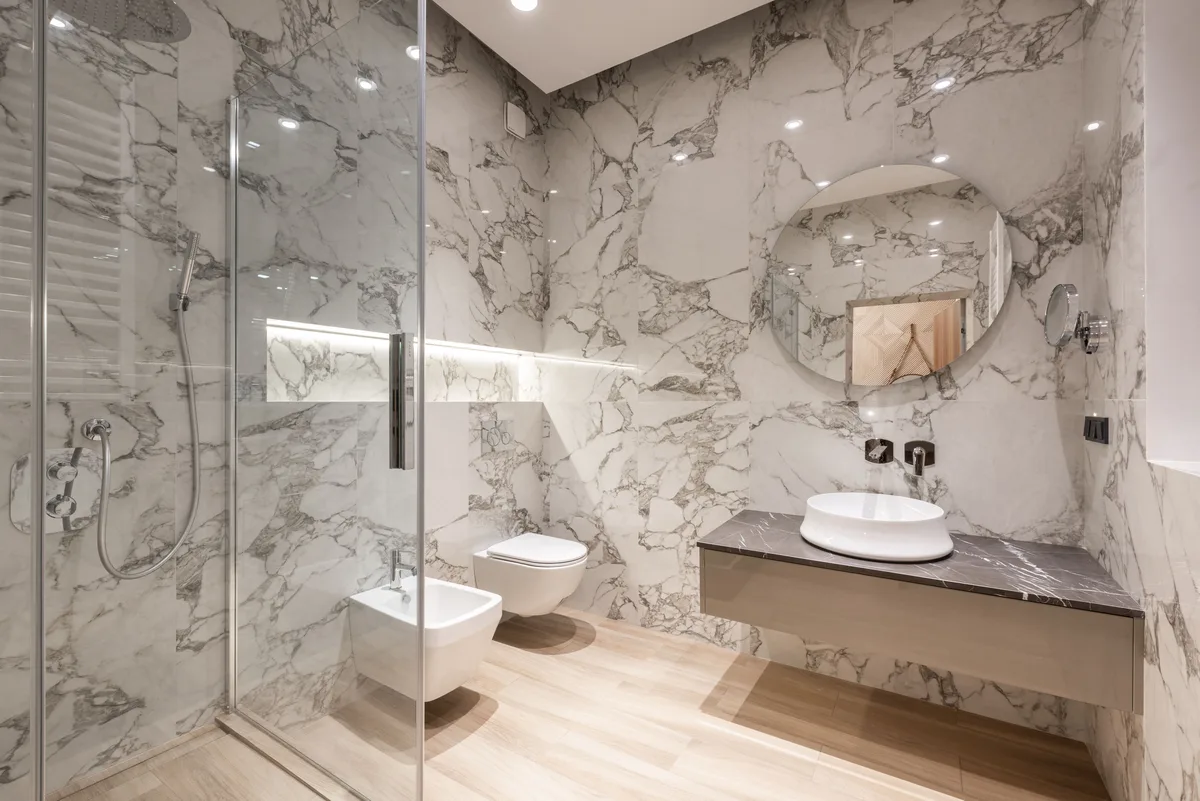
Measure the distance between the hanging points on the back of the mirror or the brackets. Draw a level line on the wall and mark the drilling points on it. Preferably drill in the middle of a tile and not in the grout joint or close to the edge of a tile; that is where a tile cracks more easily.
Read more about drilling into hard materials in our blog on diamond drilling in tile and concrete.
Tap the plugs into the holes until they are flush with the tile. Screw on the brackets or hanging screws and check with the spirit level that they are straight. Lift the mirror into place with two people, especially with a large mirror or mirror cabinet. Check once more that the mirror hangs straight and is securely fixed.
💡 Many mirror cabinets have adjustable hanging brackets. These let you fine-tune the cabinet by a few millimetres after hanging.
Wear safety goggles when drilling and keep dust to a minimum with a vacuum cleaner. Work calmly and never carry a large mirror on your own. If you are going to tile the wall first, read our blog on tiling a wall.
Usually the bottom edge is about 20 to 30 centimetres above the washbasin. The centre of the mirror is roughly at the eye level of the users.
That is possible with some mirrors using a suitable mirror adhesive, but the mirror is then hard to remove later. Always follow the mirror manufacturer's instructions.
You can do the hanging yourself. Leave the electrical connection in the bathroom to a qualified electrician, because strict rules apply to electrics near water.
Stop and assess the damage. A cracked tile can often be replaced; if in doubt, have a tiler do it.
Read also: How to design your bathroom with the Saniso bathroom configurator
Read also: Fixing into concrete, brick and aerated concrete: the right anchor
At Saniso, the online store for DIYers and professionals, you will find tools, materials and personal protective equipment for your job.
In doubt about the approach? Feel free to call in a professional.
Read also: How to install a shower enclosure: step-by-step DIY guide
Saniso – Build your home with Saniso.
Read also: How many spots do you need in the bathroom?, a calculation guide for the number of recessed spots and the right light next to your mirror.
Share:
Comparing LED bathroom mirrors before you buy? See how the Saniso+ mirror stacks up on dimming, sizing, and water resist...

Grout in one even colour across the whole wall or floor: that is what you want. In this blog we explain how the hybrid R...

Learn how to level a floor yourself: prepare the subfloor, prime, mix and pour self-levelling compound. Step-by-step wit...

Installing a kitchen: do it yourself or hire a professional? Read what is involved, which parts you can do yourself and...