


.webp)
After touching up your walls you do not want to throw away the brush. With the right approach you quickly clean brushes,...

Your online building supplies store for building and renovation
 English
✓
 Nederlands
✓
 Bathroom furniture sets
 Pillars and semi-pillars
 Consoles
 Washbasin cabinets
 Mirrors
 Cabinet for wc frame
 Shelves
 Accessories - bathroom furniture
 Panels for consoles
 Cabinets with laundry basket
 Top for wc frame
 Wall hung cabinets
 Cabinets for washing machine
 Mirror cabinets
 Case for wc frame
 Countertops
 Under countertop cabinets
 Washbasin faucets
 Washbasin faucets deck-mount high
 Washbasin faucets concealed
 Bidet faucets
 Bathshower faucets
 Shower faucets
 Bathshower sets concealed
 Shower column
 Freestanding bathshower faucets
 Shower sets
 Bathroom fitting sets
 Click-clack plugs
 Spare parts - bathroom fittings
 Bathshower faucets concealed
 Bath spout
 Multi-hole bathtub faucet
 Washbasin siphons
 Consealed bidet system
 Clothes
 Shorts
 Dungarees
 Work dungarees
 Reflective work dungarees
 Sweatshirts
 Hoodies
 Fleeces
 ShirtsFlannel work shirts
 T-shirts
 Polo
 Jackets
 Vests
 Jumpsuits and SetsDisposable suits
 Underwear and socks
 Hats and scarves
 Hats
 Baseball caps
 Hats with a lamp
 Chimneys
 Reflective hats
 Clothing accessories
 Stripes
 Suspenders
 Foam inserts
 Protective knee pads
 Footwear
 Low shoes
 Work shoes
 Boots
 Work boots
 Winter boots
 High-top winter boots
 Sandals
 Work sandals
 Flip-flops and clogs
 Rain boots
 Work boot
 Low wellies
 High-top galoshes
 Shoe accessories
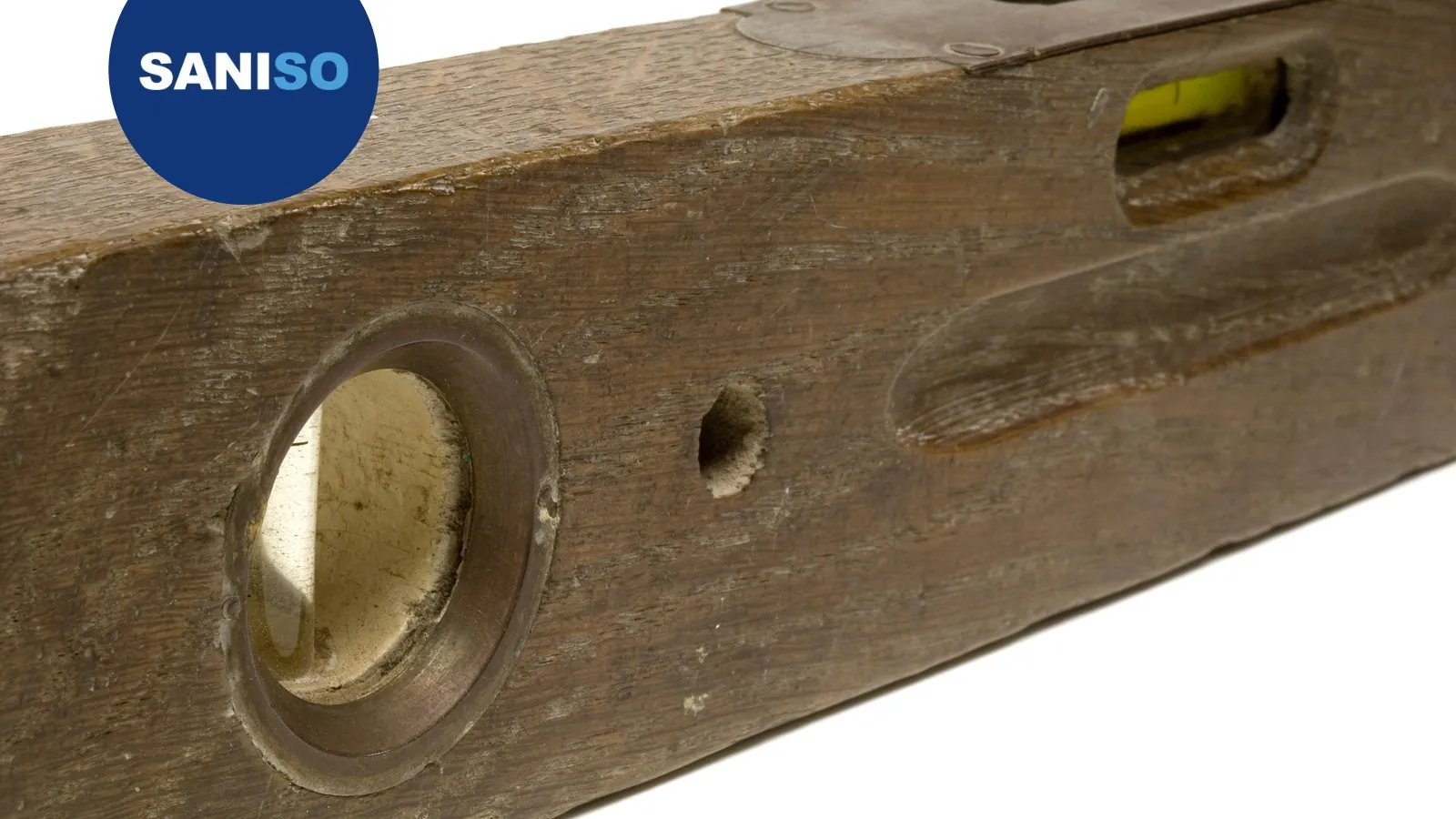
Photo: an old wooden spirit level, used at the laying of a cornerstone. Wellcome Collection, Wikimedia Commons, licence CC BY 4.0 (cropped)
Building facts #8 · Every Monday and Thursday one building topic, examined in depth
Every straight wall starts with a weight on a string and a bubble in a tube. Long before lasers, builders trusted gravity: a hanging weight shows exactly what is vertical, and a line at right angles to it shows what is level. Egyptian craftsmen used wooden triangles with a plumb bob, the Romans levelled their aqueducts with a 20-foot bench, and in 1661 a Frenchman sealed a bubble in a glass tube. In this eighth edition of Building facts we look at one topic: the history of the spirit level and the plumb line. (Missed edition #7? Read the history of glass and the window, from crown glass to triple glazing.)
Because gravity never lies. Hang a weight on a string and it points straight down to the centre of the earth: that is the plumb line. A line at a right angle to it is horizontal, or level. With these two directions a builder can check that a wall stands upright, a floor is flat and a beam lies straight, whatever the ground looks like.
The weight is called a plumb bob, and it has been used since at least ancient Egypt. Bobs were made of stone, wood or lead. That last material gave the tool its name: plumb comes from the Latin plumbum, lead. The English word aplomb has the same root, from the idea of 'standing upright'. Dutch says the same thing with its own word for lead: a wall that is perfectly vertical is loodrecht, or in het lood.
With tools so simple that they still make sense today. The Grand Egyptian Museum shows a plumb line level from the Middle Kingdom (12th Dynasty): a wooden isosceles triangle of 20.2 by 29.1 cm, with a plumb bob hanging from the top. When the string hangs over the mark in the middle of the base, the base is level. The museum calls it a simple but effective tool that is still used today to help builders align structures.
A second famous example belonged to Sennedjem, an artisan in the workers' village of Deir el-Medina during the reigns of Seti I and Ramesses II. His tomb, TT1, was discovered intact on 31 January 1886, with work tools among the funerary goods. One of them is a wooden plumb level: a long slab with two short pieces at right angles and a limestone bob on a string. Hold the slab against a wall and, if the wall is vertical, the string just touches the lower piece. The tool carries Sennedjem's name.
The Egyptians also used a bar with a plumb line, the merkhet, but for the sky rather than for walls: they used it to follow certain stars and tell the time at night.
An aqueduct only works if the water keeps flowing gently downhill over many kilometres, so the Romans had to measure tiny slopes. The architect Vitruvius describes three instruments in Book VIII of his De architectura: the dioptra, the water level (libra aquaria) and the chorobates. He calls the chorobates the best, because the other two 'are often found to be incorrect'.
The chorobates was a rod about 20 feet long on two legs of equal length, with cross pieces on which vertical lines were marked. Plumb lines hung from the rod: when they coincided with the marked lines, the instrument stood level. And if the wind made the lines swing? Then, says Vitruvius, cut a channel in the top of the rod, five feet long, one inch wide and half an inch deep, and pour water into it. If the water touches both ends equally, it is level. He even answers readers of Archimedes, who knew that water is not flat but curves with the earth: the two ends of the channel still hold the same height of water.
For straight lines and right angles on the ground, Roman surveyors used the groma, a rotating horizontal cross with plumb bobs hanging from all four ends. It is the only Roman surveying tool of which examples survive.
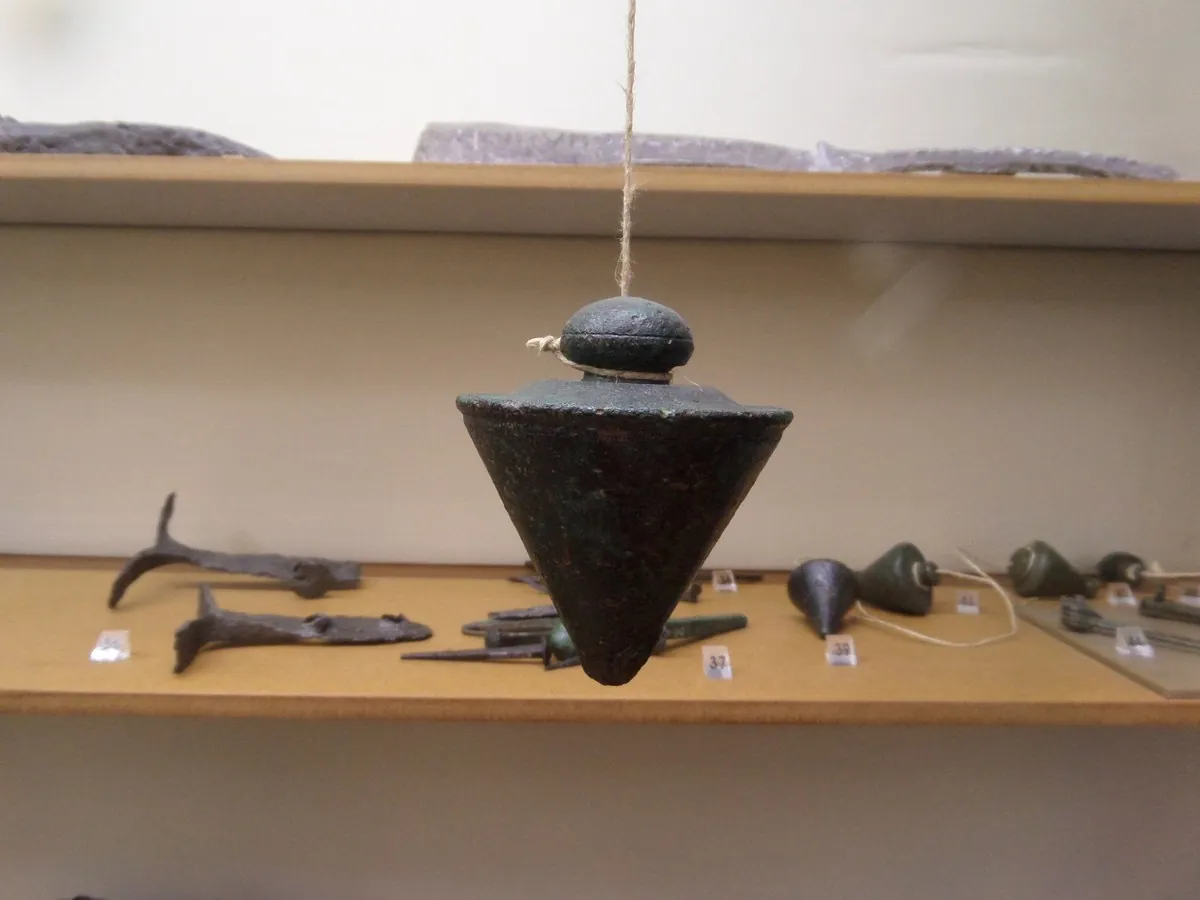
Much longer than you might think. The Dutch name for this tool is the loodrei: an isosceles triangle with an accurate straight base and a plumb bob hanging from the top corner, sometimes made as an inverted T instead. In other languages it was known as the archipendulum, an A-frame level with a plumb line from the vertex, and it remained in use until the middle of the 19th century.
Even after the bubble level was invented, it was at first kept for precision work. According to French sources, carpenters, masons and joiners went on using a wooden level with a plumb line at least until the end of the 18th century. There were also 'bottle levels': a tin tube one inch across and four feet long, with a glass vial sealed with putty at each end.
A French scholar called Melchisédech Thévenot (about 1620–1692). From his letters to the Dutch scientist Christiaan Huygens we know that he invented the bubble level some time before 2 February 1661. Within a year he sent details of his invention to Robert Hooke in London and Vincenzo Viviani in Florence. He later entered the service of Louis XIV.
The oldest spirit levels that survive date from the early 18th century, which is why it is sometimes said that the bubble level only caught on then. But as early as 1666 Adrien Auzout recommended that the French Académie royale des sciences take 'levels of the Thévenot type' on an expedition to Madagascar. In 1764 the technique was described and illustrated in the astronomy book of La Lande.
Thévenot was a man of many talents. He is also famous for The Art of Swimming, published after his death in 1696 and one of the first books on swimming. Curiously, no portrait of him has survived.
The name says it: spirit is alcohol. The vial contains a light-coloured liquid, usually ethanol, with an air bubble in it. Despite the Dutch name waterpas, water is actually unsuitable: it expands when it freezes and can crack the glass vial. A colourant such as fluorescein makes the liquid yellow or green, so the bubble is easier to see.
The trick is in the shape. The vial is very slightly curved, so the bubble always rises to the highest point. If the level is horizontal, that highest point is exactly between the two lines. The less curved the vial, the more sensitive the level. French sources give an example: an ordinary mason's or carpenter's level with a sensitivity of 1 mm per metre has a vial with a radius of curvature of about 2 metres, while precision levels can exceed 100 metres. Levels that must also work upside down use a barrel-shaped vial instead.
Thévenot's first usable level still had two banana-shaped capsules and was quite complicated to use. Today's form, with a single, only slightly curved vial, dates from the 1920s. Usual accuracies for a new level are 0.057° (1 mm per metre) or 0.0285° (0.5 mm per metre). Want to know if yours is still accurate? Place it on a surface, turn it 180° and compare; we explain the full test in how to test if your spirit level is still accurate.
The Dutch word waterpas literally describes what the tool checks: a surface that 'fits' the surface of still water. Etymologists explain it as a combination of water and pas, an old word for a fixed measure, and the word appears in Dutch as early as 1527. It travelled well: German, Danish, Norwegian, Swedish, Russian, Ukrainian, Indonesian, Papiamento and Sranan Tongo all borrowed it, which is why a spirit level is a vaterpas in Norway and a vattenpass in Sweden.
The Dutch name for the vial, libel, comes from the Latin libella, which means both 'small balance' and 'level'. The English word level and the Dutch word niveau come from the same source (libel, livel, nivel). And the dragonfly, also called libel in Dutch, was named after the instrument.
The plumb line left traces in everyday Dutch too. In the old days a wall that stood straight was te lode, checked with the plumb. Today something that is in order is in het lood, and a picture or a person that leans to one side hangt uit het lood.
Water always finds its own level. Connect two upright tubes with a hose, fill it with water, and the water stands at exactly the same height in both: the law of communicating vessels. That is how a hose water level works. Over long distances it can be more accurate than an optical or laser level, and very large versions have been used to measure height differences between the Wadden Islands and the Dutch mainland.
The Netherlands also has its own national 'level': NAP, the Normaal Amsterdams Peil. It goes back to Amsterdam in the 17th century. From September 1683 to September 1684 the mean high water of the IJ was measured, and in 1684 this city level was fixed at nine feet and five inches below the sea dike height. That height was marked by a groove in marker stones, and on the orders of mayor Johannes Hudde eight of them were placed in Amsterdam sluices. Only the stone in the Eenhoornsluis is still in its original place. When it was measured again in 2007, it turned out to be 61 mm lower than in 1683.
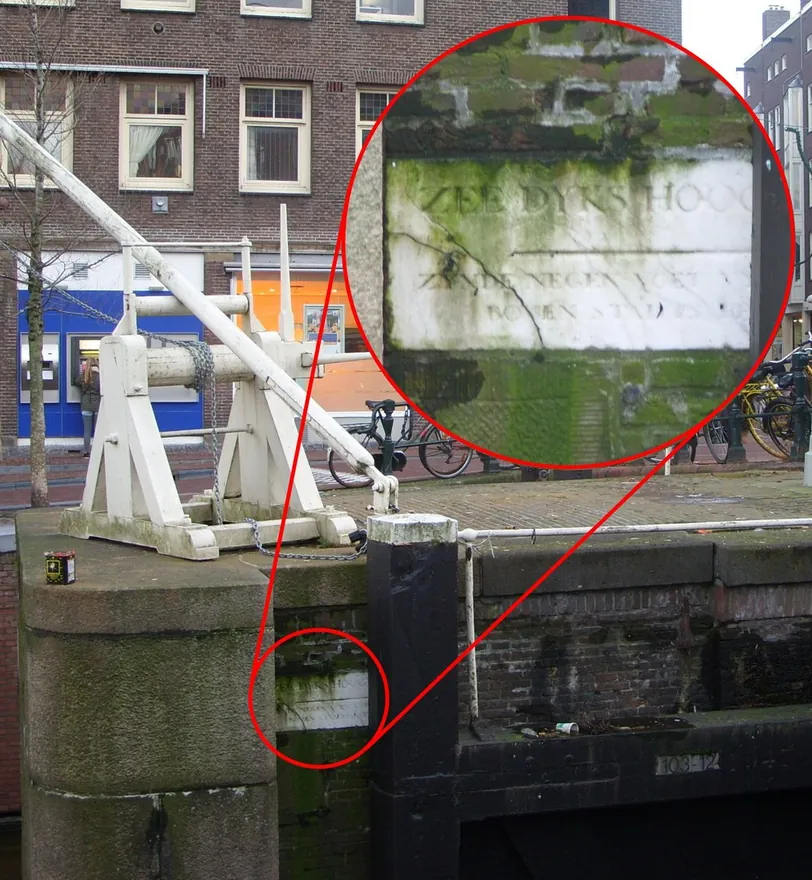
In 1818 the Amsterdams Peil was prescribed as the reference level, and in 1829 it became the zero point for all water level gauges in the Netherlands. After the first precision levelling (1875–1885) it was given the name NAP. Today about 35,000 visible benchmarks, mostly small bronze bolts marked NAP, and 400 underground benchmarks carry the level across the country, and Rijkswaterstaat measures most of them again every 10 years. Since 1953 the reference has been the top of a bronze bolt on a 22-metre pile at the Dam in Amsterdam. The lowest point of the Netherlands lies at 6.76 metres below NAP near Nieuwerkerk aan den IJssel; the highest point of the mainland is on the Vaalserberg, at NAP +322.4 metres.
| When | Milestone |
|---|---|
| Middle Kingdom (12th Dynasty) | Egyptian plumb line level: a wooden triangle with a plumb bob |
| 19th Dynasty | Plumb level of the artisan Sennedjem, found in his tomb in 1886 |
| Roman times | Vitruvius describes the chorobates for levelling aqueducts |
| before 2 Feb 1661 | Melchisédech Thévenot invents the bubble level |
| 1666 | Thévenot levels recommended for a French scientific expedition |
| 1683–1684 | Amsterdam measures the mean high water of the IJ: the Amsterdams Peil |
| 1764 | The bubble level is described and illustrated in La Lande's astronomy book |
| 1818 / 1829 | Amsterdams Peil becomes the Dutch reference level |
| 1875–1885 | First precision levelling; the name NAP follows |
| 1920s | Today's form: one single, slightly curved vial |
| 1939 | Fell All-Way bull's-eye level |
| 1953 | NAP fixed on a bronze bolt on a 22-metre pile at the Dam |
| late 1960s | Oscar Soliz invents the laser level |
| late 1990s | Compact line laser with a lens is patented |
| today | Cross line lasers, digital levels and still the spirit level |
Quite recently. The laser level was invented by Oscar Soliz in the late 1960s, and the idea has been around since at least the early 1970s. A design with a spinning mirror, which sweeps the beam into a full level plane, was patented by the late 1980s, and the compact line laser with a lens, the type most tool makers produce today, in the late 1990s. Cross line lasers, which project a horizontal and a vertical line at the same time, have now largely replaced simple line lasers, also for jobs like painting and tiling.
The bubble didn't disappear, though. Many lasers level themselves, but some are set up with a vial or even a plumb bob. Digital levels show the angle in figures, and a smartphone app uses the phone's accelerometer. Wondering which tool suits your job? Read cross line laser or spirit level: tile and measure truly straight.
The principle hasn't changed in thousands of years: gravity pulls a bob down and lifts a bubble up. What has changed is the accuracy and the comfort. Below are a few products in which you can recognise this history, from the classic spirit level to the water level and the cross line laser.
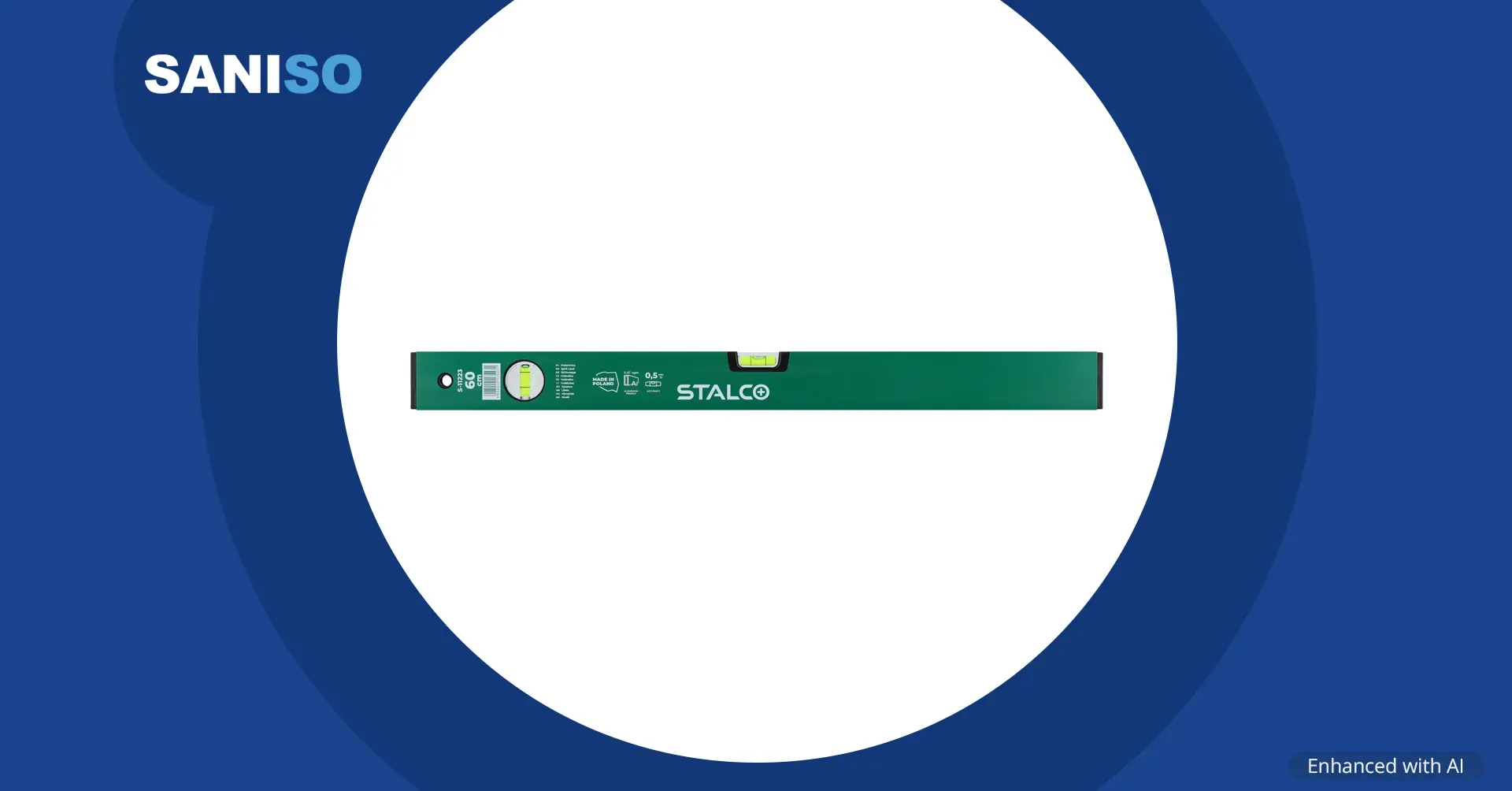
A spirit level with a solid aluminium profile (1.3 mm wall), vials that resist extreme weather and UV, and electrostatically neutral vials. Measuring accuracy: 0.5 mm per metre. Made in Poland.
What is it for? Everyday levelling, from a shelf to a window sill: the bubble does what Thévenot's bubble did in 1661.
Read also: how to test if your spirit level is still accurate
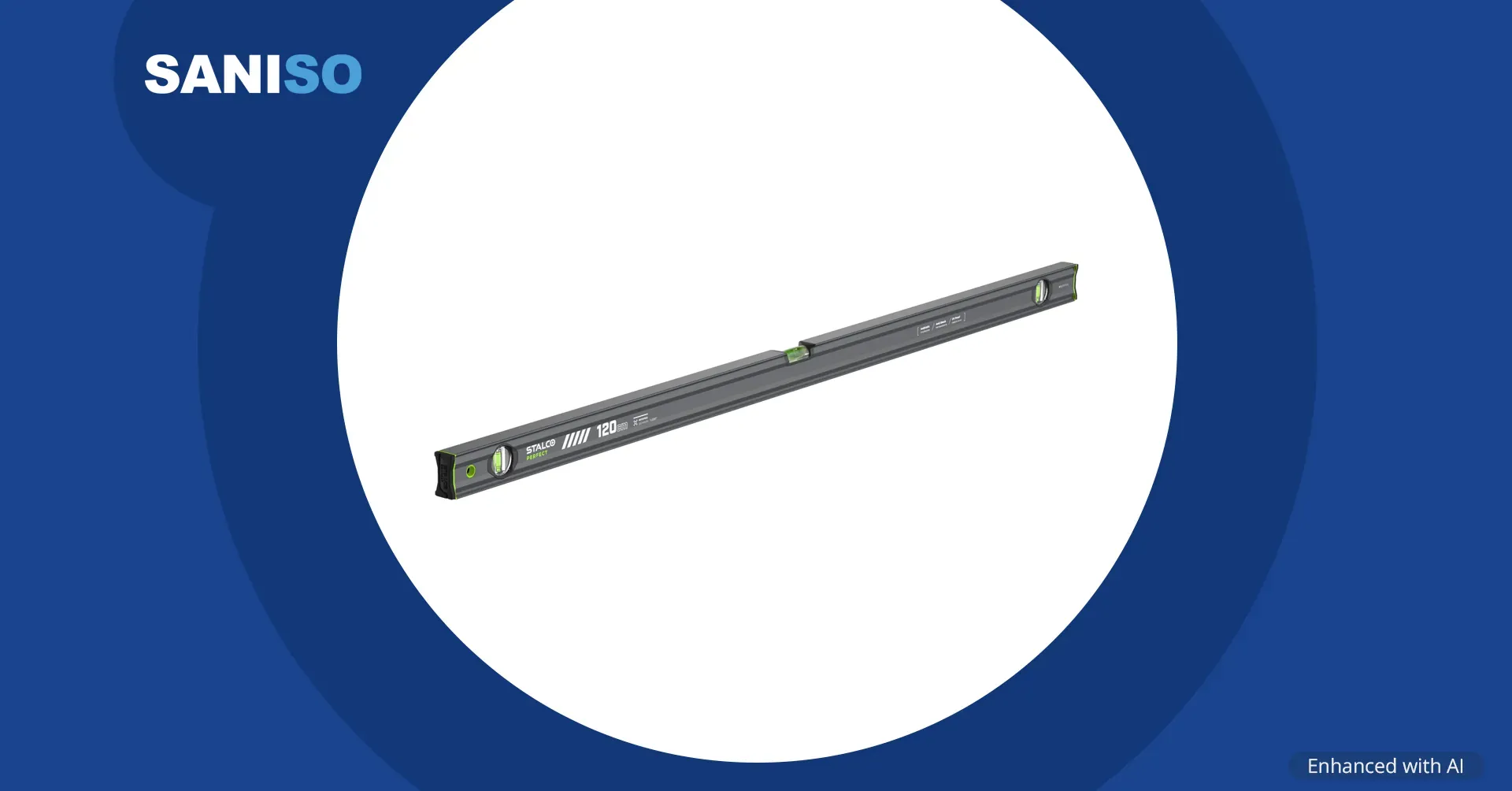
A 120 cm level with two plumb vials and a measuring accuracy of 0.0285°, which is 0.5 mm per metre. It has a corrugated profile for rigidity, shock-absorbing end caps and a 30-year warranty on the horizontal and plumb vials.
What is it for? Checking door frames, posts and walls for plumb: the plumb vial is the modern answer to the plumb line.
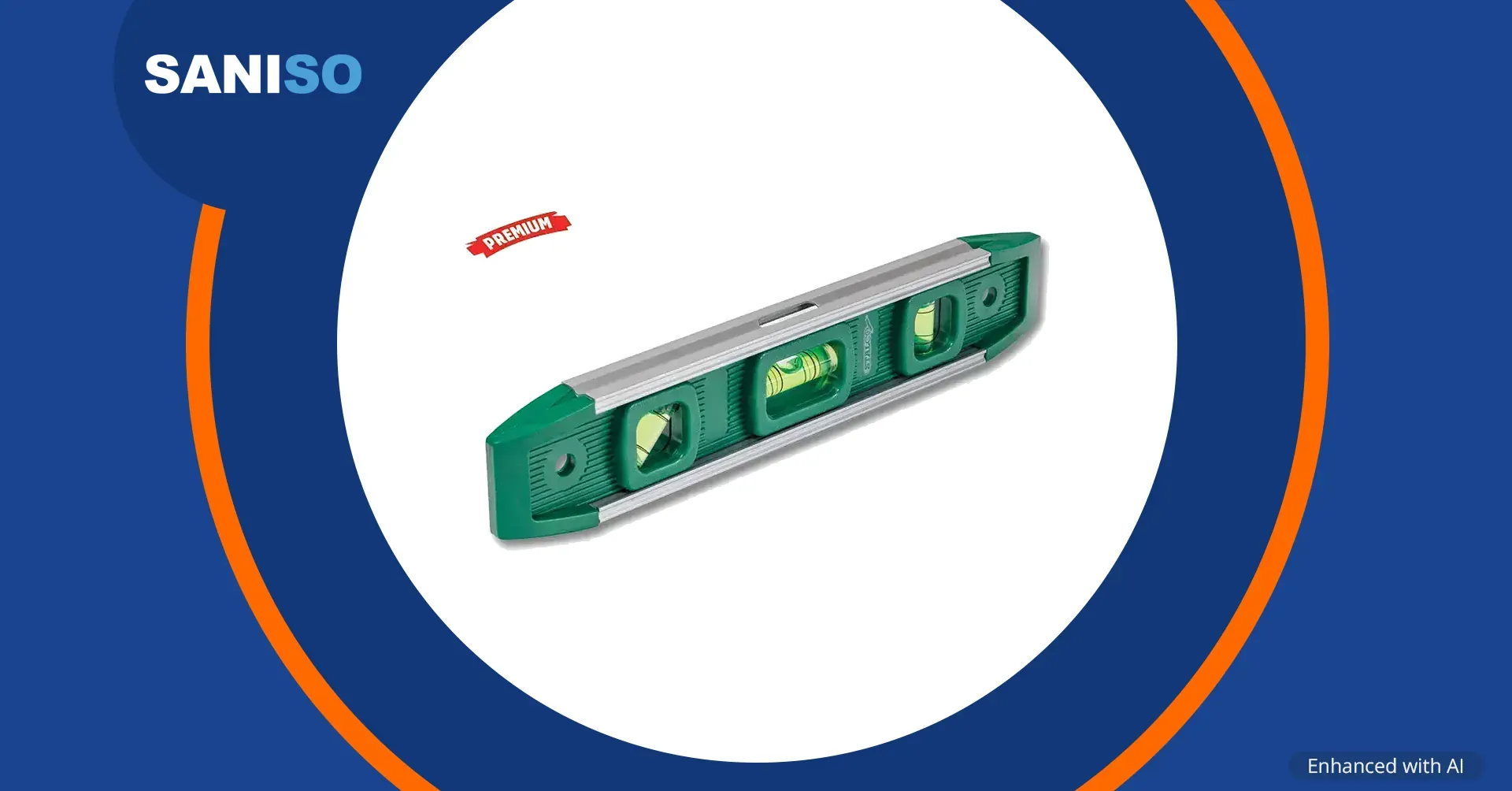
A compact 23 cm level with three vials (0°, 90° and 45°), a V-groove for levelling pipes and a magnetic base, in a light housing.
What is it for? Short jobs and tight spots, such as pipework or a small bracket, where a long level won't fit.
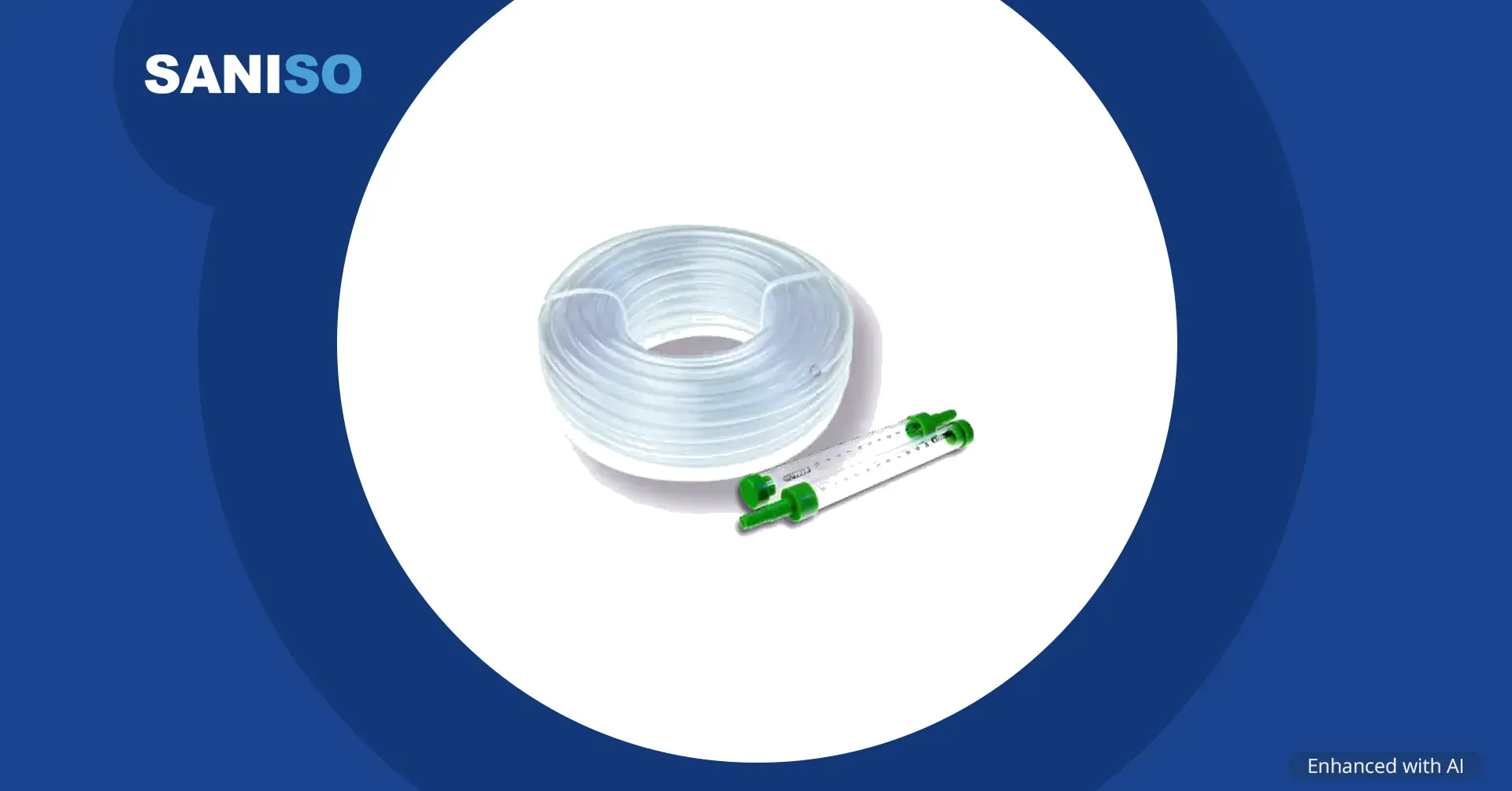
A water level with 15 metres of hose, tight plugs that keep the water in at the measuring point and unbreakable measuring cylinders with a clear scale.
What is it for? Transferring a height between points far apart or around a corner, using the same principle of communicating vessels as the old hose levels.
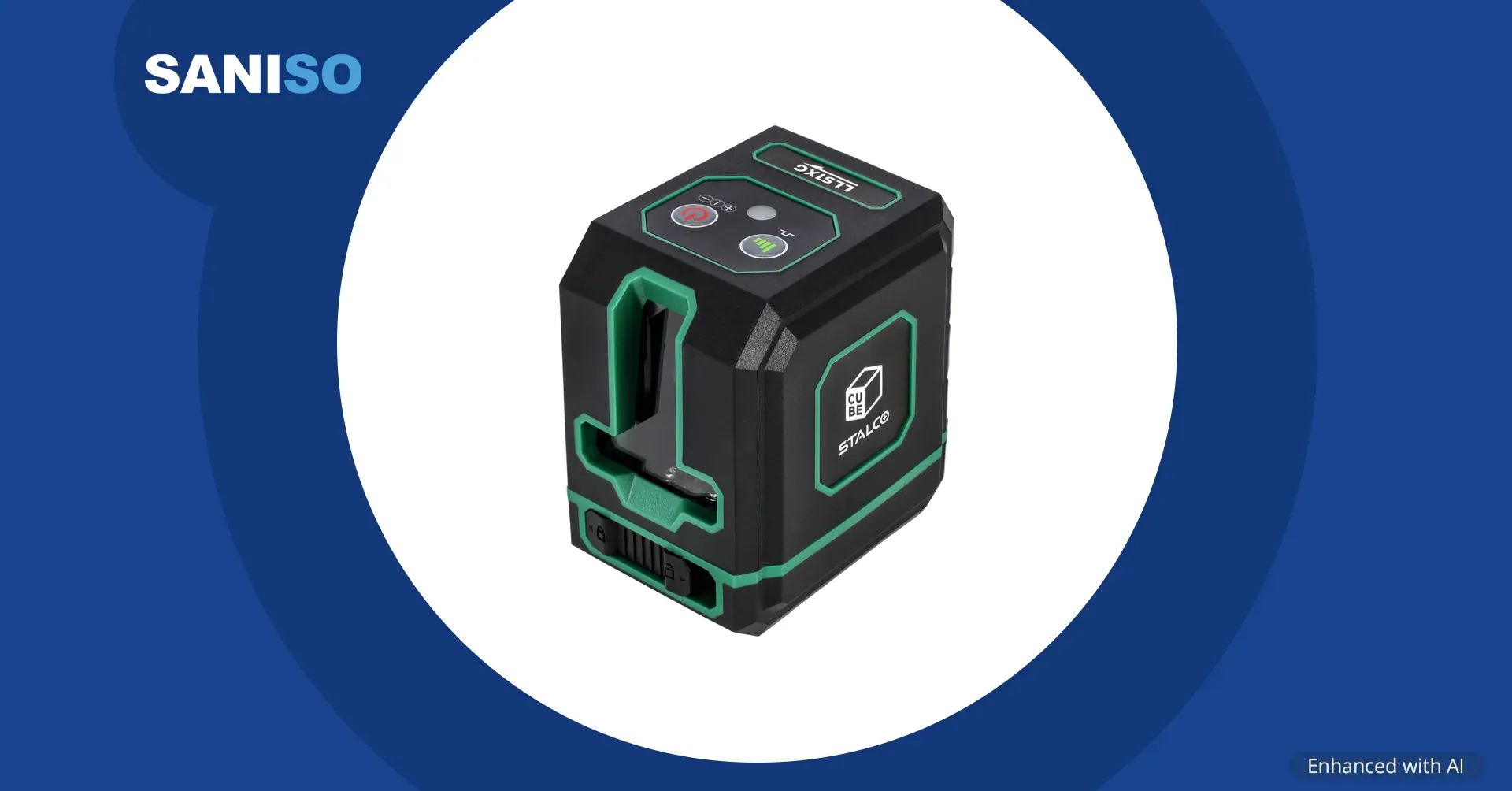
The LLS1XG CUBE cross line laser has a green beam that stays visible in bright light, horizontal and vertical lines that can be switched on separately, 4 brightness levels, self-levelling up to 4° and a built-in 1000 mAh battery for up to 9 hours at 50% brightness. It works from −10 to 50 °C and comes with a mount, USB cable and case.
What is it for? Projecting a straight horizontal and vertical line on the wall, for example for tiling or fitting a row of cabinets.
Read also: cross line laser or spirit level: tile and measure truly straight
Order on a workday before 15:00? Then your order is delivered the next workday, as long as it fits in a parcel. Pallet shipments have a different delivery time. Saniso has thousands of products in stock in the Netherlands.
Your first order is easy to place:
Want to know when there are new offers? Sign up for the newsletter: scroll to the bottom of any page on saniso.nl, enter your email address under "Newsletter" and click "Subscribe". You'll get updates on offers and discount vouchers, and we don't spam. With an account you also collect loyalty points for a discount on your next purchase.
Questions about ordering, your account, payment, shipping or returns? Find all the answers in the Saniso FAQ.
Who invented the spirit level?
The French scholar Melchisédech Thévenot, some time before 2 February 1661. We know the date from his letters to Christiaan Huygens.
How did builders check level before the spirit level?
With a plumb bob. A wooden triangle or A-frame with a plumb line from the top showed when its base was level. The Egyptians already used this, and builders kept using it until the 18th and 19th centuries.
How old is the plumb bob?
It has been used since at least ancient Egypt. The Grand Egyptian Museum has a plumb line level from the Middle Kingdom (12th Dynasty).
Where does the word plumb come from?
From the Latin plumbum, lead, the material once used for the weight. The Dutch word lood (as in loodrecht and schietlood) also means lead.
What is a chorobates?
A Roman levelling instrument described by Vitruvius: a rod of about 20 feet on legs, with plumb lines, and a water channel on top for windy days. It was important for building aqueducts.
Why is a spirit level filled with alcohol?
Water expands when it freezes and could crack the vial. Alcohol, usually ethanol, doesn't have that problem. A colourant such as fluorescein makes the bubble easier to see.
Why does the bubble always sit in the middle?
The vial is very slightly curved, so the air bubble always rises to the highest point. When the level is horizontal, that point is exactly between the lines.
How accurate is a spirit level?
Usual accuracies for a new level are 0.057° (1 mm per metre) or 0.0285° (0.5 mm per metre).
What does the Dutch word waterpas mean?
Literally something like 'matching the surface of water'. The word dates from at least 1527 and was borrowed into German, the Scandinavian languages, Russian, Indonesian and other languages.
How does a hose water level work?
It works on communicating vessels: water in a hose with two open ends stands at the same height at both ends. Over long distances it can be more accurate than an optical or laser level.
What is NAP?
Normaal Amsterdams Peil, the Dutch reference level for heights. It goes back to the mean high water of the IJ measured in 1683–1684 and has carried the name NAP since 1891.
When was the laser level invented?
Oscar Soliz invented it in the late 1960s. Compact line lasers with a lens were patented in the late 1990s.
What is the delivery time at Saniso?
Order on a workday before 15:00 and it's delivered the next workday, as long as it fits in a parcel. Pallet shipments have a different delivery time.
Do the prices include VAT?
This blog shows every price including and excluding VAT. At checkout on saniso.nl, prices are shown including VAT.
Building facts takes one building topic under the magnifying glass every Monday and Thursday. This is edition #8. Read the previous edition too: the history of glass and the window, from crown glass to triple glazing, and edition #1: the history of the brick. Fun link: every brick in a straight wall was once laid with a level and a plumb line.
Share:
After touching up your walls you do not want to throw away the brush. With the right approach you quickly clean brushes,...

Is your shelf still crooked? With the reversal test you check in two minutes whether your spirit level is still accurate...
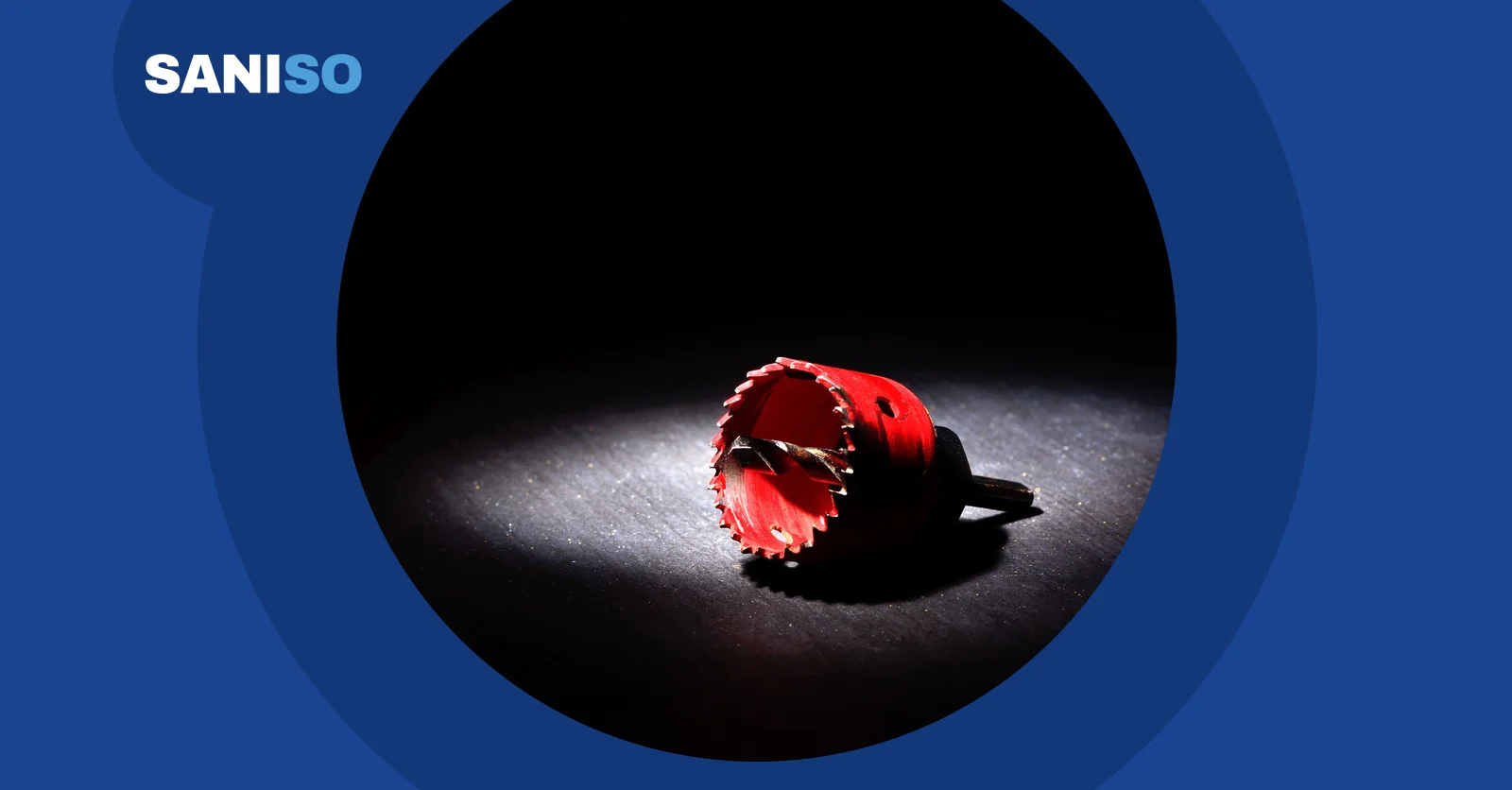
Which hole saw do you choose for wood, metal, plastic or tile? Learn the difference between bi-metal, carbide and diamon...