

.webp)

Waterproofing a facade against moisture: find out when it makes sense, what to repair first, how to do it yourself and w...

Your online building supplies store for building and renovation
 English
✓
 Nederlands
✓
 Bathroom furniture sets
 Pillars and semi-pillars
 Consoles
 Washbasin cabinets
 Mirrors
 Cabinet for wc frame
 Shelves
 Accessories - bathroom furniture
 Panels for consoles
 Cabinets with laundry basket
 Top for wc frame
 Wall hung cabinets
 Cabinets for washing machine
 Mirror cabinets
 Case for wc frame
 Countertops
 Under countertop cabinets
 Washbasin faucets
 Washbasin faucets deck-mount high
 Washbasin faucets concealed
 Bidet faucets
 Bathshower faucets
 Shower faucets
 Bathshower sets concealed
 Shower column
 Freestanding bathshower faucets
 Shower sets
 Bathroom fitting sets
 Click-clack plugs
 Spare parts - bathroom fittings
 Bathshower faucets concealed
 Bath spout
 Multi-hole bathtub faucet
 Washbasin siphons
 Consealed bidet system
 Clothes
 Shorts
 Dungarees
 Work dungarees
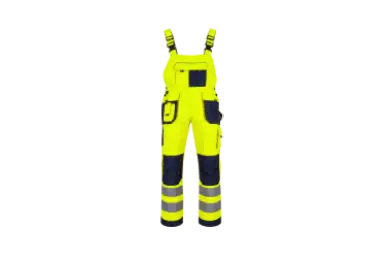 Reflective work dungarees
 Sweatshirts
 Hoodies
 Fleeces
 ShirtsFlannel work shirts
 T-shirts
 Polo
 Jackets
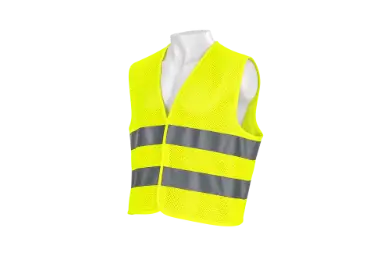 Vests
 Jumpsuits and SetsDisposable suits
 Underwear and socks
 Hats and scarves
 Hats
 Baseball caps
 Hats with a lamp
 Chimneys
 Reflective hats
 Clothing accessories
 Stripes
 Suspenders
 Foam inserts
 Protective knee pads
 Footwear
 Low shoes
 Work shoes
 Boots
 Work boots
 Winter boots
 High-top winter boots
 Sandals
 Work sandals
 Flip-flops and clogs
 Rain boots
 Work boot
 Low wellies
 High-top galoshes
 Shoe accessories

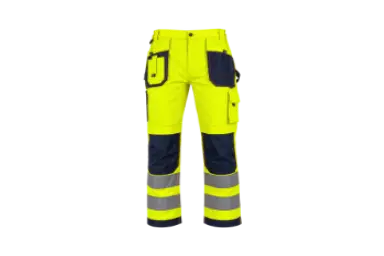
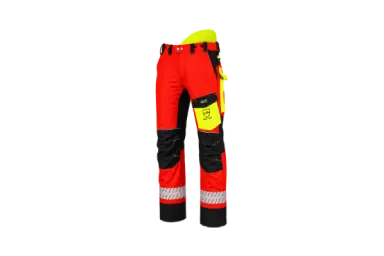
Short answer: high-visibility clothing to EN ISO 20471 comes in three classes. The higher the class, the more fluorescent and reflective material and the better you are seen. For work by the road, class 2 is the minimum in daylight. In the dark, in poor visibility or with faster traffic you wear class 3. On a construction site the risk assessment of your employer or client decides which class is needed.
👷 High-visibility clothing is not a separate purchase but part of a project's safety plan. Always follow the agreements on site and the instructions of your supervisor or safety adviser. Their experience with traffic, machines and visibility is never superfluous.
The standard sets a minimum area per class. Fluorescent material makes you stand out in daylight, reflective material returns the light of headlights and site lamps in the dark.
| Class | Fluorescent material | Reflective material | Typical garment |
|---|---|---|---|
| Class 1 | at least 0.14 m² | at least 0.10 m² | reflective bands, harness, narrow body warmer |
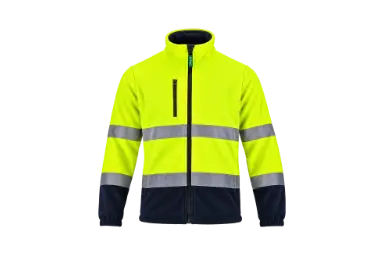
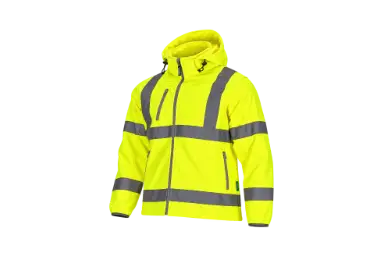
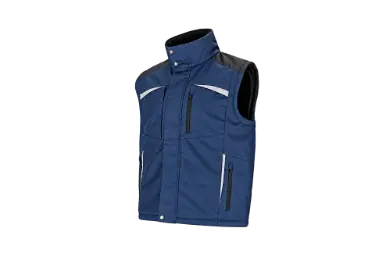
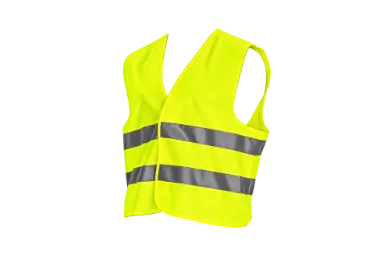
| Class 2 | at least 0.50 m² | at least 0.13 m² | vest, body warmer, fleece or softshell |
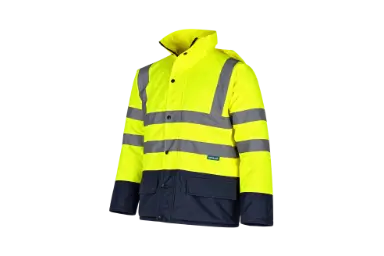
| Class 3 | at least 0.80 m² | at least 0.20 m² | long-sleeved jacket, overall or jacket and trousers together |
The permitted fluorescent colours are yellow, orange-red and red. A jacket and trousers can reach a higher class together, but only if the label states this for that combination. So never assume that two separate garments are automatically class 3.
⚠️ If you work on or beside a road with traffic, there must always be a traffic measure as well, such as barriers and signs according to an approved plan. Clothing alone is never enough. If in doubt, talk to the site manager or the road authority first.
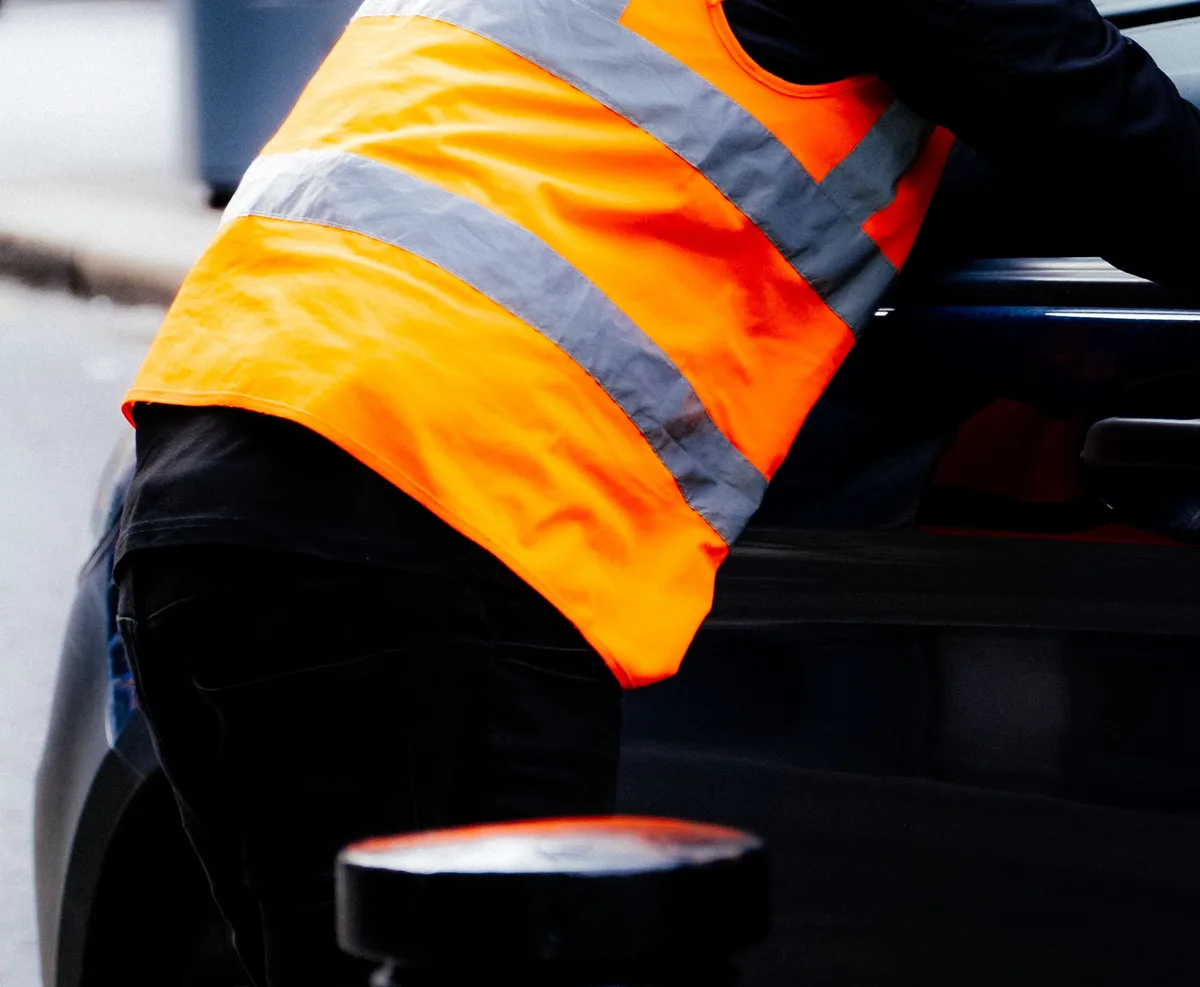
In autumn and winter it is dark in the morning and at the end of the working day. That is exactly when you often wear a coat over your vest, and the reflective tape disappears under a dark layer. So choose a garment that is visible in its own right.
Check the label and the product page for the class of a garment. Without a clear mention of EN ISO 20471 and the class, it is not certified high-visibility clothing.
Replace clothing sooner if the fabric fades or stays dirty, if reflective bands tear or come loose, or if paint, cement or oil no longer comes off. You lose visibility slowly, so you often notice it late yourself.
Read more about working safely in our blog on safe working on the construction site.
💡 When buying for a company, let everyone try on their own size. A vest that hangs too loose can catch on machines, and a jacket that is too tight is left open, so the reflective tape on the torso is lost.
Not always. Only the label with EN ISO 20471 and the number 2 tells you the class of the vest. Cheap promotional vests sometimes only reach class 1 or are not certified.
For roadside work in the dark or in poor visibility, class 3 applies. A vest is usually class 2. Wear a jacket with reflective sleeves or a combination labelled as class 3.
There is usually no legal duty for private individuals, but if you work on the driveway, by the street or unload materials in the dark, a vest is little effort. For work on the public road, call in a professional or the company that arranges the barriers.
At Saniso, the online store for DIYers and professionals, you will find tools, materials and personal protective equipment for your job.
In doubt about the approach? Feel free to call in a professional.
Saniso – Build your home with Saniso.
Share:
Waterproofing a facade against moisture: find out when it makes sense, what to repair first, how to do it yourself and w...

Old paint on window frames, doors or stairs can contain lead. Learn where the risk is, why you should never dry sand or...
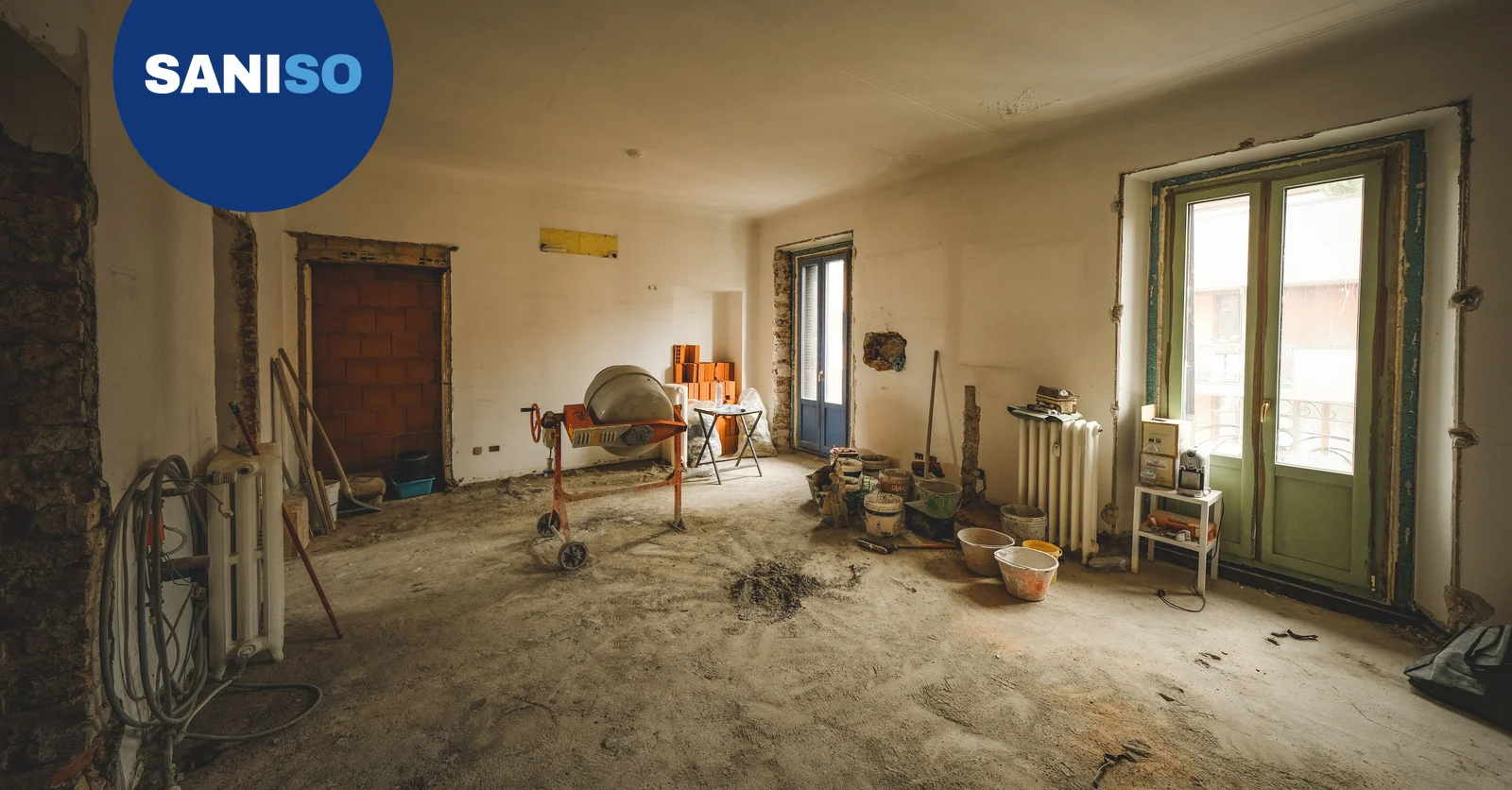
Tripping over a cable, stepping on a screw or searching for that one tool: clutter on site slows you down and causes acc...

A green roof or moss between the tiles? Learn what you can safely do yourself on a low roof, why a pressure washer damag...