





Want to lay a vinyl floor yourself? This guide explains the difference between click and glue-down vinyl and shows you h...

Your online building supplies store for building and renovation
 English
✓
 Nederlands
✓
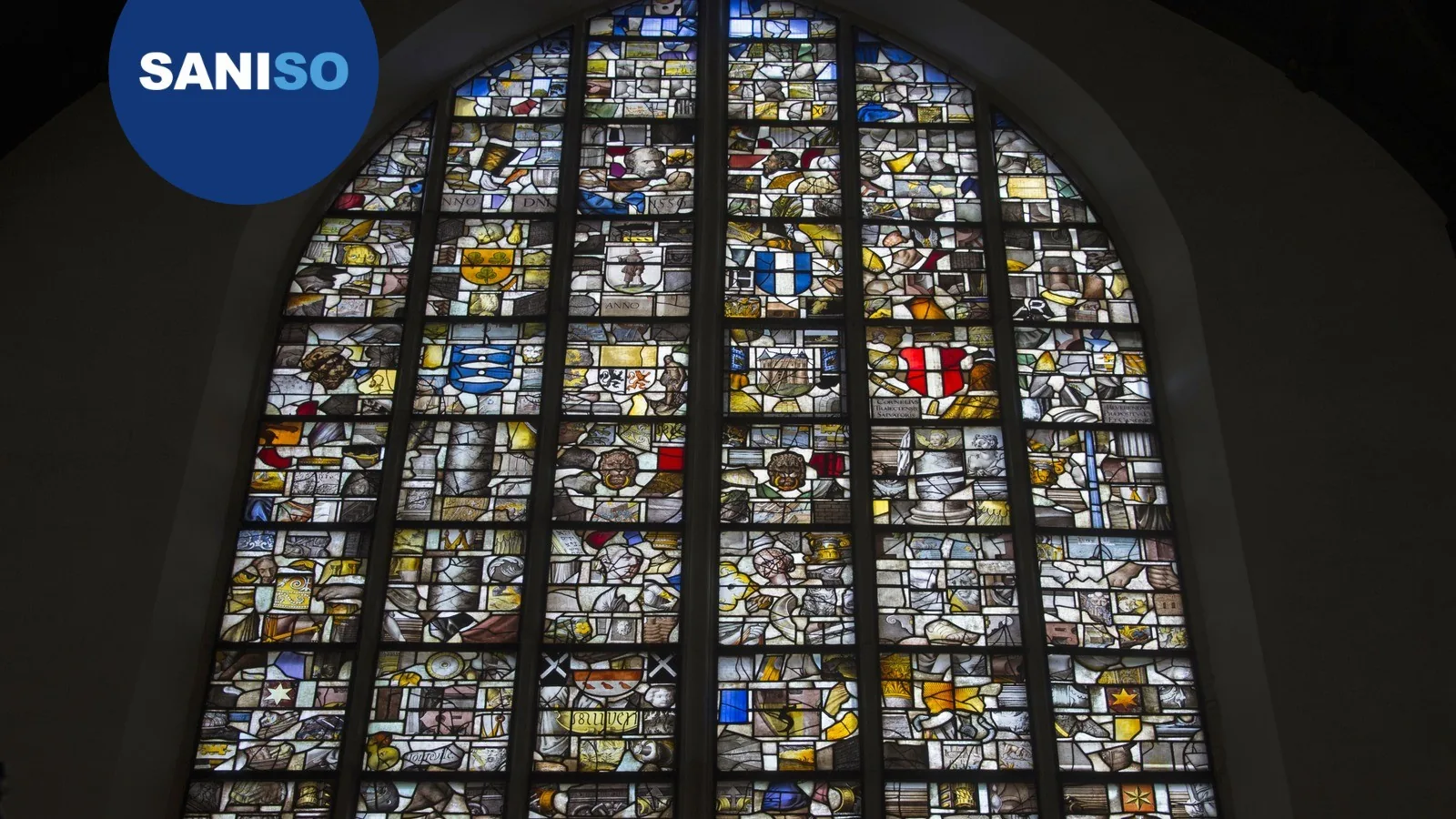
Photo: one of the Goudse Glazen, the famous stained-glass windows of the Sint-Janskerk in Gouda. Dosseman, Wikimedia Commons, licence CC BY-SA 4.0 (cropped)
Building facts #7 · Every Monday and Thursday one building topic, examined in depth
Look out of the window: you're looking through melted sand. We hardly notice glass any more, yet for most of history a clear, flat window was a luxury. The Romans glazed their first windows with thick, cloudy cast glass, medieval churches filled huge openings with small pieces of glass in lead, and in the Netherlands people once paid tax on every window. Today a sheet of HR++ or triple glazing keeps the warmth inside. In this seventh edition of Building facts we look at one topic: the history of glass and the window. (Missed edition #6? Read the history of the bath and the shower, from Roman thermae to walk-in shower.)
Long before anyone made glass, people used it. Obsidian, a natural volcanic glass, was used for arrowheads and knives as far back as the Stone Age. Man-made glass objects date back to about 3500 BC, and archaeologists think the first true glass was made in coastal north Syria, Mesopotamia or ancient Egypt.
The Roman writer Pliny the Elder told a nice story: Phoenician traders were said to have stumbled upon glass by accident at the river Belus. Historians see it more as a reflection of the Roman glass trade, which prized the very pure sand from that area, than as the real discovery. The oldest written recipe is more down to earth. An Assyrian clay tablet from about 650 BC says: 'Take 60 parts sand, 180 parts ashes of sea plants and 5 parts lime, and you get glass.'
The Dutch heritage agency (RCE) puts it simply: glass is melted sand that cools into a solid without crystallising. Scientists call it an amorphous solid: its atoms have no regular crystal pattern, which is why light passes straight through.
Pure silica only melts at 1,723 °C, too hot for early furnaces. So glassmakers added a flux: first potash from the ashes of wood or plants, later soda. Soda lowers the melting point but makes glass weaker, so lime is added for strength and durability. Window glass is still essentially that trio, sand, soda and lime, usually with broken glass (cullet) mixed in, which also helps it melt. This soda-lime glass contains about 70% silica and makes up around 90% of all glass made today. Depending on the type, the batch is melted at 1,300 to 1,600 °C.
Look at the edge of a pane and you'll see a faint green tint: that comes from traces of iron oxide in the sand. Glassmakers once added manganese to make glass colourless, but manganese slowly turns purple in sunlight. That's why some houses on the Amsterdam canals have purple window panes.
Before glass, window openings were closed with shutters, or with thin, translucent materials such as flattened animal horn, paper or thin slices of marble. The English word window still remembers the open hole: it comes from Old Norse vindauga, 'wind eye'. Many Germanic languages took the Latin word fenestra for a glazed window instead, like German Fenster.
The Romans are the first people known to have used glass in windows. Glassblowing, invented on the Syro-Judean coast in the 1st century BC, made glass much cheaper: glass vessels became inexpensive compared with pottery. Around 100 AD glassblowers in Alexandria learned to make clear glass with manganese dioxide, and the Romans began using glass in buildings. Their cast window glass had poor optical quality, but it appeared in the most important buildings in Rome and in the luxurious villas of Herculaneum and Pompeii. It also let in the warmth of the sun while keeping warm air inside.
In our part of the world, window glass only really took off from the late Middle Ages, and at first mainly in churches. Clear window glass was so expensive that only the rich could afford it, in castles and large stone town houses. Even in England, glass only became common in the windows of ordinary homes in the early 17th century.
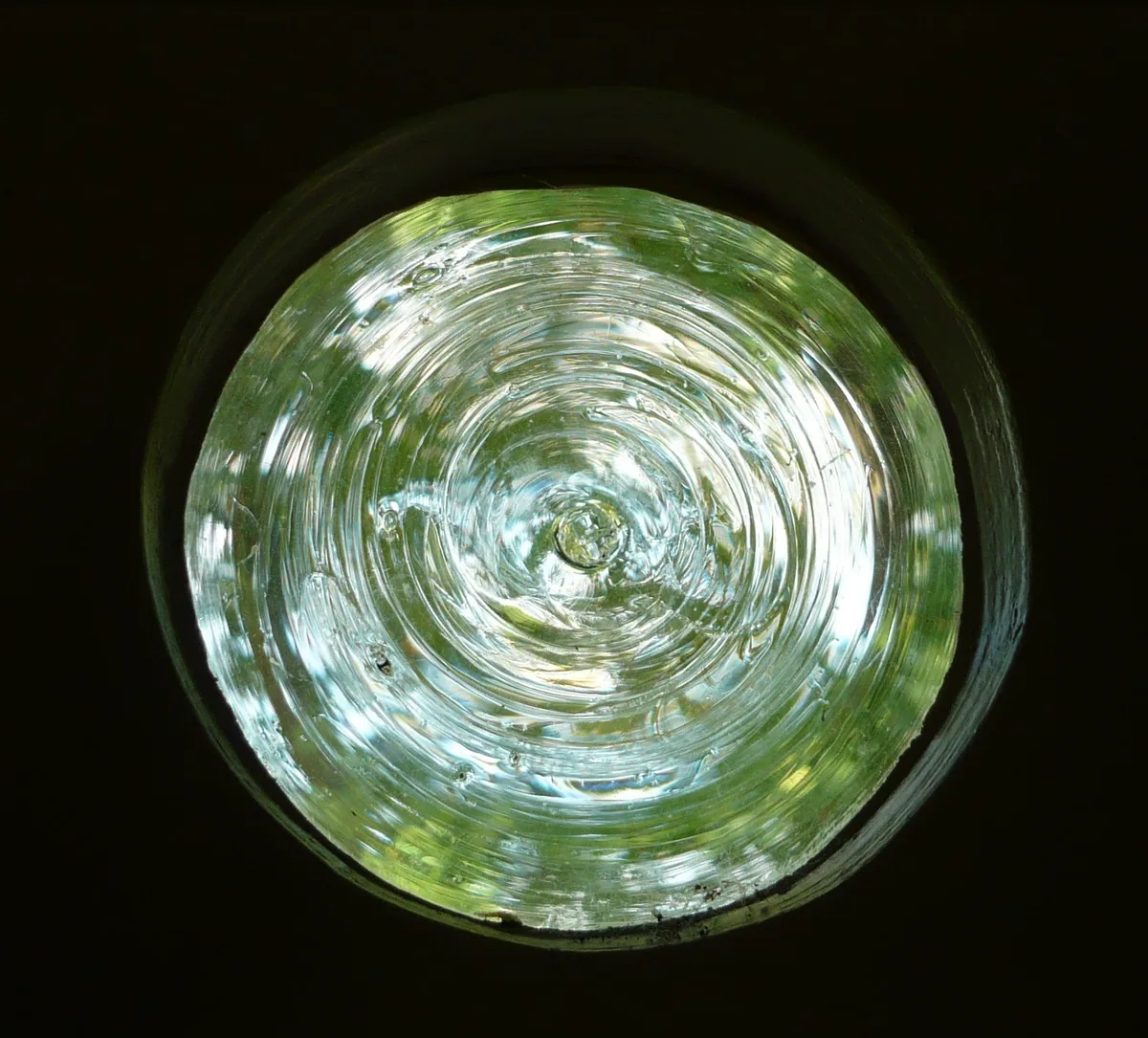
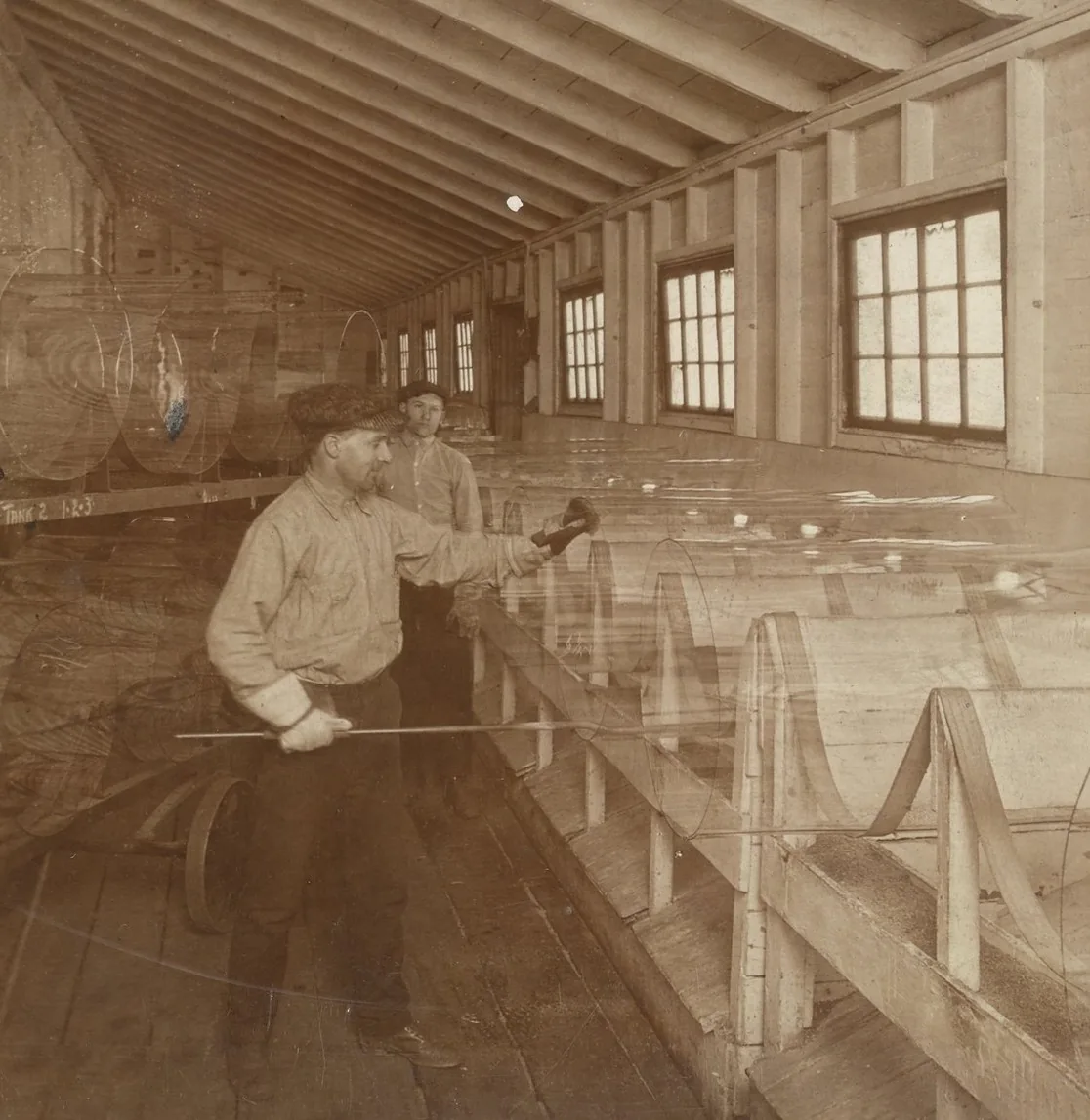
For centuries, a flat pane of glass was a feat of skill. For crown glass (in Dutch kroonglas or maanglas) the glassblower blew a bubble, transferred it to an iron rod and spun it so fast that it opened up into a flat, round disc of about 1.20 metres across. The centre, with the scar of the rod, stayed thick: the 'bullseye', used for cheaper windows. From a round disc it was most economical to cut diamond-shaped pieces, and according to the RCE that is where the Dutch word for a windowpane, ruit (which also means diamond shape), comes from. Disc and crown glass were made from at least the 7th century until the early 20th century.
With cylinder glass the glassblower swung a blown bubble back and forth until it became a long, hollow cylinder. The ends were cut off, the cylinder was slit lengthwise and then rolled out flat in a flattening kiln. The method has Roman roots, and German craftsmen developed it into a way of making window glass in the 11th century. In the early 19th century the cylinders were about 1.8 to 2.4 metres long and 25 to 36 cm across, which limited the width of a pane. Cylinder glass is still made today for leaded-glass windows, in more than five thousand colours.
Because large panes simply couldn't be made. In the Gothic period window openings grew enormously, and they were filled with pieces of glass held in H-shaped lead strips, soldered together where they cross. To make the window waterproof, a soft, oily cement or mastic is worked in between the lead and the glass. The oldest stained-glass windows still in their original place in the Netherlands date from the 16th century, and the finest of them, the Goudse Glazen in the Sint-Janskerk in Gouda (the photo at the top), are world famous.
In houses, the Dutch kruiskozijn (a cross window, divided into four by a vertical mullion and a horizontal transom) was at first closed only with shutters. Later the two upper lights were given leaded glass, and after about 1650 the glass was set in wooden glazing bars (roeden) instead. The lower windows got shutters, and later glass as well. The sash window was developed in the second half of the 17th century. In England, counterweights replaced the pins that held the sash open after 1670, and the Netherlands got its first sash window in 1685.
Yes. England and Wales introduced a window tax in 1696; it was only abolished in 1851. The Netherlands got a tax on doors and windows on 1 January 1812, under French rule. The idea was simple: the inspector didn't have to go inside. He counted the outside doors and windows and multiplied them by an amount per door or window, which depended on things like the number of inhabitants of the town and the floor the window was on. In 1821 that could be 40 cents, but also more than a guilder. Homes with an annual rental value under 20 guilders were exempt, and so were roof windows and attics or cellars that weren't fit to live in.
People found ways around it. They bricked up windows, sometimes plastering the façade or even painting a fake window on the bricks. Anyone building a new house simply chose fewer but larger windows, because the size of a window didn't count. The reverse was true as well: a farmhouse with many windows in its front façade showed that a wealthy family lived there. The tax was only abolished in 1896, partly so it wouldn't stand in the way of badly needed house building in overcrowded cities.
Not every blind window is a tax story, by the way. In the Archipelbuurt in The Hague there are walls with window-shaped brickwork that were never real windows. (Curious about the bricks themselves? Read the history of the brick.)
You may have heard that old church windows are thicker at the bottom because glass slowly flows downwards over the centuries. It's a myth. Once glass has solidified, it stops flowing. The ripples and thicker edges in old glass were already there on the day it was made: hand-made crown and cylinder glass was simply never perfectly even. A 2017 study of medieval glass from Westminster Abbey, dating from 1268, calculated that it could flow at most 1 nanometre per billion years. Impossible to notice in a human lifetime, or in the lifetime of the universe.
Around 1900 machines took over. In 1901 the Belgian engineer Emile Gobbe managed to draw a band of molten glass straight upwards, and from 1905 he improved the process together with Emile Fourcault. This drawn glass has faint draw lines, which can distort the view when you look at it from an angle. For perfectly flat glass, for mirrors and shop windows, glass had been cast on an iron table and then ground and polished on both sides since 1685: plate glass, beautiful but expensive.
The real revolution was float glass. In the 1950s Sir Alastair Pilkington and Kenneth Bickerstaff in England developed a process in which molten glass is poured onto a bath of molten tin, on which it floats. The tin gives a perfectly smooth underside, the heat above the glass a perfectly smooth top. The raw materials are melted at about 1,500 °C, and the glass cools on the tin from about 1,100 to 600 °C before it is lifted onto rollers. The process was introduced in 1959 and gives a ribbon up to 3.21 metres wide. Almost all window glass today is float glass.
The Netherlands, with little suitable sand and wood, was never an ideal place to make glass. Float glass was used here from about 1962, and only really took off after Dutch production started in 1984. Larger sheets changed architecture: think of the Glaspaleis in Heerlen (1935, designed by Frits Peutz), with its glass façades. A tip for spotting old glass: buildings from before 1915 originally had cylinder or disc glass; after 1915 drawn glass quickly took over.
| Year | Milestone |
|---|---|
| c. 3500 BC | Oldest known glass objects |
| c. 650 BC | Assyrian clay tablet with a glass recipe: sand, ashes of sea plants and lime |
| 1st century BC | Glassblowing is invented on the Syro-Judean coast |
| c. 100 AD | Clear glass in Alexandria; Romans start glazing windows |
| 11th century | Cylinder glass for windows developed by German craftsmen |
| 16th century | Oldest stained-glass windows still in place in the Netherlands, such as the Goudse Glazen |
| 1685 | First sash window in the Netherlands; cast plate glass invented the same year |
| 1812–1896 | Tax on doors and windows in the Netherlands |
| 1905 | Drawn sheet glass (Fourcault method) |
| late 1940s | Double glazing arrives in the Netherlands |
| 1959 | Float glass on a bath of molten tin |
| after 1973 | Oil crisis: double glazing breaks through |
| today | HR++ (U ≤ 1.2) and triple glazing (U 0.4–0.9) |
Glass is a poor insulator, so a house loses a lot of heat through its windows. In the 1870s people in Scotland, Germany and Switzerland started fitting a second pane. A sealed unit of two panes was patented in the United States as early as 1865, but it only became a commercial product in the 1930s and 1940s. In the Netherlands double glazing appeared in the late 1940s (the RCE mentions both 1946 and 1948). The big breakthrough only came after the oil crisis of 1973, when the government offered subsidies and people realised that double glazing could save around 40% energy compared with single glass.
How does it work? Two panes are bonded to a spacer so that a sealed cavity of dry air or gas forms between them. The spacer contains a drying agent that absorbs any moisture in the cavity. If that seal fails, the pane mists up on the inside, between the two sheets, and it has to be replaced.
HR stands for hoog rendement, high efficiency. The secret is an invisible coating: an extremely thin metal layer, applied to the glass under vacuum, that reflects heat back into the room while letting light through. Milieu Centraal explains the difference: HR and HR+ glass have ordinary dry air between the panes, while HR++ and triple glazing contain a noble gas, usually argon, which insulates better. How well glass insulates is expressed as the U-value: the lower, the better.
| Glazing | Thickness | U-value (W/m²K) | Insulation |
|---|---|---|---|
| Single glass | 5 mm | 5.8 | None |
| Ordinary double glazing | 18 mm | – | Moderate |
| HR++ glass | 24 mm | 1.2 or lower | Good |
| Triple glazing | 37 mm | 0.4–0.9 | Very good |
| Vacuum glass | 8 mm | – | Very good |
HR++ has a U-value of 1.2 or lower and often fits in existing frames; triple glazing usually needs new, insulating frames. The newest step is vacuum glass: two panes with a gap of only 0.2 mm from which the air has been removed. It was first produced in Japan in 1996 and introduced in the Netherlands in 2004. At only about 8 mm thick, it insulates as well as triple glazing, according to Milieu Centraal.
Glass is only part of a warm house: draughts along window frames and worn sealant joints count too. We don't repeat those checks here; read getting your home ready for winter.
Making glass is a job for the factory, but cutting a small pane, drilling a hole or sealing a joint around a window is something many DIYers do themselves. Glass edges are sharp, so wear cut-resistant gloves and eye protection; how cut levels work is explained in cut-resistant gloves, cut levels A to F. Below are a few products where you can recognise this history.

A classic glass cutter with a wooden handle, a rotating head with six cutting wheels and notches in the head for breaking off strips of glass.
What is it for? Score and snap: the same principle used to cut flat glass to size today, by scoring the surface and breaking it along the line.
Read also: cut-resistant gloves, cut levels A to F explained

A set of glass drill bits (4 to 10 mm) with a tungsten carbide tip and a double cutting plate. Mainly for ceramic tiles and ordinary glass; also usable in concrete, brick, plastic, wood and soft metals. When drilling glass, tiles, granite or stainless steel, the bit must be cooled with water.
What is it for? For drilling a neat hole in a glass panel or a tile, for example for a fixing.
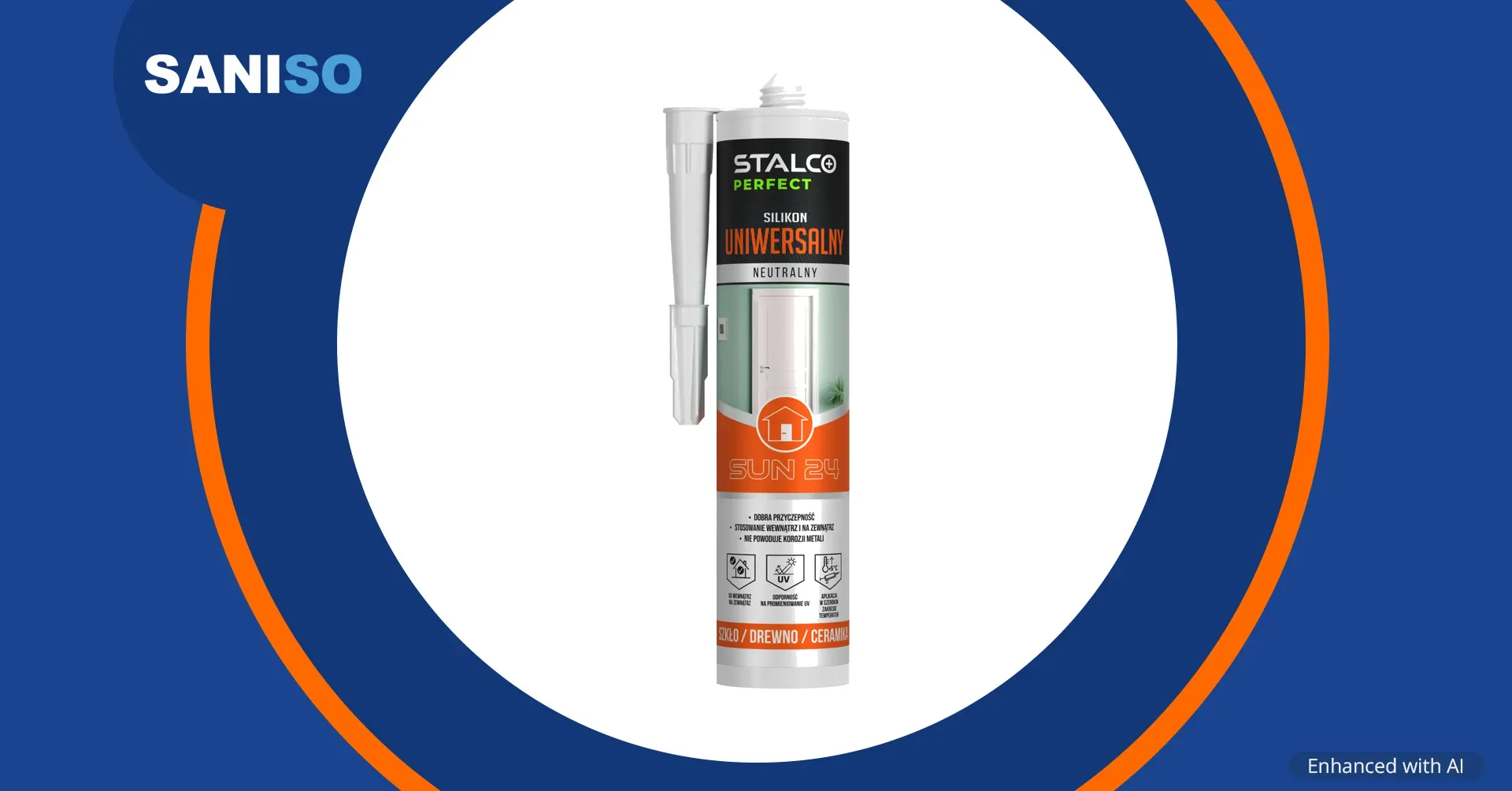
A neutral, transparent universal silicone that is highly resistant to all weather conditions and UV, resistant to moisture, adheres well to porous substrates and sanitary surfaces, cures quickly and does not cause metal corrosion.
What is it for? Sealing joints and connections, for example when fitting a window or door, also where the sealant has to cope with weather, moisture and sunlight.
Read also: how to reseal your bathroom with new silicone, step by step

A sealant gun with a rotating handle for comfortable, controlled work, drip protection against unwanted leaking and an unclogging pin for the nozzle.
What is it for? Applying silicone from a standard cartridge in an even bead.

A cordless window vacuum with a 280 mm suction nozzle, a 100 ml water tank and a 2000 mAh Li-ion battery: about 25 minutes of use on a 3-hour charge, weighing 0.8 kg.
What is it for? Getting windows, mirrors and glass shower screens streak-free without drips on the windowsill.
Order on a workday before 15:00? Then your order is delivered the next workday, as long as it fits in a parcel. Pallet shipments have a different delivery time. Saniso has thousands of products in stock in the Netherlands.
Your first order is easy to place:
Want to know when there are new offers? Sign up for the newsletter: scroll to the bottom of any page on saniso.nl, enter your email address under "Newsletter" and click "Subscribe". You'll get updates on offers and discount vouchers, and we don't spam. With an account you also collect loyalty points for a discount on your next purchase.
Questions about ordering, your account, payment, shipping or returns? Find all the answers in the Saniso FAQ.
Who invented glass?
Nobody knows exactly. The oldest glass objects date from about 3500 BC, and the first true glass was probably made in coastal north Syria, Mesopotamia or ancient Egypt. Natural volcanic glass, obsidian, was already used in the Stone Age.
When were the first glass windows made?
In Roman times. From around 100 AD the Romans used cast window glass in important buildings in Rome and in villas in Herculaneum and Pompeii.
What is glass made of?
Mainly sand, soda and lime, usually with some broken glass added. The mixture is melted at 1,300 to 1,600 °C, depending on the type of glass.
Why do old windows have such small panes?
Hand-made crown and cylinder glass could only be made in limited sizes, so windows were made of small panes in lead or wooden glazing bars.
What is crown glass?
Hand-blown window glass that was spun into a round disc of about 1.20 metres. It's recognisable by its curved lines and the thick 'bullseye' in the middle.
Was there a window tax in the Netherlands?
Yes. From 1812 to 1896 the Netherlands taxed the outside doors and windows of houses. Some people bricked up windows to pay less.
Does glass flow over time?
No. Old panes that are thicker at the bottom were made that way. A 2017 study calculated that medieval glass flows at most 1 nanometre per billion years.
What is float glass?
Glass made by pouring molten glass onto a bath of molten tin, on which it floats and becomes perfectly flat. The process was introduced in 1959; almost all window glass is made this way now.
What does HR++ mean?
HR stands for hoog rendement (high efficiency). HR++ glass is double glazing with an invisible heat-reflecting coating and a noble gas such as argon between the panes. Its U-value is 1.2 or lower.
What is the U-value of single glass compared with triple glazing?
According to Milieu Centraal, single glass has a U-value of 5.8 and triple glazing 0.4 to 0.9. The lower the U-value, the better the glass insulates.
When did double glazing come to the Netherlands?
In the late 1940s. The big breakthrough came after the oil crisis of 1973.
What is the delivery time at Saniso?
Order on a workday before 15:00 and it's delivered the next workday, as long as it fits in a parcel. Pallet shipments have a different delivery time.
Do the prices include VAT?
This blog shows every price including and excluding VAT. At checkout on saniso.nl, prices are shown including VAT.
Building facts takes one building topic under the magnifying glass every Monday and Thursday. This is edition #7. Read the previous edition too: the history of the bath and the shower, from Roman thermae to walk-in shower, and edition #1: the history of the brick. Fun link: next time you walk past an old brick façade, look for bricked-up windows from the days of the window tax.
Share:
Want to lay a vinyl floor yourself? This guide explains the difference between click and glue-down vinyl and shows you h...

Want to wallpaper a wall yourself? This guide shows you how to prepare the surface, mark a plumb line, paste non-woven o...

The Romans built with a type of concrete that has kept some buildings standing for almost two thousand years. Modern cem...