Your online building supplies store for building and renovation

0 Your Cart 0.00€

Cart (0)

No products in the cart.

How to clean patio tiles

How to clean patio tiles

A patio has a lot to endure. Rain, leaves, shade and moisture cause green deposits, moss between the joints and stains from pots, grease or leaves. Tiles become slippery and the patio looks dull. With the right approach you can get your patio tiles clean again, and often you do not need harsh products to do it. In this blog you will read how to prepare the patio, when to scrub it by hand and when a pressure washer is useful, and how to prevent damage to tiles and joints.

👷 Calling in a professional is never superfluous. With natural stone, tiles with a special coating, subsided or loose tiles or a very large area, a paver or cleaning specialist knows which method is safe and immediately repairs whatever is not right.

First look: what kind of patio do you have?

  • Concrete tiles and pavers: sturdy and resistant to scrubbing. A pressure washer can be used, provided you work carefully.
  • Ceramic patio tiles: hard and dense, dirt mainly stays on the surface and in the joints. Scrubbing with soapy water is often enough.
  • Natural stone: some types are sensitive to acids and high pressure. Read the advice from the stone supplier or ask a professional.
  • Joints: high pressure easily blasts sand joints away. Patios with hard grouted joints are sturdier, but they can also be damaged if you spray too close.

If in doubt, test on a small, inconspicuous area first.

What do you need?

Working safely

⚠️ Never point a pressure washer at people, animals, outdoor sockets, lamps or electrical appliances. Only connect it to an earthed outdoor socket with a residual current device and keep cables out of the water. If you are unsure about the outdoor electrical connection, have it checked by a certified installer.
Step by step: cleaning the patio with a brush and soapy water

  1. Clear the patio. Remove furniture, pots and cushions so you can reach everywhere.
  2. Sweep thoroughly. Sweep away leaves, sand and loose dirt with the street broom with long bristles.
  3. Remove weeds and moss from the joints with the weed puller. You can read the best way to do this in our blog on removing weeds between paving tiles.
  4. Wet the tiles with the garden hose. On a dry, warm tile, soapy water dries too quickly.
  5. Apply the soapy water. Mix the cleaner according to the packaging in an 12-litre bucket or fill the 2-litre hand pressure sprayer, and spread it over an area of a few square metres. Let it work for a while, but do not let it dry.
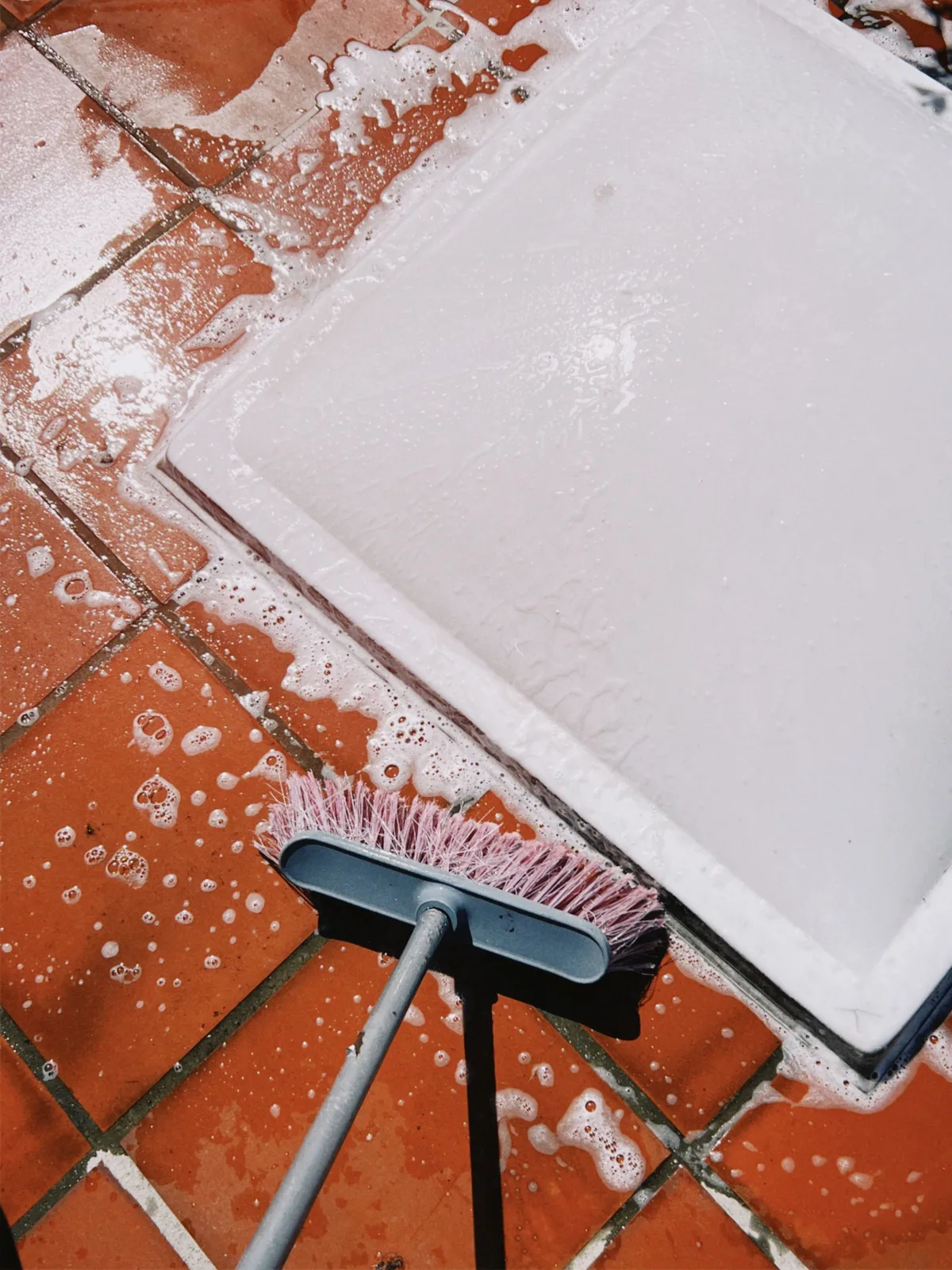
  6. Scrub. Scrub in strips with the 220 mm scrubbing broom, and finish edges and corners with the hand scrubbing brush.

Red patio tiles being scrubbed with soapy water and a stiff brush

  1. Rinse with plenty of clean water, using the garden hose and the connector set with spray nozzle. Rinse the dirty water towards the drain or the garden, not towards the neighbours.
  2. Repeat on stubborn areas if necessary.

Step by step: cleaning with a pressure washer

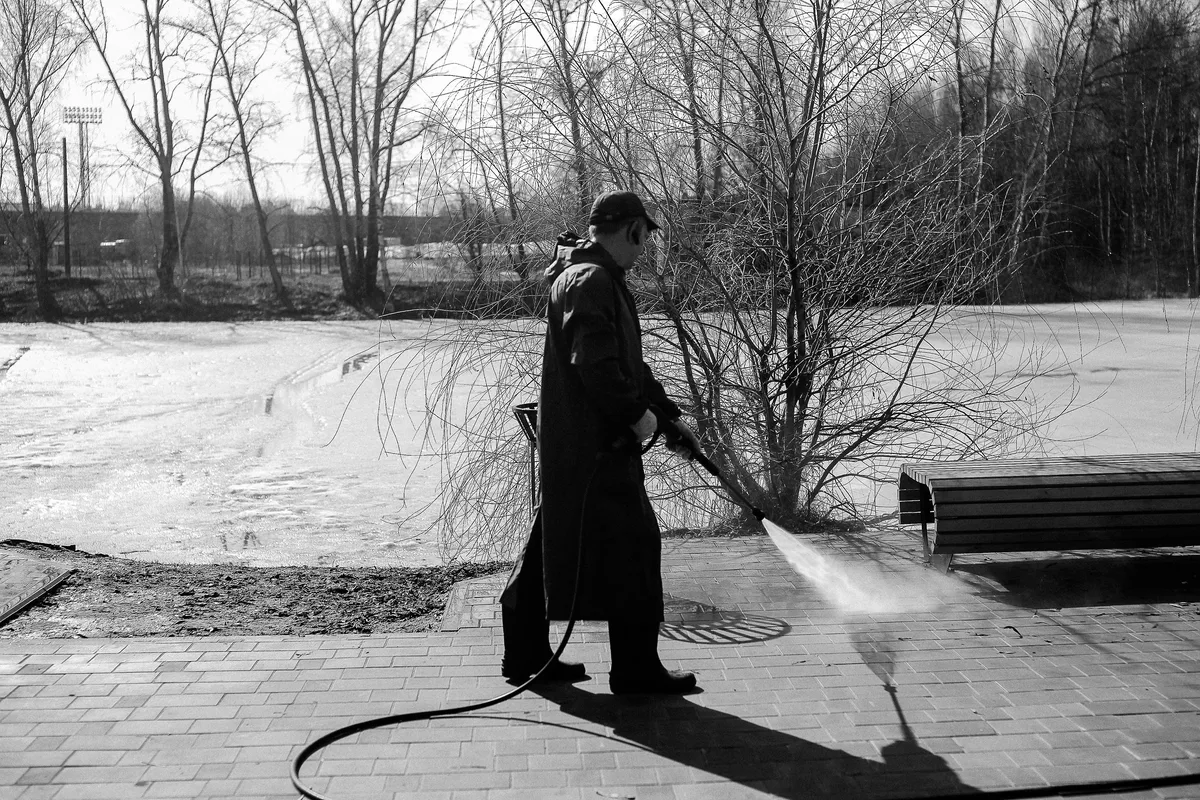
A pressure washer works quickly, but it can also cause damage. So work calmly and carefully.
  1. Sweep and remove weeds first, as described above.
  2. Choose a wide jet or a patio cleaner attachment if you have one. A pinpoint jet is too aggressive for tiles and joints.
  3. Keep your distance. Start at about 30 centimetres and only come closer if needed and if it causes no damage.
  4. Spray at an angle, not straight at the joints. That way you will not blast out the jointing sand.
  5. Work in strips from high to low, or away from the house, so the dirty water runs off.

Black and white photo of a man cleaning brick paving with a pressure washer

  1. Check the joints. If joints have been washed out, refill them once dry, so the tiles do not shift and fewer weeds return.

Stubborn stains

  • Green deposits: thorough scrubbing with soapy water and then regular sweeping helps most. Green deposits mainly return in places that stay wet and shady.
  • Grease and food stains: treat them as soon as possible with warm water and cleaner and scrub with the hand scrubbing brush.
  • Rust or limescale stains: only use a product that is suitable for your tile and follow the packaging. If in doubt, ask a professional for advice.

Never simply use aggressive products or bleach: they can damage tiles, joints and plants.

How to keep your patio clean for longer

When do you call in a professional?

  • With natural stone or tiles where you do not know how they react to cleaners or high pressure.
  • If tiles have subsided, are loose or large sections of jointing are missing.
  • With very large areas or dirt that does not come off by scrubbing.

A professional is never superfluous in those cases: he chooses the right method and prevents permanent damage to your patio.

Frequently asked questions

Can I clean my patio with a pressure washer?

With most concrete tiles and pavers you can, if you use a wide jet, keep your distance and do not spray straight at the joints. With natural stone and sand joints, care is needed.

How often should I clean my patio?

Regular sweeping keeps the patio clean for longest. A thorough clean in spring and possibly in autumn is enough for most patios.

Why do the green deposits keep coming back?

Green deposits grow in places that stay wet and shady. Make sure water drains away properly and sweep more often, and it will stay away longer.

Can I use bleach against green deposits?

We do not recommend it. Bleach can damage tiles and joints and is harmful to plants and the environment. Scrubbing with a mild cleaner usually works well.

Read also: How to lay a garden path

Where can you find everything for this job?

At Saniso, the online store for DIYers and professionals, you will find tools, materials and personal protective equipment for your job.

In doubt about the approach? Feel free to call in a professional.

Saniso – Build your home with Saniso.

« Previous
Next »
Saniso Support Online +31 85 488 5920

Hi there! How can we help you today?