






.jpg)

Learn how to connect a new exposed bath-shower tap yourself: shut off the water, measure the centre distance, set the S-...

Your online building supplies store for building and renovation
 English
✓
English
✓
 Nederlands
✓
Nederlands
✓
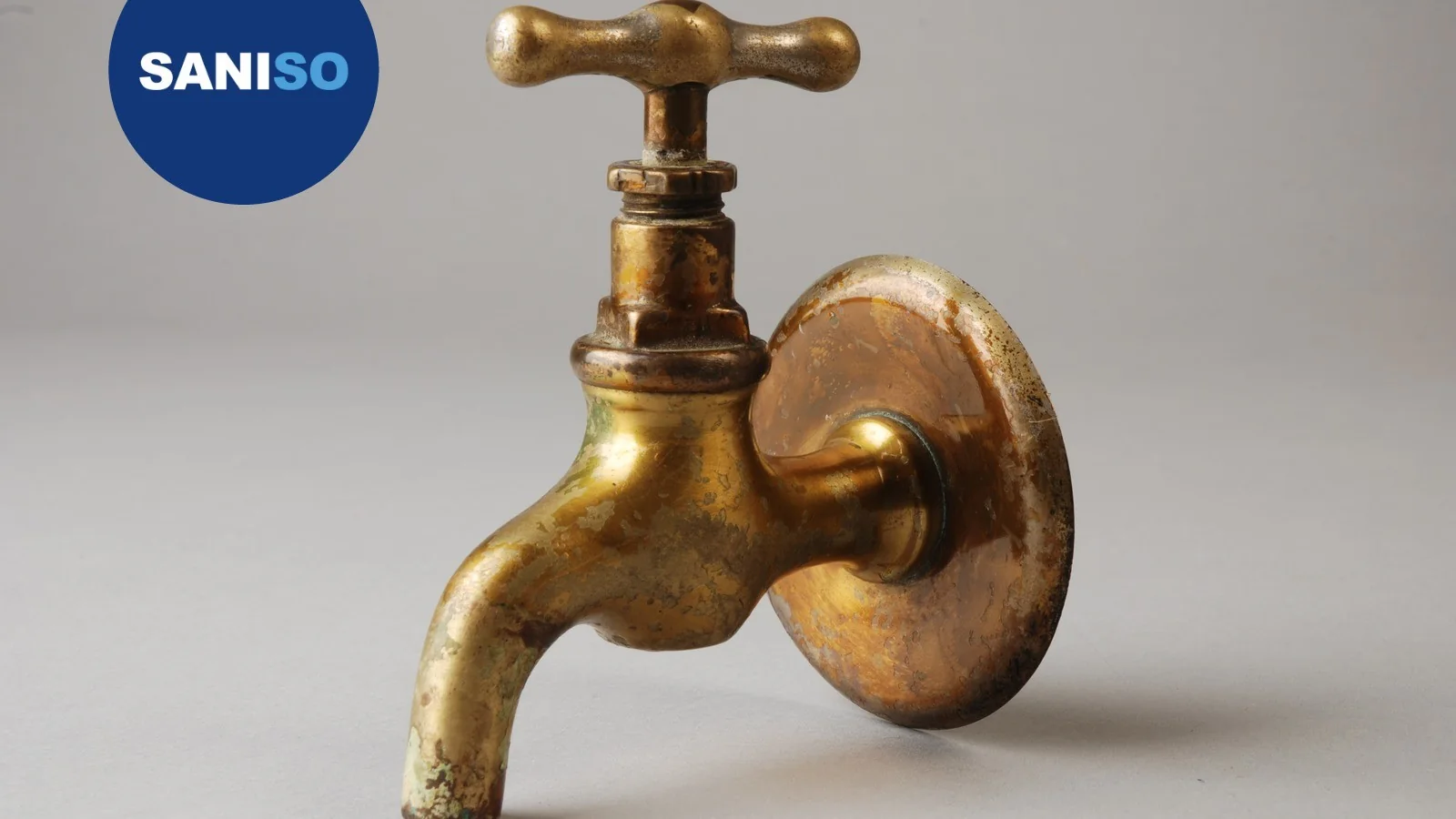
Photo: brass water tap with wall plate, dated 1920–1950, from the collection of Museum Rotterdam (inv. no. 34438). Photo: Museum Rotterdam, Wikimedia Commons, licence CC BY-SA 3.0 (cropped)
Building facts #5 · Every Monday and Thursday one building topic, examined in depth
Turn a lever and clean water flows, hot or cold, as much as you like. For most of history that was anything but normal. The Romans sent water through lead pipes with bronze stopcocks, Amsterdam only got the first piped drinking water in the Netherlands in 1853, and the single-lever mixer tap arrived after the Second World War. In this fifth edition of Building facts we look at one topic: the history of the tap and running water at home. (Missed edition #4? Read the history of concrete, from Roman opus caementicium to modern concrete.)
The English tap goes back to Old English tæppa, originally a tapering peg or stopper. Dutch has the same word: tappe, a stopper in a barrel, is recorded as early as 1240. Faucet appears in English around 1400, from Old French fausset, a spigot or peg in a barrel. "Spigot and faucet" was an old type of barrel tap: a tapering tube driven into the cask, with a screw to regulate the flow.
The Dutch word for a tap, kraan, is the same word as the bird: the crane (kraanvogel). Tools that reminded people of the bird's long neck were named after it. A crane for lifting loads is mentioned in a Latin text from 1244 about Utrecht, and kraen as a tap in a barrel in 1354. German calls a tap Hahn and English has the cock in stopcock: two more birds on the water pipe.
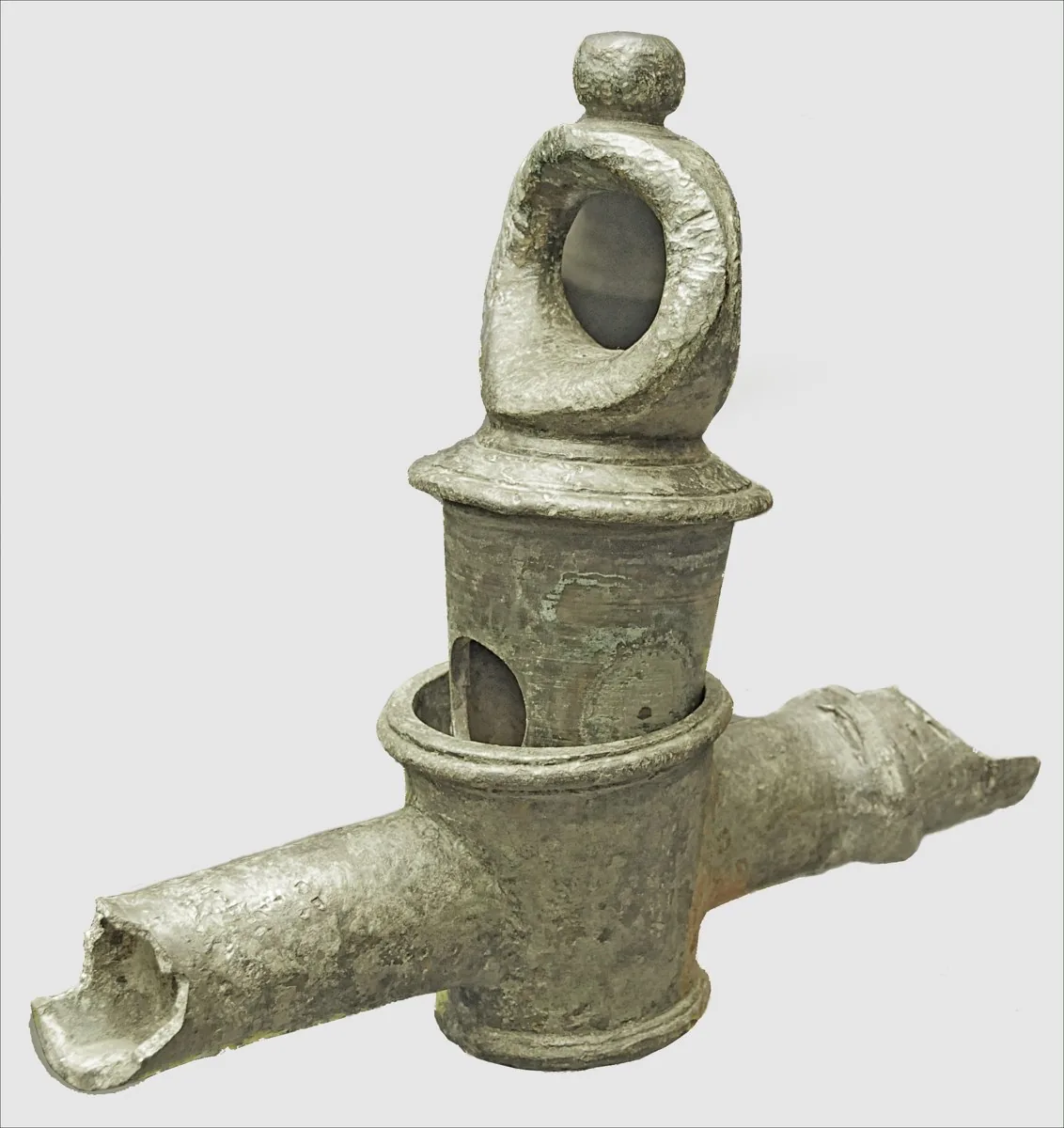
Roman aqueducts moved water by gravity alone, along a gentle downward slope through channels of stone, brick, concrete or lead. In town the water usually ran into distribution tanks (castellum aquae) that fed the branches through lead or ceramic pipes. Those pipes came in 25 standardised diameters and were fitted with bronze stopcocks, so the flow could be fully or partly opened, shut down or diverted. A Roman stopcock was a plug valve: a quarter turn of a pierced plug lines the hole up with the pipe and lets the water through.
Running water went to public fountains and baths, and to the homes of the wealthy. In the time of the water commissioner Frontinus (c. 40–103 AD), about 10% of Rome's aqueduct water supplied 591 public fountains. Officially approved lead pipes carried inscriptions with the maker and the fitter, which also helped against water theft.
The Latin word for lead, plumbum, gave English plumbing and plumber. Dutch went the same way with loodgieter, literally a "lead caster", after the strips and pipes of lead the trade used to cast. Closer to home, a Roman water supply is generally assumed near Nijmegen: earthworks of about five kilometres that appear to have carried water to the camp of the Tenth Legion on the Hunnerberg, where archaeologists found lead pipes. (Where the used water went is the subject of edition #2: the history of the toilet and the sewer.)
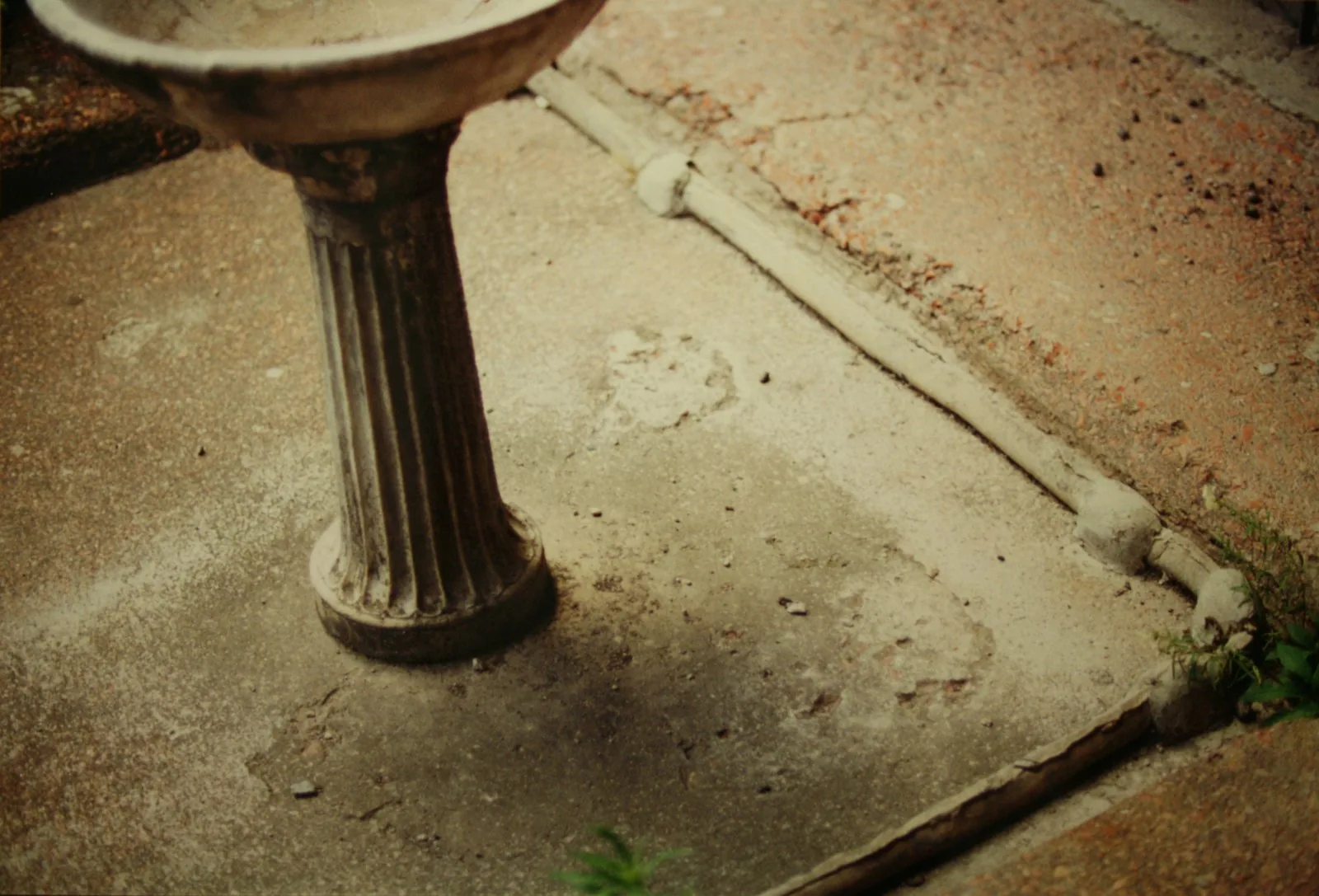
After the fall of Rome, water supply and sanitation stagnated or even went backwards for well over a thousand years. Where pipes were laid, they were often simple: in London and elsewhere, hollowed-out logs served as water pipes in the 16th and 17th centuries.
In Dutch towns people drank from canals, ditches, wells and rain cisterns. In Amsterdam the canals became more and more polluted from the 16th century onwards, because sewage drained into them too. Rain barrels appeared at churches and houses, and water boats sold unfiltered water from the river Vecht near Weesp. In 1786 the Versch Water Sociëteit was set up, an association of licensed water skippers. Around 1840 some 2,200 water boats a year came into the city: enough for about one jug (0.66 litre) per inhabitant per day, if you could afford it. In the 17th century many old chain wells had been replaced by wells with a pump, but hygiene stayed poor, and cholera and typhoid kept breaking out.
Plans for a water main to Amsterdam existed from around 1840, but money was always the problem. After the cholera epidemic of 1848 things sped up, and with help from English financiers the Amsterdamsche Duinwater-Maatschappij was founded in July 1851, with the writer Jacob van Lennep as its first chairman. Dune water from near Vogelenzang was cleaned in sand filters, pumped by steam engines and carried through cast-iron pipes along the Haarlemmerweg. On 6 June 1853 water flowed for the first time from a fountain at the Haarlemmerpoort, and on 12 December 1853 Amsterdammers could fetch drinking water there by the bucket: the first piped drinking water in the Netherlands.
From April 1854 subscribers could get water delivered to their homes, and standpipes appeared on squares such as the Dam and the Nieuwmarkt. At first only well-off households could afford a connection, but by 1866 there were 8,505 private connections and 56 public tap points. In the cholera epidemic of that year, Amsterdam had markedly fewer victims than elsewhere. From 1888 a second network carried Vecht water, only for cleaning and industry; manhole covers marked "Duin" or "Vecht" still recall the two networks. And the cast-iron main of 1853 stayed in service until November 2017; in 2018 the oldest water main in the Netherlands was replaced.
The rest of the country followed step by step. The first group water supply serving several municipalities dates from 1911, and in 1949 712 of the then 1,054 municipalities were connected: about 75% of the Dutch population had tap water. The Waterleidingwet (water supply act) of 1957 set rules for the quality of the water and the continuity of supply.
| Year | Milestone |
|---|---|
| Roman era | Lead and ceramic pipes in 25 standard diameters, fitted with bronze stopcocks |
| c. 40–103 AD | Lifetime of Frontinus: about 10% of Rome's aqueduct water supplies 591 public fountains |
| 1240 | Dutch tappe recorded as a stopper in a barrel |
| 1354 | Dutch kraen recorded as a tap in a barrel |
| c. 1400 | The word faucet appears in English |
| 1786 | Versch Water Sociëteit of licensed water skippers in Amsterdam |
| c. 1840 | About 2,200 water boats a year bring Vecht water to Amsterdam |
| 1845 | Edward Chrimes (Rotherham) patents a screw-down tap with replaceable rubber washer |
| July 1851 | Amsterdamsche Duinwater-Maatschappij founded |
| 1853 | First piped drinking water in the Netherlands, at the Haarlemmerpoort in Amsterdam |
| 1866 | Cholera epidemic: markedly fewer victims in Amsterdam thanks to clean water |
| 16 Jan 1880 | Thomas Campbell patents "Campbell's Double Basin Cock", a mixer tap |
| 1911 | First Dutch group water supply serving several municipalities |
| 1943 | Elie Aghnides invents the tap aerator |
| 1947 | First single-handle mixing tap (Al Moen) goes into production |
| 1949 | About 75% of the Dutch population has piped water |
| 1957 | Dutch Waterleidingwet (water supply act) |
| 1960 | Lead drinking water pipes banned in the Netherlands |
| 1973 | Patent for the ceramic disc valve |
| 2005 | Chlorine no longer allowed as primary disinfectant in Dutch drinking water |
| Nov 2017 | Amsterdam's cast-iron water main of 1853 taken out of service |
| 2024 | 117.3 litres of drinking water per person per day at home |
There are three classic ways to stop water. The oldest is the plug valve the Romans used: turn a pierced plug a quarter turn and the passage opens or closes. Its modern cousin is the ball valve, with a ball that rotates in plastic (usually PTFE) seats; you recognise it by the 90° movement between open and closed. Choosing shut-off valves and ball valves today is covered in buying shut-off valves and ball valves: what to look for.
The second is the screw-down tap. In 1845 Edward Chrimes of Rotherham in England patented a high-pressure screw-down tap with a replaceable rubber washer; the brass foundry that later became Guest and Chrimes made it. Turning the handle presses a soft washer (in Dutch the leertje) onto a valve seat. It seals well and regulates finely, but washer and seat wear over time, which is why older taps start to drip.
The third, and the standard today, is the ceramic disc. Two hard ceramic discs slide over each other; when their openings line up, water flows. A ceramic disc valve was patented in 1973. Two ceramic surfaces have very little friction, especially with water as a lubricant, and ceramic does not expand or shrink with temperature and resists corrosion. These taps need far less maintenance, and when they do, the whole cartridge is usually replaced in one piece.
For a long time hot and cold came from two separate taps, and you did the mixing in the basin. On 16 January 1880 Thomas Campbell of Saint John, New Brunswick (Canada), received a patent for "Campbell's Double Basin Cock" (Canadian patent 10,811): one outlet that mixed hot and cold water. To avoid back pressure, he made the outlet wider than the supply pipes. His tap still had two handles.
The single lever started with a burn. In 1937 the American inventor Al Moen burned his hands on a two-handle tap and began designing a tap that mixed hot and cold with one handle. After the war, in 1947, the first single-handle mixing tap with his cartridge went into production in Seattle. In 1959 Fortune magazine listed it among the 100 best-designed mass-produced products. A second design with a ball-shaped valve, by Landis Perry, followed in 1952.
Today mixer taps are the common choice in kitchens and bathrooms, often with a single lever: up and down for the amount of water, left and right for the temperature. Connecting a new shower tap yourself is explained step by step in how to connect a new shower tap.
A thermostatic mixing valve blends hot and cold water to a nearly constant outlet temperature, to prevent scalding. Many of them use a wax thermostat for this. If the hot or cold supply suddenly fails, a thermostatic valve shuts off quickly to prevent scalding or a cold shock. Shower and bath mixers often also compensate for sudden pressure changes, for example when someone flushes the toilet, so the temperature does not jump.
There is a hygiene side too: hot water is often stored above 60 °C against Legionella and distributed below about 50 °C; a thermostat brings it to a comfortable shower temperature. And the shower matters: in 2021 it accounted for 36.1% of household drinking water use in the Netherlands, about 46 litres per person per day.
The Netherlands has ten drinking water companies, about 122,000 km of mains and almost 8.7 million connections (2023). The network is in such good shape that treated water usually needs no chlorine on its way to your tap, so it reaches you without a chlorine taste or smell. Since 2005 chlorine is no longer allowed as the primary disinfectant; the companies use UV light or ozone instead.
On average, each person in the Netherlands used 117.3 litres of drinking water a day at home in 2024. The national plan to save drinking water aims for 100 litres per person per day by 2035. The tap itself helps: the aerator at the tip, invented by the Greek engineer Elie Aghnides in 1943, mixes air into the stream, prevents splashing and limits the flow.
One leftover from history deserves attention: lead pipes. They have been banned in the Netherlands since 1960, but in buildings from before 1960 they can still be present, for example under floors and inside walls. Lead in drinking water is unhealthy, especially for young children, so the government advises having lead pipes replaced by an installer; the owner is responsible for the pipes from the water meter into the building.
You no longer need a Roman stopcock, but the same ideas return in every bathroom: a cartridge that mixes, a thermostat that guards the temperature, and pipes that have to be cut and tightened neatly. Below are a few products that fit that story. Which pliers to use is explained in our guide to water pump pliers and pipe wrenches; shut-off valves are covered in our guide to shut-off valves and ball valves.
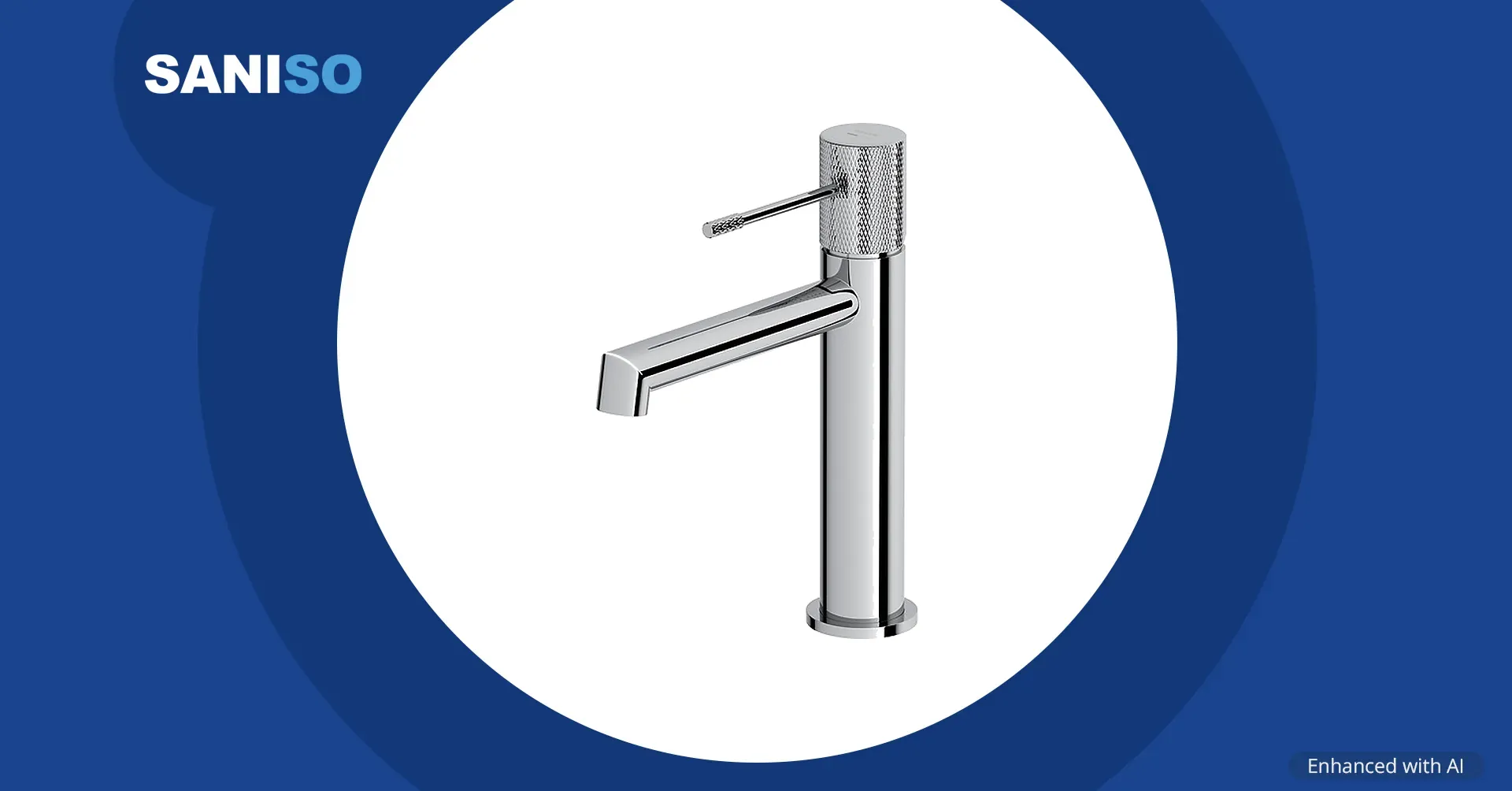
A single-lever basin mixer with a 25 mm ceramic cartridge for smooth control and a Cersanit Water Save aerator that limits the flow to 6 litres per minute. Chrome finish with Super Shine coating and a knurled handle.
What is it for? The ceramic disc and the aerator from this story, together in one modern basin tap.
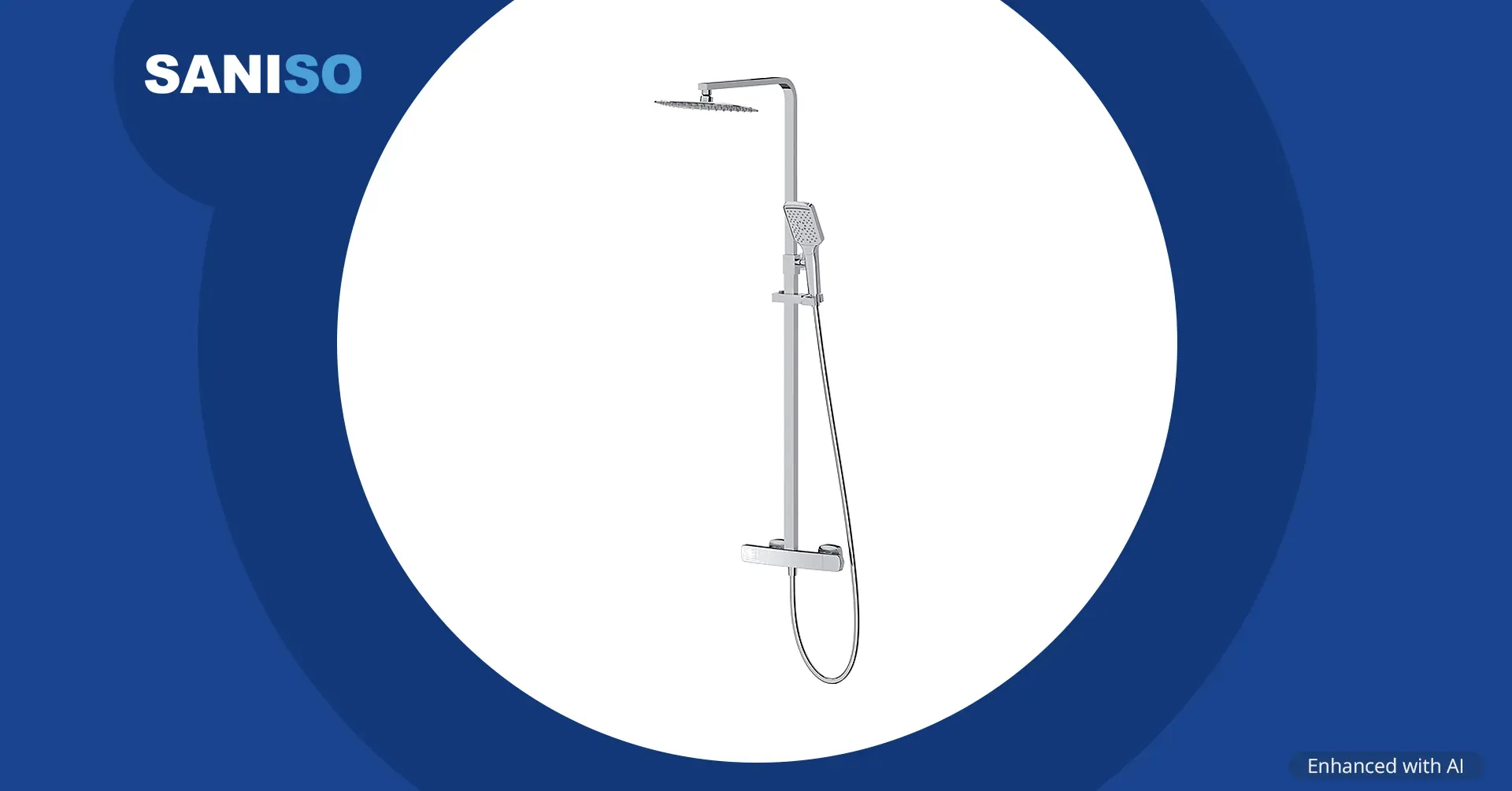
A shower column with a brass thermostatic tap body, a slim stainless-steel rain shower of 15 × 25 cm, a 3-function hand shower and a 1.5 m hose.
What is it for? The thermostat from this story: it keeps the mix of hot and cold stable while you shower.
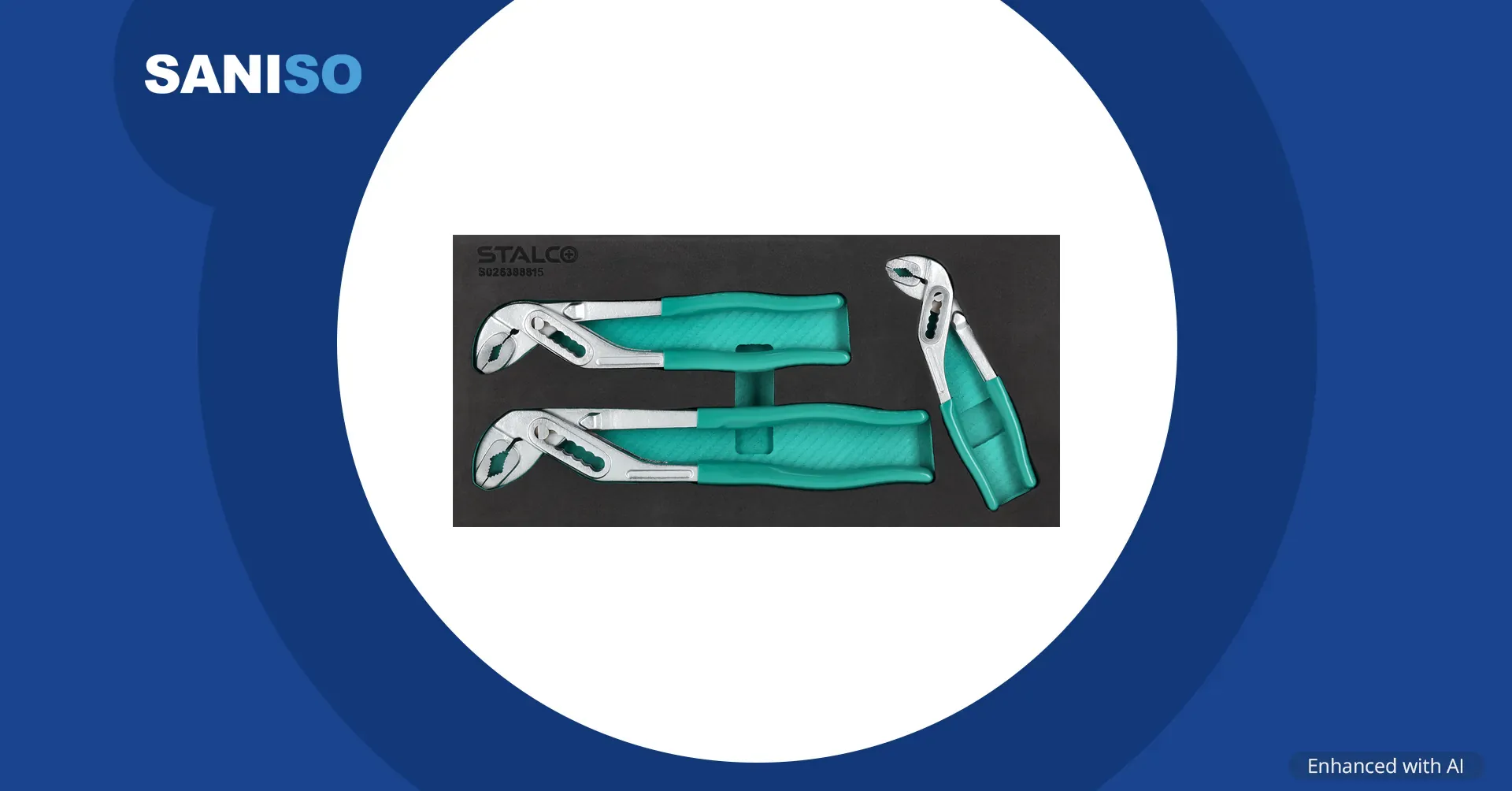
Three water pump pliers in chrome-vanadium steel with hardened jaws, an anti-corrosion coating and an EVA foam insert that fits STALCO tool cabinets.
What is it for? For gripping nuts, couplings and pipes when you fit a tap or a shut-off valve. Which pliers suit which job is explained in water pump pliers and pipe wrenches: which pliers for which job?
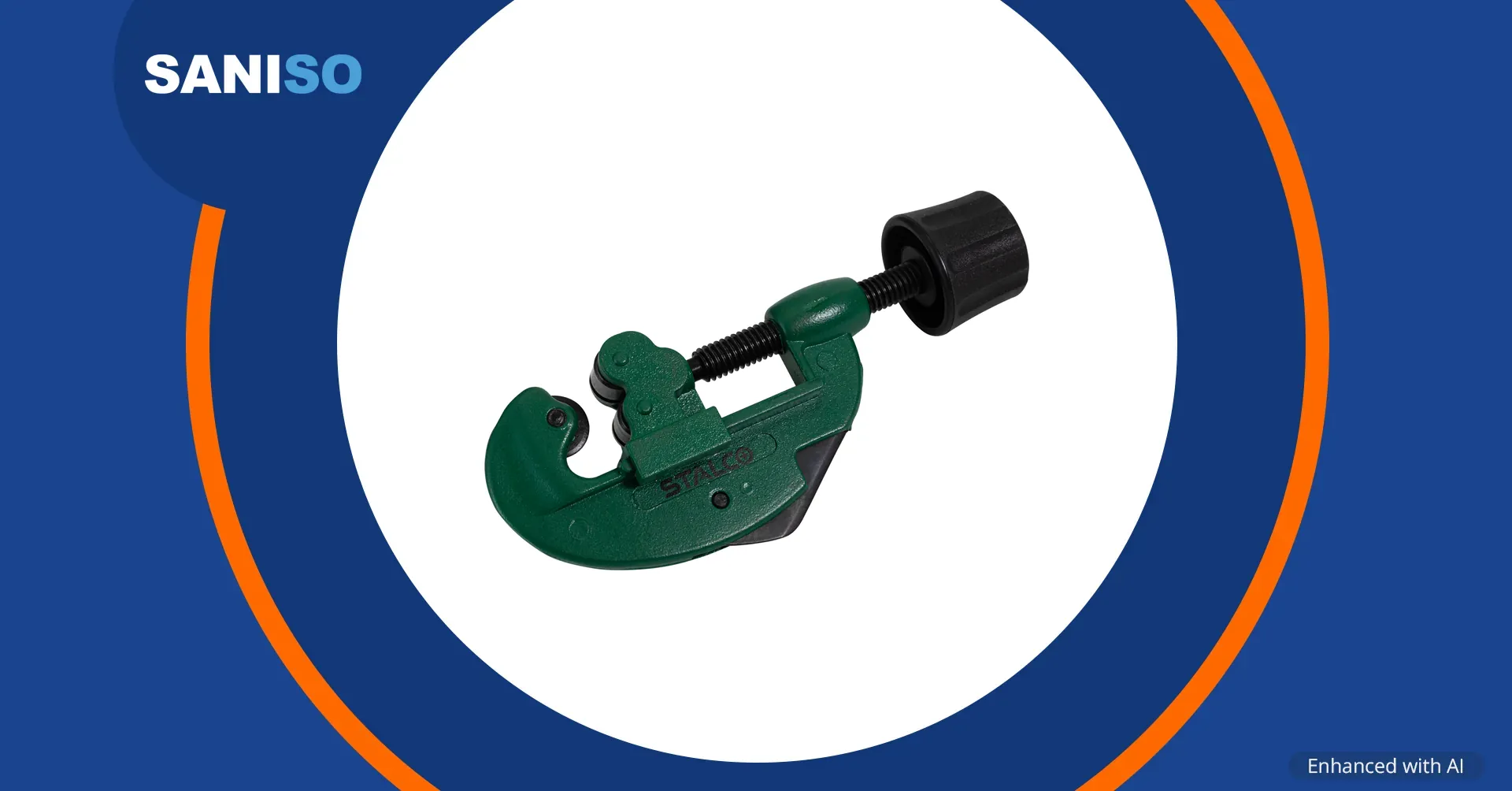
A compact pipe cutter for copper pipe with a diameter from 3 to 28 mm.
What is it for? After the Second World War copper replaced lead as the safer pipe material. A pipe cutter gives a clean, square cut.
Order on a workday before 15:00? Then your order is delivered the next workday, as long as it fits in a parcel. Pallet shipments have a different delivery time. Saniso has thousands of products in stock in the Netherlands.
Your first order is easy to place:
Want to know when there are new offers? Sign up for the newsletter: scroll to the bottom of any page on saniso.nl, enter your email address under "Newsletter" and click "Subscribe". You'll get updates on offers and discount vouchers, and we don't spam. With an account you also collect loyalty points for a discount on your next purchase.
Questions about ordering, your account, payment, shipping or returns? Find all the answers in the Saniso FAQ.
Who invented the tap?
There is no single inventor. The Romans already used bronze plug stopcocks on their water pipes. Edward Chrimes of Rotherham patented a screw-down tap with a replaceable rubber washer in 1845, Thomas Campbell patented a mixer tap in 1880, and Al Moen's single-handle mixing tap went into production in 1947.
Did the Romans have taps?
Yes. Lead or ceramic pipes from the distribution tanks were fitted with bronze stopcocks. These were plug valves: a quarter turn of a pierced plug opened or closed the flow.
Why is a plumber called a plumber?
Because of lead: the Latin word is plumbum, and the first effective water pipes in the Roman era were made of lead. The Dutch loodgieter (lead caster) has the same origin.
Were Roman lead pipes dangerous?
The Romans knew lead harmed the people who mined and processed it, and preferred ceramic pipes for drinking water where they could. The hard Roman water also formed a layer of scale inside the pipes, which limited contact between water and lead.
When did the Netherlands get tap water?
In 1853 in Amsterdam, supplied by the Amsterdamsche Duinwater-Maatschappij with water from the dunes. In 1949 about 75% of the Dutch population had piped water.
Where did Amsterdam get its drinking water before 1853?
From canals, wells and rain cisterns, and from water boats that brought water from the river Vecht. Around 1840 about 2,200 water boats a year came into the city.
Why is the Dutch word for tap the same as the bird?
Kraan is the old word for the crane bird. Tools that resembled the bird's long neck, such as a lifting crane and a barrel tap, got the same name. Kraan as a tap in a barrel is recorded in 1354.
Who invented the mixer tap?
Thomas Campbell of Saint John, New Brunswick (Canada). He received a patent for "Campbell's Double Basin Cock" on 16 January 1880; it mixed hot and cold water in one outlet, but still had two handles.
Who invented the single-lever tap?
Al Moen. He had the idea in 1937 after burning his hands on a two-handle tap; his single-handle mixing tap went into production in 1947.
What is a ceramic disc cartridge?
A cartridge with two hard ceramic discs that slide over each other; when the openings line up, water flows. The ceramic disc valve was patented in 1973 and needs much less maintenance than a tap with a rubber washer.
How does a thermostatic tap work?
It blends hot and cold water to a nearly constant temperature, often with a wax thermostat, and shuts off quickly if the hot or cold supply fails. That protects against scalding and cold shocks.
How much tap water does a person in the Netherlands use?
On average 117.3 litres per person per day at home in 2024. The shower is the largest share: 36.1% of household use in 2021.
Is there chlorine in Dutch tap water?
Usually not. The network is in such good condition that chlorine is normally not needed, and since 2005 it is no longer allowed as the primary disinfectant. Chlorine is only used temporarily after bacterial contamination, for example after a pipe burst.
Can old houses still have lead pipes?
Yes, in buildings from before 1960, often hidden under floors or in walls. Lead pipes have been banned since 1960, and the government advises having them replaced by an installer.
What is the delivery time at Saniso?
Order on a workday before 15:00 and it's delivered the next workday, as long as it fits in a parcel. Pallet shipments have a different delivery time.
Do the prices include VAT?
This blog shows every price including and excluding VAT. At checkout on saniso.nl, prices are shown including VAT.
Building facts takes one building topic under the magnifying glass every Monday and Thursday. This is edition #5. Read the previous edition too: the history of concrete, from Roman opus caementicium to modern concrete, and edition #2: the history of the toilet and the sewer. Fun link: Roman aqueduct channels were partly made of concrete, while the pressure pipes were often made of lead.
Share:
Learn how to connect a new exposed bath-shower tap yourself: shut off the water, measure the centre distance, set the S-...
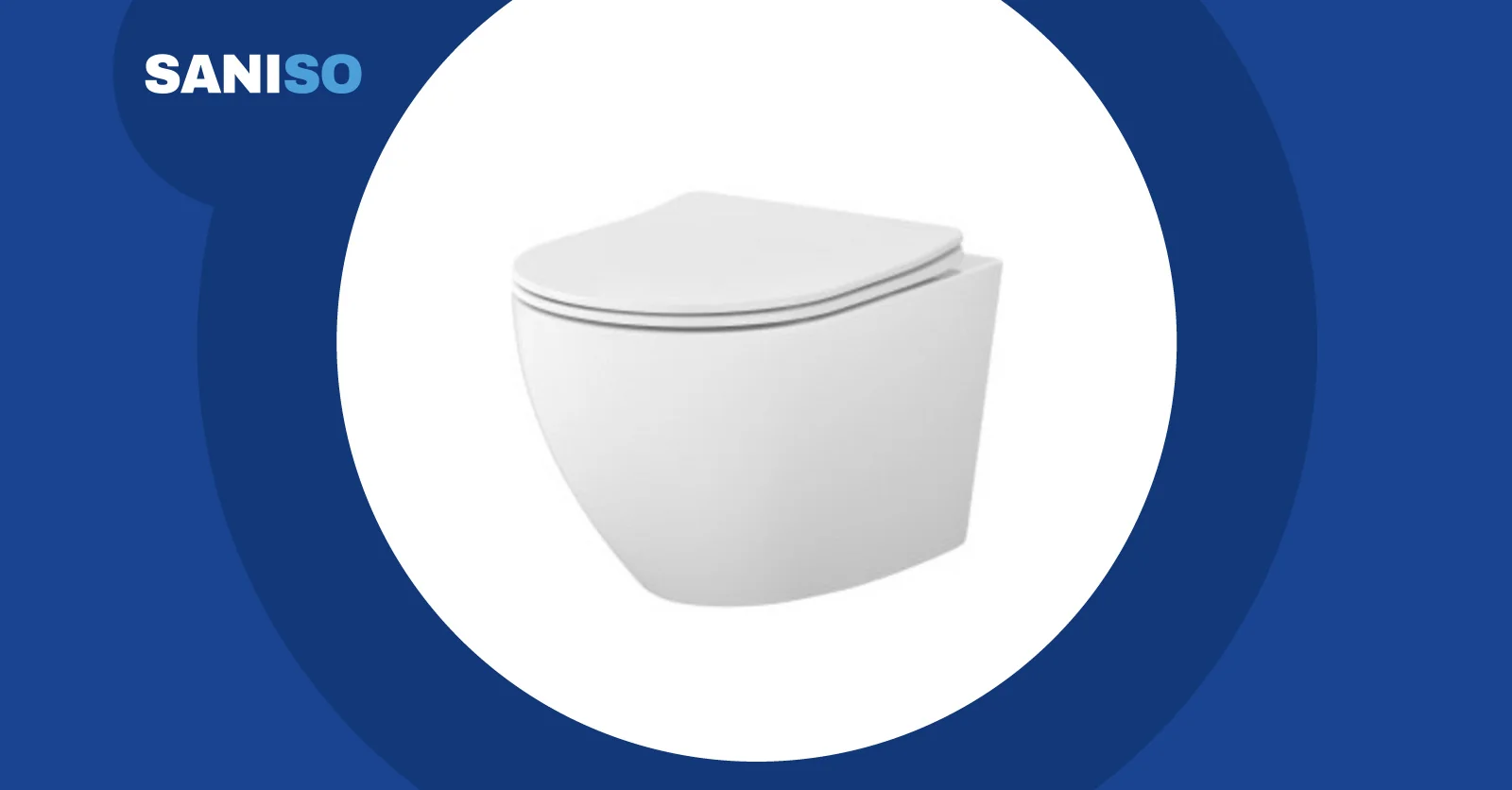
A toilet that flushes powerfully and still stays quiet: that is the idea behind Cersanit Vortex. In this blog you read h...
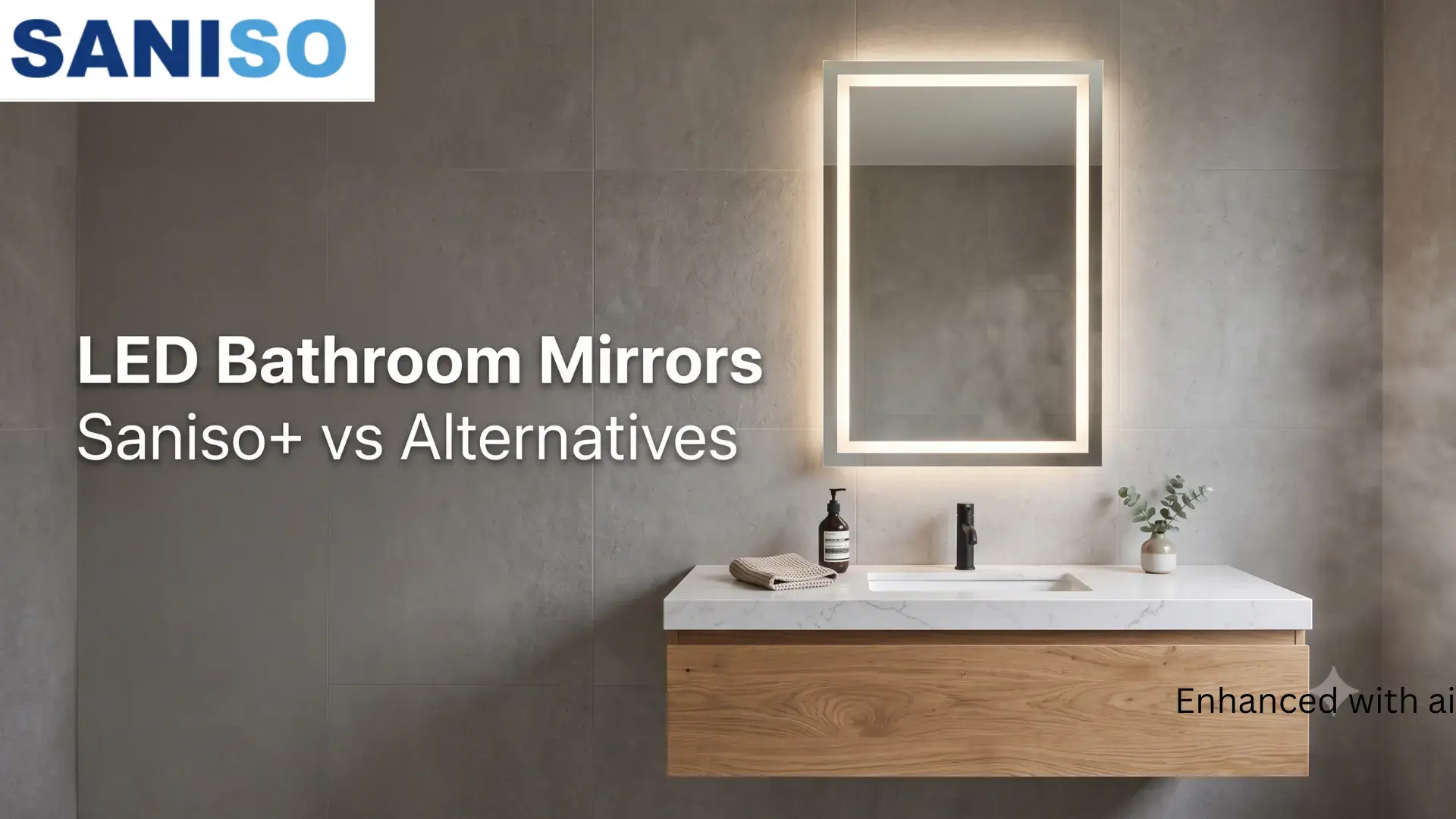
Comparing LED bathroom mirrors before you buy? See how the Saniso+ mirror stacks up on dimming, sizing, and water resist...
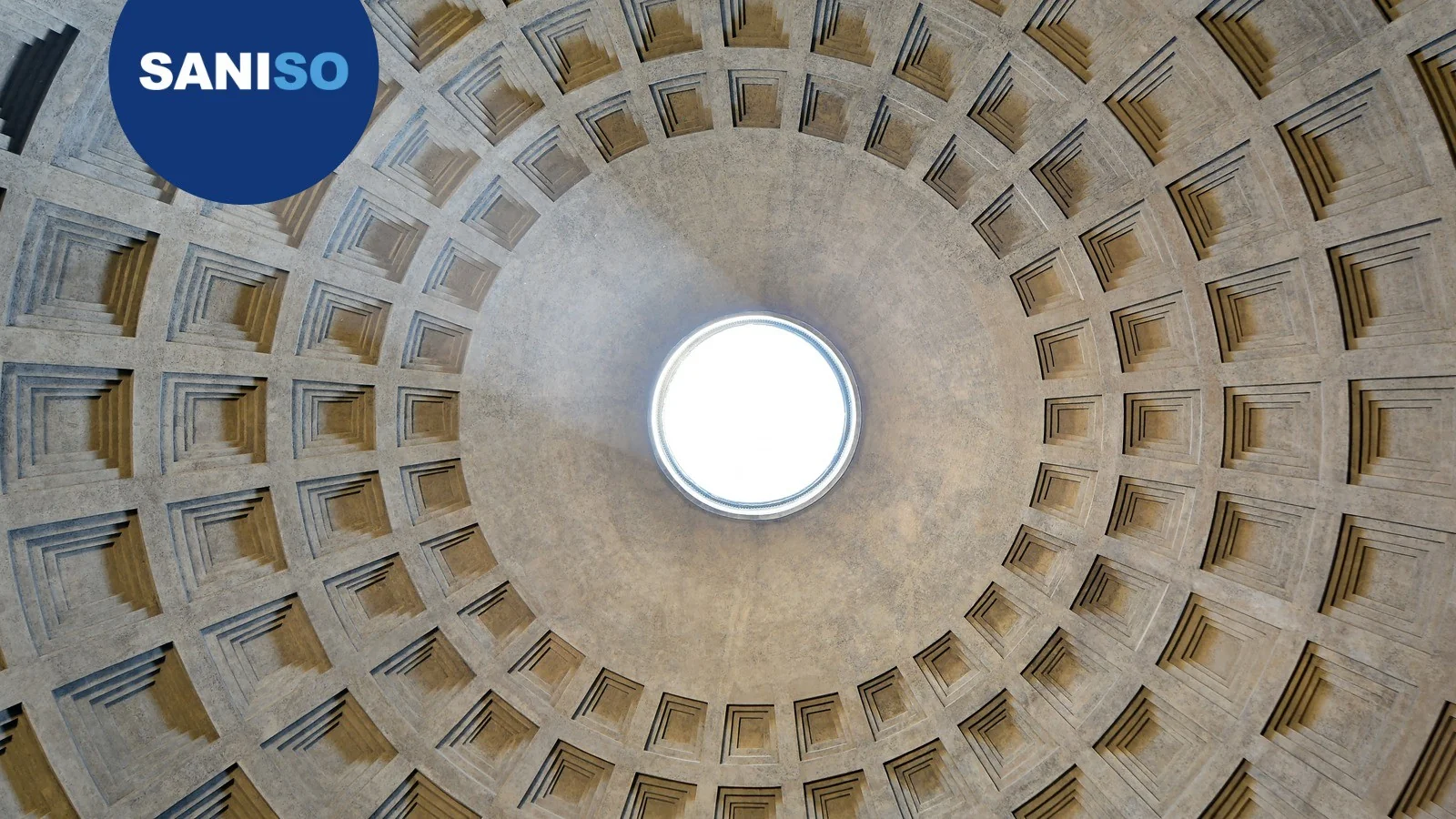
Building facts #4: the history of concrete. From Roman opus caementicium and the Pantheon to Portland cement, reinforced...