








Grout in one even colour across the whole wall or floor: that is what you want. In this blog we explain how the hybrid R...

Your online building supplies store for building and renovation
 English
✓
English
✓
 Nederlands
✓
Nederlands
✓
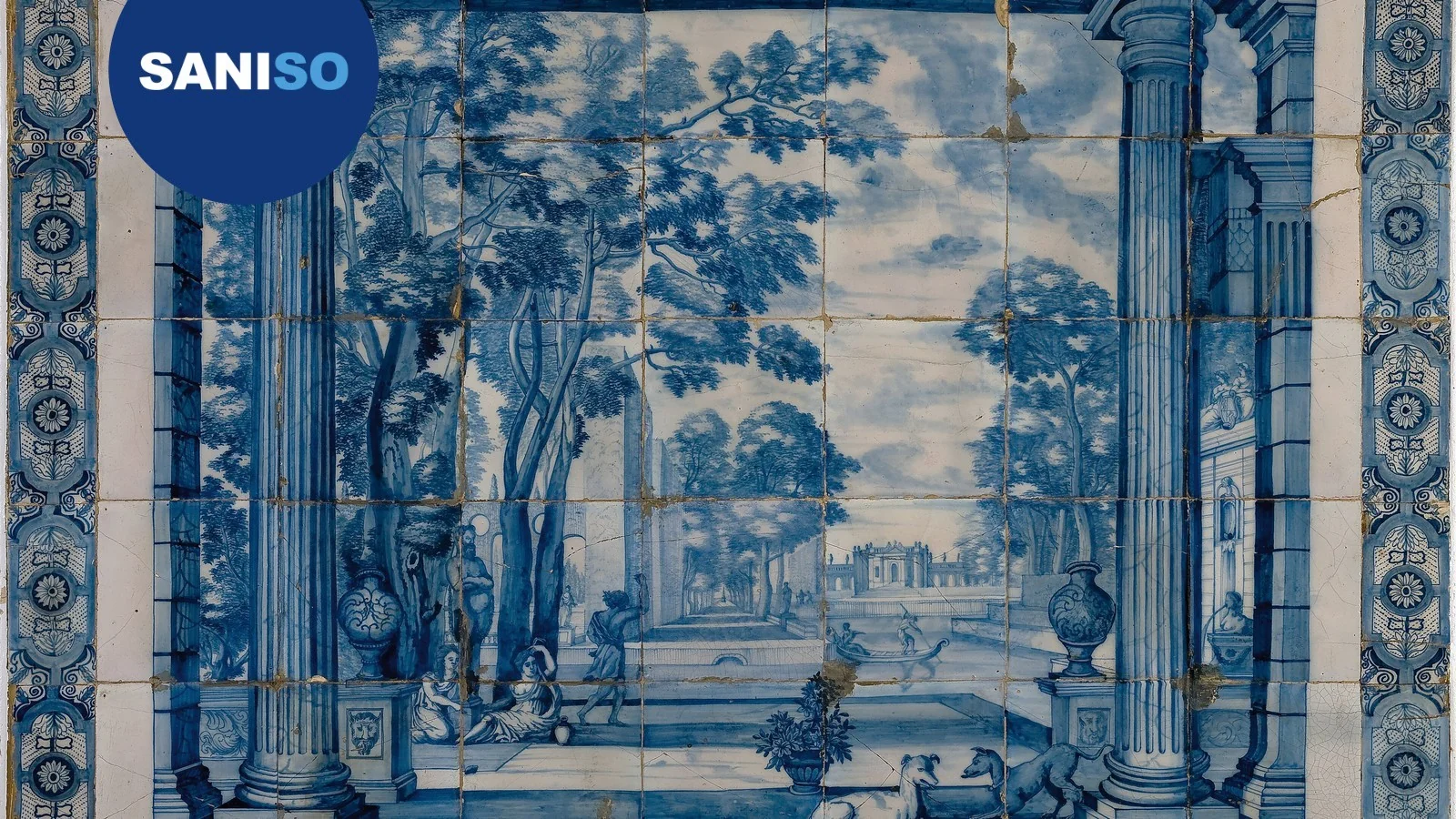
Photo: tile panel with a formal garden, made around 1700 by the Rotterdam tile works De Delfschevaart (Museum Rotterdam, object 5092). Museum Rotterdam, Wikimedia Commons, licence CC BY-SA 3.0 (cropped)
Building facts #3 · Every Monday and Thursday one building topic, examined in depth
Look around your bathroom or kitchen: chances are there's a tile within arm's reach. It's so normal that we hardly notice it. Yet the tile has a long story behind it, from glazed bricks in Babylon and hand-cut mosaics in the Alhambra, via medieval floors in Utrecht and the famous blue Dutch wall tile, to the large, thin porcelain stoneware tiles of today. In this third edition of Building facts we look at one topic: the history of the tile. (Missed edition #2? Read the history of the toilet and the sewer.)
The English tile and the Dutch tegel share the same ancestor: the Latin tegula, a roof tile of fired clay. It comes from the verb tegere, 'to cover'. Over the centuries the Dutch word shifted from 'roof tile' and 'brick' to the flat wall and floor tile we mean today.
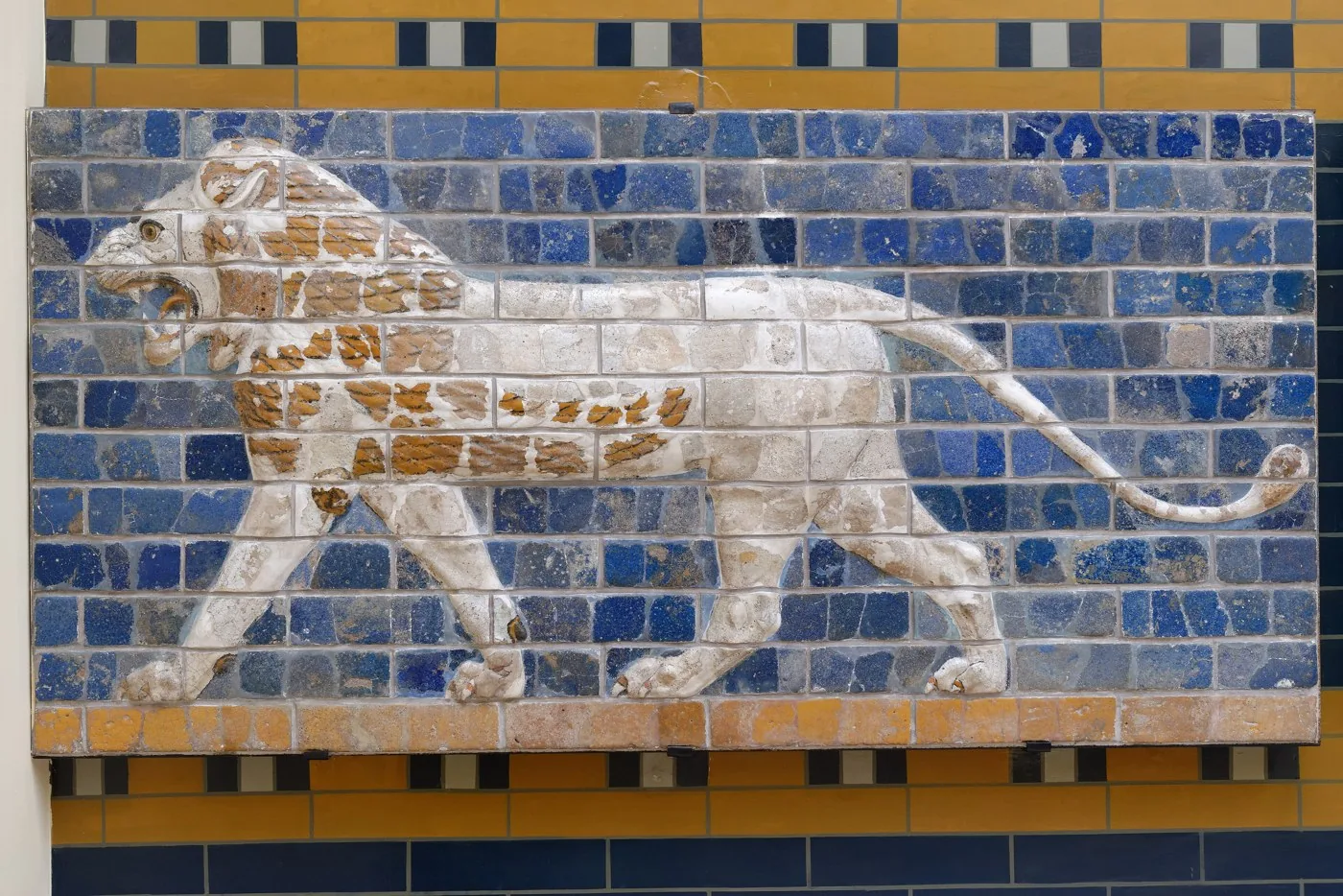
The idea of covering a wall with fired, glazed clay is very old. The earliest evidence of glazed brick comes from the Elamite temple of Chogha Zanbil in present-day Iran, from the 13th century BC. The most famous example is the Ishtar Gate of Babylon, built around 575 BC on the orders of King Nebuchadnezzar II. Its walls were finished with bricks in a deep blue glaze, meant to look like the precious stone lapis lazuli, with lions, bulls and dragons in relief. The bricks were pressed into wooden moulds, fired once, glazed and then fired again at a higher temperature. Part of the gate was rebuilt in the Pergamon Museum in Berlin.
The Romans gave us the word, and they're famous for their mosaic floors: pictures made of small cubes of stone, glass or ceramic called tesserae. Even the word 'tessellation', a pattern that covers a surface without gaps, comes from the Latin tessella, a small tile. (For the story of fired clay itself, read edition #1: the history of the brick.)
Glaze was the big breakthrough. Fired clay without glaze is porous; a glaze melts during a second firing into a glassy layer that keeps water out and makes the surface easy to clean. According to the Nederlands Tegelmuseum, tin glaze, which turns opaque and glossy white after firing, was already used in the Middle East around 1000 to 600 BC. On that white background, painted decoration really stands out.
In the Islamic world, tilework grew into a high art. In North Africa and al-Andalus, craftsmen developed zellij: mosaics of hand-chiselled, glazed tile pieces that together form complex geometric star patterns. In the 14th-century Alhambra in Granada, some pieces are as small as 2 millimetres wide. The Spanish and Portuguese word azulejo, still the everyday word for 'tile' there, comes from the Arabic al-zillij. Fun Dutch link: the tessellations of the Alhambra were an important source of inspiration for the graphic artist M. C. Escher.
From Spain, a lot of tin-glazed pottery was exported to Italy, where it became known as maiolica. Italian potters then brought the technique north: in 1500 the Italian potter Guido da Savino settled in Antwerp. There, Italian craftsmen made multicoloured tiles with ornamental patterns, in which the full pattern only appeared when you laid 4 or 16 tiles together.
Long before the famous blue wall tile, there were floor tiles. In Dutch they're called plavuizen (and in the past also estrikken). The best-documented medieval production site in the Netherlands is the Bemuurde Weerd in Utrecht, just outside the old city moat. Because of the fire risk, potters weren't allowed to work inside the city. Between 1275 and 1350 they made coloured floor tiles there.
The method was ingenious. A mould of about 17.5 × 17.5 cm was filled with clay, the edges were trimmed with a broad knife and the tiles were dried. With only a lead glaze they came out of the kiln red; copper oxide in the glaze made them almost black; a layer of white slip under the glaze made them yellow, and copper on top of that gave light green. To make smaller tiles, the potters cut the unfired tile halfway through. After firing they broke it along those lines into squares, rectangles or triangles.
During excavations in 1994–95 in Utrecht, archaeologists found an almost complete floor from the first quarter of the 14th century: the floor of Bloemaert, made of about 20,000 small tiles from the Bemuurde Weerd. Floor tiles with a stamped relief also existed from the first half of the 13th century, mainly in churches and monasteries. Only one such floor survived in part, in the infirmary of the Cistercian monastery of Aduard. In Friesland, red and yellow examples up to 9 cm thick are known.
In England, inlaid tiles were popular from the 13th century. Their pattern isn't painted on but made of different colours of clay that run through the thickness of the tile, so the design doesn't wear away when you walk on it.
After the Fall of Antwerp in 1585, many craftsmen moved north. Tin-glazed pottery was made in Middelburg and Haarlem in the 1570s and in Amsterdam in the 1580s. In the early 17th century, potteries and tile works appeared in towns such as Utrecht, Delft, Gouda, Hoorn, Enkhuizen, Harlingen, Makkum and Bolsward. In Rotterdam the number of tile works grew to nineteen; one tile maker who died in 1645 left a stock of almost 100,000 tiles.
Around 1600 the Dutch tile got its own character: instead of an ornamental pattern spread across several tiles, each tile got one main motif, such as a soldier, an animal, a ship, a flower or a child at play, often with small corner decorations. Many tile painters used prints by well-known artists as examples; 592 different Bible scenes on tiles are known.
Why were tiles so popular? They're heat resistant and easy to clean, which made them ideal for the back wall of a fireplace. Damp walls in houses that were hard to heat also benefited from tiles. With growing prosperity, tiles appeared along floors as skirting, in corridors, stairwells and kitchens. The typical tile was about 13 × 13 cm: the witje. In regions such as Zeeland, Friesland and Overijssel some living rooms and kitchens were tiled from floor to ceiling, and in the Zaan region you'll find the smuiger, a fully tiled chimney breast that bends forward at the top.
Dutch tiles were also exported on a large scale. Tile works in Rotterdam, Delft, Amsterdam, Harlingen and Makkum made panels to order for palaces, churches and monasteries abroad, from Portugal and Brazil to Russia. Painter Cornelis Bouwmeester of the Rotterdam tile works De Bloempot made large harbour and river views; the largest panels ever made in the Netherlands are in the Madre de Deus church in Lisbon, and one Dutch panel even consists of 931 tiles. The panel at the top of this article was also made in Rotterdam, around 1700.
Around 1602, trade with China brought the first blue-and-white Chinese porcelain to Holland. It was called kraakporselein, probably after the Portuguese ships (carracks) the Dutch captured. Only the rich could afford it. When supplies were interrupted after the death of the Wanli Emperor in 1620, Dutch potters saw their chance to make a cheaper alternative. From about 1620, blue tiles were made: the picture painted only in blue on the white tin glaze.
The blue comes from cobalt oxide. At Royal Delft they still paint with it today: it looks black when applied, but turns blue in the kiln. Different shades of blue are made by adding more or less water.
But Delft Blue is not porcelain. It's tin-glazed earthenware (faience). The potters called themselves 'porcelain makers', but real porcelain could not be made here yet: it was first made in Germany in 1709. By adding marl, a lime-rich clay, the Delft potters could make their pottery thinner and finer, and from about 1615 they coated pieces completely in white tin glaze. Around 1700 Delft alone had 33 potteries. Delft became so famous that 'Delft Blue' is now a general name for blue-painted pottery and tiles, even when they weren't made in Delft.
The scale was enormous: Delft potters made an estimated 800 million tiles over two centuries, and many Dutch houses still have tiles fixed in the 17th and 18th centuries. In the late 17th century purple tiles came into fashion, except in Friesland, where blue remained the main colour. In the second half of the 18th century the potteries disappeared one by one, under pressure from cheap English earthenware. Of the 17th-century Delft factories, only De Porceleyne Fles, founded in 1653, has worked without interruption. In 1876 engineer Joost Thooft bought it to revive Delft Blue, and in 1919 it became Royal (Koninklijk); today it's known as Royal Delft. In Makkum, Royal Tichelaar is still active; the Tichelaar family has run the pottery since 1689 and received the title Royal in 1960 at its 300th anniversary.
| Year | Milestone |
|---|---|
| 13th century BC | Glazed bricks in the Elamite temple of Chogha Zanbil (Iran), the earliest evidence of glazed brick |
| c. 575 BC | Ishtar Gate in Babylon, clad in blue-glazed bricks |
| 1275–1350 | Coloured floor tiles made on the Bemuurde Weerd in Utrecht |
| 14th century | Zellij tile mosaics in the Alhambra in Granada |
| 1500 | Italian potter Guido da Savino settles in Antwerp |
| c. 1620 | First blue-and-white Dutch wall tiles |
| 1653 | De Porceleyne Fles is founded in Delft (now Royal Delft) |
| 1883 | Mosa is founded in Maastricht; wall tiles from 1888 |
| 1974 | Marazzi patents rapid single firing of body and glaze |
| early 1980s | The term "gres porcellanato" (porcelain stoneware) is coined |
| 2019 | World production of ceramic tiles: an estimated 12.7 billion m² |
The basic recipe hasn't changed: clay, fire and glaze. The Nederlands Tegelmuseum describes the traditional method like this: clays are mixed and washed, rolled into slabs, cut into tiles with small frames and dried. They're fired at about 1000 °C, then coated on one side with tin glaze, a white mixture of tin ash, quartz, sand and soda, among other things. The design is transferred with a spons: a sheet of paper with tiny holes along the outlines, over which the painter dabs a bag of charcoal powder. After painting, the tile goes into the kiln a second time, where the glaze melts into an opaque white layer.
Clay fired at 800 to 1000 °C becomes earthenware, which is porous. Modern porcelain tiles are made very differently. The body typically consists of 40–50% kaolin and ball clay, 35–45% feldspar, 10–15% quartz and less than 5% metal oxides for colour. The raw materials are wet-milled into a slurry, spray-dried into fine granules (with 4–7% moisture) and pressed under very high pressure. In a roller kiln at around 1200 °C the feldspar melts into a liquid glass that fills the tiny pores between the particles. When it cools, you get a dense, frost-resistant tile that hardly absorbs any water.
Porcelain stoneware (Italian: gres porcellanato) is the dense tile we just described. Historically, porcelain was far too expensive for most tiling; the first porcelain tiles were made in China, for example for the 15th-century Porcelain Tower of Nanjing.
The modern version was born in the Sassuolo area in Italy at the end of the 1970s, in what experts call a true technological revolution: wet milling, high-tonnage presses, spray drying and fast single firing in single-deck roller kilns. That gave much better control and made larger sizes possible. Firing cycles that used to take more than 12 hours in tunnel kilns came down to less than one hour. Tile maker Marazzi had patented rapid single firing, firing the tile body and glaze together, in 1974. The term 'gres porcellanato' was coined at the beginning of the 1980s.
Since then, sizes have grown steadily. Modern porcelain tiles often reach 1600 × 3200 mm, and specialist manufacturers make 1840 × 3300 mm. Digital printing with ceramic inks, fired in the kiln at up to 1200 °C, can now give a tile almost any look: wood, marble or concrete.
The international standard ISO 13006 (and its counterpart EN 14411) sorts ceramic tiles by how they're shaped and by their water absorption: the percentage of water a tile absorbs, by weight. Dry-pressed tiles get the letter B, extruded tiles the letter A. A porcelain tile is defined as a fully vitrified tile with a water absorption of 0.5% or less, in groups AIa and BIa.
| Group (dry-pressed) | Water absorption | What it means |
|---|---|---|
| BIa | ≤ 0.5% | Porcelain tile (porcelain stoneware): fully vitrified |
| BIb | 0.5–3% | Low water absorption |
| BIIa | 3–6% | More porous than group I |
| BIIb | 6–10% | More porous still |
| BIII | > 10% | Porous; this group applies essentially to glazed tiles |
The lower the water absorption, the denser the tile. Earthenware tiles, fired at up to about 1100 °C, aren't frost resistant; porcelain stoneware is. That's one reason why the old witje was an indoor wall tile, while porcelain stoneware can also go on a terrace. Which tile suits which room is a buying question, and we don't repeat that here: read our guide to buying ceramic floor, wall and garden tiles and why ceramic outdoor tiles are so popular.
In the second half of the 19th century, traditional Dutch tile making declined, because of the economic situation, competition from industrial tiles from England and Germany, and because wallpaper came into fashion and was much cheaper. In England, Herbert Minton had taken up making inlaid ('encaustic') tiles; in 1845 he founded Minton, Hollins & Co., which supplied durable wall and floor tiles for churches, public buildings and ordinary homes, including floors for the United States Capitol.
In the Netherlands, Mosa in Maastricht became a big name. The company was founded in 1883 by Louis Regout and was the first Dutch porcelain factory. In 1888 it started making ceramic wall tiles, and in 1957 a new floor tile factory opened in Limmel. In 1983, at its 100th anniversary, it was given the title Royal. In 2008 the factories in Maastricht produced five million square metres of wall and floor tiles. Also in Maastricht, REMA, founded in 1888, had success between the wars with double hard-fired floor tiles.
Around 1900 there was a short revival of the decorated tile: Art Nouveau tiles appeared in porches and in arches above windows. From 1875, new techniques made tiles more colourful and suitable for outdoor use on façades. The Nederlands Tegelmuseum shows tiled shop interiors from this period, such as fish shops and butcher's shops.
Since the Victorian era, tiles have remained the standard for kitchens and bathrooms, partly because of the rise of the bathroom and a better understanding of hygiene. Tiles protect against splashes and are easy to keep clean, which is why you also find them in hospitals, swimming pools and professional kitchens.
The scale is huge: worldwide production of ceramic tiles, excluding roof tiles, was estimated at 12.7 billion m² in 2019. The main producers of porcelain tiles are China, Italy, India, Spain and Turkey. Want to put tiles on a wall yourself? We don't explain the steps here: read how to tile a wall, step by step.
The modern tile is the sum of all these inventions: a densely pressed body, a glaze or digital print, and of course the materials to fix it. Large, dense tiles ask for a stronger adhesive than the old porous ones, and large formats are less forgiving of height differences. Below are a few products where you can recognise that history. How to lay them is explained step by step in how to tile a wall; which tile to choose is in buying ceramic tiles.
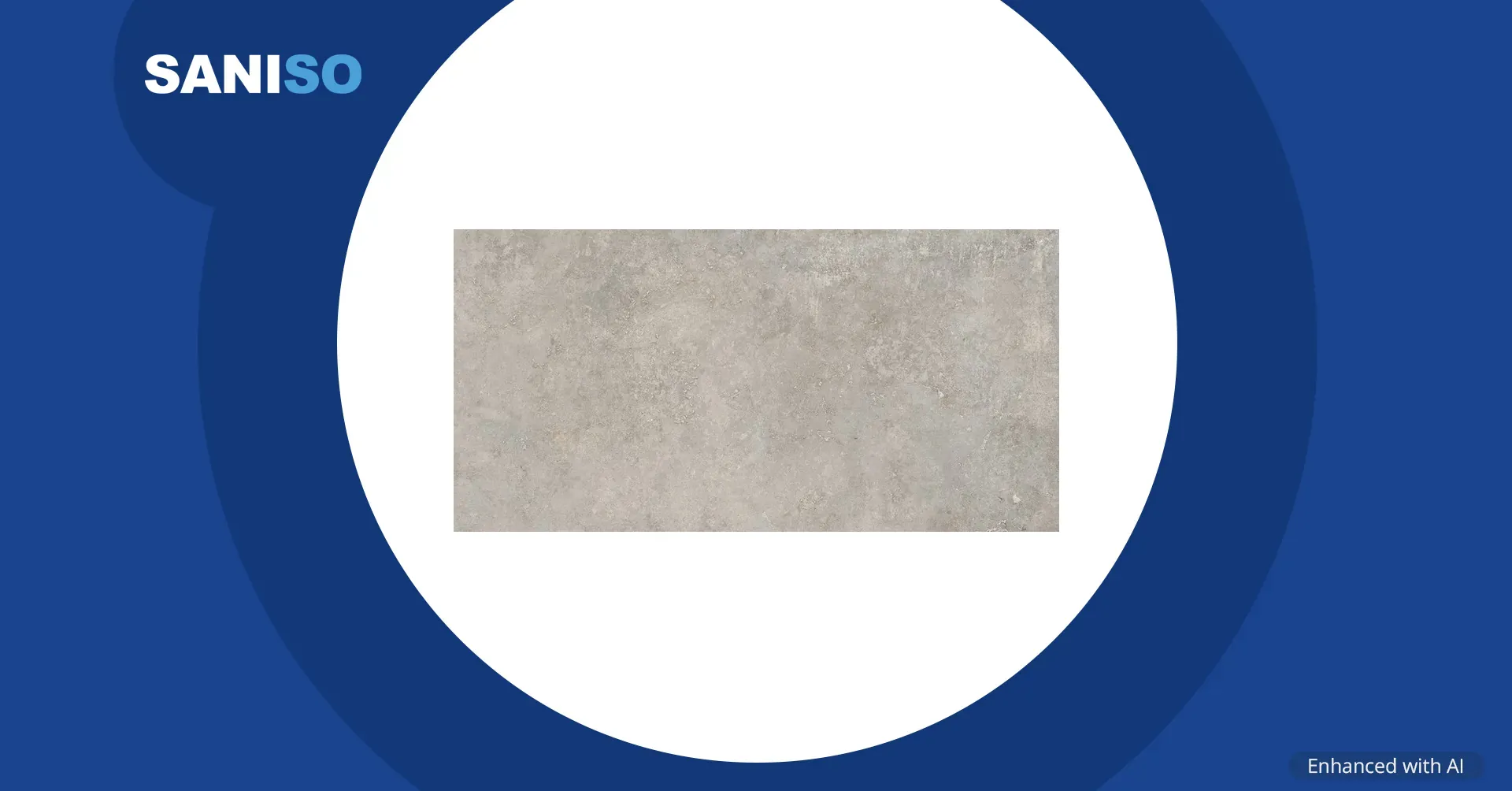
A large-format, rectified Cersanit tile in a cement look, 60 × 120 cm and 8 mm thick, for walls and floors, indoors and outdoors. Frost resistant, slip resistance class R10b, abrasion resistance class 4; one packing holds 2 tiles (1.43 m²).
What is it for? Today's counterpart of the 13 × 13 cm witje: a big, thin tile for walls and floors, indoors and outdoors.

A mineral adhesive from Kerakoll for high-performance bonding of porcelain tiles, ceramic tiles and natural stone, with no vertical slip and a long open time. Coverage about 1.25 kg/m² per mm of thickness.
What is it for? Dense, heavy porcelain tiles need a stronger adhesive than the old porous tiles.

A tile cutter and breaker on a rigid aluminium table, with a hardened steel guide and a ball-bearing blade slider. It cuts ceramic tiles up to 16 mm thick and has an adjustable steel square for angled cuts.
What is it for? Score and snap: the same idea as the medieval tile makers in Utrecht, who scored their tiles before firing so they could break them into smaller pieces afterwards.
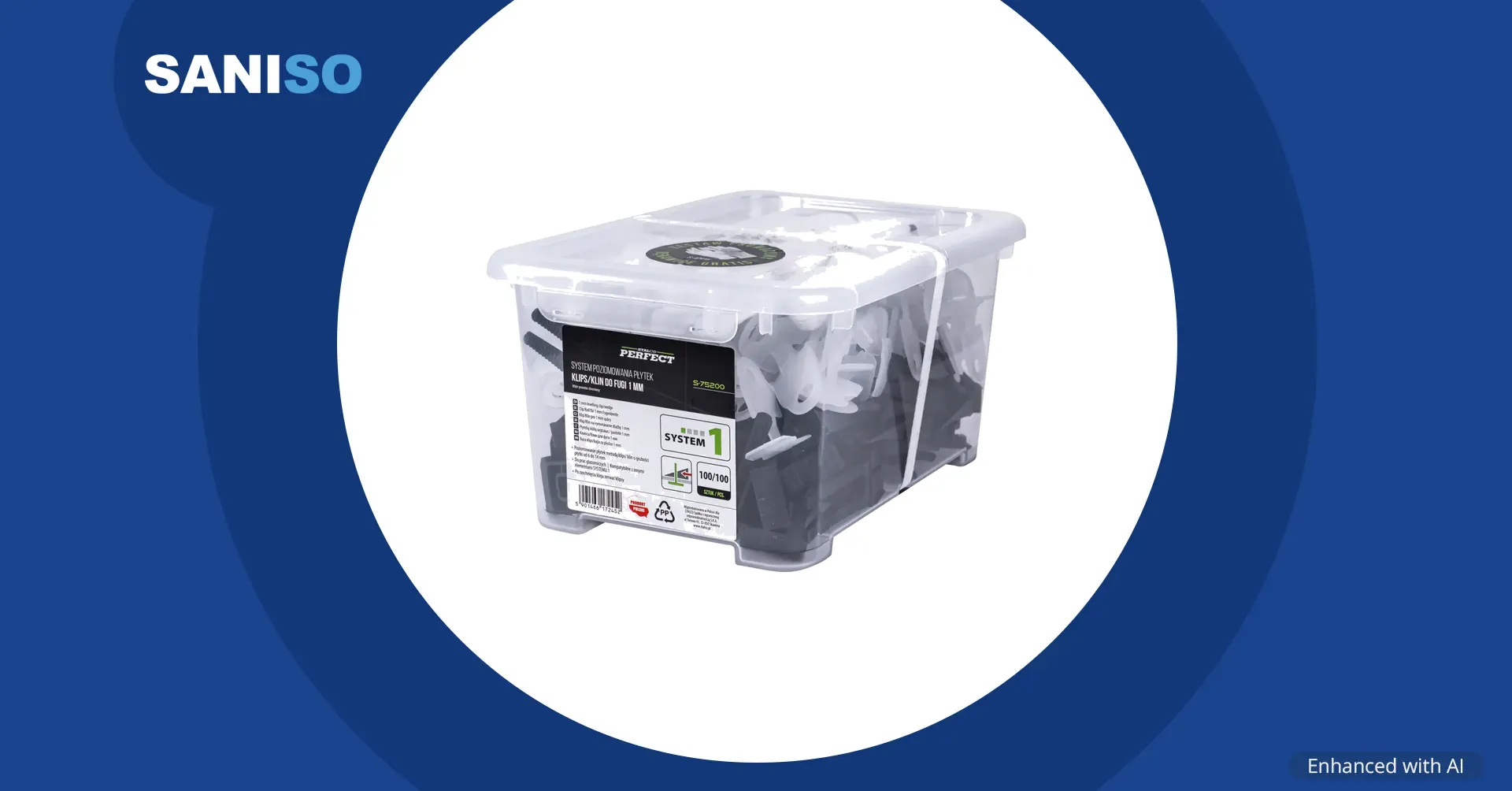
A tile levelling kit with a double wedge and a snap-in clip that keeps newly laid tiles level with their neighbours while the adhesive cures. For tiles 6–14 mm thick, walls and floors, indoors and outdoors; after curing you remove the clips.
What is it for? The bigger the tile, the more you notice height differences between two tiles. Levelling clips help keep large formats flat.
Order on a workday before 15:00? Then your order is delivered the next workday, as long as it fits in a parcel. Pallet shipments have a different delivery time. Saniso has thousands of products in stock in the Netherlands.
Your first order is easy to place:
Want to know when there are new offers? Sign up for the newsletter: scroll to the bottom of any page on saniso.nl, enter your email address under "Newsletter" and click "Subscribe". You'll get updates on offers and discount vouchers, and we don't spam. With an account you also collect loyalty points for a discount on your next purchase.
Questions about ordering, your account, payment, shipping or returns? Find all the answers in the Saniso FAQ.
How old are tiles?
The earliest evidence of glazed brick comes from the temple of Chogha Zanbil in Iran, from the 13th century BC. The Ishtar Gate of Babylon, clad in blue-glazed bricks, dates from around 575 BC.
Where does the word 'tile' come from?
From the Latin tegula, a roof tile of fired clay, from tegere, 'to cover'. The Dutch word tegel has the same origin.
Is Delft Blue porcelain?
No. Delft Blue is tin-glazed earthenware (faience). Real porcelain was first made in Germany in 1709.
Why are old Dutch tiles blue?
Because Dutch potters imitated the blue-and-white Chinese porcelain that arrived from around 1602. Blue tiles were made from about 1620; the blue comes from cobalt oxide.
How many Delft tiles were made?
Delft potters made an estimated 800 million tiles over a period of two hundred years.
How big is an old Dutch tile?
The typical 17th-century Dutch wall tile, the witje, measures about 13 × 13 cm.
Which old Dutch tile and pottery works still exist?
Royal Delft (De Porceleyne Fles, founded in 1653) in Delft and Royal Tichelaar in Makkum, run by the Tichelaar family since 1689.
What is a tile panel (tegeltableau)?
A picture painted across two or more tiles. The largest panels ever made in the Netherlands are in the Madre de Deus church in Lisbon. There is even a Dutch panel of 931 tiles.
What is porcelain stoneware?
A fully vitrified ceramic tile with a water absorption of 0.5% or less (groups AIa and BIa of ISO 13006). It is pressed under high pressure and fired at around 1200 °C.
When was porcelain stoneware invented?
The modern version came from the Sassuolo area in Italy at the end of the 1970s; the term 'gres porcellanato' was coined in the early 1980s.
What does BIa mean on a tile?
B means dry-pressed, and group Ia means a water absorption of 0.5% or less: that's porcelain stoneware.
Where can you see old tiles in the Netherlands?
For example in the Nederlands Tegelmuseum in Otterlo, at Royal Delft in Delft and in the Keramiekmuseum Princessehof in Leeuwarden.
What is the delivery time at Saniso?
Order on a workday before 15:00 and it's delivered the next workday, as long as it fits in a parcel. Pallet shipments have a different delivery time.
Do the prices include VAT?
This blog shows every price including and excluding VAT. At checkout on saniso.nl, prices are shown including VAT.
Building facts takes one building topic under the magnifying glass every Monday and Thursday. This is edition #3. Read the previous edition too: the history of the toilet and the sewer, from Roman latrine to wall-hung WC, and edition #1: the history of the brick. Fun link: before the tile, the Ishtar Gate was already a wall of glazed bricks.
Share:
Grout in one even colour across the whole wall or floor: that is what you want. In this blog we explain how the hybrid R...
Why Cersanit tiles at Saniso: wood, floral, stone, monocolour and outdoor collections for walls and floors, with 5 price...
Building facts #4: the history of concrete. From Roman opus caementicium and the Pantheon to Portland cement, reinforced...
A tiled splashback protects the wall against grease and splashes and instantly gives your kitchen a new look. This is ho...