






Grout in one even colour across the whole wall or floor: that is what you want. In this blog we explain how the hybrid R...

Your online building supplies store for building and renovation
 English
✓
English
✓
 Nederlands
✓
Nederlands
✓
A new door handle, a lock that sticks or a door that slams without a stopper: the door hardware determines how nicely an interior door works and how it looks. But which hardware fits your door? This blog explains which parts there are, how to take the measurements (door thickness, backset, left or right hand) and which choice suits where.
The door handle operates the lock. A handle usually comes as a pair with a square spindle that passes through the lock. You choose between a pair on rosettes or on long plates, and between a handle on both sides or a handle with a blind plate or knob on one side. Check that the pair suits the thickness of your door.
A rosette is a round or square plate around the handle; a long plate is a long plate that also covers the keyhole or lock cut-out. Rosettes are simple and clean. Long plates hide old holes from a previous lock and give the door extra protection because the handle wears it less.
Interior doors hang on two or three hinges. Choose the size, thickness and finish to suit the existing frame and the weight of the door. A third hinge in the middle prevents sagging on a heavy door. How to cut the recesses is described in our blog how to cut hinge recesses in an interior door.
A door stopper prevents the handle from knocking a hole in the wall. There are floor stoppers, stoppers for the skirting board or wall and hooks that hold the door against the wall. Position it so that the door hits the stopper before the handle hits the wall, and pay attention to the floor or skirting finish.
Under an interior door you can fit a draught strip or drop seal to reduce draughts, noise and dust. Allow for the gap between the door and the floor: a strip that sits too low will scrape the floor. In bathrooms and for doors with a ventilation grille, air should be able to pass; don’t seal that gap.
Hardware comes in many finishes, such as stainless steel, black, white, brass and bronze. Keep one colour and finish throughout the house (handle, plates and hinges) for a calm look. Stainless steel and black hardware are low-maintenance; brass has a warm look but develops a patina over time. If you are painting the door, let it dry before the hardware goes back on: read how to paint a door.
Stand on the side the door opens towards you. If the hinges are on the left, it is a left-hand door; on the right, a right-hand door. Many locks and handles are reversible, but not all, so make a note. With a toilet or bathroom lock, it can also matter which side the emergency release is on.
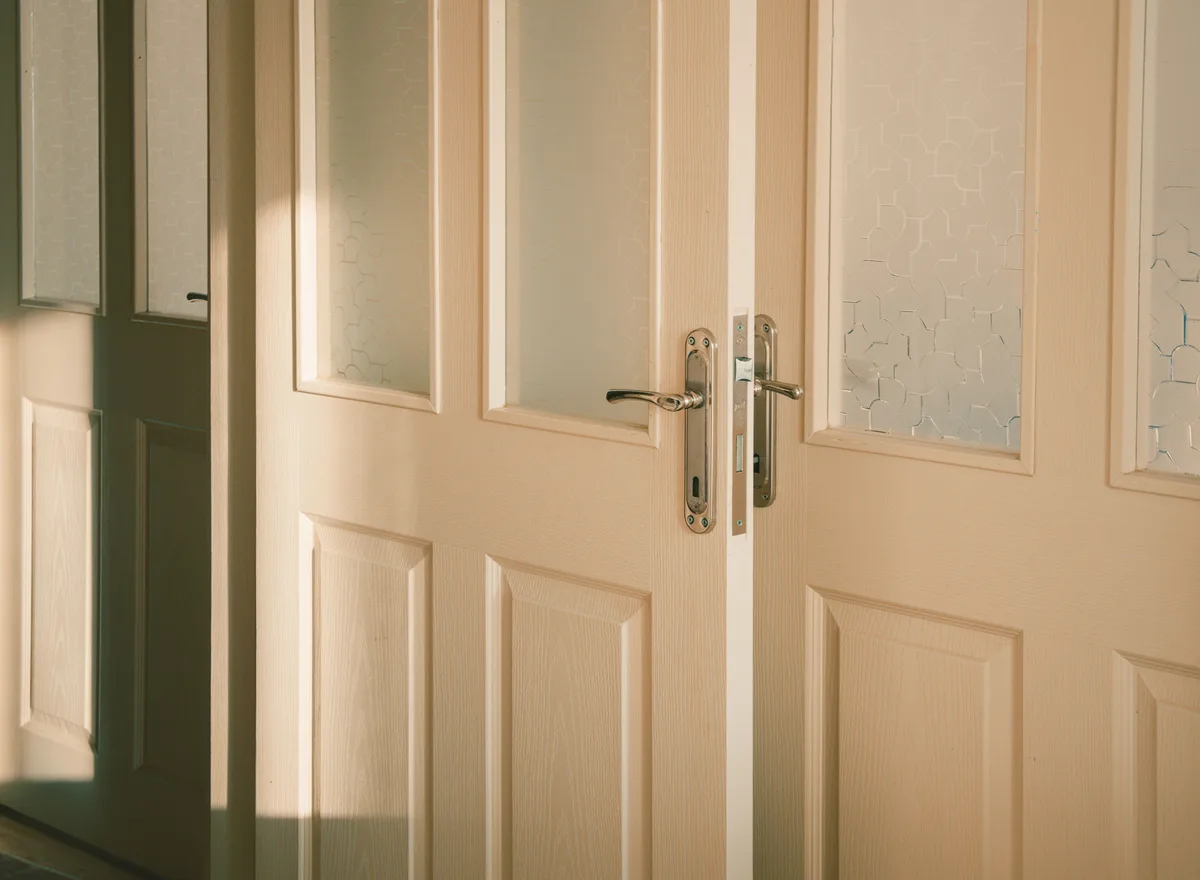
💡 Tip: take a photo of the old hardware and measure the lock before you unscrew the handle. That way you have all the dimensions to hand when you buy new hardware.
Wear work gloves when handling sharp metal parts and safety glasses when drilling and chiselling. Working at the bottom of the door or at the floor stopper? Knee pads will spare your knees. You can find all personal protective equipment in our workwear and safety category. Read more tips in our guide safe working on the construction site. With fire-rated doors, doors with built-in closing mechanisms or your front door: if in doubt, call a professional.
A latch closes the door with a latch bolt but can’t be locked. A toilet lock has a slide or knob on the inside to lock the door, and an emergency release on the outside.
Measure the distance from the edge of the door to the centre of the square hole for the handle. Common sizes are 50 and 55 mm. If in doubt, measure the old lock.
Stand on the side the door opens towards you. If the hinges are on the left it is a left-hand door; if they are on the right, it is a right-hand door.
Often yes, but watch the spacing between the holes and the hole for the lock. Long plates cover larger holes, but only fit if the distance between the handle and cylinder holes matches.
Usually about 1 metre above the floor. Look at the height of the other doors in your home so everything stays level.
With a fire-rated or burglar-resistant door, a door with a built-in lock you don’t know, if a lot of wood has to come out for a new mortise, or if you simply don’t have the time or the inclination.
Working on more than one part of your door? Then also read: How to paint a door and How to cut hinge recesses in an interior door.
At Saniso, the online DIY and building store, you’ll find tools and personal protective equipment for your job. Questions about door hardware or hinges? Feel free to ask us.
In doubt about the approach, or is the door special (for example fire-rated, very heavy or glazed)? Feel free to call in a professional.
Read also: How to fix a sticking door
Saniso – Build your home with Saniso.
Share:
Grout in one even colour across the whole wall or floor: that is what you want. In this blog we explain how the hybrid R...

Learn how to level a floor yourself: prepare the subfloor, prime, mix and pour self-levelling compound. Step-by-step wit...

Installing a kitchen: do it yourself or hire a professional? Read what is involved, which parts you can do yourself and...

Cersanit Ares cement-look tiles for bathroom, kitchen and living room: 30×30 to 60×120, matt or satin, plus mosaic, skir...