Cart (0)
No products in the cart.

 English ✓
 Nederlands ✓
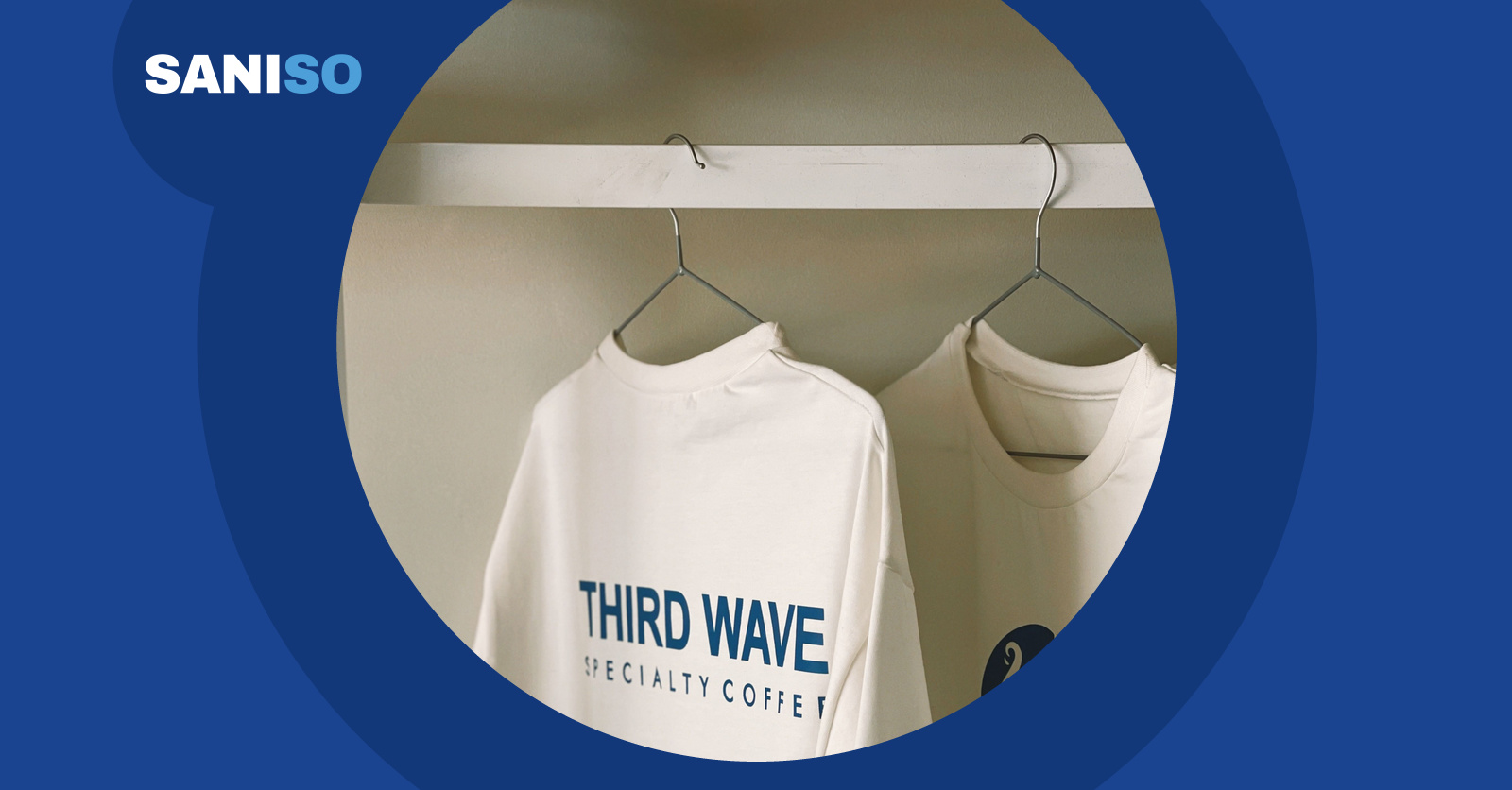
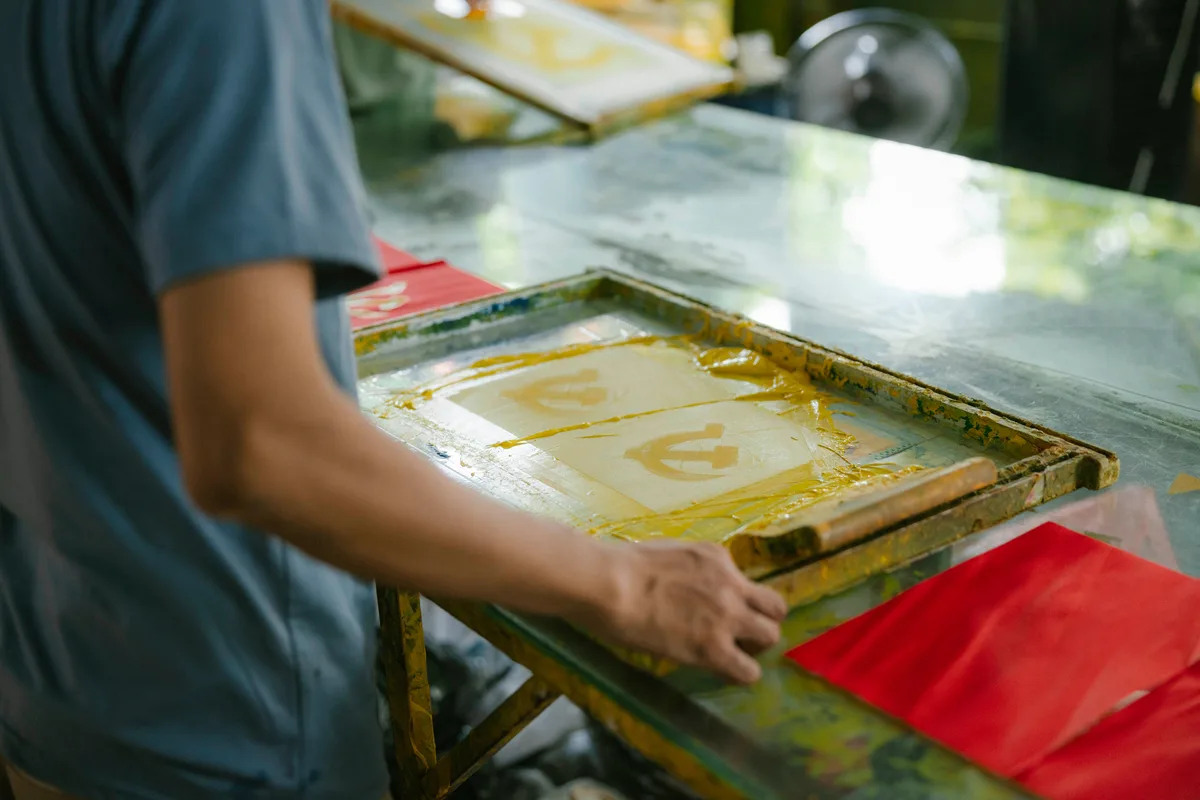
Short answer: you usually add a company logo to workwear with printing (screen or digital), embroidery or transfer. Screen printing suits larger runs and simple colour areas. Embroidery looks durable and often ages well on thicker fabrics. Transfer is useful for small runs or multi-colour artwork. Choose clothing that fits the job and the wash routine first; then let a printer or embroidery workshop apply the logo. Saniso supplies the garments as a wholesaler. For larger quantities or a project quote you can get in touch with us.
👷 Printing and embroidery are skilled trades. A good printer or embroidery workshop knows which method suits which fabric, how thick the ink layer may be, and where a logo must not reduce safety or comfort. Their experience with fabrics, wash tests and placement is never optional.
| Method | Strong for | Less suited to | Look and feel |
| Screen / digital print | Larger runs, flat areas (back, chest), clear colours | Very fine detail on rough or thick fabric | Clean, sharp logo |
| Embroidery | Polos, softshells, fleeces, caps; thicker fabrics | Very large solid fills or photo-like logos | Robust, premium, tactile |
| Transfer (e.g. DTF/flex) | Small runs, many colours, frequently changing logos | Heavy abrasion or high wash temperatures without clear care advice | Sharp, even with complex logos |
There is no single 'best' method. Softshell and fleece take stitches differently from a cotton polo. A printer or embroidery workshop can show with a sample or wash test what works on your fabric.
Start from the job, not from the logo. A logo on clothing that tears quickly, overheats or gives the wrong protection helps no one.
Combine clothing with the right PPE: a safety helmet on site, work gloves with nitrile coating for assembly, high leather S3 safety boot outdoors and safety goggles when there is dust or grinding. More on layers and rainwear is in our blog on rainwear, warm workwear and work gloves; thermal underwear is covered in our blog on thermal work underwear.
⚠️ On high-visibility clothing under EN ISO 20471 a logo must not casually reduce the fluorescent or reflective areas. Never print or stick over reflective bands. If you are unsure, ask the supplier or printer and keep the class on the label under review.
A company logo helps recognition, but it is not PPE. On a construction site helmet, gloves, footwear and eye protection belong with the job; see our blog on safe working on the construction site, our blog on safety helmets, our buying guide for work gloves and our blog on choosing safety shoes. Welding has its own rules; read our blog on personal protection when welding.
Place the logo where it stays visible without blocking zips, knee pads or a harness. On vests and high-vis jackets: keep fluorescent panels and reflective bands clear.
Saniso is a wholesaler: you order workwear and PPE in the sizes and quantities your team needs. Printing or embroidery is arranged with a specialist printer or workshop, or you align a larger order through a project request. That keeps garment choice with the job, and the logo with the specialist who masters the technique.
For a quote or advice on which items and sizes fit your team: contact us or use the project request via the buttons at the bottom of this page.
💡 Order one or two sample garments in the right size and fabric first, have them printed or embroidered, and wash them a few times. Only then kit out the whole crew. That avoids a full team ending up with a logo that cracks, is too small or sits in the wrong place.
It depends on fabric, run size and look. Embroidery feels robust on polos and jackets. Screen printing is efficient for larger runs. Transfer is flexible for small runs or many colours. Ask for a sample on your garment.
Only if the fluorescent and reflective areas required by EN ISO 20471 stay intact. No print over reflective bands. Have the class on the label checked after application.
Saniso supplies the workwear and PPE. Printing or embroidery is done by a printer or workshop, or you align a larger order via contact or a project request.
Preferably a vector file (.AI, .EPS or .SVG). If you only have a bitmap, supply high resolution (about 300 dpi at print size) without compression artefacts.
At Saniso, the online store for DIYers and professionals, you will find tools, materials and personal protective equipment for your job.
In doubt about the approach? Feel free to call in a professional.
Saniso – Build your home with Saniso.
Share:
Learn how to choose chemical-resistant gloves for construction work, from EN ISO 374 ratings to nitrile, latex and neopr...
What is VCA, what is the difference between B-VCA and VOL-VCA and which certificate do you need? An outline explanation,...
Do you work with a rotary hammer, demolition hammer or grinder every day? Read what hand-arm vibration is, which symptom...
What PPE do you need for welding? An overview of welding helmet, welding gloves, welding clothing, boots, hearing and re...