


Working with power tools in the rain? Read which cable and reel to use outdoors, why you always unwind a reel fully, how...

Your online building supplies store for building and renovation
 English
✓
 Nederlands
✓
Short answer: when welding, protect your eyes and face with a welding helmet with an auto-darkening filter, your hands with leather welding gloves and your body with flame-retardant welding clothing without open pockets or synthetic layers. Add high leather safety boots, hearing protection where it is noisy and safety glasses under the helmet. Tackle welding fumes at the source with extraction first. Respiratory protection is an addition, not a replacement. Welding remains skilled work: a professional is never unnecessary.
Read this article in Dutch as well: Lassen: persoonlijke bescherming op hoofdlijnen.
Welding brings five risks together: bright light with UV and infrared radiation, heat and spatter, welding fumes, noise from grinding and hammering, and electricity. In winter there is one more. The workshop doors stay closed against the cold, so fumes linger longer. That is exactly when good extraction matters.
Employers look at measures at the source first, such as extraction and a safe workplace. PPE is the last step. But without the right PPE you cannot weld safely. How this works on site in general is explained in our blog on safe working on the construction site.
| Body part | PPE | What to look for |
| Eyes and face | welding helmet with auto-darkening filter | filter to EN 379, shade set for the welding process |
| Eyes (under the helmet) | safety glasses | against slag and fragments when chipping and grinding |
| Hands | leather welding gloves | EN 12477: type A for stick and MIG/MAG welding |
| Body | flame-retardant welding clothing | EN ISO 11611, cotton or leather, no synthetic layers |
| Feet | high leather welder boots | S3, closed top so spatter cannot fall in |
| Hearing | earplugs or earmuffs | mandatory at 85 dB(A) or more |
| Breathing | extraction and respiratory protection | source extraction first, then a mask |
Arc eye can occur after just a few seconds without protection. You only notice hours later: burning, watering eyes and a feeling of sand in your eyes. A Hyperion auto-darkening welding helmet with an auto-darkening filter switches to dark in a fraction of a second. Your hands stay free and you can see the workpiece before striking the arc. Set the shade for the process and the current. The higher the current, the darker.
Always wear safety goggles under the helmet. When chipping slag or grinding a weld, you often flip the helmet up. For grinding, a face shield over the glasses is better. More on eye injuries is in our safety tip on preventing eye injuries, and on safe grinding in our blog on working with an angle grinder.
⚠️ Bystanders get arc eye too. Put welding screens or curtains around the workplace and warn colleagues before you start.
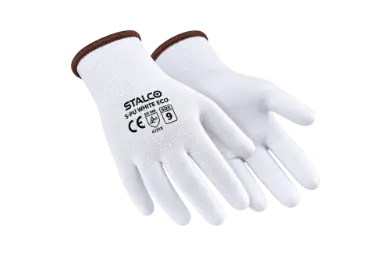
leather welding gloves made of thick leather protect against heat, spatter and UV radiation. For stick and MIG/MAG welding choose type A to EN 12477. For fine TIG work, thinner type B gloves are more comfortable. More on choosing gloves is in our buying guide for work gloves.
Welding clothing is flame-retardant and closes well at the neck and wrists. Avoid synthetic clothing: it melts into your skin when hit by spatter. Do not wear trousers with turn-ups or open chest pockets, because spatter collects in them. A leather apron or sleeves help when welding overhead.
A S3L leather welder boot has a closed top and a quick release, so you can pull it off fast if spatter does fall in. Which safety class suits which job is explained in our blog on choosing safety shoes.
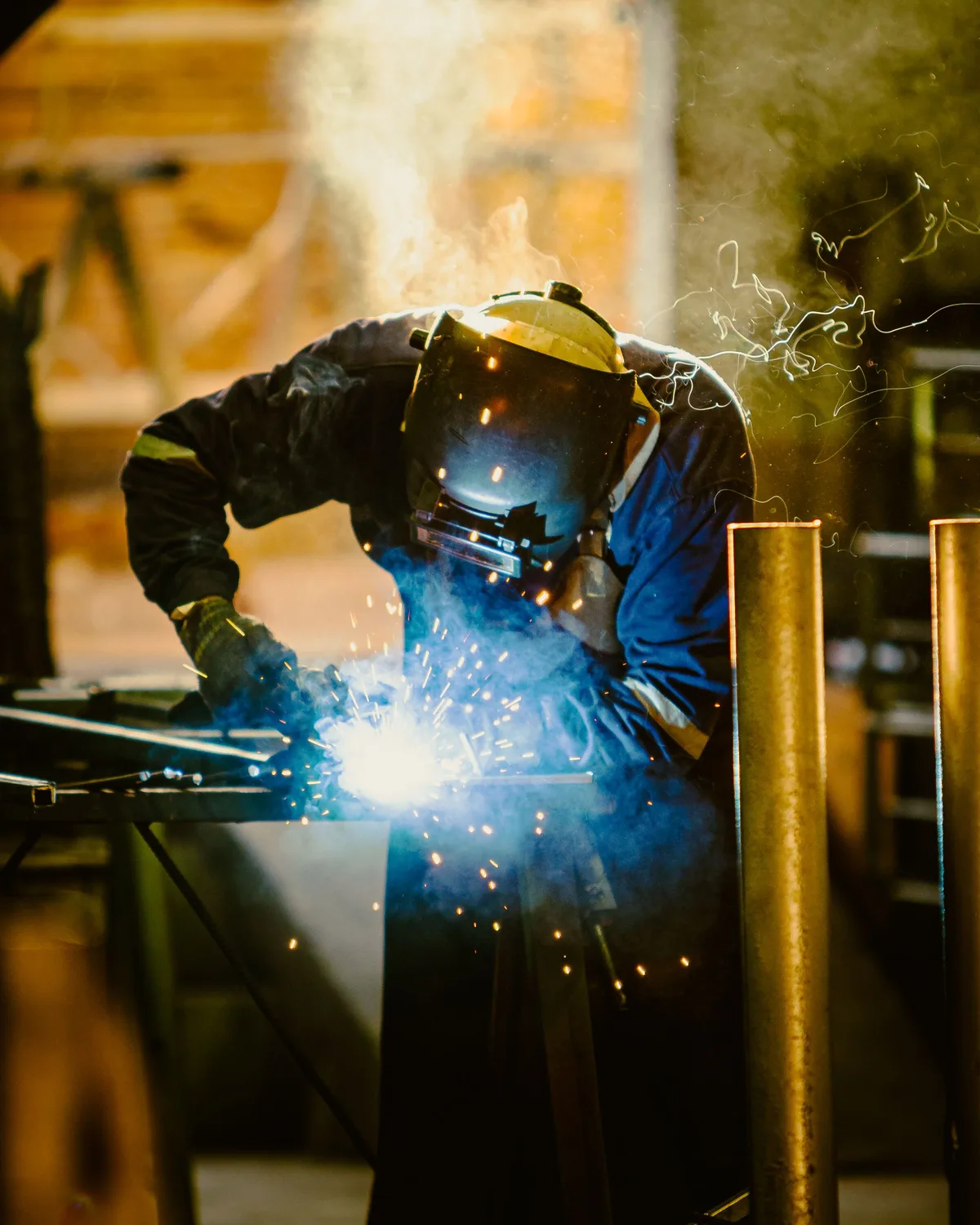
Welding fumes consist of fine metal particles and gases and are classed as carcinogenic. The key rule: extract the fumes where they are produced. Use an extraction arm, a fume extraction torch or a mobile extraction unit. Just opening a door or window is usually not enough. Keep your head out of the plume.
Respiratory protection is an addition. A FFP3 dust mask helps for short jobs, but it must fit well and does not fit under every helmet. For long welding sessions, or stainless and galvanised steel, a powered air helmet is a better choice. In a confined space, such as a tank or crawl space, extra rules apply and independent breathing apparatus is required.
Welding itself is not always loud, but chipping, grinding and straightening with a hammer are. Wear hearing protection at 85 dB(A) or more, such as earplugs or earmuffs. More in our blog on hearing protection.
Keep the workplace tidy and well lit with a rechargeable LED work lamp, so you do not trip over cables. See also our blog on work lights.
Whether you work with a stick welding machine (MMA) and E7018 welding electrodes or with a MIG/MAG welding machine and SG2 MIG welding wire: check cables, earth clamp and torch before use. Put the earth clamp close to the weld. Use MIG/MAG welding pliers to clean the gas nozzle and cut the wire. A locking welding pliers with wide jaws holds the workpiece so your hands stay clear. Brush the weld afterwards with a wire brush.
💡 Move flammable material at least a few metres away, keep an extinguisher within reach and check the workplace for smouldering remains for a while after you finish.
⚠️ Never weld with wet gloves or clothing, and do not work on a wet floor. Do not repair cables, plugs or the machine yourself: have the machine inspected periodically by a competent person. If in doubt about the electrical supply in the workshop, call in a certified installer.
👷 A professional is never unnecessary. Structural welding, such as load-bearing parts, railings or lifting eyes, belongs with a certified welder. Welding in confined spaces, or on pipes and tanks that have contained gas or fuel, is work for specialists too.
It depends on the process and the current. You set an auto-darkening helmet yourself; the higher the current, the darker the filter.
Not as the only measure. Extraction at the source comes first. An FFP3 mask is an addition for short jobs; for long sessions powered air is better.
No. Synthetic fabric melts and untreated cotton catches fire more easily. Wear flame-retardant welding clothing.
Because you flip the helmet up when chipping and grinding. The glasses then protect against slag and fragments.
At Saniso, the online store for DIYers and professionals, you will find tools, materials and personal protective equipment for your job.
In doubt about the approach? Feel free to call in a professional.
Saniso – Build your home with Saniso.
Share:
Working with power tools in the rain? Read which cable and reel to use outdoors, why you always unwind a reel fully, how...

Which socket set suits your work? Learn the difference between 1/4, 3/8 and 1/2 inch drive, why the number of ratchet te...
Caring for work shoes: how to clean safety shoes and boots, dry them properly, prevent odour and know when they need rep...
Drilling in wood, brick or concrete needs a different tool. Read the difference between a cordless drill, impact drill a...