

Fitting a bathtub: can you do it yourself or should you hire a professional? Learn what is involved with the waste, leve...

Your online building supplies store for building and renovation
 English
✓
 Nederlands
✓
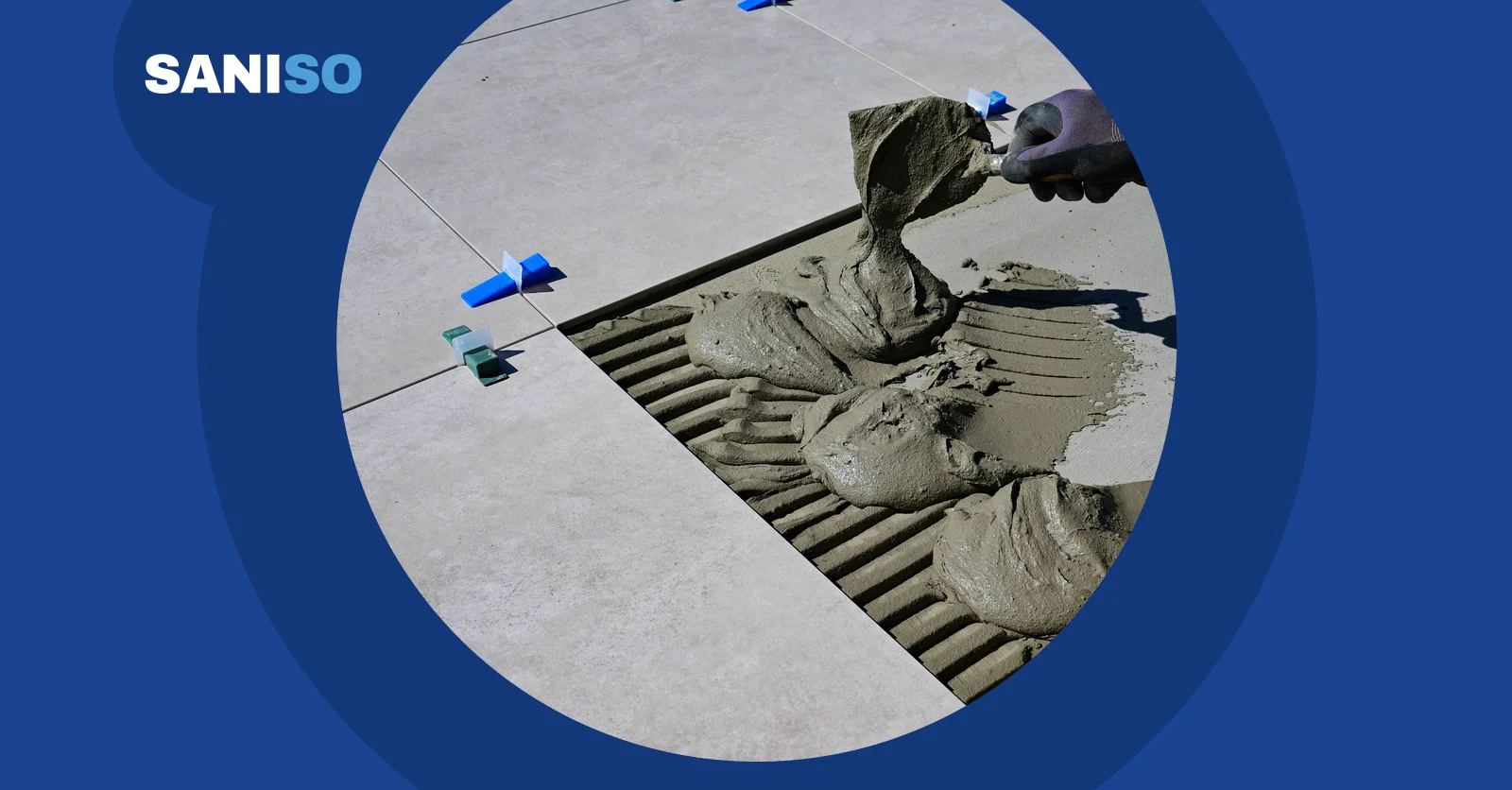
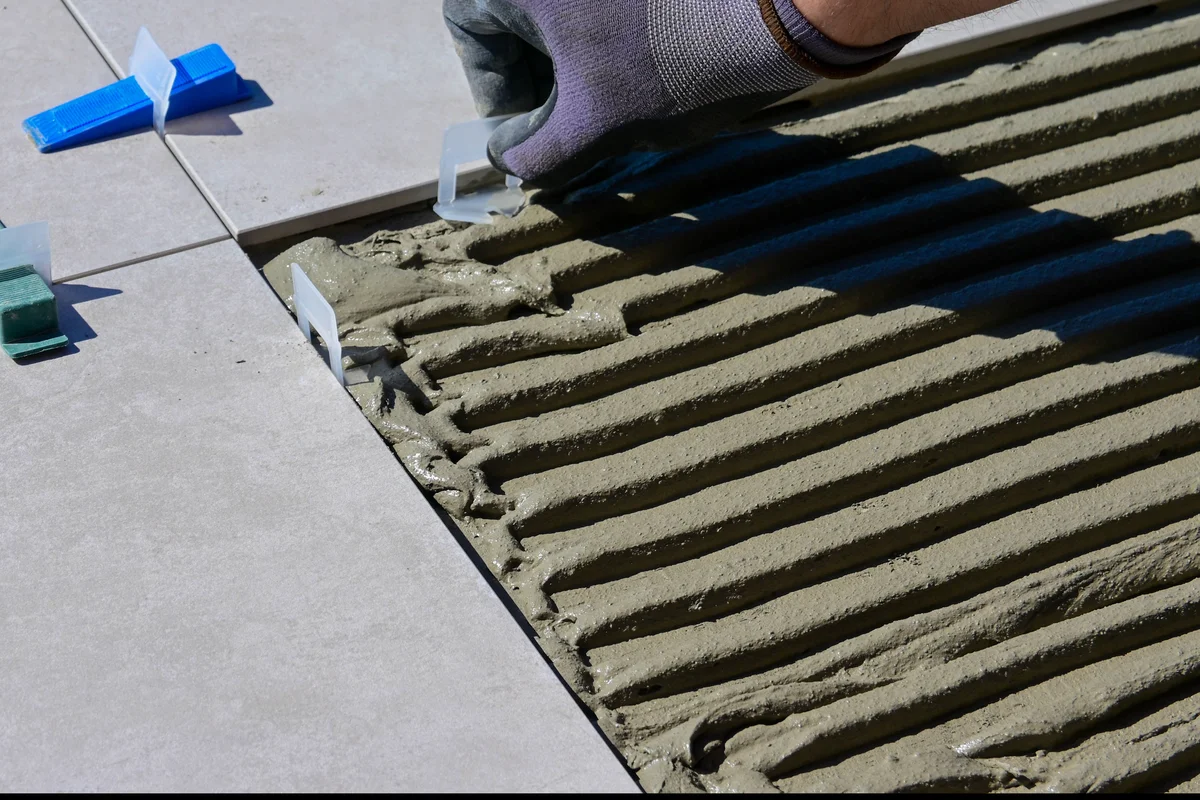
Short answer: small wall tiles need a fine notch, large floor tiles a coarser trowel and a flat surface. The trowel spreads the adhesive, but the real check is coverage on the back of the tile. Lift a tile now and then: if you see almost full coverage without large empty lines, you are right. If you see stripes, the trowel is too fine, the adhesive too stiff or the surface too hollow.
👷 Calling in a professional is never unnecessary. For large format, natural stone, floor heating or a wet area, a tiler remains the safest choice. A professional also judges whether the surface is strong and flat enough for the tile.
Wear work gloves with nitrile coating with adhesive, safety goggles when mixing and cutting and Raimondi knee pads with gel for floor work. Lift large tiles with two hands or suction cups and leave heavy tiling to a tiler in doubt.
Not reliably. A layer that is too thick dries differently, slumps and gives height differences. Level the surface first and then choose the trowel.
Carefully lift a tile that has just been laid. The adhesive should contact the back widely without large empty stripes, especially on floors and in wet areas.
The right trowel is not a feeling but a check: lay, lift, look and only then continue.
At Saniso, the online store for DIYers and professionals, you will find tools, materials and personal protective equipment for your job.
In doubt about the approach? Feel free to call in a professional.
Saniso – Build your home with Saniso.
Share:
Fitting a bathtub: can you do it yourself or should you hire a professional? Learn what is involved with the waste, leve...
Is the screw spinning or is the plug loose in a hole that is too big? This is how to repair a torn-out plug in brick, co...

Splitting firewood with a splitting axe? Learn which axe to choose, how to set up a stable chopping block, where to aim,...
Want to hang heavy items on the wall? Learn how to recognise the wall type, choose the right plug, drill safely and hang...