




A green roof or moss between the tiles? Learn what you can safely do yourself on a low roof, why a pressure washer damag...

Your online building supplies store for building and renovation
 English
✓
 Nederlands
✓

Short answer: choose a hole saw first by material and then by size. A bi-metal hole saw is the all-rounder for wood, sheet material, plastic and thin metal. A hole saw with carbide teeth works faster in wood, plasterboard and plastic and can also cut soft masonry. For tile, glass and natural stone you use a diamond hole saw, and for concrete and masonry a core bit. Always drill at low speed and switch off the hammer setting, except with a core bit that is specifically made for it.
👷 If it involves a hole in a load-bearing structure, a large hole in concrete or a feed-through for gas, water or electrics, leave it to a professional. Calling in a professional is never unnecessary: they know where you may and may not drill and have the heavy equipment for large diameters.
The diameter is always printed on the hole saw. A few common sizes:
If you often drill different sizes, a bi-metal hole saw set for installers (20 to 68 mm) or a diamond hole saw set is more practical than separate saws.
⚠️ Check beforehand with a multifunction wall detector that no pipes or cables run behind the wall or in the floor. Leave work on the electrical installation, such as connecting a back box, to a certified electrician.
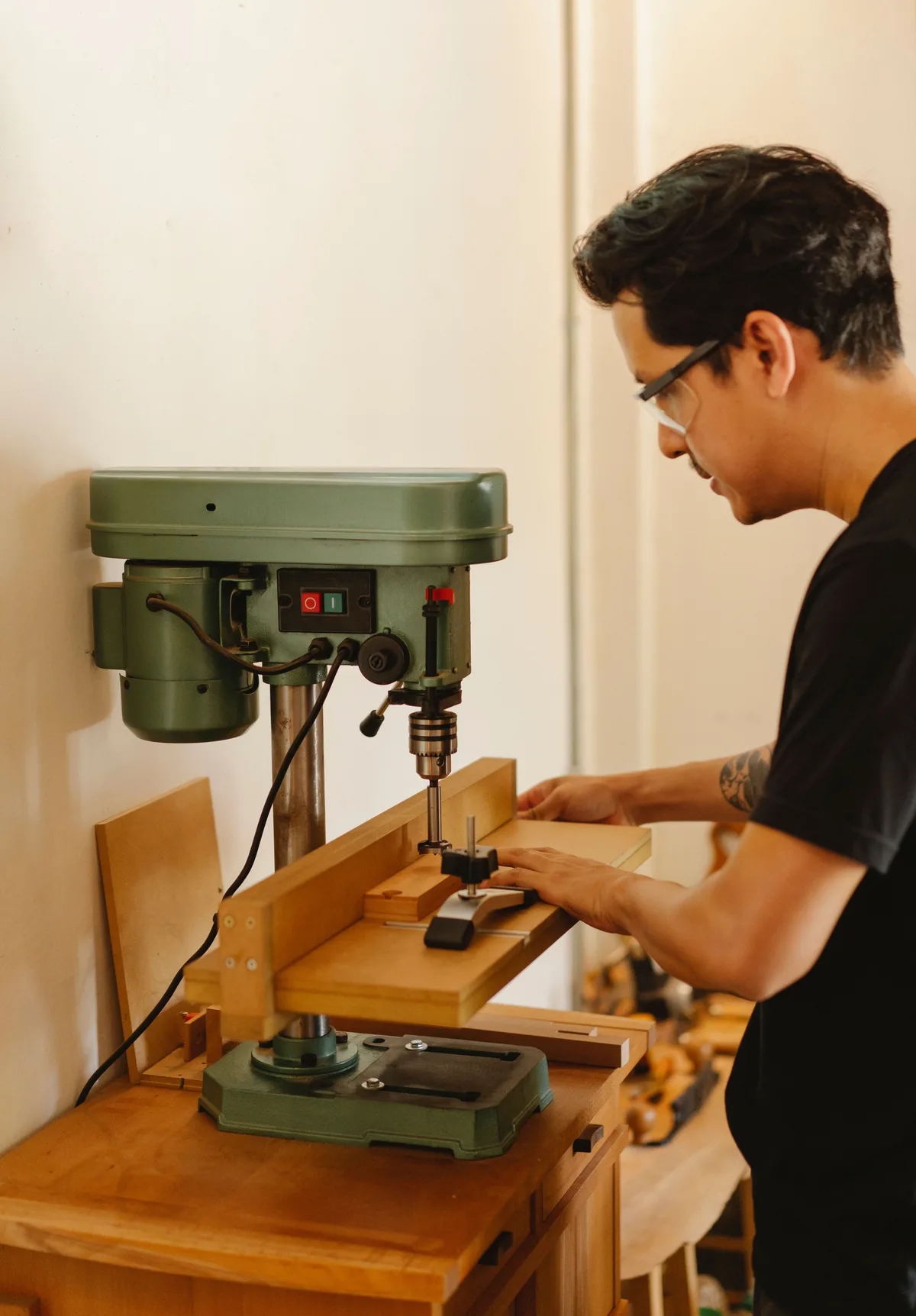
💡 Mind the maximum cutting depth of the hole saw. If the workpiece is thicker, drill in stages and remove the core in between. A clogged hole saw gets hot and blunt.
Always wear safety goggles: chips, tile shards and metal swarf fly in all directions. Use work gloves with nitrile coating when removing the core and touching the saw, as it is hot and razor-sharp after drilling. With a rotating machine, never wear loose gloves near the chuck, no loose sleeves and no loose hair. Vacuum dust from tile and stone with a construction vacuum cleaner.
A bi-metal hole saw can do both. A hole saw intended only for wood will be blunt within a few holes in metal.
Usually because of too high a speed, too much pressure or a clogged saw. Lower the speed, pull the saw back regularly and clamp the workpiece firmly.
Disconnect the machine from the mains or remove the battery and push the core out through the slots in the saw wall with a screwdriver.
The right hole saw makes the difference between a clean hole and a split workpiece. Choose by material and size, drill calmly and leave heavy or risky drilling to the professional.
Read also: Diamond drilling in tile and concrete · Carpenter's clamps: opening and clamping force · The Stalco 20V battery system
At Saniso, the online store for DIYers and professionals, you will find tools, materials and personal protective equipment for your job.
In doubt about the approach? Feel free to call in a professional.
Saniso – Build your home with Saniso.
Share:
A green roof or moss between the tiles? Learn what you can safely do yourself on a low roof, why a pressure washer damag...
Want to lay a vinyl floor yourself? This guide explains the difference between click and glue-down vinyl and shows you h...

Does the first varnish coat feel rough or does the second grip badly? Read when to sand between coats, which grit fits a...

Does your shower sputter or spray sideways? Read how to descale a shower head, clean the jets and check whether limescal...