





What makes good tools different? Often it is in details you only truly appreciate after years of use. Using the STALCO P...

Your online building supplies store for building and renovation
 English
✓
English
✓
 Nederlands
✓
Nederlands
✓

Hex and torx screws are everywhere: in furniture, taps and shower heads, bicycles, door hardware, machines and power tools. An ordinary screwdriver will not get you far there. The right key in the right size makes the difference between a screw you tighten or loosen in one go, and a head that gets stripped. In this blog you will read which types there are, which sizes you need most often and what to look for when choosing.
👷 Calling in a professional is never superfluous. If it concerns a seized bolt in an installation, a tap that will no longer close or a screw in a safety component, it is better to leave it to a professional. A professional knows how much force a component can take and has the tools to loosen stuck screws without damage.
💡 Never confuse torx with hex. A hex key sometimes fits halfway into a torx head, but you damage the head on the first turn.
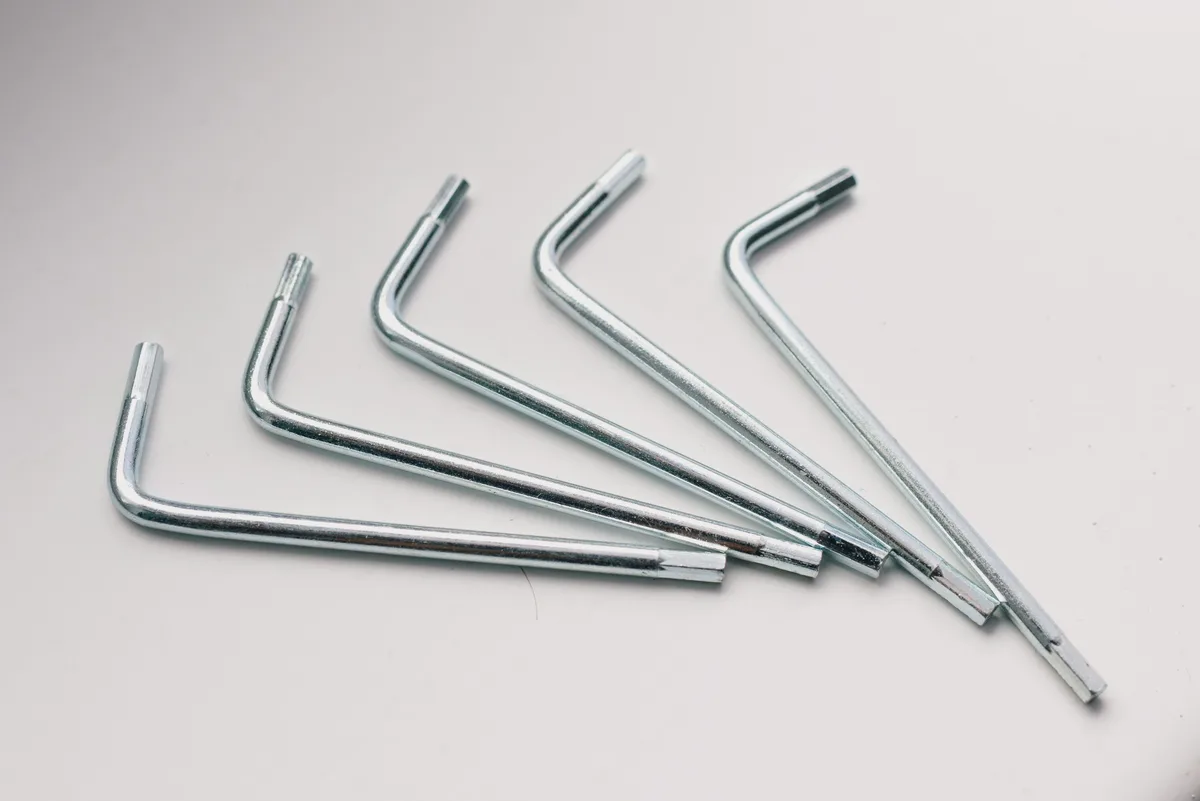
The classic key. The short end gives you plenty of force for loosening and tightening, the long end lets you turn quickly. A hex key set with extra-long arms gives more reach and more leverage.
A ball end on the long side lets you work at an angle of up to about 25 degrees. Ideal for screws in awkward places, such as behind a washbasin or under a cabinet. Use the ball end only for quick turning and the straight end for tightening and loosening with force: a ball end is less strong.
A set of extra-long torx keys with long arms is handy for construction screws, hinges and machines. A combined set of torx and hex keys of torx and hex keys is a good basis for anyone who comes across both. For torx screws with a pin in the middle, use a set of tamper-resistant torx keys.
For heavy bolts in machines, racking or scaffold parts you sometimes need a large size, such as a single 10 mm ball-end hex key. A single key of good steel is then stronger than the largest key from a small set.
If you have a lot of screws to drive, you work faster with bits in a cordless drill driver. A bit set with hex and torx bits or an extensive 40-piece torx, hex and spline bit set covers almost everything, and with a magnetic bit holder the screw stays on the bit. You can read how the Stalco 20V battery system works in our blog on the Stalco 20V battery system.
A handy rule of thumb when choosing a set:
A set with hex sizes from 1.5 to 10 mm and torx from T10 to T50 is sufficient for most jobs at home and on site.
You can read more about other wrenches, such as combination wrenches, in our combination wrench guide. More about screwdrivers and bit sets can be found in our blog on screwdrivers, bit sets and screw extractors.
If it does go wrong, you can often still remove a damaged screw with a set of screw extractors. If that does not work, or the screw is in a component you should not simply drill into, call in a professional.
Wear work gloves with nitrile coating for grip, especially with greasy or oily bolts. Use safety goggles when working with force, drilling with a screw extractor or using compressed air to blow a head clean. Never put an extension pipe on a hex key: the key can break or shoot out of the head. If you work on electrical appliances or installations, first make them dead. Leave work on electrics to a qualified installer.
No. Sometimes it seems to fit, but you damage the head. Always use a torx key or torx bit in the right size.
With a ball end you can work at an angle of up to about 25 degrees. That is handy in hard-to-reach places. For a lot of force, use the straight end.
For most furniture and cabinets, hex 3, 4, 5 and 6 mm will do. A complete set is handy, because then you never have to search.
First try carefully tapping a torx bit that is just slightly larger into the head, or use a screw extractor. If that does not work, leave it to a professional.
Read also: How to organise a workshop or garage
Read also: How to install a kitchen cabinet
At Saniso, the online store for DIYers and professionals, you will find tools, materials and personal protective equipment for your job.
In doubt about the approach? Feel free to call in a professional.
Saniso – Build your home with Saniso.
Share:
What makes good tools different? Often it is in details you only truly appreciate after years of use. Using the STALCO P...

Grout in one even colour across the whole wall or floor: that is what you want. In this blog we explain how the hybrid R...

Learn how to level a floor yourself: prepare the subfloor, prime, mix and pour self-levelling compound. Step-by-step wit...

Installing a kitchen: do it yourself or hire a professional? Read what is involved, which parts you can do yourself and...