

Is your shelf still crooked? With the reversal test you check in two minutes whether your spirit level is still accurate...

Your online building supplies store for building and renovation
 English
✓
 Nederlands
✓
Weekend DIY #4 · Every Saturday a new DIY job in and around the house
Gurgle, gurgle... and the water just stays there. A washbasin or shower that drains slower every week is one of the most common little annoyances in the house. Most of the time the cause sits only a few centimetres below the plug: hair, soap residue and dirt caught in the trap. In this fourth edition of Weekend DIY we show you how to clean a washbasin trap step by step, how to get the hair out of a shower drain from the top, why you're better off without a chemical drain unblocker, and how to keep the drain flowing afterwards. With the time needed, the difficulty, a materials list and safety tips.
This job at a glance
Time needed: About 20 to 45 minutes for a washbasin trap, about 15 minutes for a shower drain from the top (our estimate)
Difficulty: 2 out of 5 for a washbasin trap, 1 out of 5 for a shower drain (our estimate)
Best moment: As soon as the water drains slower than usual, before the drain is completely blocked, at a time when nobody needs the washbasin for an hour
Under almost every washbasin, sink and shower there is a trap: a bend or cup in the waste pipe that always holds a little water. That water forms a seal that keeps the smell of the sewer out of your home (read more about how this was invented in the history of the toilet and the sewer). The downside: everything that goes down the plughole passes through that bend. Hair, soap residue, toothpaste, fat and bits of dirt stick together there, and the water drains a little slower every week. A drain that suddenly smells can also have a trap that has dried out, for example in a guest bathroom that is rarely used.
Preferably not. According to the Dutch government, drain unblockers contain sodium hydroxide or sulphuric acid and are very corrosive. If you do use one, wear safety glasses and gloves, follow the instructions on the pack and never mix it with other cleaning products: some combinations release chlorine gas. Manufacturers of traps and drains also warn that aggressive chemicals can attack the seals in your waste. The government advice is therefore to try a strainer, a plunger or unscrewing the trap first. According to Dutch environmental guidance, leftover unblocker goes into the residual waste together with its packaging, never down the drain. Have you already poured some in? Then the water in the trap is corrosive: let it work as described on the pack, rinse well with water and wear gloves and safety glasses before you open anything.
Yes, that's the first thing to try. Fill the washbasin with a few centimetres of water, place the plunger over the plughole and pump firmly a few times. Most washbasins have an overflow, the small opening at the top of the basin. Cover it with a wet cloth and your hand, otherwise the pressure escapes through the overflow instead of pushing the blockage away. Does the water drain properly again? Then you're done. Is it still slow? Then the dirt is stuck in the trap and it's time to open it up.
Is the plug worn or stuck? While the waste is apart anyway, it's the perfect moment to replace an old pop-up plug that no longer closes or opens properly. Check whether a new plug suits your washbasin (with or without overflow) before you order.
Don't take the shower trap itself apart. According to manufacturers, the trap under a shower tray or bath usually can't be removed without taking out the tray or the bath. So clean it from the top only. Does the water still drain badly after cleaning? Then call a plumber.
Is the drain still blocked after the plunger and a clean trap? Then the blockage is further down the pipe, and that's a job for a plumber. Manufacturers also advise against high-pressure drain cleaners, because they can damage traps. Call a plumber too if a trap keeps leaking after you've put it back together, or if you can't reach the trap without taking things apart.
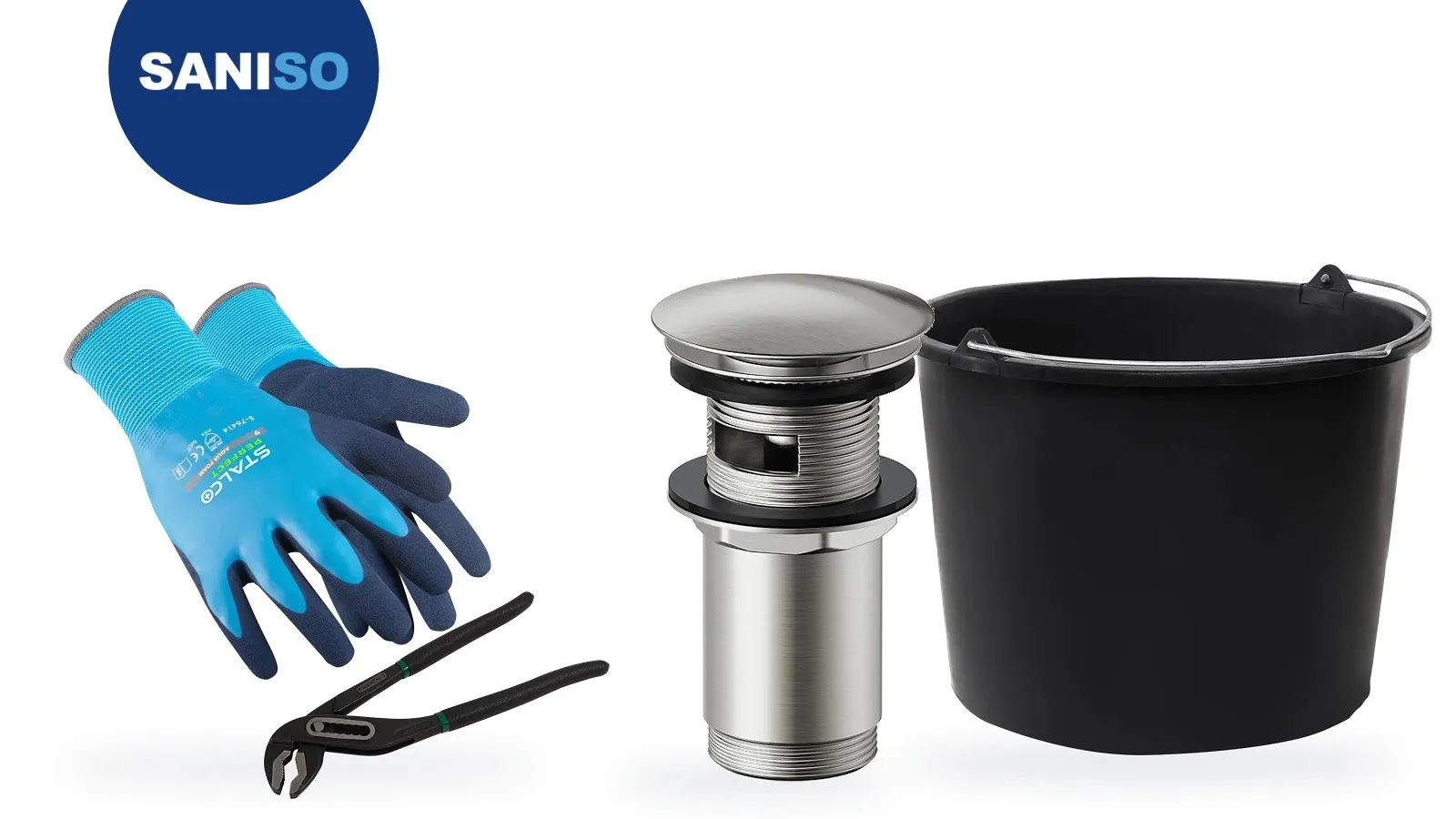
The basics are a bucket, waterproof gloves and a screwdriver set. With a work lamp you can see what you're doing under the washbasin, and the pliers are only needed for a stuck metal nut.
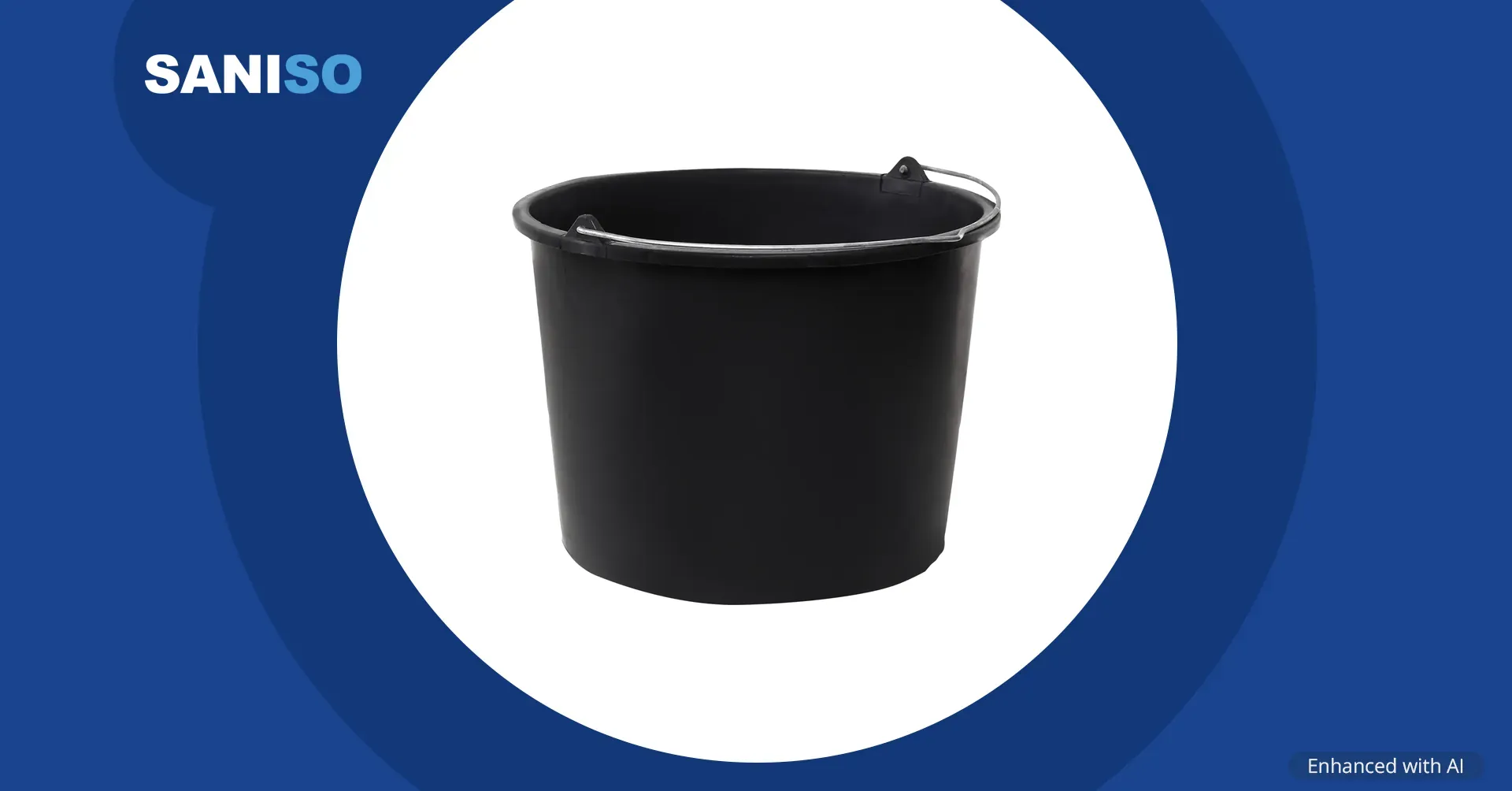
A light, stackable plastic bucket made of recycled material, resistant to loads, impacts and cracking, with a galvanised wire handle and hook.
What is it for? Placing it right under the trap before you unscrew anything, so the dirty water and the gunk end up in the bucket instead of in the cabinet.
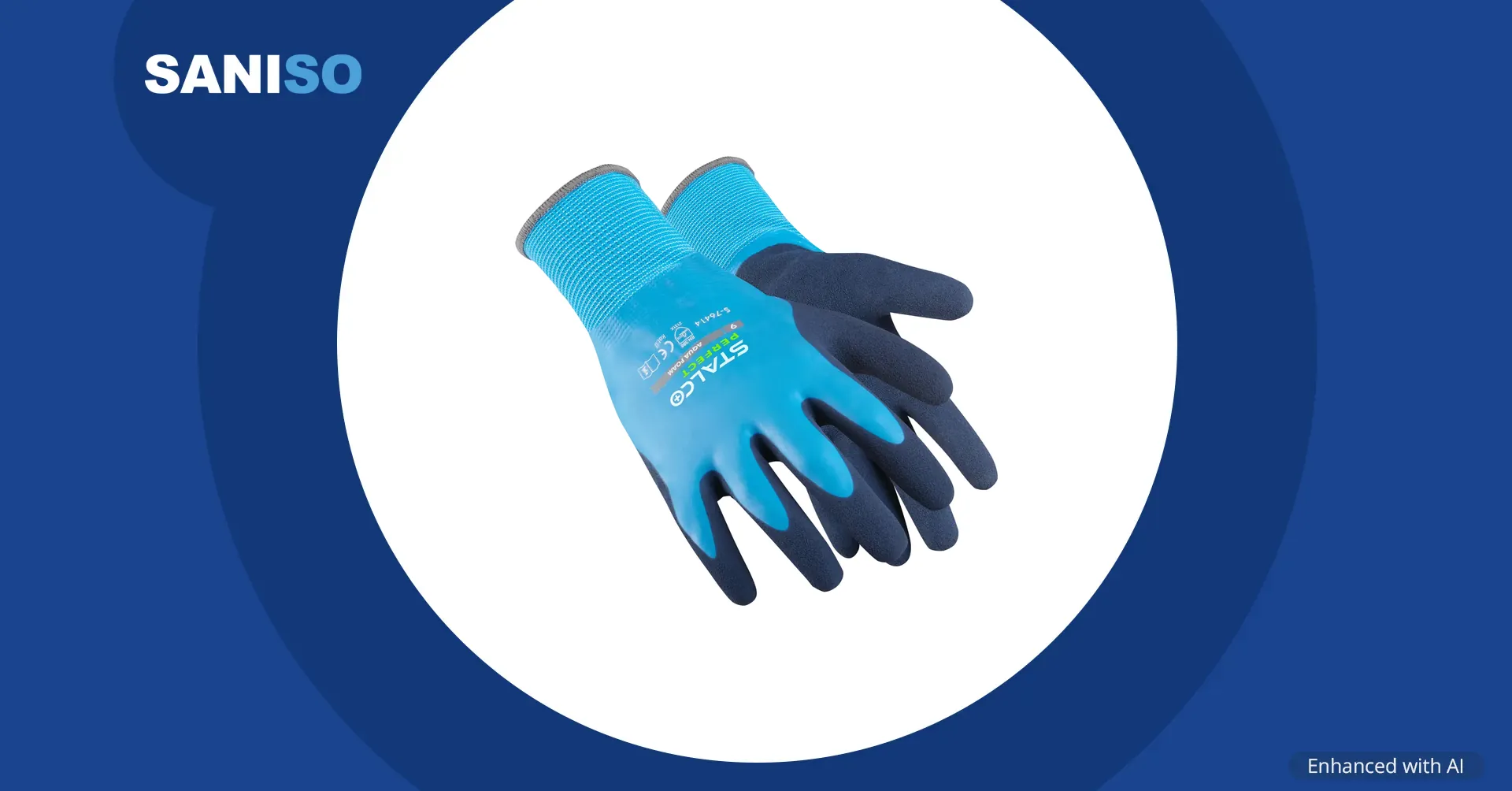
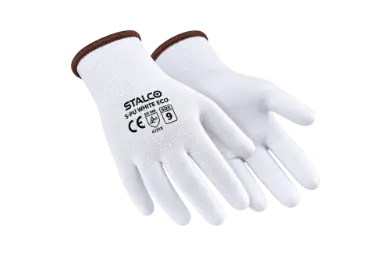
Polyester gloves with fingers coated in foamed latex for extra water resistance and a good grip, made for humid work. They meet EN 388 and EN ISO 21420. Size 9 is linked; other sizes are available on saniso.nl.
What is it for? Keeping your hands clean and dry while you take out hair, soap residue and dirt, and a grip on wet, slippery parts.
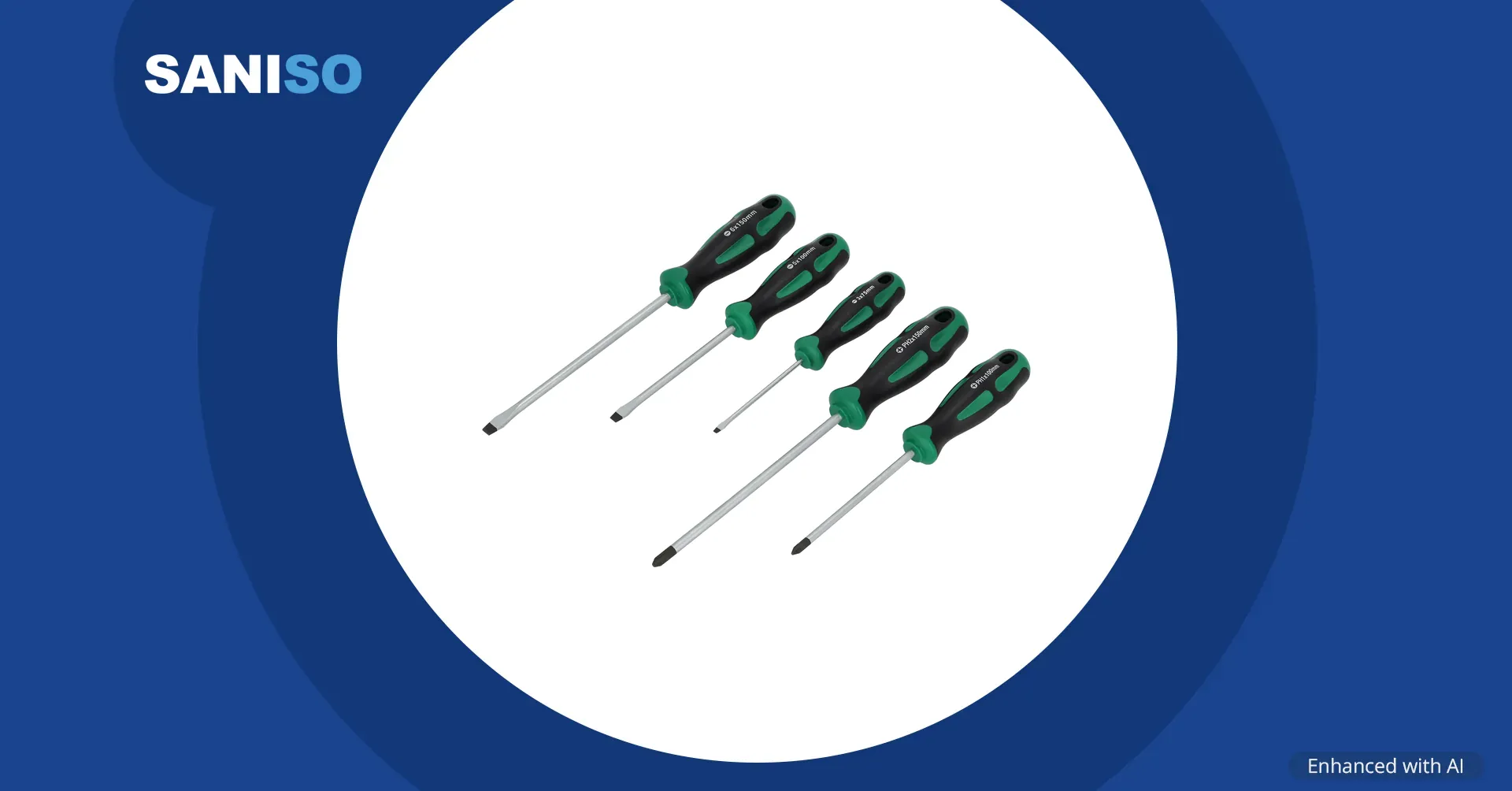
Three flat and two Phillips screwdrivers (SL 3, 5 and 6 mm, PH1 and PH2) with magnetic tips, a two-component handle and a holder.
What is it for? Undoing the screw of a shower grid or the screw in the middle of some washbasin plugs; the magnetic tip keeps the small screw from falling into the drain.
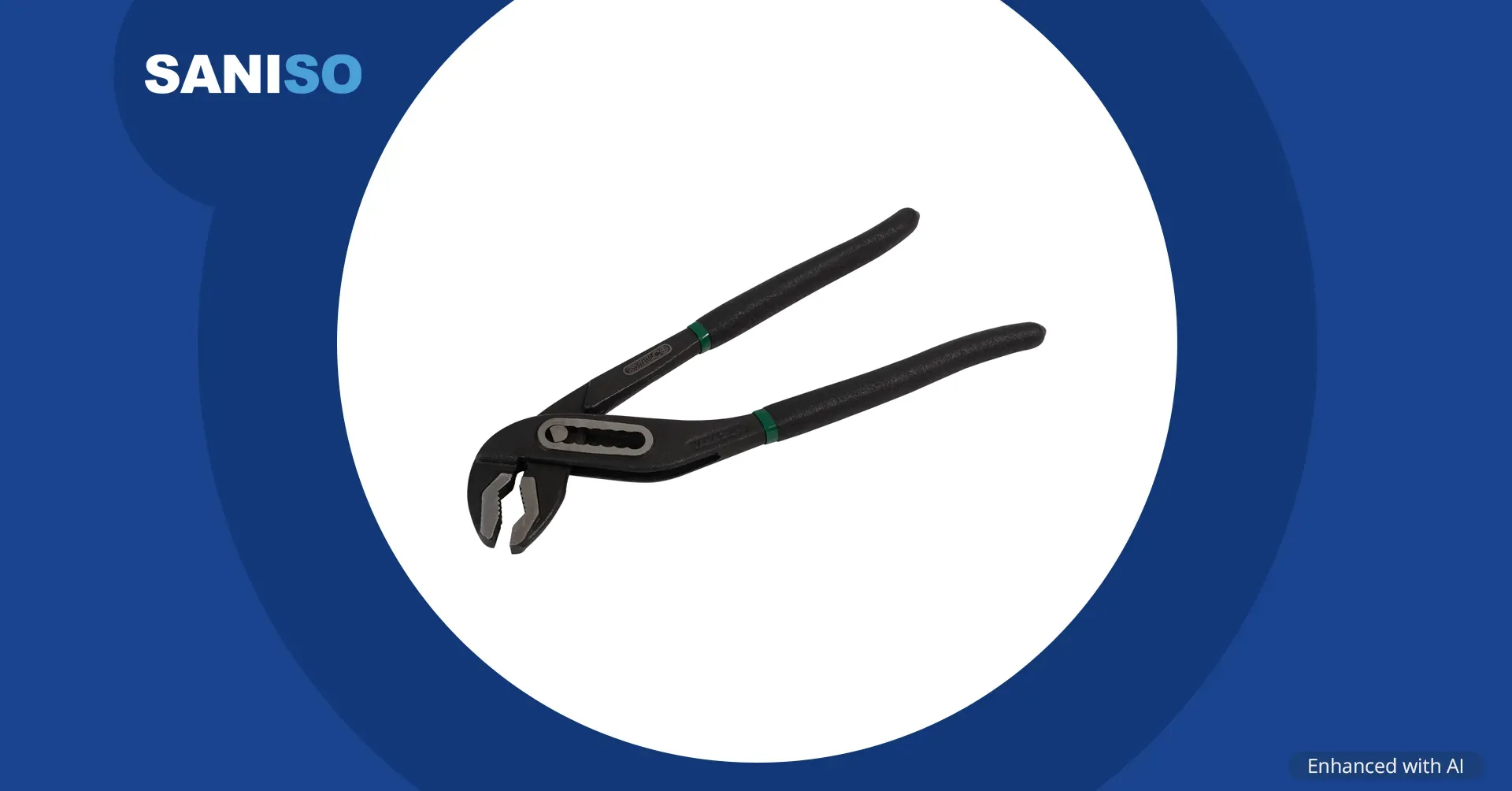
Water pump pliers in chrome vanadium steel with seven jaw positions, ground jaws and an anti-slip handle, made for plumbing work.
What is it for? Only for a stuck metal nut, always with a cloth between the jaws. Plastic trap nuts are undone and tightened by hand.
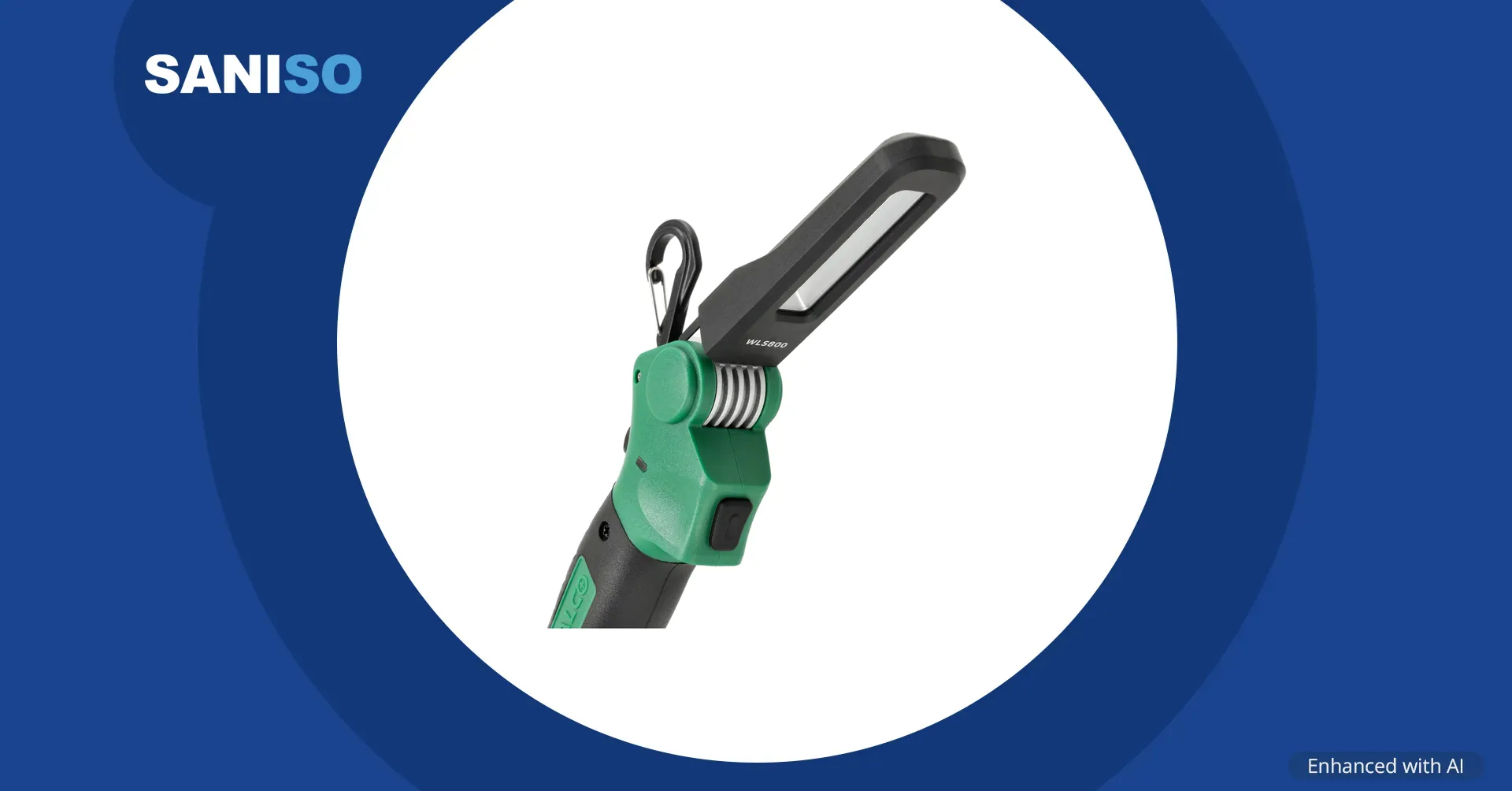
A compact LED work lamp with three light modes, an adjustable beam angle, a hook and a magnetic base. It charges via USB-C and has an IPX5 rating against water.
What is it for? Lighting up the dark space under the washbasin and looking into the wall pipe once the trap is off, with both hands free.
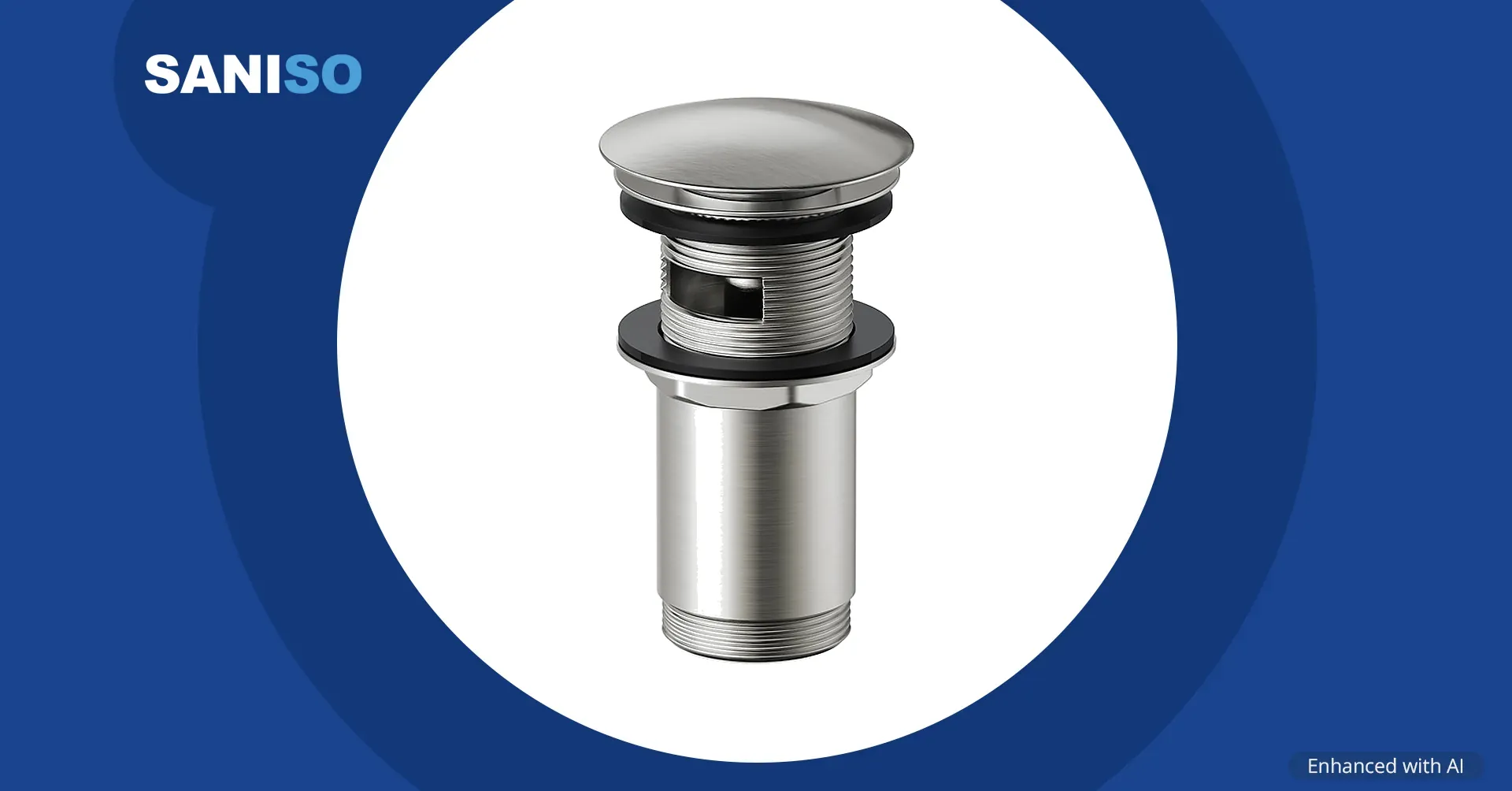
A universal washbasin plug with an automatic click-clack mechanism in a nickel finish, recommended for washbasins with or without an overflow.
What is it for? Replacing a worn or stuck pop-up plug while the waste is apart anyway.
Your first order is easy to place:
Questions about ordering, your account, payment, shipping or returns? Find all the answers in the Saniso FAQ.
How often should you clean a trap?
There is no fixed rule. Clean it as soon as the water drains slower than usual or the drain starts to smell. Manufacturers advise flushing the trap periodically, and a strainer in the plughole makes a big difference.
Why does my drain smell?
Usually because of dirt in the trap, or because the trap has dried out in a washbasin or shower that is rarely used. Without the water in the trap, the smell of the sewer can come up. Run the tap for a moment and clean the trap.
What is the difference between a bottle trap and a tube trap?
A bottle trap has a round cup at the bottom that you unscrew by hand. A tube trap is a bent pipe with a nut on both ends. Both hold water to keep out the smell of the sewer.
Do you need tools to remove a washbasin trap?
Often not: plastic nuts can be undone by hand. A screwdriver helps for a plug or grid with a screw. Only use water pump pliers on a stuck metal nut, with a cloth between the jaws.
My trap leaks after I put it back. What now?
Unscrew the leaking connection, check that the rubber ring sits straight and isn't damaged, and screw the nut back on straight. Hand-tight plus a quarter turn is enough. Replace a cracked or flattened ring.
Can you take a shower trap apart?
Usually not without taking out the shower tray. Clean a shower drain from the top: grid off, hair catcher or inner cup out, hair out, rinse and put back.
Is a chemical drain unblocker bad for the drain?
Manufacturers of traps warn that aggressive chemicals can attack the seals. Unblockers are also very corrosive to your skin. That's why it's better to try a plunger and cleaning the trap first.
Where do you dispose of leftover drain unblocker?
Never down the drain. According to Dutch environmental guidance, leftover unblocker goes into the residual waste together with its packaging.
Can fat go down the drain if you run hot water after it?
No. Fat cools down further along the pipe, solidifies and sticks to the pipe walls. Wipe pans with kitchen paper and put it in the residual waste.
What does the water in the trap do?
It forms a water seal that stops sewer air from coming into your home. Want to know how that was invented? Read the history of the toilet and the sewer.
Which gloves are best for this job?
Waterproof work gloves with a coated palm and fingers, so your hands stay dry and you have grip on wet parts. Choose a size that fits closely.
Weekend DIY: every Saturday morning a fun, doable job in and around the house. Missed an earlier one? Read how to reseal your bathroom with new silicone. Next Saturday brings a new job.
Share:
Is your shelf still crooked? With the reversal test you check in two minutes whether your spirit level is still accurate...
Holes from nails and plugs, a dent from the vacuum cleaner or a mark that will not come off: touching up walls is a job...
Old paint on window frames, doors or stairs can contain lead. Learn where the risk is, why you should never dry sand or...

Tripping over a cable, stepping on a screw or searching for that one tool: clutter on site slows you down and causes acc...