






Comparing LED bathroom mirrors before you buy? See how the Saniso+ mirror stacks up on dimming, sizing, and water resist...

Your online building supplies store for building and renovation
 English
✓
English
✓
 Nederlands
✓
Nederlands
✓
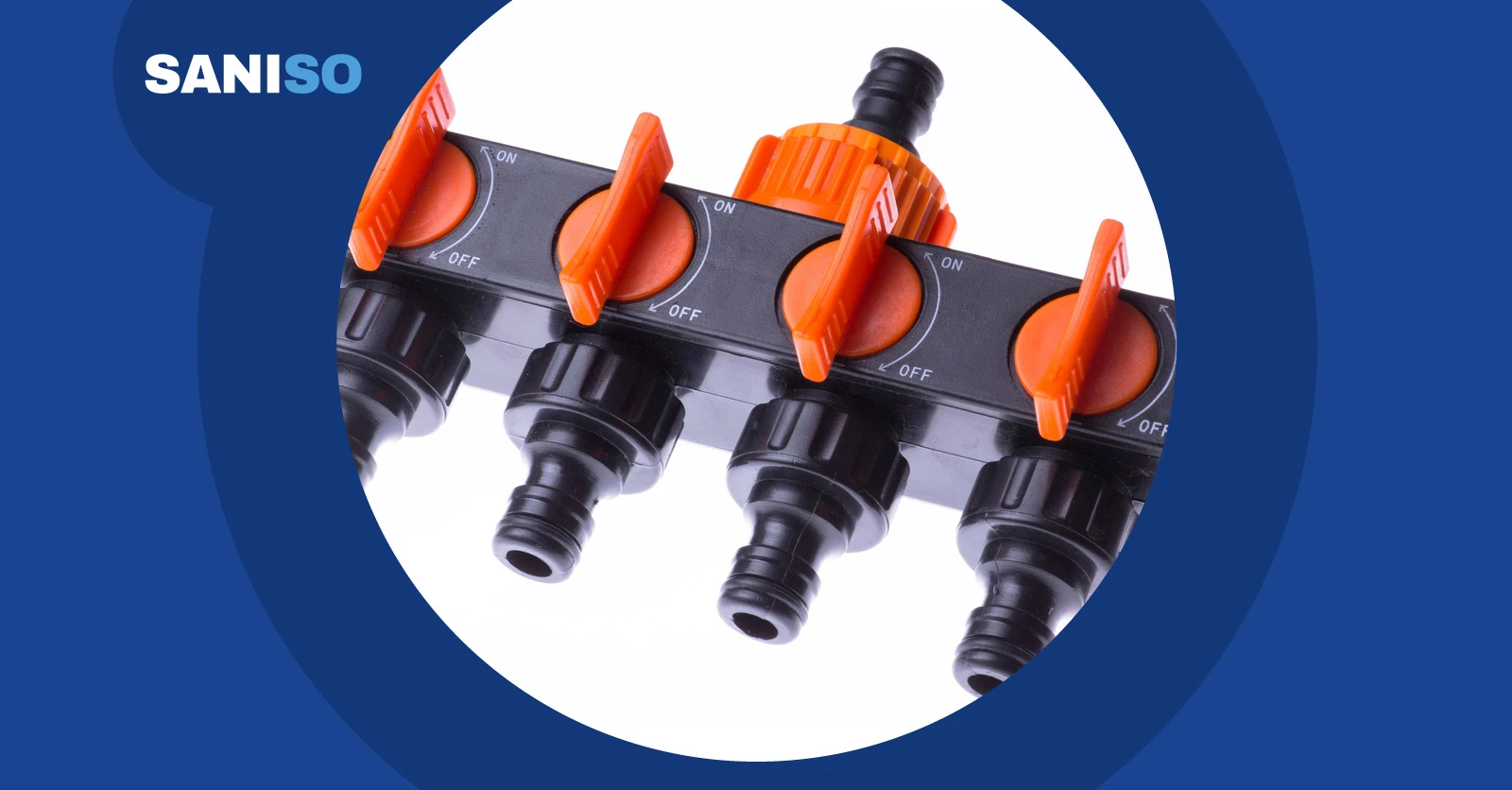
Shut-off valves are the silent helpers of your water supply. You only notice them when something leaks, when you want to replace a tap or when you go on holiday. That is exactly when you want them to turn smoothly and close properly. In this buying guide you will read which types of shut-off valves and ball valves there are, what to look for when choosing and which work is better left to an installer.
👷 Calling in a professional is never superfluous. Work on the water supply looks simple, but a badly fitted coupling can start leaking weeks later, often behind a wall or under a floor. If in doubt, or if it concerns the main supply or the central heating system, call in a qualified installer.
The main stopcock is usually located just after the water meter, in the meter cupboard or in the crawl space. It shuts off the water to the whole house. Know where it is and close and reopen it fully a few times a year so that it does not seize up. Replacing a main stopcock is always work for an installer, because the water company or the meter may be involved.
A chrome angle valve sits under the washbasin, at the toilet or at a bidet. It shuts off a single connection point, so you can replace a tap or float valve without cutting off water to the whole house. Angle valves come in different finishes, for example chrome or a black angle valve that matches black taps and accessories. With a concealed cistern, the valve sits behind the flush plate. The angle valve core for a concealed cistern can be replaced there without breaking open the wall.
A ball valve has a ball with a hole inside. A quarter turn opens or closes the passage. That makes a ball valve quick, reliable and easy to operate: the position of the lever shows at once whether it is open or closed. A brass ball valve with lever is often used for an outdoor tap, a washing machine connection or as a shut-off on a branch line.
In older homes you still see stop valves with a turning knob and a spindle. Over time they become stiff or no longer close completely. Replacing them with a ball valve is then a logical step, but if in doubt leave it to an installer.
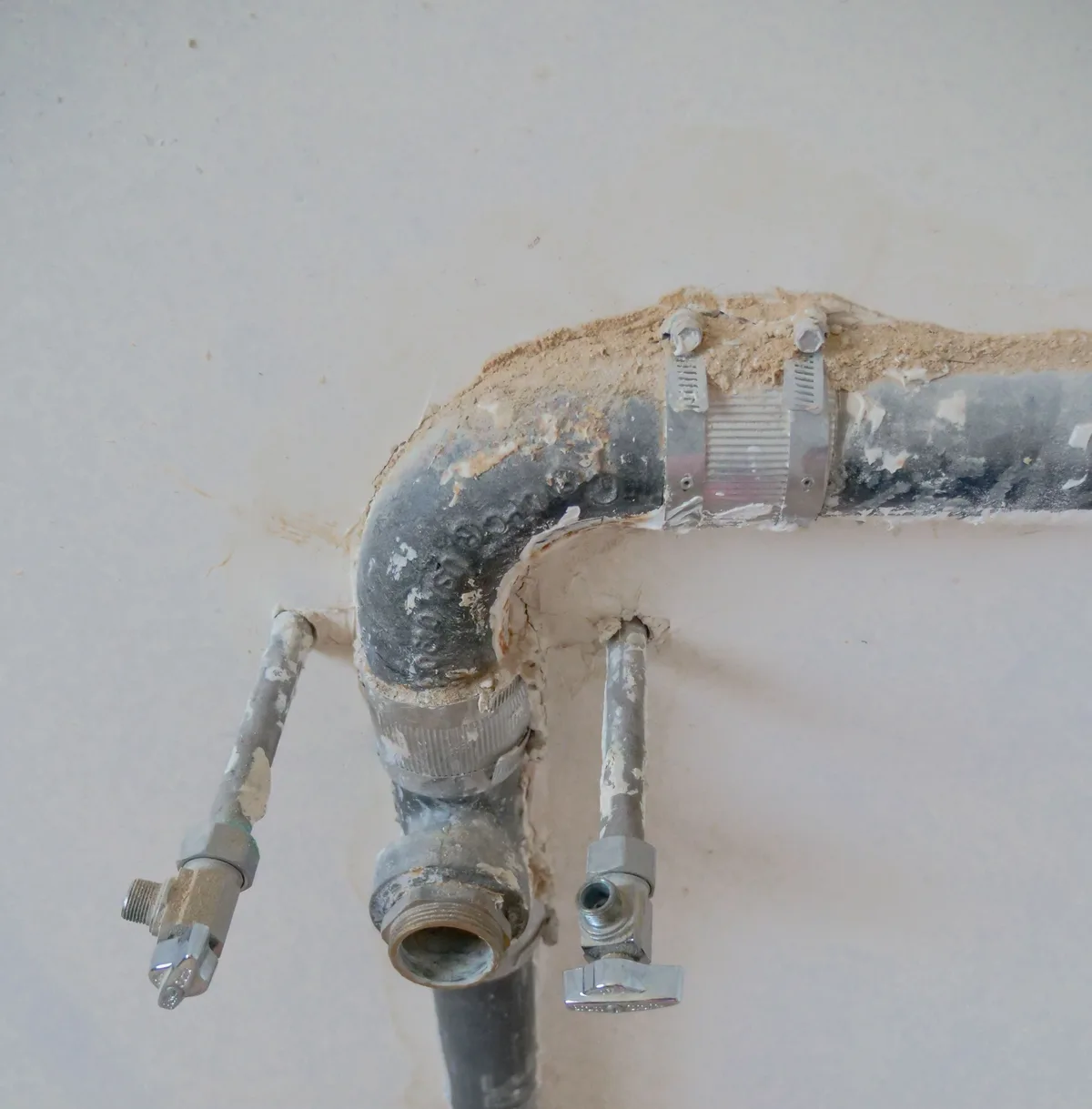
A handy DIYer can replace an angle valve or a 40 cm flexible connection hose under the washbasin themselves, provided the main stopcock closes properly and the connections are standard. If you work with press systems such as Bonfix Alupers multilayer pipe with a Bonfix press coupling, you need special pressing tools. You can read more about this system in our blog on Bonfix Alupers multilayer pipe and press fittings. Leave it to a qualified installer in these cases:
You can read more about choosing the right pliers in our buyer's guide to water pump pliers and pipe wrenches. For the right spanners, see our combination wrench guide.
⚠️ Does a pipe in the wall turn with it, or do you see rust, green deposits or a damaged thread? Stop and call an installer. A broken pipe in the wall is a bigger problem than a leaking tap.
Wear work gloves with nitrile coating when working on old pipes and fittings: sharp burrs and rust easily cause a cut. Use safety goggles when working overhead or when there may be pressure on the pipe. Never work on a pipe that is still under pressure. If there are electrics nearby, such as a socket under the washbasin or an undersink water heater, switch off the power first and leave work on electrics to a qualified installer.
A ball valve closes with a quarter turn and has a ball inside. An old-fashioned stop valve closes with a spindle and several turns. A ball valve is quicker to operate and usually keeps working properly for longer.
Close and open them fully at least twice a year. That keeps them smooth and makes sure they work when needed.
Do not force anything. Contact a qualified installer. Sometimes the water company is needed as well, because the valve before the meter belongs to them.
Often yes, if the main stopcock closes properly and the wall connection is in good condition. If in doubt, or if the pipe in the wall turns with it, call an installer.
At Saniso, the online store for DIYers and professionals, you will find tools, materials and personal protective equipment for your job.
In doubt about the approach? Feel free to call in a professional.
Read also: How to connect a new shower tap
Saniso – Build your home with Saniso.
Read also: How to install garden irrigation and Bathroom configurator: design your bathroom
Share:
Comparing LED bathroom mirrors before you buy? See how the Saniso+ mirror stacks up on dimming, sizing, and water resist...

Grout in one even colour across the whole wall or floor: that is what you want. In this blog we explain how the hybrid R...

Learn how to level a floor yourself: prepare the subfloor, prime, mix and pour self-levelling compound. Step-by-step wit...

Installing a kitchen: do it yourself or hire a professional? Read what is involved, which parts you can do yourself and...