





Work gloves need to protect, but you also want to be able to pick up a small screw. In this blog we look more closely at...

Your online building supplies store for building and renovation
 English
✓
English
✓
 Nederlands
✓
Nederlands
✓

Dust is part of construction, many people think. Yet fine dust from concrete, masonry, tiles, natural stone and sand-cement is one of the biggest health risks in the trade. It often contains quartz, also called crystalline silica. You can barely see the finest particles, but they end up deep in the lungs. After years of exposure this can lead to silicosis: incurable scarring of the lungs. Lung cancer and COPD are also associated with quartz dust. In this blog you will read where quartz dust is released and how to limit it in practice, following the fixed order: first the source, then extraction and water, and only then personal protection.
👷 Craftsmanship also means growing old healthily in the trade. A professional who organises his work so that little dust is released protects himself, his colleagues and the occupants. You do not see that difference in the end result, but you do after twenty years.
Quartz is found in many stony building materials. The dust is mainly released during high-speed or high-friction work:
You can read more about drilling in stony materials in our blog on diamond drilling in tile and concrete.
Dutch health and safety law prescribes a fixed order of measures. Personal protective equipment comes last, because it only works if it fits properly and is always worn.
A legal limit value applies to quartz dust. An employer must assess the exposure and keep it as low as possible. You can read the general basics of safe working in our blog on safe working on the construction site.
The most effective collective measure is extraction directly on the tool. Use tools with an extraction port, such as the wall chaser with dust extraction port, and connect them to a suitable construction vacuum.
💡 Switch the construction vacuum on before you start and let it run on for a moment after cutting. That way you also catch the dust still hanging in the extraction hood.
Water binds dust before it goes into the air. Many diamond tools are suitable for wet use; always check the manual of the tool and the disc.
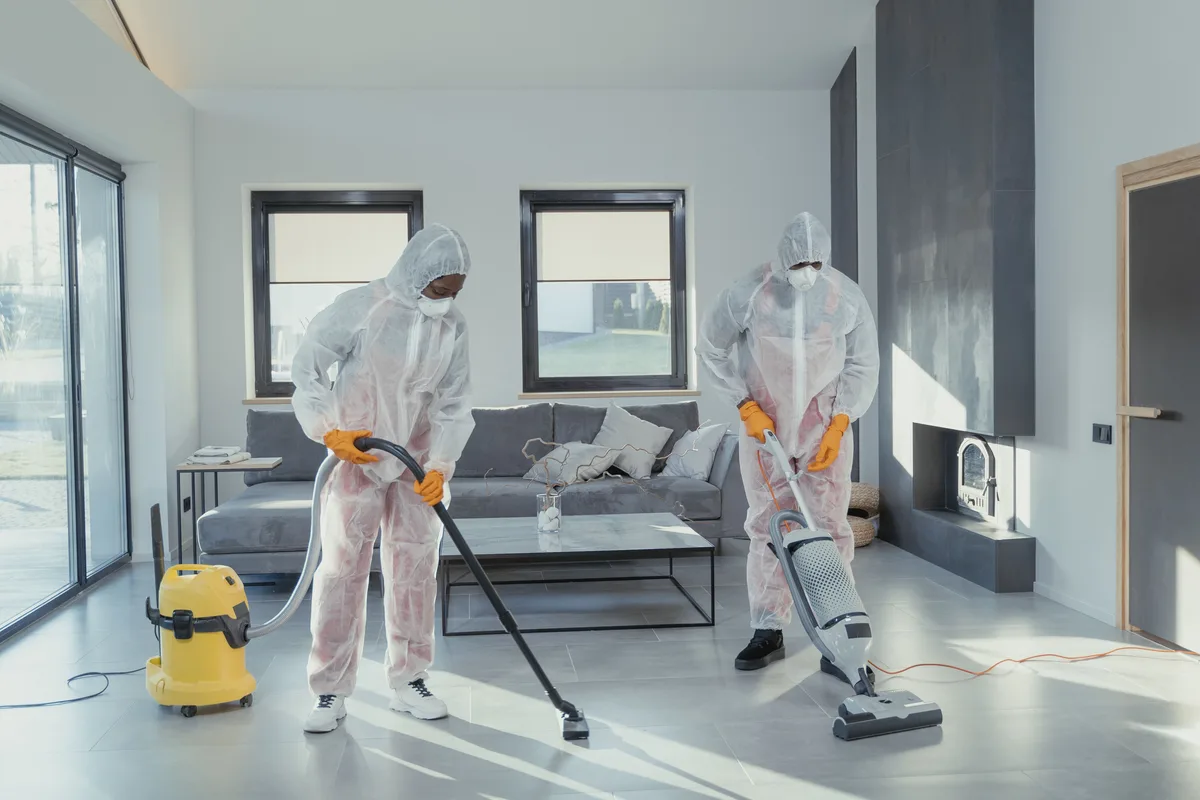
If dust remains after the other measures, respiratory protection is needed.
⚠️ Do you suspect asbestos, for example in old sheet materials, vinyl flooring, sealant or sprayed coatings? Stop immediately. Asbestos is subject to strict rules and may only be investigated and removed by a certified company.
For dusty work with quartz, FFP3 is usually recommended, in addition to extraction on the tool. A mask is always the last step, not the first.
Dry sweeping sends the finest dust back into the air. Vacuum with a suitable construction vacuum or moisten the floor first.
For quartz-containing dust, dust class M is the right choice. Class L is intended for less hazardous dust.
Not always. The most dangerous particles are so small that you cannot see them. A work area that looks clean can still contain dust.
Read also: Working with an angle grinder: risks and measures and Working safely with chisels: what to watch for
At Saniso, the online store for DIYers and professionals, you will find tools, materials and personal protective equipment for your job.
In doubt about the approach? Feel free to call in a professional.
Saniso – Build your home with Saniso.
Share:
Work gloves need to protect, but you also want to be able to pick up a small screw. In this blog we look more closely at...

Which safety glasses suit your work? Read what to look for in impact resistance, sealing and comfort, when to combine gl...
A safety helmet protects your head against falling objects and bumps, but only if it fits, is adjusted properly and is r...
What do S1, S1P, S2, S3 and S5 mean on safety footwear? Explained in outline: toe protection, slip resistance, penetrati...