





_-_Dome_interior.jpg)
.png)

Grout in one even colour across the whole wall or floor: that is what you want. In this blog we explain how the hybrid R...

Your online building supplies store for building and renovation
 English
✓
English
✓
 Nederlands
✓
Nederlands
✓
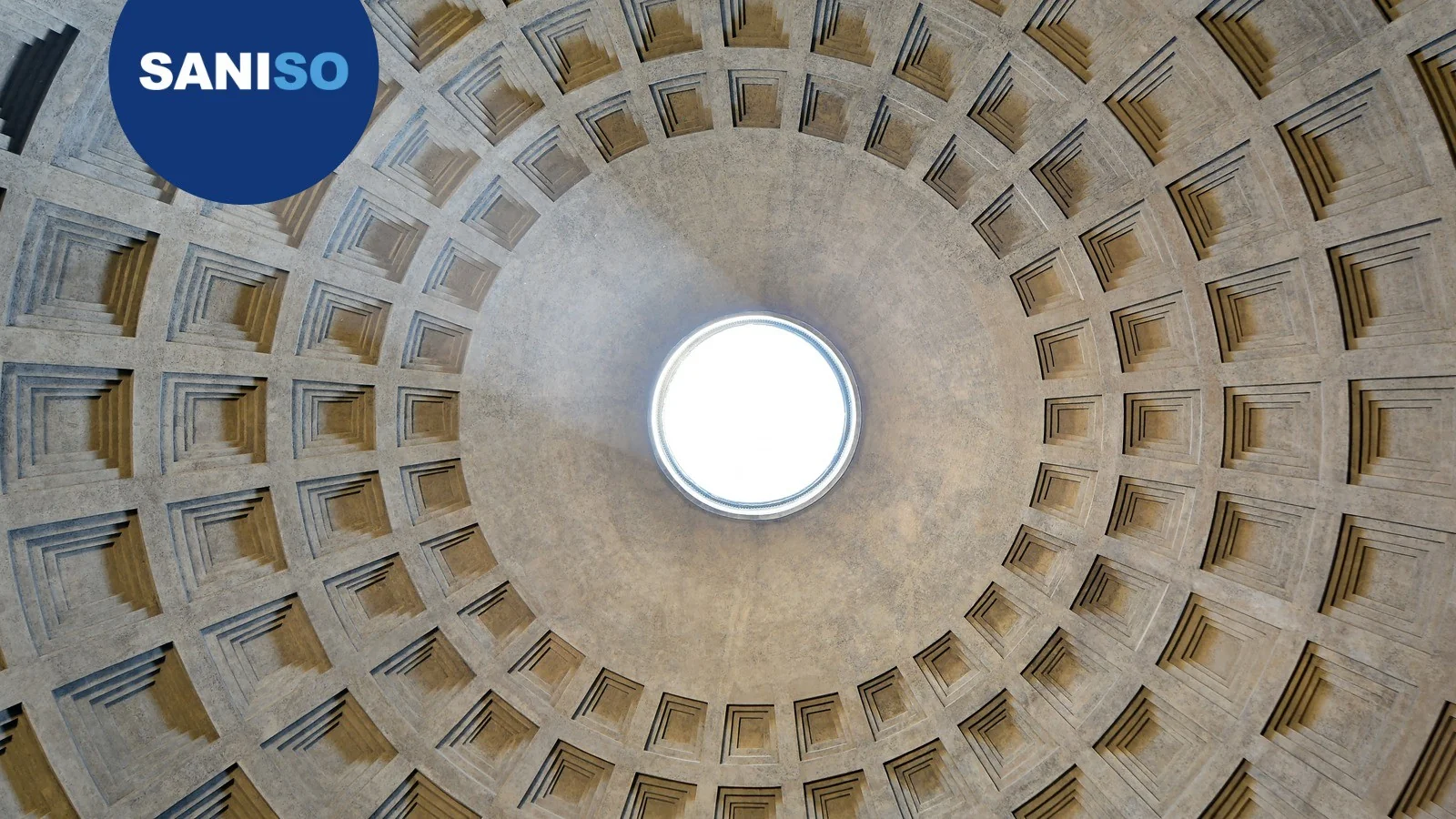
Photo: interior of the Pantheon dome in Rome, the largest and oldest unreinforced concrete dome still standing. Photo: Livioandronico2013, Wikimedia Commons, licence CC BY-SA 4.0 (cropped)
Building facts #4 · Every Monday and Thursday one building topic, examined in depth
Concrete is so ordinary that we walk on it, drive over it and live under it without thinking twice. Yet it is one of the oldest high-tech building materials we still use. The Romans mixed lime, volcanic ash and rubble into opus caementicium; centuries later Portland cement, steel reinforcement and prestressing turned that idea into the bridges, locks and floors of today. In this fourth edition of Building facts we look at one topic: the history of concrete. (Missed edition #3? Read the history of the tile, from Delft Blue to porcelain stoneware.)
The English word concrete comes from the Latin concretum: solidified, grown together (con- + crescere, to grow). Cement goes back via Old French to Latin caementum, hewn stone. The Romans themselves did not use our modern pair of words in the same way; scholars usually call their material opus caementicium, after the caementa — the coarse rubble aggregate packed into the mortar.
Roman concrete was a hydraulic mix: lime mortar with reactive volcanic ash (pozzolana, Latin pulvis puteolanus from the Bay of Naples) and aggregate such as tuff, brick rubble or stone. Vitruvius, writing around 25 BC, recommended one part lime to three parts pozzolana for buildings, and a richer 1:2 ratio for underwater work. The material could set under water, which made harbours possible: the harbour of Caesarea (22–15 BC) is a famous large-scale example. Unlike modern ready-mix, Roman concrete was often laid rather than poured, with larger pieces of aggregate.
From about 150 BC the material was in widespread use. After the fire of Rome in 64 AD, Nero's building code pushed brick-faced concrete, which helped the craft grow. (For fired clay as a facing material, see edition #1: the history of the brick.)
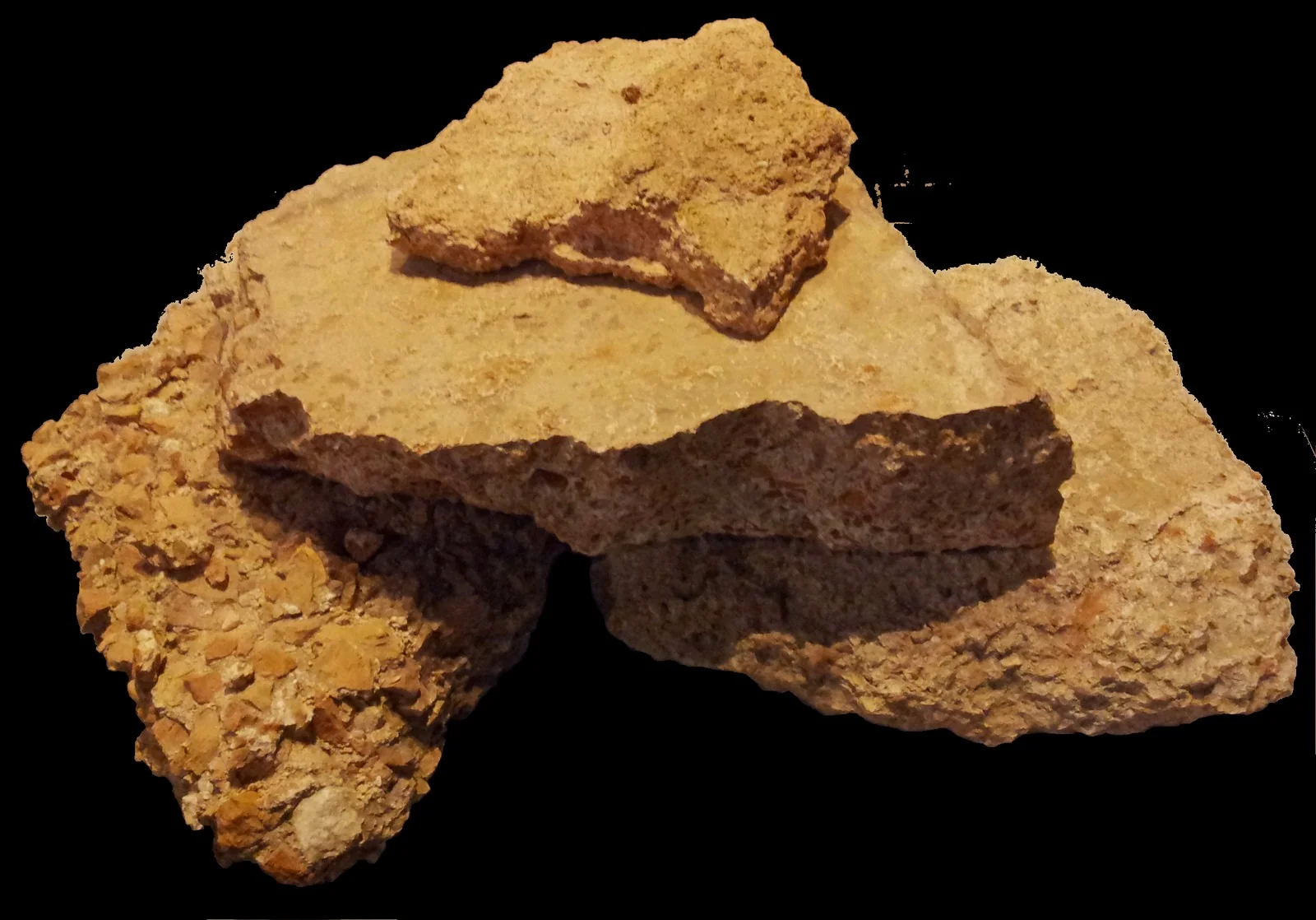
The most famous Roman concrete structure is the Pantheon in Rome. Its dome, completed around 125–127 CE under emperor Hadrian, is still the world's largest and oldest unreinforced concrete dome. The builders lightened the upper part: near the top the aggregate is light tuff and pumice (about 1,350 kg/m³), while the foundation uses denser travertine (about 2,200 kg/m³). An oculus of about 9 metres lets in light and weather.
Recent research (2023) also points to lime clasts from a hot-mixing technique with quicklime. When water enters a crack, those clasts can help form new calcium carbonate and reseal it — a self-healing effect that helps explain why so much Roman marine concrete still looks solid after two thousand years. Seawater reacting with volcanic ash and lime can even form rare crystals such as tobermorite.
With the decline of the Roman world, the quality of cementing materials fell. Between about 1200 and 1500 much of the old know-how of burning lime with pozzolan was lost or only partly remembered. Builders went back to ordinary lime mortars that do not set under water in the same way.
The comeback started in the eighteenth century. In 1793 John Smeaton found that limestone containing clay produced a lime that hardened under water — hydraulic lime — and used it to rebuild the Eddystone Lighthouse. In 1796 James Parker patented a natural hydraulic cement from calcined clayey limestone nodules, sold as Parker's Cement or "Roman cement". In France, Louis Vicat later made artificial hydraulic lime by calcining synthetic mixes of limestone and clay (1812–1813).
On 21 October 1824 the Leeds bricklayer Joseph Aspdin was granted British patent BP 5022 for "An Improvement in the Mode of Producing an Artificial Stone". He called the product Portland cement because the set mortar looked like the fine building stone from the Isle of Portland. His process burned limestone (even road sweepings) with clay, then ground the result to a powder.
Aspdin's early product was not yet identical to modern Portland cement: it was fired at a relatively low temperature and aimed at stucco and mouldings. His son William Aspdin later burned hotter mixes and ground the hard clinker, which is closer to the cement we pour today. By the mid-nineteenth century Portland cement was being imported into the Netherlands as well, including for the concrete-filled piers of the iron railway bridge over the IJssel at Westervoort in 1856.
| Year | Milestone |
|---|---|
| c. 150 BC | Roman concrete (opus caementicium) in widespread use |
| c. 25 BC | Vitruvius describes pozzolana lime mortars for buildings and underwater work |
| 22–15 BC | Harbour of Caesarea built with underwater Roman concrete on a large scale |
| c. 125–127 CE | Pantheon dome completed under Hadrian: largest unreinforced concrete dome |
| 1200–1500 | Quality of cementing materials declines; much Roman hydraulic knowledge is lost |
| 1793 | John Smeaton uses hydraulic lime for the Eddystone Lighthouse |
| 1796 | James Parker patents "Roman cement" (natural hydraulic cement) |
| 21 Oct 1824 | Joseph Aspdin patents Portland cement in Leeds (BP 5022) |
| 16 Jul 1867 | Joseph Monier patents iron-reinforced concrete troughs for horticulture |
| 1875 | First iron-reinforced concrete bridge at Château de Chazelet (Monier) |
| 1890 | Amsterdamsche Fabriek van Cement-ijzerwerken (Systeem Monier) founded |
| 1892 | François Hennebique patents his monolithic reinforced-concrete system |
| 1900 | Schollenbrug in Amsterdam: early large reinforced-concrete bridge in the Netherlands |
| 1928 | Eugène Freyssinet patents prestressed concrete |
| 1929 | Noordersluis at IJmuiden opened (400 × 50 × 15 m) |
| 1988 | Prototype of self-compacting concrete completed at the University of Tokyo |
| 1990s | First commercial applications of ultra-high-performance concrete (UHPC) |
Modern concrete is a composite: cement + water form a paste that binds aggregate (sand and gravel). Typical mixes are roughly 7–15% cement, 60–75% aggregate and 14–21% water by volume, sometimes with entrained air. Cement is not glue that dries; it is a hydraulic binder. When you add water, the calcium silicates in Portland cement react in a process called hydration. They form calcium silicate hydrate (C-S-H) and calcium hydroxide. The interlocking C-S-H gel is what gives concrete its strength.
Concrete does not need to dry out to harden — it needs moisture to keep hydrating. Too much mix water leaves more pores and weakens the concrete; too little makes it unworkable. Strength is often checked at 28 days, but hydration can continue for years if water is still available. That chemistry is why a bag of sand-cement only works when you dose water carefully — we explain bag counts in how many bags of sand-cement do I need?, without repeating the calculator here.
Concrete is strong in compression but weak in tension. In the 1840s–1860s French gardeners and builders started embedding iron mesh in cement. Joseph Monier showed reinforced containers at the Paris Exposition of 1867 and received his first patent on 16 July 1867 for iron-reinforced horticultural troughs. Patents for pipes, panels, bridges and beams followed; in 1875 he designed the first iron-reinforced concrete bridge at the Château de Chazelet in France.
François Hennebique turned the idea into a building system. In 1892 he patented a monolithic reinforced-concrete method that combined columns, beams and slabs. Between 1892 and 1902 more than 7,000 structures were built with his system under licence.
Prestressing went a step further. Eugène Freyssinet studied creep in concrete and, in 1928, patented prestressed concrete: high-strength steel put permanently in tension so the concrete stays compressed. His rescue of the Le Havre maritime station in the 1930s made the method famous. Prestressed beams and decks are why long-span bridges and slim floors became practical.
Dutch builders already knew volcanic tras (ground tuff) as a hydraulic addition to lime. Home-grown "kunstcement" experiments in the late eighteenth century lost out to imported Portland cement in the mid-nineteenth century. Reinforced concrete entered via Belgium: the Picha brothers held the Monier patent there, opened a branch in Sas van Gent in 1888, and in July 1890 the Amsterdamsche Fabriek van Cement-ijzerwerken (Systeem Monier) was founded. The first larger reinforced-concrete bridge in the Netherlands was the Schollenbrug in Amsterdam in 1900.
Waterworks drove the next leap. The Noordersluis at IJmuiden, opened in 1929, is 400 m long, 50 m wide and 15 m deep — a landmark of early large-scale reinforced concrete in Dutch hydraulic engineering. After the 1953 flood, the Delta Works made reinforced concrete indispensable for dams, locks and storm-surge barriers. You can still see real Roman concrete closer to home too: the Thermenmuseum in Heerlen shows opus caementicium from the Roman baths.
Most everyday concrete is still Portland-cement concrete, often delivered as ready-mix from a plant. Admixtures change behaviour: air-entraining agents improve freeze–thaw resistance (from the 1930s), and superplasticizers (from the 1980s) make mixes flow with less water.
Self-compacting concrete (SCC) was proposed by Okamura in Japan in 1986; a prototype was completed at the University of Tokyo in 1988. It fills formwork under its own weight, without vibration. Ultra-high-performance concrete (UHPC) grew from low-porosity paste research and densified-particle mixes; commercial use started in the 1990s, often with steel fibres and a very low water–binder ratio.
And on walls and floors at home you also meet the look of concrete: cement-look porcelain tiles that mimic a poured slab. That is a design choice, not a structural one — for tiling itself, see edition #3 on the history of the tile.
You rarely cast a Pantheon in the garden, but the same materials still turn up as screeds, repairs, cores and fixings. Below are a few products that fit that story. How many sand-cement bags you need is calculated in our sand-cement guide; drilling dense concrete is covered in diamond drilling in tile, concrete and masonry; choosing plugs and anchors for concrete is in fixing into concrete, brick and aerated concrete.
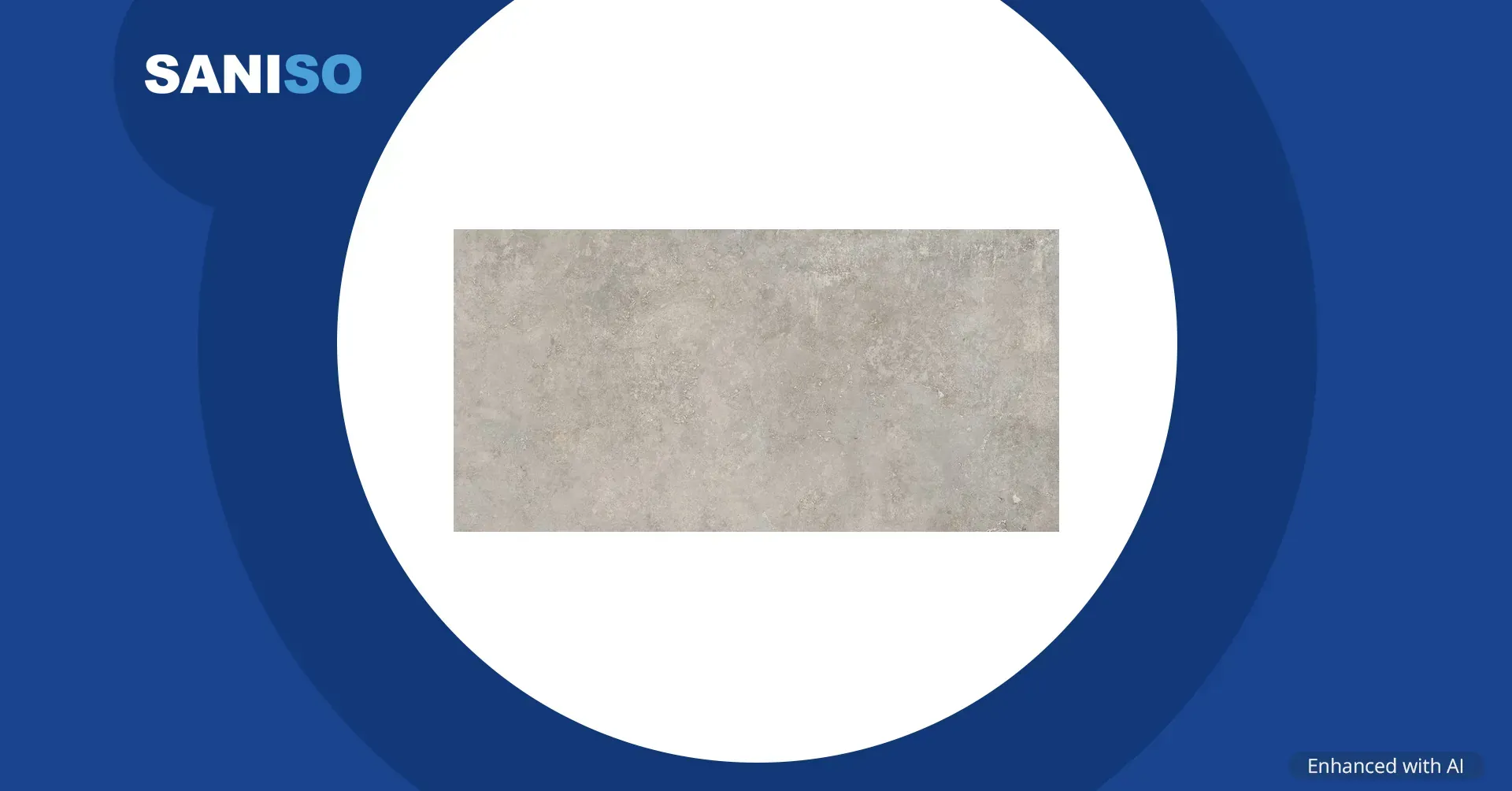
A large-format, rectified Cersanit tile in a cement look, 60 × 120 cm and 8 mm thick, for walls and floors, indoors and outdoors. Frost resistant, slip resistance class R10b.
What is it for? Today's cement-look tile: the visual echo of poured concrete, without pouring a slab.

A mixing paddle for thick, heavy mortars and cement-bound mixes, for use with a drill or mixer.
What is it for? Cement paste only hardens if cement and water meet properly; a good mixer helps get a homogeneous batch.
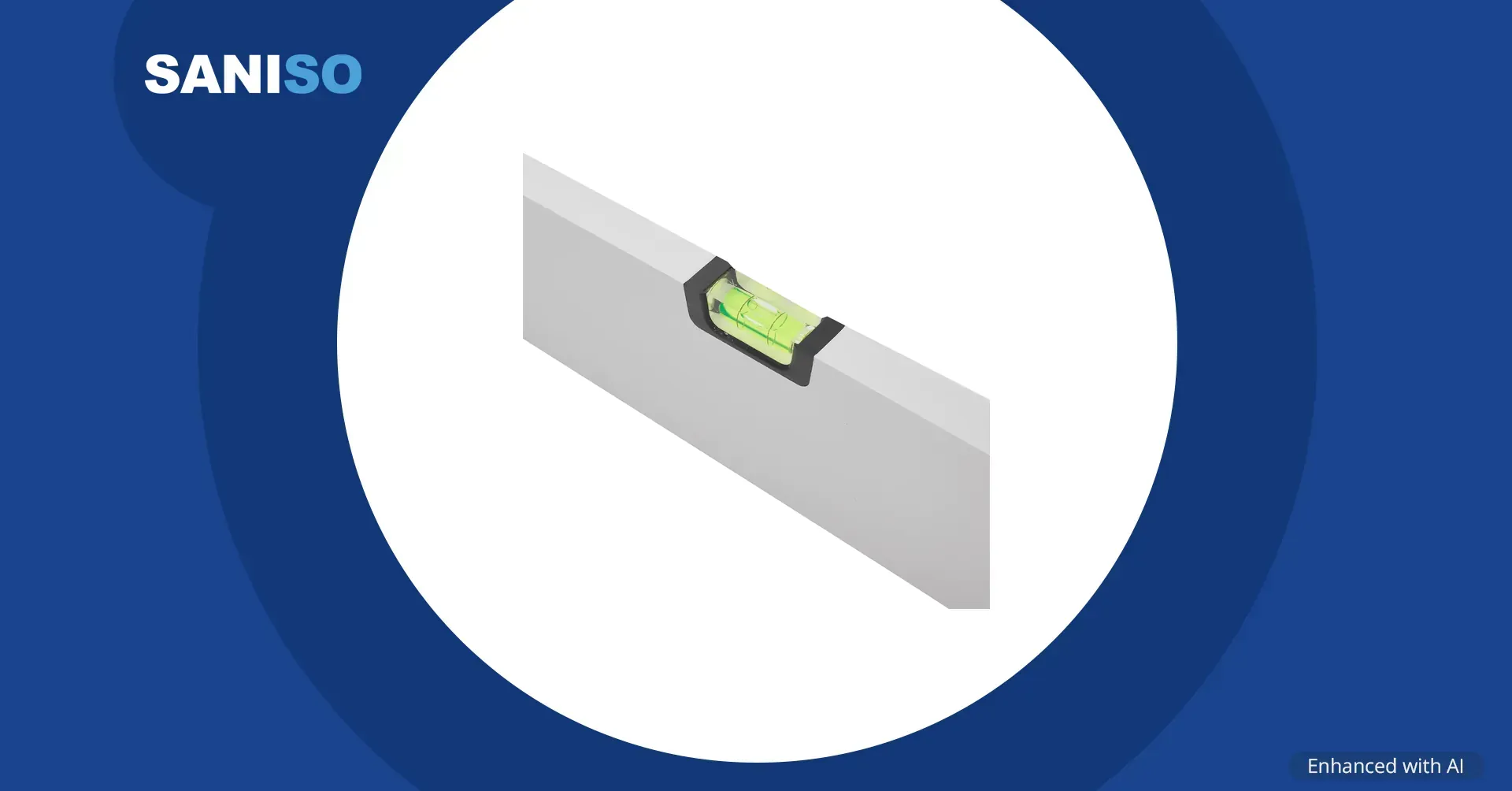
A long aluminium screed rule for striking off and levelling freshly placed screed or mortar over 2.5 metres.
What is it for? Roman concrete was laid rather than poured; today we still need a long, straight edge to get a flat level.
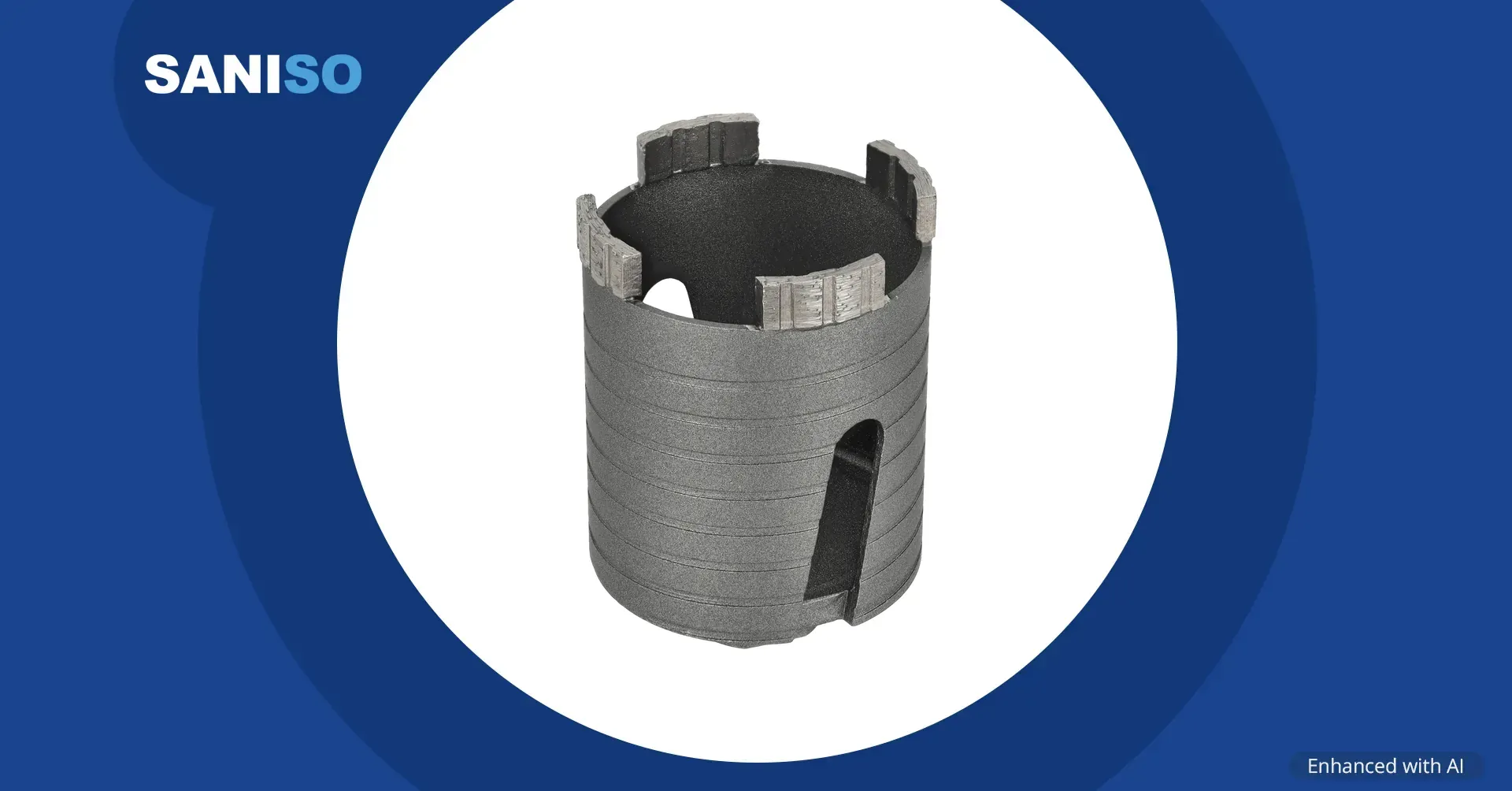
A diamond core bit with turbo segments, diameter 68 mm, for drilling clean cores in concrete (max. 1450 rpm).
What is it for? Modern concrete is dense and hard: diamond tools are the practical way to open it. We explain the method in our diamond-drilling guide.
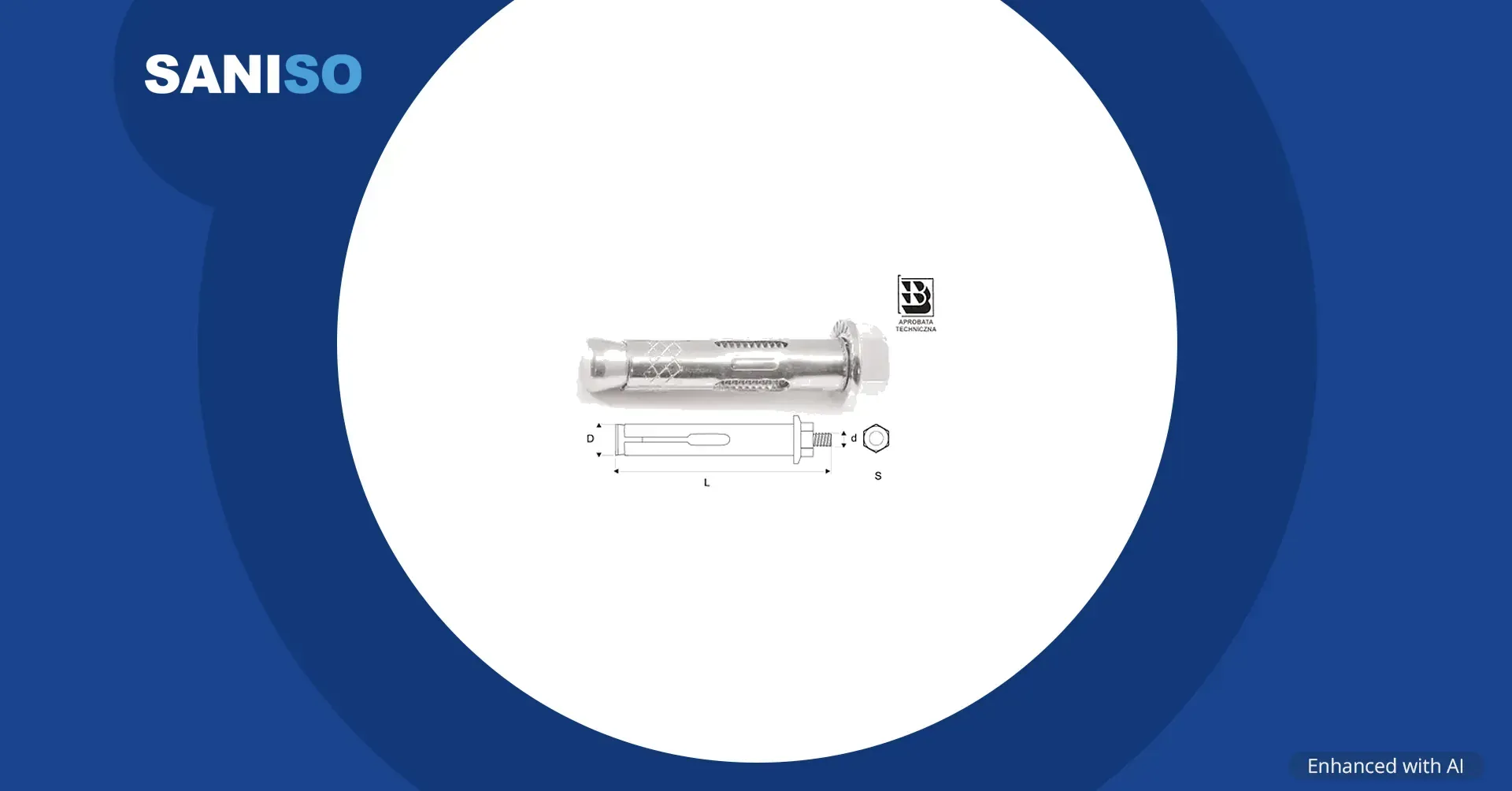
A steel expansion anchor bolt for fixing into solid substrates such as concrete, with an external diameter of 10 mm and length 100 mm.
What is it for? Once concrete has hardened, you fix into it rather than cast everything in. Choosing the right anchor is a separate topic.
Order on a workday before 15:00? Then your order is delivered the next workday, as long as it fits in a parcel. Pallet shipments have a different delivery time. Saniso has thousands of products in stock in the Netherlands.
Your first order is easy to place:
Want to know when there are new offers? Sign up for the newsletter: scroll to the bottom of any page on saniso.nl, enter your email address under "Newsletter" and click "Subscribe". You'll get updates on offers and discount vouchers, and we don't spam. With an account you also collect loyalty points for a discount on your next purchase.
Questions about ordering, your account, payment, shipping or returns? Find all the answers in the Saniso FAQ.
How old is concrete?
Roman concrete (opus caementicium) was in widespread use from about 150 BC. Earlier lime and gypsum mortars existed long before that, but the hydraulic Roman mix is the direct ancestor of structural concrete.
What is opus caementicium?
The modern name for Roman concrete: lime mortar with pozzolana (volcanic ash) and coarse aggregate (caementa), often laid rather than poured.
Why does Roman concrete last so long?
Pozzolanic chemistry, careful aggregate grading (as in the Pantheon), and — according to 2023 research — self-healing lime clasts from hot-mixing with quicklime all play a role. Marine concrete can also form durable tobermorite crystals.
Is the Pantheon made of reinforced concrete?
No. The Pantheon dome is unreinforced concrete. It remains the largest and oldest unreinforced concrete dome still standing.
Who invented Portland cement?
Joseph Aspdin of Leeds patented Portland cement on 21 October 1824 (British patent BP 5022). Later makers, including his son William, developed hotter-fired clinker closer to modern cement.
Does concrete harden by drying?
No. Cement hydrates: it needs water for the chemical reaction. If concrete dries out too soon, hydration stops and strength stays lower.
Who invented reinforced concrete?
Several pioneers worked on it. Joseph Monier patented iron-reinforced troughs in 1867 and built the Chazelet bridge in 1875; François Hennebique patented a full building system in 1892.
What is prestressed concrete?
Concrete that is permanently compressed by high-strength steel tensioned before or after casting. Eugène Freyssinet patented a practical system in 1928.
When did reinforced concrete arrive in the Netherlands?
Via the Monier licence: a branch in Sas van Gent in 1888 and the Amsterdamsche Fabriek van Cement-ijzerwerken in 1890. The Schollenbrug in Amsterdam (1900) is an early large Dutch example.
What is special about the Noordersluis at IJmuiden?
Opened in 1929, it measures 400 × 50 × 15 metres and is a landmark of large-scale reinforced concrete in Dutch hydraulic engineering.
What is self-compacting concrete?
A mix that fills formwork under its own weight without vibration. The idea was proposed in Japan in 1986; a prototype was completed in 1988.
What is UHPC?
Ultra-high-performance concrete: a very dense, fibre-reinforced cementitious material with commercial applications from the 1990s.
What is the delivery time at Saniso?
Order on a workday before 15:00 and it's delivered the next workday, as long as it fits in a parcel. Pallet shipments have a different delivery time.
Do the prices include VAT?
This blog shows every price including and excluding VAT. At checkout on saniso.nl, prices are shown including VAT.
Building facts takes one building topic under the magnifying glass every Monday and Thursday. This is edition #4. Read the previous edition too: the history of the tile, from Delft Blue to porcelain stoneware, and edition #1: the history of the brick. Fun link: Roman walls were often brick-faced concrete — clay and concrete side by side.
Share:
Grout in one even colour across the whole wall or floor: that is what you want. In this blog we explain how the hybrid R...

Learn how to level a floor yourself: prepare the subfloor, prime, mix and pour self-levelling compound. Step-by-step wit...

Installing a kitchen: do it yourself or hire a professional? Read what is involved, which parts you can do yourself and...

Cersanit Ares cement-look tiles for bathroom, kitchen and living room: 30×30 to 60×120, matt or satin, plus mosaic, skir...