Cart (0)
No products in the cart.

 English ✓
 Nederlands ✓
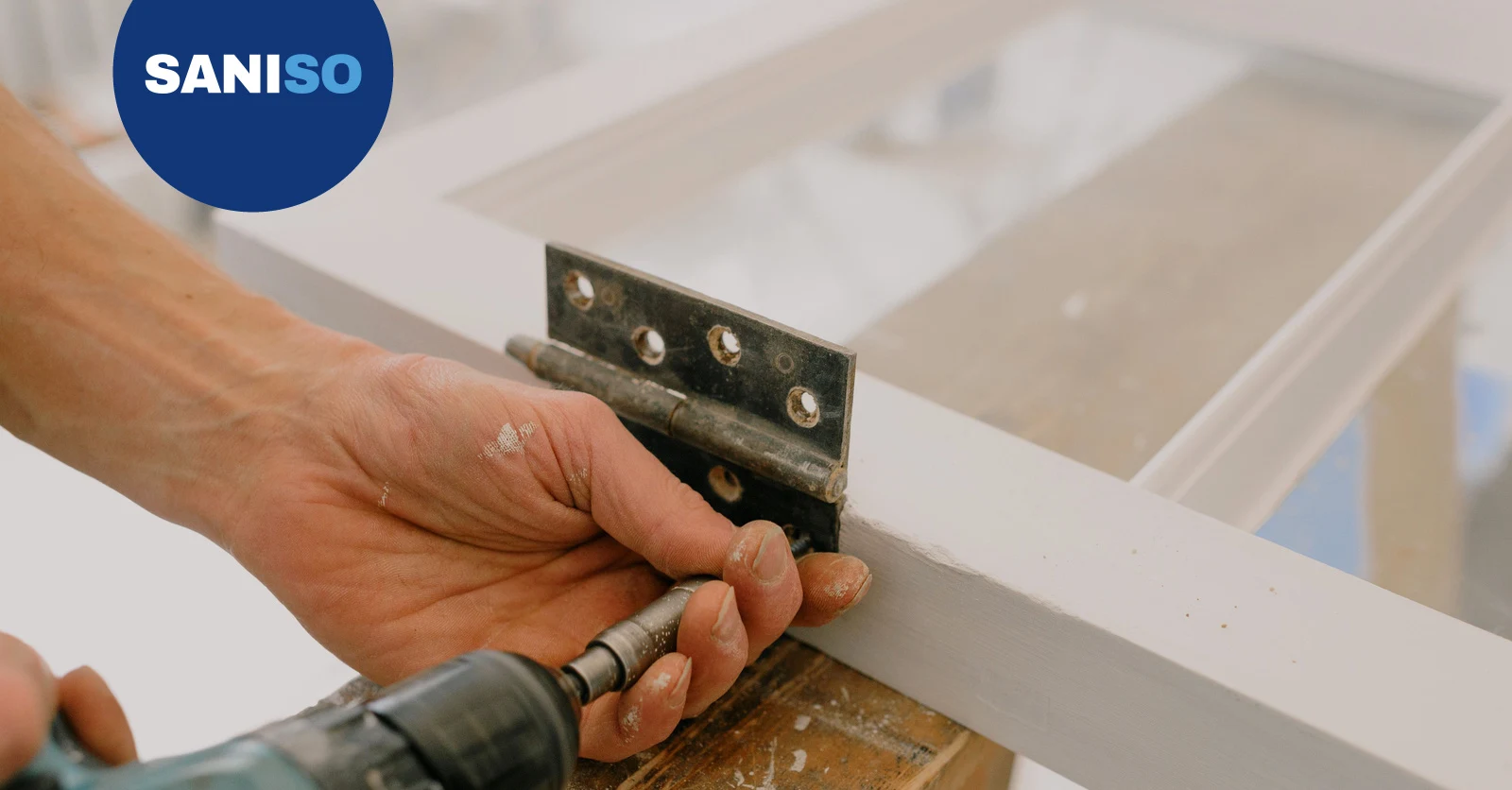
Yesterday you adjusted the door handle and the strike plate. Today you finish the door job. A door that squeaks with every movement is especially irritating late in the evening and early in the morning. And a door that slams into the wall leaves a dent or a hole where the handle hits it. In this blog you will read how to lubricate a squeaky hinge, tighten loose hinge screws and fit a door stop that stops the door in time.
👷 Calling in a professional is never unnecessary. Is it a heavy external door, a fire door, torn-out hinges or a floor with underfloor heating where you want to fix a stop? Then leave it to a professional.
| Type of hinge | How to recognise it | How to lubricate it |
| Lift-off hinge | Two halves with the pin on one half; the door can be lifted off | Lift the door off with two people and lubricate the pin |
| Hinge with a loose pin | Pin with a small cap on top that you can tap out | Tap out the pin one hinge at a time, clean and lubricate it |
| Hinge with a fixed pin | No loose cap and the door cannot be lifted off | Lubricate at the top and in the seam and move the door back and forth |
Move the door slowly open and closed and listen to where the sound comes from. Often only one hinge squeaks. Use the rechargeable LED work lamp to check for paint residue, rust or dirt on the pin and whether the hinges are firmly fixed.
Tighten all the screws in the hinges with the screwdriver set. Keep the door half open and support it at the handle side. If a screw spins in the frame, our blog on fixing a sticking door explains how to solve that. If a hinge does not sit properly in its recess, read more in our blog on cutting hinge recesses in an interior door. You will find more about the right screwdriver in our blog on screwdrivers, bit sets and screw extractors.
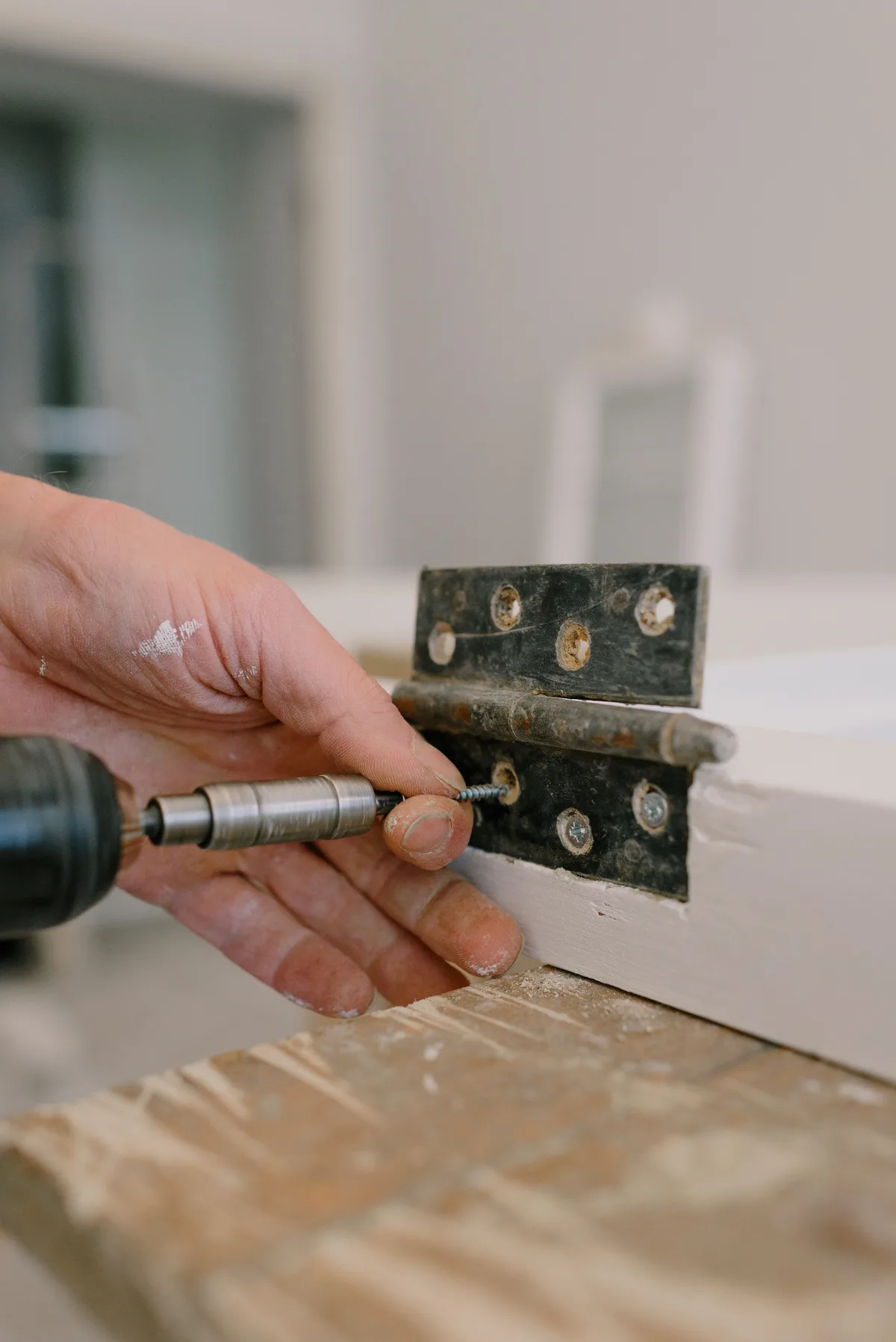
Always wipe off the excess with the microfibre cloth. Too much lubricant attracts dust and leaves marks on the door and the floor.
⚠️ On a door with loose pins, never remove all the pins at once. The door can then fall out of the frame in one go. An interior door is heavier than you think.
A door stop makes sure the door stops before the handle hits the wall. There are roughly three types:
Open the door until the handle almost touches the wall. Leave a few centimetres of space and mark the position of the stop with the carpenter pencil. If you fit a wall-mounted stop, measure the height of the handle with the tape measure with auto-lock.
Is there already a dent or hole in the wall where the handle hit it? Then read our blog on touching up damaged walls.
Calling in a professional is never unnecessary. Certainly do so in these situations:
A professional rehangs the door properly and makes sure everything is fixed firmly and safely.
A thin layer of silicone spray works well and attracts little dirt. Always wipe off the excess. Thick grease often leaves marks and collects dust.
Once a year is usually enough, or as soon as a hinge starts to squeak. A door that is used a lot may need it more often.
Check that the hinge screws are tight and that the door hangs straight. A door that hangs crooked often keeps creaking. Then read our blog on fixing a sticking door. If that does not help, have a professional take a look.
At the point where the door stops a few centimetres before the wall. A wall-mounted stop at handle height or a skirting stop is usually the safest, because nobody can trip over it.
That calls for caution. Tiles can crack, and there may be pipes or underfloor heating under the floor. Preferably choose a wall-mounted or skirting stop, or have a professional fit the stop.
Read also: How to adjust a door handle and strike plate
At Saniso, the online store for DIYers and professionals, you will find tools, materials and personal protective equipment for your job.
In doubt about the approach? Feel free to call in a professional.
Saniso – Build your home with Saniso.
Share:
Install multilayer pipe and press fittings yourself or call in an installer? What you can do yourself, how pressing work...
Cement, hybrid or epoxy grout? CG1, CG2, W, A and RG explained according to EN 13888, and which grout to choose for wall...
From bath to shower: how to go about it. Shower tray or walk-in shower, drainage, waterproofing, a step-by-step plan and...
Combination pliers, side cutters or long nose? Buying guide with sizes, locking, circlip and VDE pliers, plus tips for w...