Cart (0)
No products in the cart.

 English ✓
 Nederlands ✓
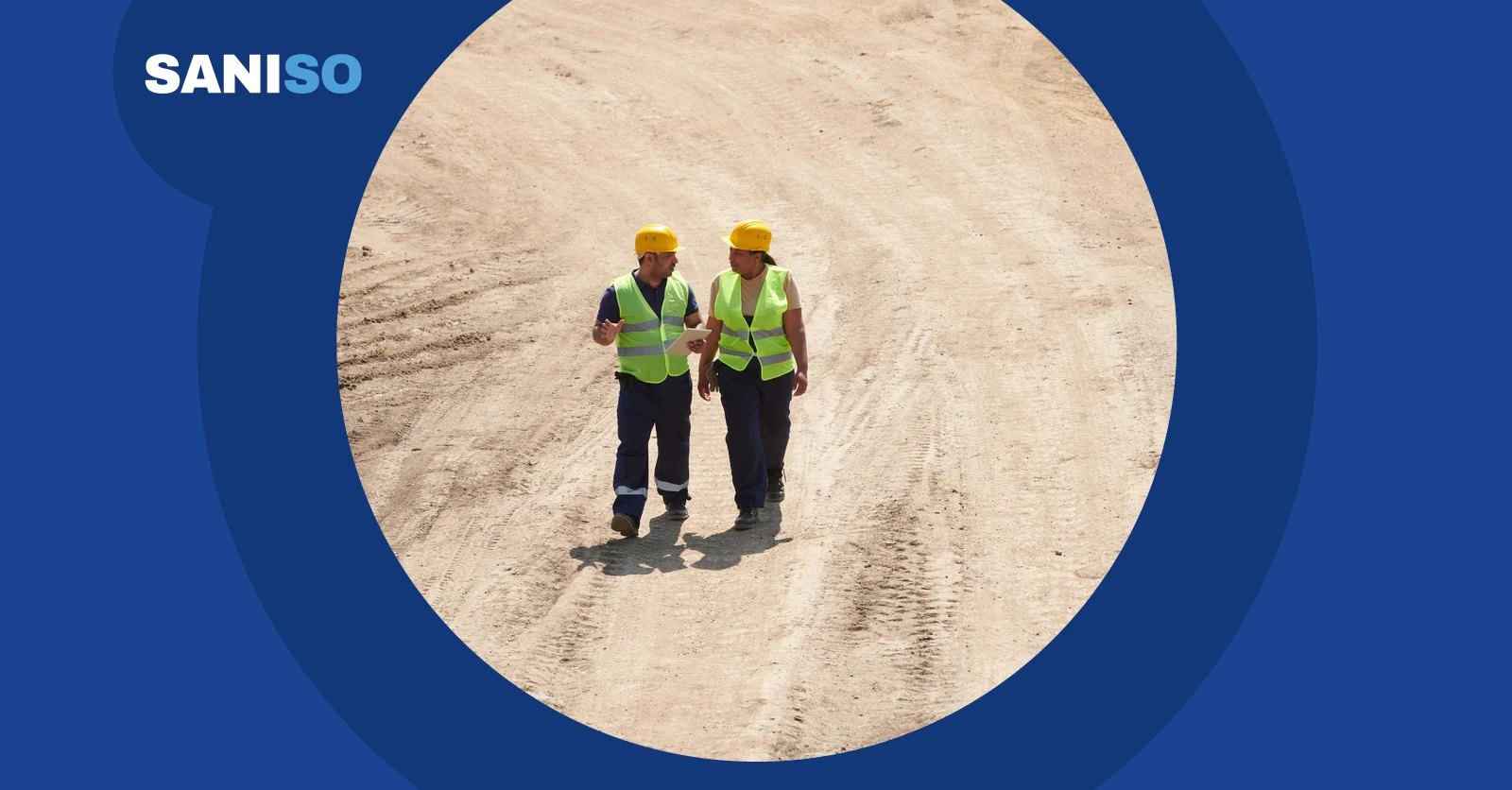
Short answer: on almost every building site the basic kit consists of a safety helmet, safety shoes, work gloves and high-visibility clothing. Depending on the work, safety glasses or a face shield, hearing protection, a dust mask, knee pads and fall protection are added. Exactly which PPE is needed follows from the risk assessment (RI&E) and the project's health and safety plan. The employer provides PPE free of charge; the employee wears it and looks after it carefully.
Read this article in Dutch as well: Persoonlijke beschermingsmiddelen op de bouw: complete lijst.
In the occupational hygiene strategy, PPE only comes into play when a risk cannot be removed at the source, with technical measures or with organisation. First low-dust working with extraction, scaffolding with guardrails or a quieter machine; only then a dust mask, a harness or hearing protection. That is why a PPE list never replaces good work preparation. How this works on a building site as a whole is explained in our blog on safe working on the construction site.
| Risk | PPE | Standard (guideline) |
| Falling objects, bumping your head | safety helmet | EN 397 |
| Falling materials, nails, wet ground | safety shoes S1P, S3 or S3S | EN ISO 20345 |
| Abrasion, cuts, grip | work gloves, cut-resistant gloves | EN 388 |
| Splinters, dust, splashes | safety glasses, goggles, face shield | EN 166 |
| Machine noise | earplugs or earmuffs | EN 352 |
| Dust, silica dust | FFP2 or FFP3 dust mask | EN 149 |
| Traffic, machinery, low light | high-visibility clothing class 2 or 3 | EN ISO 20471 |
| Working at height without collective protection | harness with lanyard and anchor point | EN 361 |
| Kneeling work | knee pads | EN 14404 |
| Rain, cold | rainwear and warm workwear | EN 343 / EN 342 |
A helmet is mandatory on most building sites. Choose a safety helmet or an orange safety helmet with a well-adjustable harness and, for work at height or bending down, a chin strap. Replace a helmet after a hard impact and follow the manufacturer's replacement period. More in our blog on safety helmets.
For dry interior work S1P is sometimes enough. Outdoors and on a wet site choose S3 or S3S: water-repellent, with a steel or composite toe cap and a nail-resistant sole. Consider a low S3S safety shoe or a high leather S3 safety boot if you need ankle support. The difference between the classes is explained in our blog on choosing safety shoes.
For general work, work gloves with nitrile coating are a good basis: grip and protection against abrasion. When working with knives, sheet metal or glass choose cut-resistant gloves. How to read the cut level is covered in our guide to cut-resistant gloves; general tips in our buying guide for work gloves.
When drilling, grinding, chopping and sawing, wear safety goggles. For heavy striking and dust, impact-protection goggles offer more protection. When grinding or when liquids may splash, also wear a face shield. More on markings and choice in our blog on safety glasses for professionals.
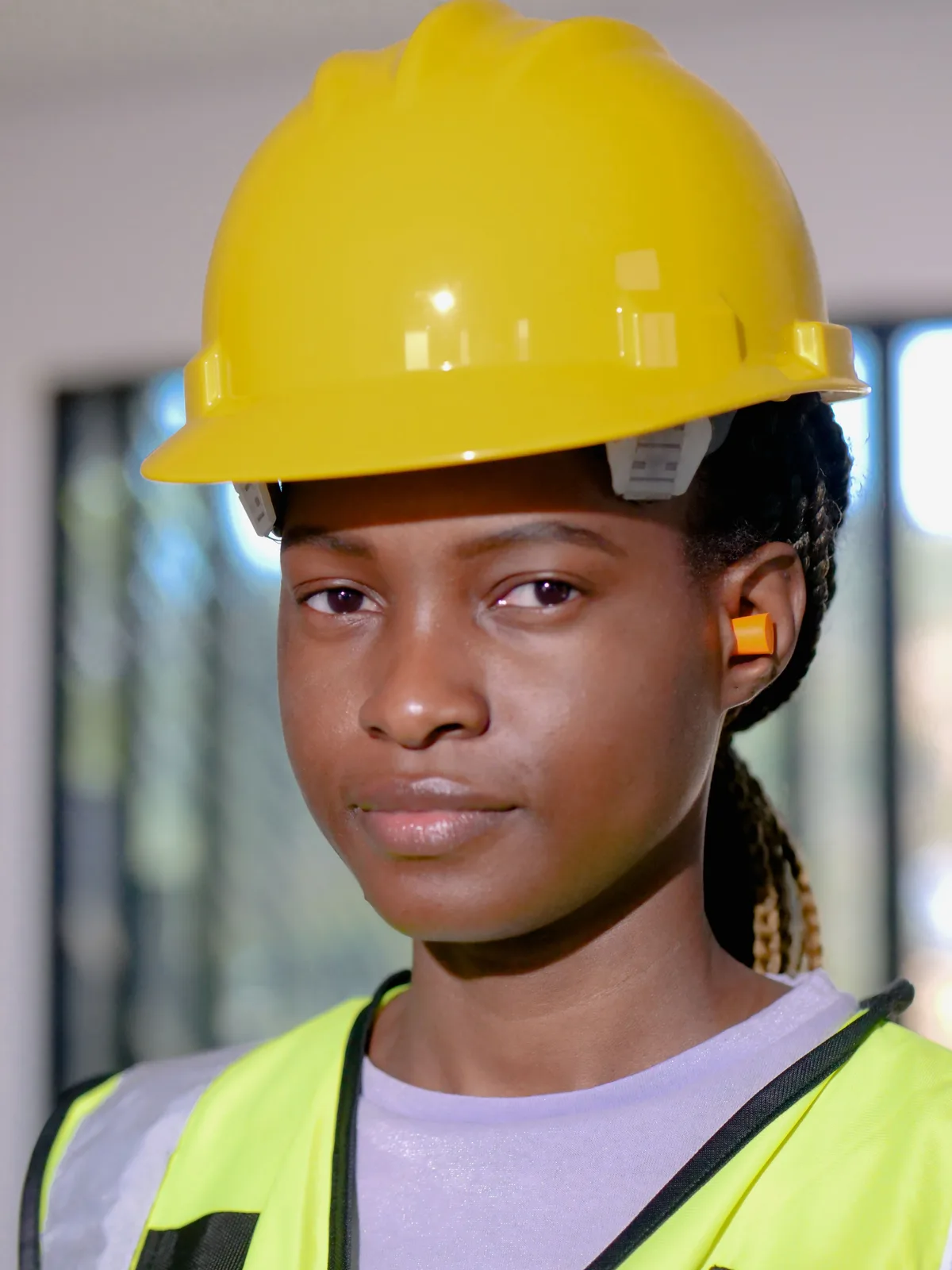
Above 80 dB(A) the employer must make hearing protection available; from 85 dB(A) wearing it is mandatory. Grinding, breaking, sawing and pile driving are well above that. Use earplugs for short jobs and varied work, or earmuffs if you put them on and take them off often. More in our blog on hearing protection.
Sanding, grinding, milling and sawing concrete, stone or tiles releases silica dust. First work with low dust using extraction and water. In addition, wear an FFP2 dust mask for light dust or an FFP3 dust mask for silica dust and prolonged dusty work. A dust mask only seals properly on a clean-shaven face. If you suspect asbestos, stop immediately and read our safety tip on recognising asbestos.
Where traffic or machinery moves, wear high-visibility clothing. In autumn, with less daylight, this is even more important. An orange high-visibility vest is the basis; a high-visibility softshell jacket combines visibility with warmth. In rain, wear a rain jacket. Also read our blog on high-visibility clothing and EN ISO 20471 and, for working in the cold, our safety tip on working safely in the cold.
Collective measures such as guardrails, scaffolding and aerial platforms always come first. If that is not possible, use a safety harness on a certified anchor point, only after instruction and with a rescue plan. For tilers, floor layers and installers who kneel a lot, knee pads are essential.
Check your PPE at the start of every working day: cracks in a helmet, damaged soles, holes in gloves, scratches on glasses, a clogged filter or damaged harness straps. Replace damaged PPE immediately. Have a harness and lanyard inspected periodically. Store PPE clean and dry, out of the sun.
💡 Prepare a fixed PPE set per crew with spare gloves, earplugs and dust masks. That way nobody has to improvise when something runs out or breaks.
⚠️ PPE only works if it fits and is worn correctly. A helmet that is not adjusted properly, a dust mask over a beard or earplugs that are only half inserted give hardly any protection.
👷 The professional is the person who knows the risks of their work best. A safety expert or prevention officer helps with the risk assessment and with choosing the right PPE for special risks, such as working with chemicals, asbestos or at great height. If you are unsure about the right protection, ask for advice before you start.
That depends on the risks. On most sites a helmet, safety shoes and high-visibility clothing are mandatory. The risk assessment and the health and safety plan determine which further PPE is needed.
Yes. The employer provides the necessary PPE free of charge to employees. Self-employed workers provide their own PPE.
From 85 dB(A) wearing it is mandatory. Between 80 and 85 dB(A) the employer must make hearing protection available.
Yes. Saniso is a wholesaler and also supplies large quantities. Request a quote for your crew or project via a project quotation.
At Saniso, the online store for DIYers and professionals, you will find tools, materials and personal protective equipment for your job.
In doubt about the approach? Feel free to call in a professional.
Saniso – Build your home with Saniso.
Share:

Choosing women's workwear: why a men's model in a small size does not work, what to look for in trousers, jackets, safet...
Working safely in a crawl space, cellar or shaft: risks, ventilation, lighting, PPE and when not to go in. Practical tip...
Planning to dig a fence post, drain or trench? Read where cables and pipes usually lie, when a KLIC notification is requ...
Learn how to choose chemical-resistant gloves for construction work, from EN ISO 374 ratings to nitrile, latex and neopr...