Cart (0)
No products in the cart.

 English ✓
 Nederlands ✓
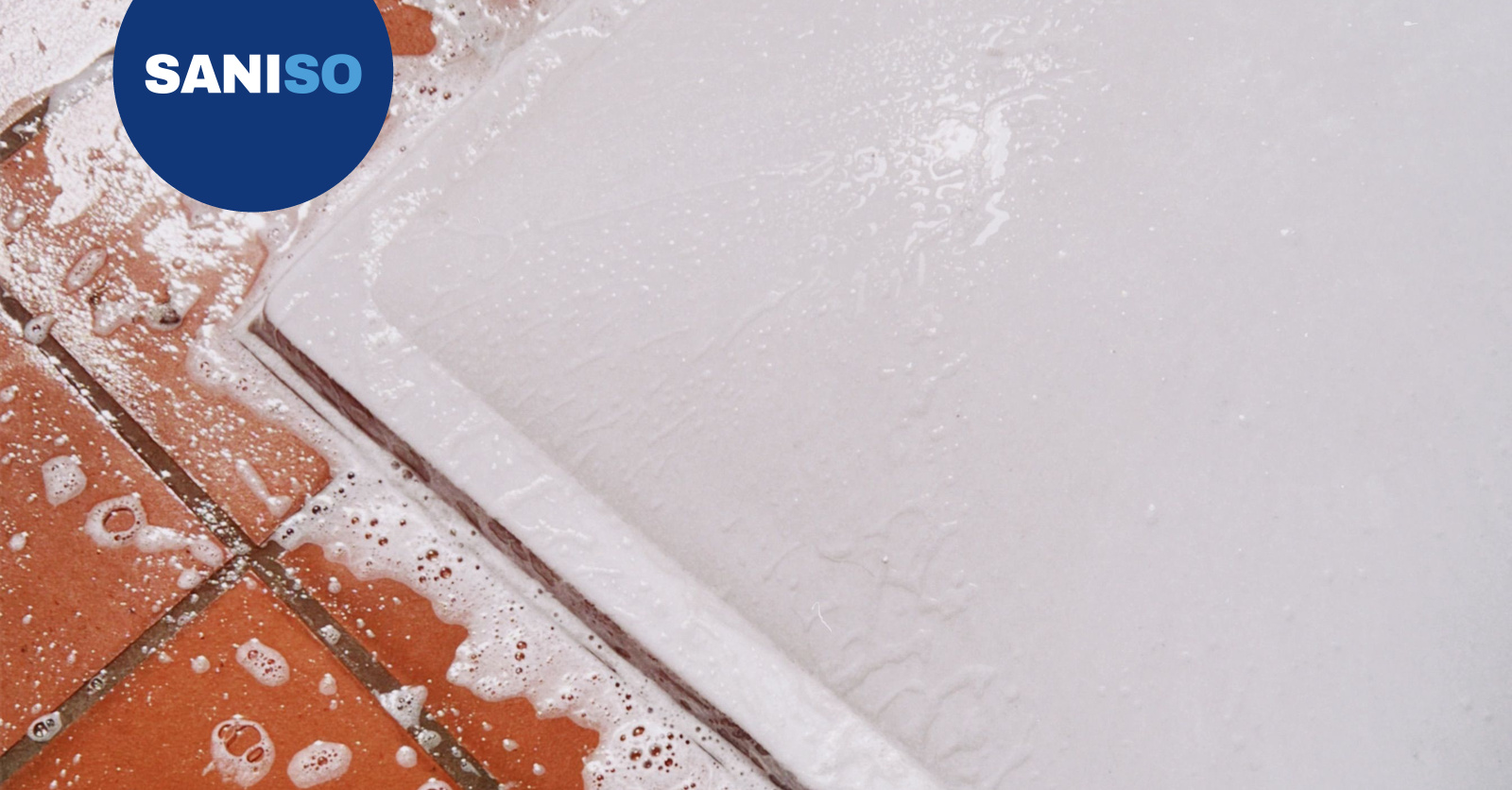
Short answer: first clean the joint with a suitable cleaner and a brush, rinse well and let the shower dry completely. If the black deposit is in the sealant itself or keeps returning, replacing the sealant is often the real solution. If the bathroom stays wet for a long time, mould will keep returning, however well you clean.
👷 Calling in a professional is never unnecessary. For large areas of mould, loose tiling, a leak behind the wall or health complaints, have a professional look first. Mould caused by a leak will not disappear with cleaning alone.
In a cement joint you can often clean surface deposit. With Fila Brio universal cleaner or a Fila cleaner for floors and surfaces and a ABS sponge float you get a long way, for limescale a Fila descaling cleaner helps according to the directions. For cement haze on tiles, Fila Deterdek Pro cement haze remover is also used. If the sealant bead itself is black and soft, use Fila Zero Sil silicone remover and then apply new sanitary silicone sealant. Read in our blog on cleaning and renewing discoloured grout how cleaning and renewing grout fit together.

Wear work gloves with nitrile coating and safety goggles against splashes and a FFP2 dust mask when brushing dry deposit. Never mix cleaners, use one product at a time and rinse well in between. Ventilate during and after the work and keep children and pets out of the wet bathroom until everything is dry.
If the joint is clean but the bathroom stays damp for a long time, the chance is high. Keeping it drier is therefore just as important as cleaning.
Surface dirt can. If the colour is deep in the sealant or the sealant is loose, replacing it is neater and longer lasting.
At Saniso, the online store for DIYers and professionals, you will find tools, materials and personal protective equipment for your job.
In doubt about the approach? Feel free to call in a professional.
Saniso – Build your home with Saniso.
Share:
Install multilayer pipe and press fittings yourself or call in an installer? What you can do yourself, how pressing work...
Cement, hybrid or epoxy grout? CG1, CG2, W, A and RG explained according to EN 13888, and which grout to choose for wall...
From bath to shower: how to go about it. Shower tray or walk-in shower, drainage, waterproofing, a step-by-step plan and...

Compare the Cersanit Vortex toilet with Tornado. Learn how each flush works, what to check, and how to choose the right...