Would you like to plant a tree in your garden yourself? Autumn and winter are a good time: the tree can root quietly before spring arrives. With a good planting hole, the right depth, a sturdy tree stake and enough water, you give a young tree the best start. This guide shows how to go about it, which tools you need and when it is better to call in a professional.
👷 Is it a large or heavy tree, a spot close to your house, a fence or pipes, or does an old tree or stump need to go first? Then call in a landscaper or tree surgeon. A professional knows the right species for the spot, how the roots will grow and the safe way of working. That craftsmanship cannot be replaced by a step-by-step guide.
What should you check before you start?
The spot: consider how big the tree will become, in height and width. Keep plenty of distance from your house, the neighbours, fences, paving and the sewer. The right distance depends on the species; ask a landscaper.
Cables and pipes: find out where cables and pipes run underground, for example from the drawings of your home or a utility location request (KLIC notification in the Netherlands). Never dig blindly where you suspect pipes.
Soil and water: if water stays on the surface long after rain, the tree will struggle. If you are unsure about the soil type or drainage, ask a landscaper for advice.
The weather: do not plant when the ground is frozen or waterlogged. Choose a dry, frost-free day.
Type of tree: plant a bare-root tree only in the dormant season; a root-balled or potted tree gives you more leeway. Always follow the planting instructions supplied with the tree.
What do you need?
Materials
The tree, bare-root, root-balled or in a pot.
A tree stake and a wide tree tie (no product link here). Never use wire or thin cable ties; they cut into the bark.
Optionally good garden soil or compost to improve the excavated soil, according to the instructions on the packaging.
Choose and mark the spot. Measure the distance to house, fence and neighbours with the tape measure. Check once more where cables and pipes run. Mark the centre of the planting hole.
Soak the roots. Put a bare-root tree or a dry root ball in a bucket or tub of water first, as the planting instructions say. This keeps the roots from drying out while you work.
Cut the turf. Cut the turf loose in a wide circle with the spade and set it aside. You can later place it upside down at the bottom of the hole.
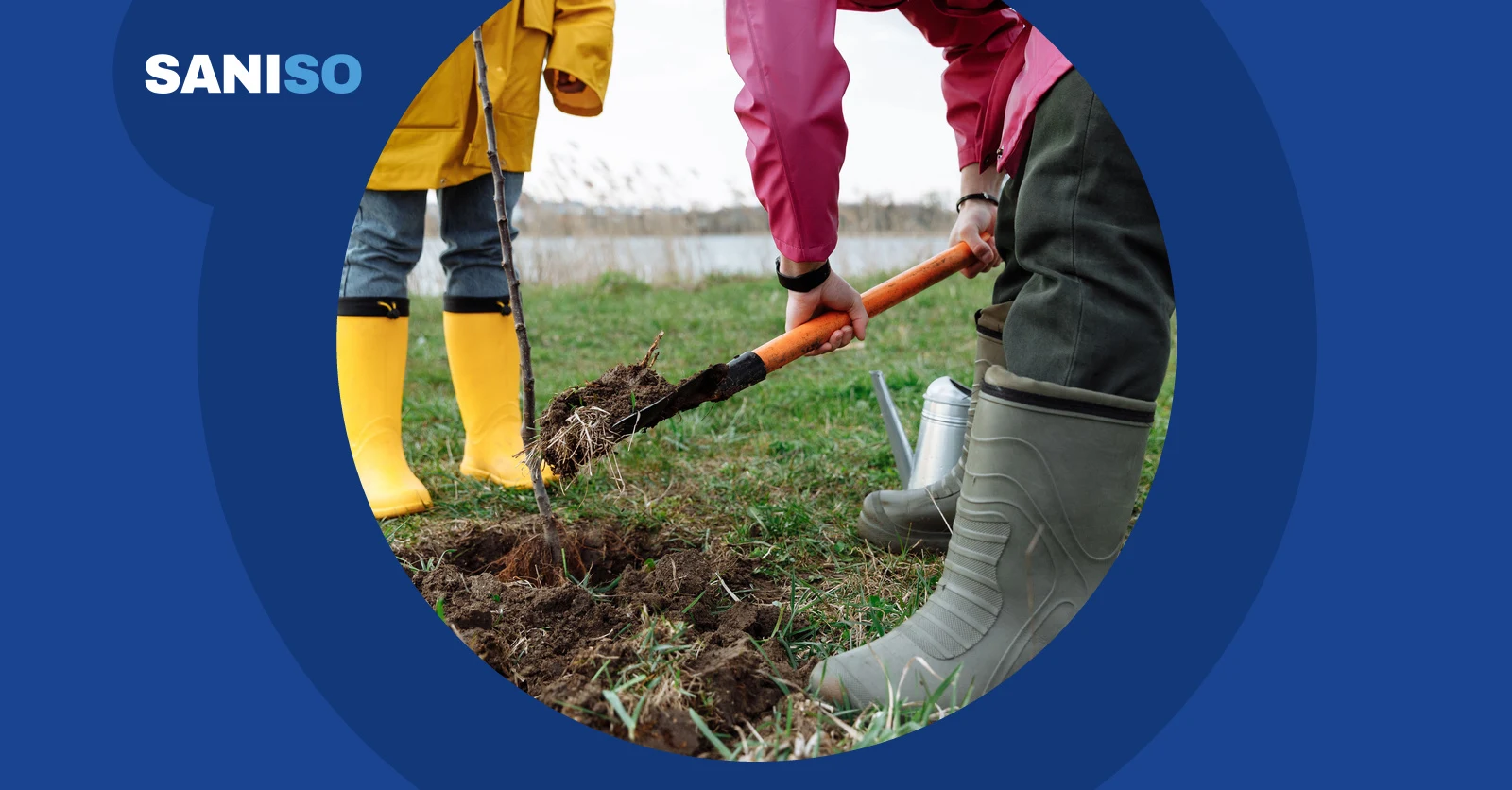
Dig the planting hole. Make the hole well wider than the root ball or root system, so the roots can grow into the soil easily. Do not make it deeper than needed. Keep the fertile topsoil separate from the deeper soil. Loosen hard layers or roots with the pickaxe.
Loosen the bottom and sides. Prick the bottom and sides of the hole with the hand fork or spade. Smooth, hard sides hold back water and roots.
Set the tree stake. Drive the tree stake firmly into the ground with the sledgehammer before the tree is in the hole. Place the stake on the side the wind usually comes from. This way you do not damage the roots.
Set the tree at the right height. Place the tree next to the stake in the hole. The root collar, where the trunk turns into roots, should be level with the ground surface. Planting too deep is one of the most common mistakes. Trim damaged roots neatly with the bypass pruner.
Backfill and firm in. Fill the hole with the soil you set aside, optionally improved with garden soil or compost according to the packaging. Gently shake the tree so the soil settles between the roots, and carefully firm the soil without damaging the roots.
Tie the tree. Fix the trunk to the stake with a wide tree tie so the trunk does not rub. The tie must not constrict the trunk.
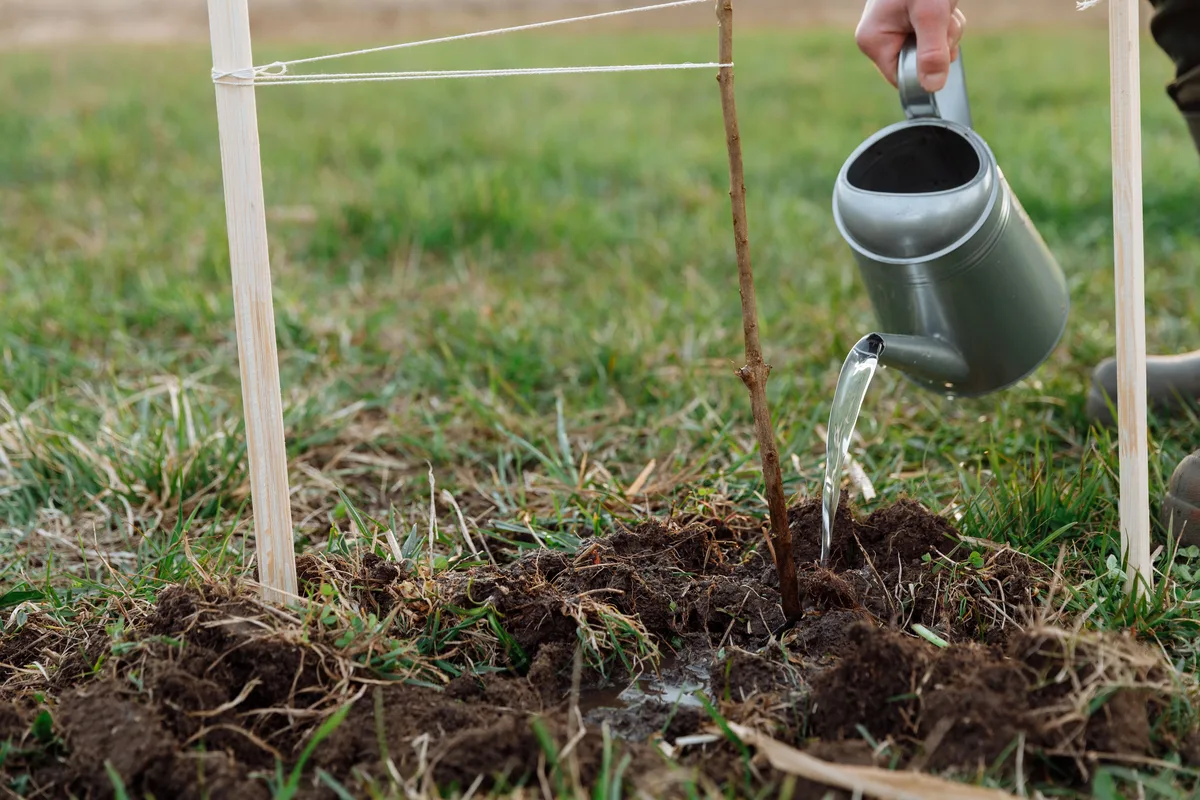
Water generously. Water generously right after planting with the hose or bucket, so the soil closes around the roots. Then rake the soil level.
Which mistakes are easy to make?
Planting the tree too deep, so the root collar disappears below the ground.
A planting hole that is too small, with hard, smooth sides.
Driving the stake only after the tree is in place, damaging the roots.
Using wire or thin cable ties instead of a wide tree tie.
Planting in frozen or waterlogged ground.
Not watering after planting, even in autumn.
Choosing a tree that will grow too big for the spot, too close to the house or pipes.
How do you work safely?
Digging: never dig blindly near cables and pipes. If you do hit a cable or pipe, stop immediately and contact the network operator or a registered installer.
Lifting: a root-balled tree can be heavy. Lift with two people, keep your back straight and lift with your legs. For heavy trees, use a professional with the right equipment.
Chopping and striking: wear safety goggles when chopping with the pickaxe and striking with the sledgehammer. Keep bystanders at a distance and never hold the stake by hand under the sledgehammer.
Feet and hands: wear sturdy footwear with toe protection and work gloves. A spade or pickaxe on your foot happens quickly.
Knees and back: use a kneeling pad and change position. Take breaks during heavy digging.
Protective equipment is in our workwear and safety range, see the link at the bottom.
💡 💡 Lay a batten or the handle of your rake across the planting hole. That way you can see at a glance whether the root collar sits exactly at ground level before you fill the hole.
👷 Unsure about the spot, the distance to your house or pipes, or is it a large tree? Then leave the planting to a landscaper or tree surgeon. Especially with trees that will grow large, craftsmanship prevents damage to your house, paving and pipes.
Frequently asked questions
When is the best time to plant a tree?
In autumn and winter, on frost-free days, when the tree is dormant. A potted tree can often be planted at other times too; follow the planting instructions.
How deep should the planting hole be?
Deep enough for the root collar to sit level with the ground surface. Make the hole generously wide, not extra deep.
Does every tree need a stake?
A young tree stands more stably with a stake, especially in an open, windy spot. How long the stake should stay depends on the tree; if in doubt, ask a landscaper.
How much water does a new tree need?
Plenty of water right after planting, and regularly in dry periods. The amount depends on the tree, soil and weather; follow the planting instructions.

 English ✓
 Nederlands