Grout in one even colour across the whole wall or floor: that is what you want. In this blog we explain how the hybrid R...

How to lay a garden path
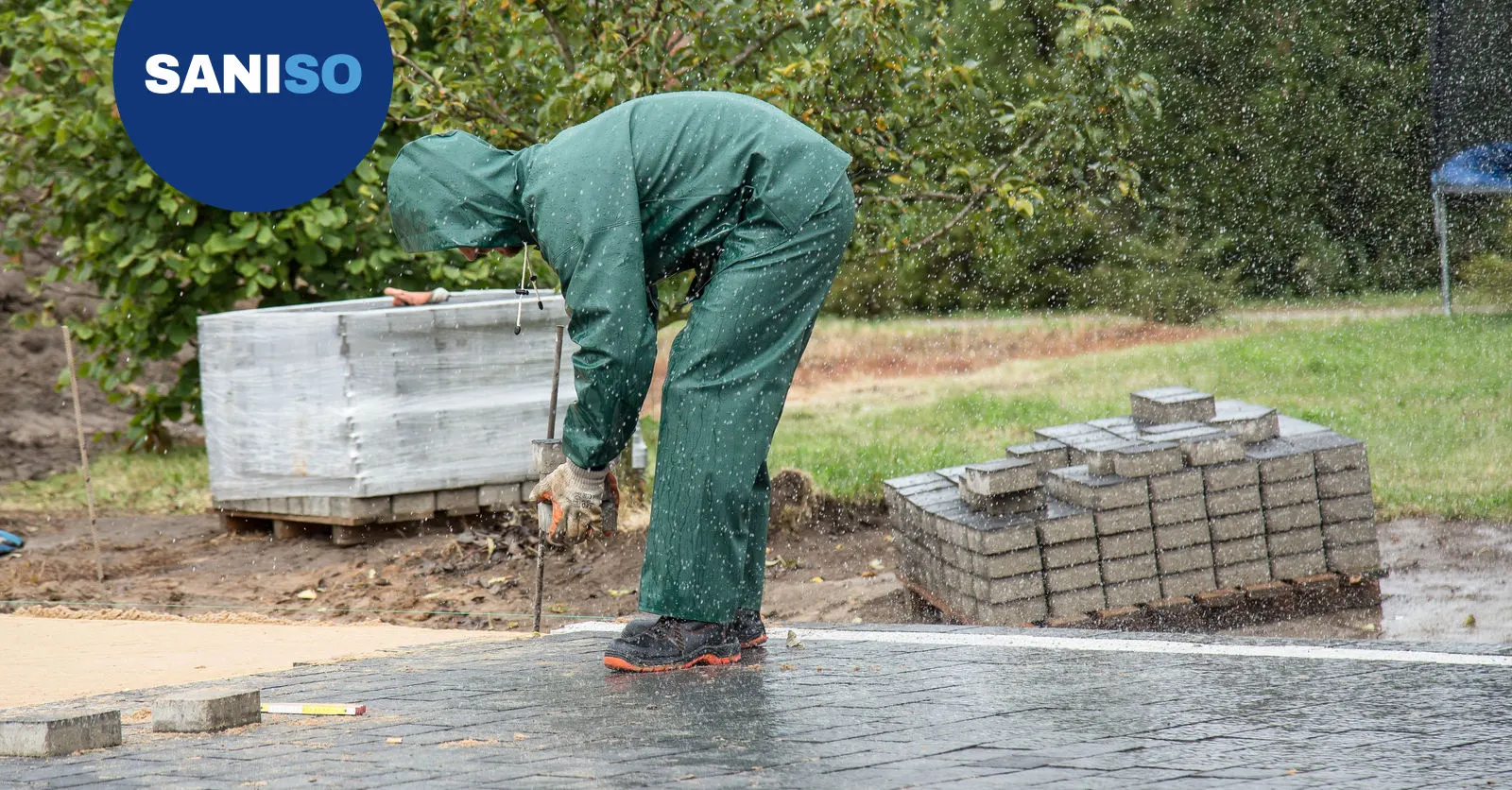
A garden path connects the patio with the shed, the front door with the gate or the border with the vegetable patch. A good path stays flat for years, drains rainwater and looks tidy. A poor path starts to wobble after just one winter, and grass grows between the slabs within a season. The difference lies mainly in what you do not see: the base. In this blog you will read step by step how to lay a garden path yourself with slabs or pavers: from setting out and digging to the sand bed, laying and filling the joints. Of course also with attention to working safely and to the moment when a paving contractor is the better choice.
👷 Calling in a professional is never superfluous. A paving contractor knows exactly how much fill and compaction the soil in your garden needs, works with a plate compactor and a laser and lays in a day what takes a DIYer a few weekends. For a driveway, a soft or wet base or a large area, that is well worth it.
Preparation: route, width and fall
- Route: walk the route a few times first. A path that follows the natural walking line will actually be used.
- Width: for one person, a path one 60 centimetre slab wide is often enough. If you want to use a wheelbarrow or walk side by side, choose around a metre.
- Fall: rainwater must be able to drain away. Give the path a slight slope, about one to two centimetres per metre, away from the house or towards the border.
- Material: concrete slabs are quick to lay; pavers and smaller stones follow a curve more easily.
- Cables and pipes: if you do not know exactly where cables, pipes or the drain run, dig carefully by hand and call in a professional when in doubt. If you hit a cable or pipe, stop immediately.
What do you need?
- Setting out: pegs, a builder's line, a tape measure with auto-lock and a 120 cm spirit level or 200 cm spirit level.
- Digging: a sharp spade, a garden shovel and, for hard or stony ground, a pickaxe.
- Sand bed: a sand shovel, an adjustable rake and a straight batten to screed the sand.
- Laying: a paving hammer or rubber mallet.
- Cutting to size: a 125 mm angle grinder with a turbo diamond disc (125 mm), or a block splitter.
- Finishing: a street broom with long bristles and jointing sand.
- PPE: see below.
Working safely
- Hands: wear leather garden gloves when digging and work gloves with nitrile coating when laying; slabs have sharp edges and are heavy.
- Knees: you spend a lot of time on your knees. With knee pads you can keep going longer.
- Feet: a low S3S safety shoe protects your toes if a slab falls. You can read more about safety shoes in our blog on choosing safety shoes.
- Lifting: lift with a straight back from your knees and lift heavy slabs with two people.
- Cutting and grinding: grinding concrete and natural stone releases fine quartz dust. Always wear safety goggles, an FFP2 dust mask and Thor earmuffs, work outside and preferably wet. You can read more about hearing protection in our blog on hearing protection.
⚠️ An angle grinder is a powerful machine. Always work with the guard fitted, with both hands on the machine and with the workpiece firmly supported. If you have no experience with it, leave the cutting to a paving contractor. You can find general tips in our blog on safe working on the construction site.
Step by step: laying a garden path
- Set out the path. Drive pegs into the ground on both sides and stretch a builder's line at the desired height of the path. Check with the spirit level and build in the fall straight away.
- Dig out. Remove the soil to the depth of the slab thickness plus the sand bed. For a garden path that you only walk on, a sand bed of about five centimetres on a firm, compacted base is usual. If the soil is soft, peaty or recently raised, more fill is needed; ask a paving contractor for advice.
- Make the bottom flat and firm. Remove roots and loose stones and tamp the bottom down well. The firmer the base, the less the path will sink later.
- Provide a firm edge. Edging along both sides keeps the slabs in place. Without an edge, a path gradually spreads apart.
- Apply the sand bed. Spread the sand with the sand shovel, rake it level and screed it with a straight batten along the line. Do not walk on the screeded sand afterwards.
- Lay the slabs or pavers. Start from a fixed point, such as the patio or the door, and work forwards from the slabs already laid. Tap each slab down with the paving hammer and check regularly with the spirit level and the line.
- Make cut pieces. Measure the cut pieces accurately and cut them outside, with PPE, or have them cut to size by a professional.
- Fill the joints. Sweep dry jointing sand diagonally across the path with the street broom with long bristles until all joints are full. Repeat this after a few days, once the sand has settled.
- Clear up. Sweep away the excess sand and check that water drains away properly after a shower.
Curves and patterns
If you want a path with a curve, small pavers are handy: they follow the line without much cutting. Mark out a curve with a garden hose or a rope on the ground before you start digging. Large slabs make straight lines easier; a curve then means a lot of angled cutting.

Maintenance
A well-laid garden path needs little maintenance. Sweep it regularly, top up joints when they empty and remove weeds before they root deeply. You can read how to do that without chemicals in our blog on removing weeds between paving tiles. You can find more garden tools in our guide to Stalco Garden tools.
When do you call in a paving contractor?
- With a soft, wet or recently raised base.
- When a car also needs to drive over the path or driveway.
- With large areas, or if you want the work done in a short time.
- With a lot of cutting, natural stone or complex patterns.
- If water already drains poorly in the garden and drainage is needed.
In those cases the paving contractor is never superfluous: he determines the right build-up and compaction, so the path is still flat after years.
Frequently asked questions
How deep should I dig for a garden path?
That depends on the slab thickness and the base. For a footpath on firm ground, you usually count on the slab thickness plus a sand bed of about five centimetres. On soft ground, more fill is needed.
Should I put weed membrane under the sand?
That can help against weeds from below, but most weeds grow from seeds in the joints. Well-filled joints and regular sweeping help most.
Can I lay slabs directly on the soil?
Preferably not. Without a sand bed, slabs are not stable and sink quickly.
How wide should the joints be?
For most slabs and pavers a narrow joint of a few millimetres is enough. Some stones have spacer nibs that set the joint width automatically.
Where can you find everything for this job?
At Saniso, the online store for DIYers and professionals, you will find tools, materials and personal protective equipment for your job.
- Browse our construction tools and our workwear and safety.
- Create a customer account and order easily.
- Working on a bigger project or want to hand over the job? Request a project quote.
- Book a showroom visit, at least 24 hours in advance.
- Not sure which material suits your job? Get in touch with us.
Read also: How to lay a new lawn and Getting your garden ready for winter
Read also: How to clean patio tiles
In doubt about the approach? Feel free to call in a professional.
Saniso – Build your home with Saniso.
Share: