


Is the screw spinning or is the plug loose in a hole that is too big? This is how to repair a torn-out plug in brick, co...

Your online building supplies store for building and renovation
 English
✓
 Nederlands
✓
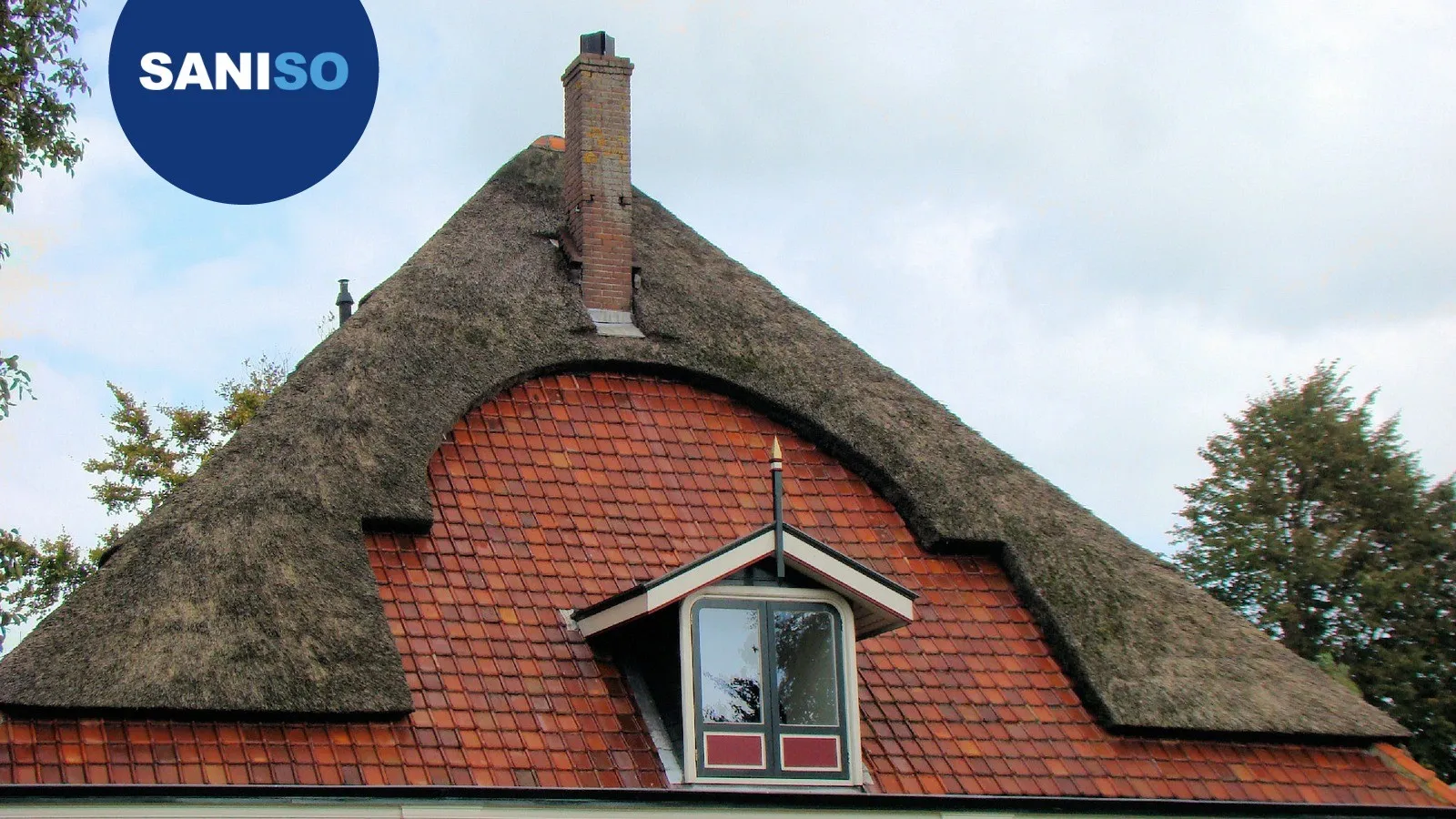
Photo: a thatched farmhouse roof in North Holland with a section of red roof tiles around the dormer. HdeK, Wikimedia Commons, licence CC BY-SA 3.0 (cropped, Saniso logo added)
Building facts #10 · Every Monday and Thursday one building topic, examined in depth
Look at a Dutch farmhouse and you often see two roofs in one: thick reed on top, a patch of red tiles around the dormer. That combination tells a story of more than two thousand years. Reed and straw were free and grew everywhere, fired clay was costly but did not burn. Fires, kings, town bylaws and a few clever inventions decided which of the two ended up on our houses. In this tenth edition of Building facts we look at one topic: the history of roof tiles and thatch, how both roofs work, and why you still see so many of them in the Netherlands. (Missed edition #9? Read plaster through the ages, from lime plaster to gypsum.)
Both keep the rain out, but in a completely different way. A tiled roof is a layer of fired clay (or concrete) units that overlap, so water runs from one tile onto the next and down into the gutter. The tiles hang on horizontal wooden battens. A thatched roof is a thick layer of dried plant stems, in the Netherlands almost always reed, laid so steeply that water runs off over the top few centimetres and never reaches the inside.
Thatch is the older of the two. Worldwide it is still the most common roofing material, simply because the materials grow almost everywhere: straw, water reed, sedge, heather and grasses. In the Netherlands, reed is probably the oldest roofing system that is still in use today.
As old as building with plants. The earliest roofs in the Netherlands were made of organic material: straw, grass and reed. Heritage experts call this the weke dak, the soft roof. Until the 14th century it was the cheapest option by far: reed and straw were almost free and labour was cheap.
A soft roof is also light. Thatch weighs much less than most other roofing, so the timber frame underneath does not need to be heavy. The Dutch Wikipedia article on thatched roofs works it out: reed weighs about 130 kg per cubic metre, so a 30 cm layer weighs about 39 kg per square metre. That made thatch the obvious choice for farmhouses with simple wooden frames for centuries.
Fired clay roof tiles are believed to have been developed independently in the late Neolithic period in Greece and in China. One of the oldest known examples is the so-called 'House of the tiles' in Lerna, Greece. The real breakthrough came between 700 and 650 BC around Corinth, where fired tiles replaced the thatched roofs of the temples of Apollo and Poseidon. The reason was fire resistance, and within fifty years tiles had spread around the eastern Mediterranean. Some Greek temples, such as the Parthenon, even got roof tiles of marble.
The Romans made the system famous. A Roman roof combines two shapes: the tegula, a flat tile with raised edges, and the imbrex, a half-round tile that covers the joint between two tegulae. Roman tile roofs generally used no nails; the tiles stayed in place by their own weight, which may be why they are found on fairly shallow roofs. Legions stamped their tiles with their unit's mark. Tiles were not cheap: a single tile could cost the equivalent of one and a half days' wages.
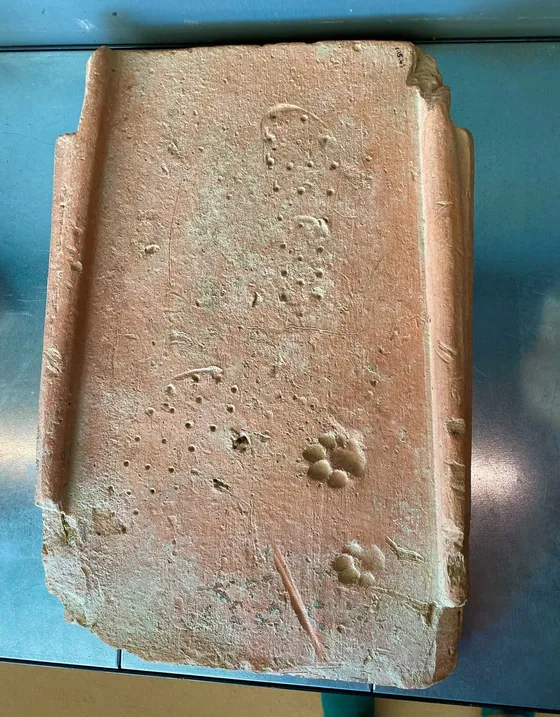
The overlapping pattern of imbrex tiles even gave us a word: imbrication, used for anything that overlaps like roof tiles.
From the Roman roof. Latin tegula comes from the verb tegere, 'to cover', which is related to the Dutch words dak (roof), dekken (to cover) and deken (blanket). Early Germanic speakers borrowed tegula together with other Roman building words. It became tile in English, Ziegel in German and tegel in Dutch.
In Dutch, tegel first meant a roof tile. A text from the late 13th century speaks of decken met teghelen, roofing with tiles. Only later did the word come to mean a brick and then a flat floor or wall tile, the meaning we use today. The variant tichel still means roof tile in some southern dialects. The town of Tegelen in Limburg, recorded around 1100 as Tieglon, most likely owes its name to tegula too: Roman pottery and roof tile kilns have been found there. More about floor and wall tiles in the history of the tile.
Because of fire. In towns where wooden houses with thatched roofs stood wall to wall, one spark could destroy a whole neighbourhood. Amsterdam burnt twice in a short time: in 1421 about a third of the town went up in flames, and on 25 May 1452 about two thirds. After the fire of 1452, a new bylaw determined that new houses could no longer be thatched, but had to get hard roofing.
Amsterdam was not alone. From the middle of the 14th century, Dutch towns issued bylaws (keuren) that banned organic roofing, and some towns even paid subsidies to help people switch to hard roofing. Around 1600, the soft roof had disappeared from Dutch towns. London had gone through the same: after a major fire, new thatched roofs were banned there in 1212, and existing roofs had to be plastered on the surface to reduce the fire risk. In the countryside, where houses stood further apart, thatch remained common.
The oldest tiled roofs in the Netherlands were built just like the Roman ones, with two layers: a hollow under tile and an over tile on top. In Dutch they are called monniken en nonnen, monks and nuns. Elsewhere such tiles were shaped over a log or even over the maker's thigh. They made a heavy roof, and today they are rare in the Netherlands.
Tile makers looked for something lighter. In 1466 the Zwolse quackpan appeared, a combined under and over tile. Around 1500 it was pushed aside by the Hollandse pan: an S-shaped, wavy tile that covers the roof in a single layer with only a small overlap. Because it was much lighter than the double roof, many more existing wooden houses could now get a tiled roof. In the early 17th century, pantiles were shipped from the Netherlands to eastern England and Scotland, where you can still see them on old buildings.
The colour tells you how a tile was fired. Clay with iron oxide turns red. If the air supply is shut off at the end of the firing, a process called smoren (smothering), the tile turns blue-grey. Glazed tiles, often black, were a status symbol: they were laid on the side of the roof facing the street to show wealth. On farmhouses, black glazed tiles were laid in the dakspiegel, the tiled section in the thatch, just like the patch of tiles in the photo at the top of this article.
Draughty. Until the 18th century, most tiled roofs had no boarding underneath; the tiles hung directly on the battens. According to the City of Amsterdam, someone sleeping in the attic could wake up with snow on their blankets. Roofers therefore laid the tiles 'with the wind': there were left-covering and right-covering pantiles, so that the overlap pointed away from the prevailing wind. In the end, right-covering tiles won.
To keep out draughts, rain and snow, the joints were stuffed with mortar or with strodokken: bundles of rye straw pushed in under the tiles. In the countryside these were used until the 1950s, and they are still made today for roofs with old Dutch tiles. Ridge tiles were bedded in lime mortar mixed with cow or pig hair as reinforcement. From the 18th century, a broad strip of lead sometimes replaced the ridge tiles, and the edge of the roof against the gable was more and more often finished with lead too.
A thatched roof is lighter, thicker and steeper than you might think. The thatcher fixes horizontal reed battens to the rafters, about 28 cm apart. Bundles of one-year-old reed are laid on them and tied to the battens with wire. For that he uses a large curved needle, the twijgijzer; today the wire can also be screwed to the battens. Then the reed is beaten level with a wooden beater. The finished layer is 28 to 30 cm thick.
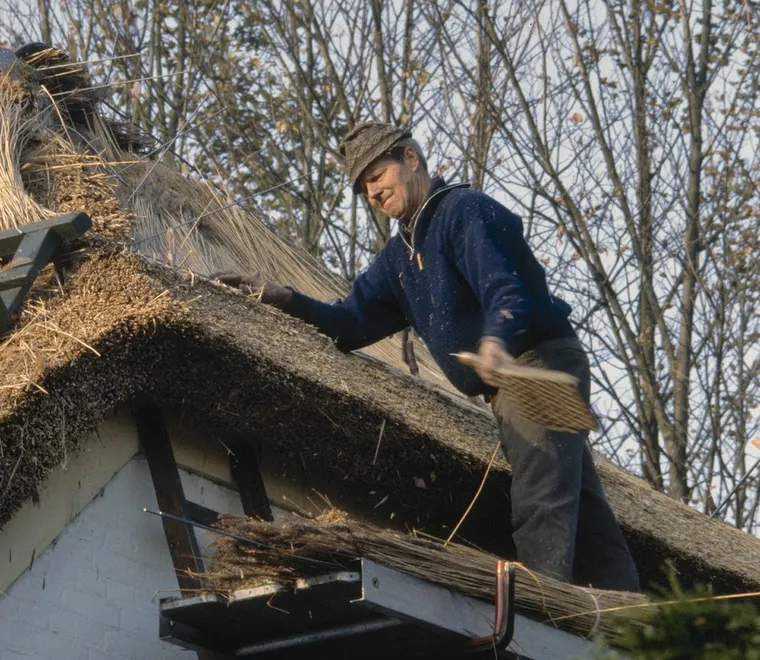
The secret is the slope. Reed needs a roof pitch of 45 degrees or steeper. Then rainwater runs off over the outer few centimetres and the inside stays dry. Reed also insulates surprisingly well: on a still day, the insulation value of an old tiled roof without boarding is about zero, while a traditional thatched roof reaches roughly Rc 1.5, according to the Dutch thatchers' knowledge platform riet.com. That keeps a thatched house cool on hot summer days.
And the fire risk? Thatch is less flammable than many people think. It is said to burn slowly, 'like a closed book'. Most thatch fires start at wood burners and badly maintained chimneys or flues.
By saving tiles and weight. On 25 March 1841, François-Xavier Gilardoni from Altkirch in Alsace patented an interlocking tile: a tile with ridges and grooves that hook into the tiles next to it, above and below. You needed only about 14 to 15 of these tiles per square metre, instead of 65 to 75 flat tiles, and the roof weighed about 38 kg per square metre instead of 65. In French they are still called tuiles mécaniques, because they were made by machine. Unlike the hand-shaped pantile, an interlocking tile needs a press.
In the Netherlands, mechanical tile presses arrived in the second half of the 19th century. New shapes followed, such as the heart-shaped Oegstgeester pan and the kruispan, and a tile industry grew in Friesland at the end of the century. Concrete roof tiles were developed in the 19th century as well.
| When | Milestone |
|---|---|
| Late Neolithic | Fired clay roof tiles are developed, probably independently, in Greece and China |
| 700–650 BC | Fired tiles replace thatch on the temples of Apollo and Poseidon near Corinth |
| 272 BC | King Pyrrhus of Epirus is killed by a roof tile |
| Roman period | Tegula and imbrex roofs; Roman tile kilns at Tegelen |
| 1212 | London bans new thatched roofs after a major fire |
| Mid-14th century | Dutch town bylaws start banning thatch and other soft roofing |
| 1421 and 1452 | Two great fires in Amsterdam; after 1452 new houses may no longer be thatched |
| 1466 | The Zwolse quackpan: an under and over tile in one |
| Around 1500 | The Hollandse pan, a single-layer S-shaped pantile |
| Around 1600 | The soft roof has disappeared from Dutch towns |
| Early 17th century | Pantiles from the Netherlands arrive in eastern England and Scotland |
| 1841 | François-Xavier Gilardoni patents an interlocking roof tile |
| Second half of 19th century | Mechanical presses for roof tiles in the Netherlands |
| 1971 | The first closed thatch constructions: nailed, later screwed |
| Today | About 150,000 Dutch buildings with a thatched roof, about 3,000 new thatched roofs a year |
Both are still very much alive. The Netherlands has an estimated 150,000 buildings with a thatched roof, and Dutch thatchers give about 3,000 houses, farms and other buildings a new thatched roof every year. Dutch reed cannot meet that demand: about 75% of the thatching reed is imported, according to riet.com, sometimes from as far away as China. Fine reed from the Kalenberg area in Overijssel is still used on windmills.
The big change came in 1971, with the first closed constructions: reed fixed onto a solid deck, first nailed and later screwed. This schroefdak (screwed roof) strongly reduced the fire risk, and according to riet.com, the insurance premium is now comparable to that of a tiled roof. A screwed roof of about 28 cm on an 18 mm board has an average R-value of 4.0 m²K/W. New reed turns grey-brown within two years. One practical tip from the same source: zinc gutters don't belong under a thatched roof, because humic acids that wash out of the reed attack the zinc.
For tiles, the choice is mainly ceramic or concrete. According to Dutch Wikipedia, making a concrete tile has up to 45% less environmental impact, but a ceramic tile easily lasts twice as long. Whatever is on your roof, regular checks help: read how to check your roof after a storm, and if you're working on the attic, how to insulate an attic.
The principle hasn't changed: tiles still hang on battens and overlap, and water still has to run off. What has changed are the materials and the safety on the roof. Below are a few products in which you can recognise this history. For larger repairs on a steep or high roof, a roofer or thatcher is the safest choice.

A measuring gauge of aluminium and plastic, made for sheet metal and roofing work. Tiles hang on horizontal battens that sit at a regular distance from each other, and a batten gauge helps you set out that distance evenly.
What is it for? When you replace a few battens or re-batten part of a roof and want the spacing to match the tiles.
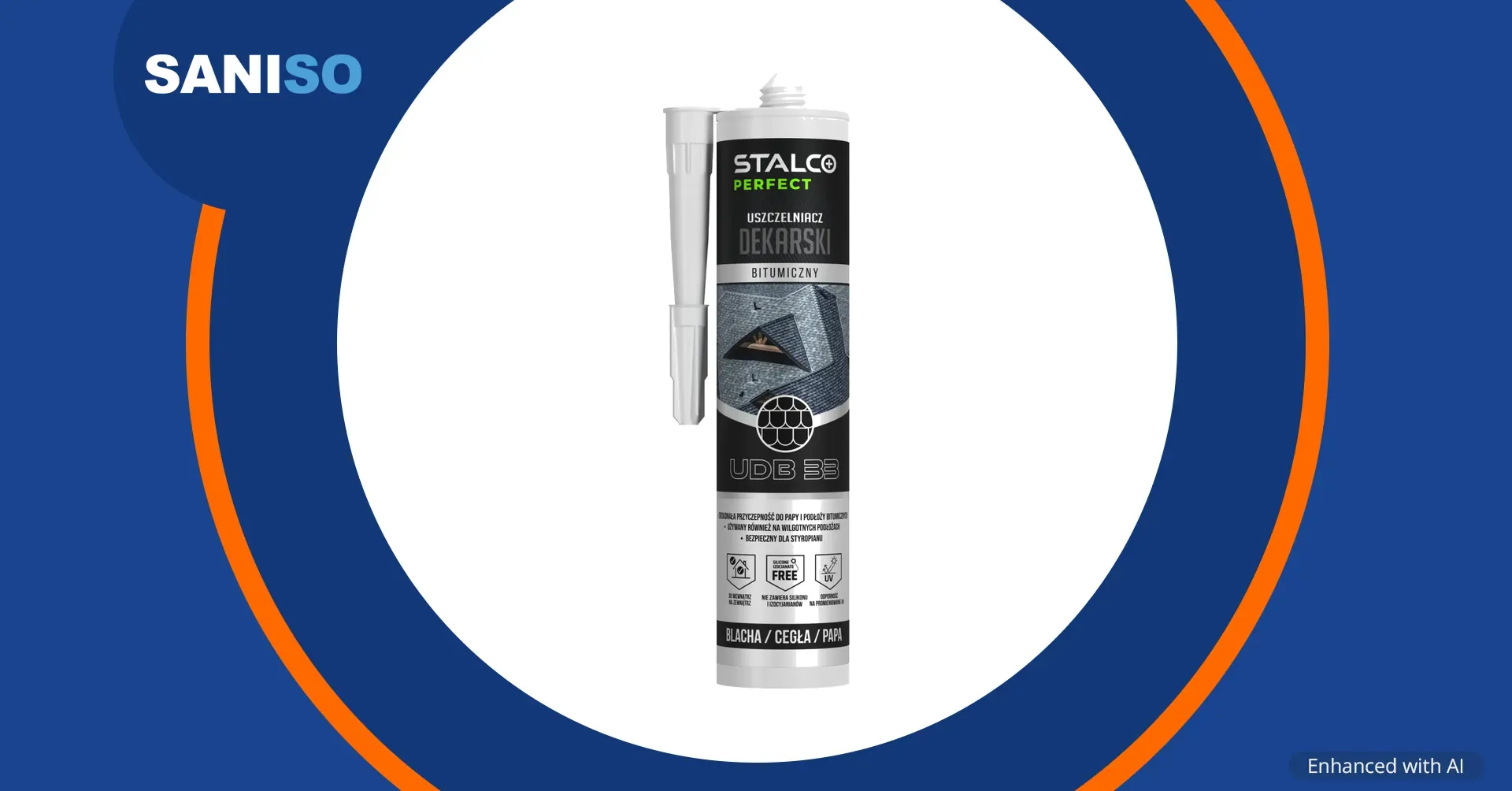
A flexible, waterproof bituminous sealant that sticks to roofing felt, bituminous coatings, galvanised sheet, concrete, plaster and wood. It can be applied on damp surfaces and stays UV-resistant for a long time.
What is it for? For quick repairs of small leaks in roofs and gutters.
Gutter trouble? Read cleaning or repairing gutters: DIY or professional?
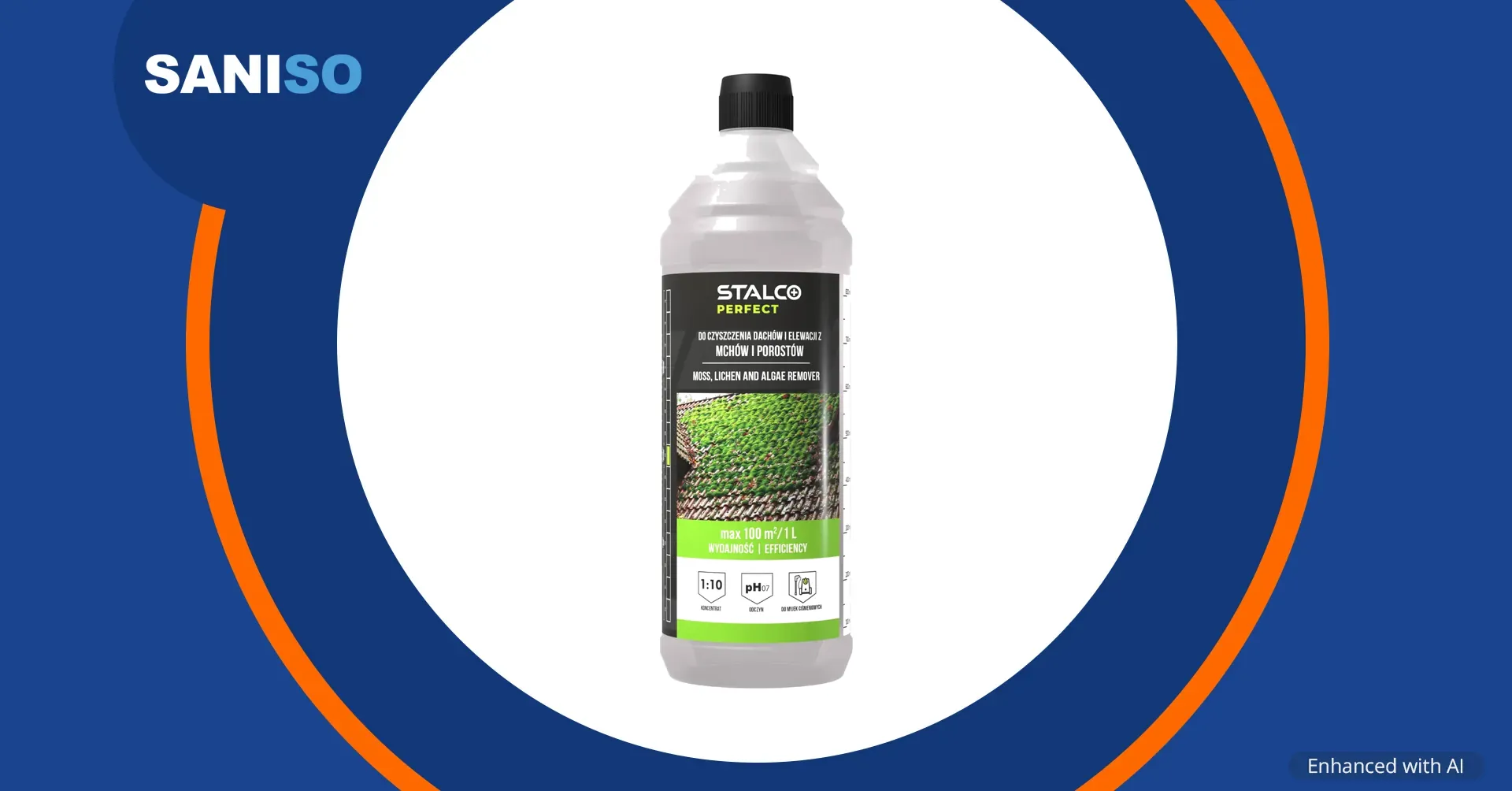
A cleaner against moss and lichen that works on a wide range of surfaces, including roof tiles, paving stones, facades, fences, walls, terraces and concrete slabs.
What is it for? For tackling moss and green growth on a tiled roof, a shed roof or a facade. Always follow the instructions on the label.
How to approach it safely: removing moss and green algae from your roof: DIY or roofer?

A full-body harness with two attachment points, one on the back and one on the front, adjustable leg straps and a durable construction of polyester and steel, for a maximum user weight of 140 kg.
What is it for? For work at height, on construction sites, mobile platforms and booms. A harness is only one part of fall protection: it always needs a suitable anchor point and connecting line.
Your first order is easy to place:
Want to know when there are new offers? Sign up for the newsletter: scroll to the bottom of any page on saniso.nl, enter your email address under "Newsletter" and click "Subscribe". You'll get updates on offers and discount vouchers, and we don't spam. With an account you also collect loyalty points for a discount on your next purchase.
Questions about ordering, your account, payment, shipping or returns? Find all the answers in the Saniso FAQ.
How old are roof tiles?
Fired clay roof tiles go back to the late Neolithic period in Greece and China. Around Corinth, tiles replaced thatch on temples between 700 and 650 BC.
What are tegula and imbrex?
The two tiles of a Roman roof. The tegula is a flat tile with raised edges; the imbrex is a half-round tile that covers the joint between two tegulae.
Why were thatched roofs banned in Dutch towns?
Because of the fire risk. From the middle of the 14th century, town bylaws banned organic roofing; in Amsterdam new houses could no longer be thatched after the fire of 1452. Around 1600 the soft roof had disappeared from Dutch towns.
What is a Hollandse pan?
An S-shaped, wavy clay tile that covers the roof in a single layer with a small overlap. It appeared around 1500 and was much lighter than the older double roof of under and over tiles.
Why are some roof tiles blue-grey?
Because the air supply was shut off at the end of the firing. This smothering (smoren in Dutch) turns the clay blue-grey instead of red.
What are left-covering and right-covering tiles?
Pantiles whose overlap points left or right. On old roofs without boarding, roofers laid them so the overlap pointed away from the prevailing wind. Right-covering tiles eventually won.
What roof pitch does a thatched roof need?
A thatched roof needs a pitch of 45 degrees or steeper, so rainwater runs off over the outer layer.
How thick is a thatched roof?
A reed layer is usually 28 to 30 cm thick. A layer of 30 cm weighs about 39 kg per square metre, much lighter than a tiled roof.
Is a thatched roof a fire risk?
Less than many people think: thatch is said to burn slowly, 'like a closed book', and most fires start at wood burners and badly maintained chimneys. The closed screwed roof, used since 1971 (first as a nailed roof), strongly reduced the fire risk.
How many thatched roofs are there in the Netherlands?
An estimated 150,000 buildings, and about 3,000 buildings get a new thatched roof every year, according to riet.com.
Who invented the interlocking roof tile?
François-Xavier Gilardoni patented an interlocking tile on 25 March 1841. It needed about 14 to 15 tiles per square metre instead of 65 to 75 flat tiles.
Where does the word tegel come from?
From Latin tegula, roof tile, from tegere, to cover. In Dutch, tegel first meant roof tile and only later floor or wall tile; English tile comes from the same word.
Do the prices include VAT?
This blog shows every price including and excluding VAT. At checkout on saniso.nl, prices are shown including VAT.
Building facts takes one building topic under the magnifying glass every Monday and Thursday. This is edition #10. Read the previous edition too: plaster through the ages. Fun link: in 1212, London had to plaster its remaining thatched roofs to make them less flammable.
Share:
Is the screw spinning or is the plug loose in a hole that is too big? This is how to repair a torn-out plug in brick, co...

Want to hang heavy items on the wall? Learn how to recognise the wall type, choose the right plug, drill safely and hang...

Sealing gaps and joints with sealant: find out which sealant goes where, acrylic or silicone, when to use foam first and...