


























.webp)


Want to hang heavy items on the wall? Learn how to recognise the wall type, choose the right plug, drill safely and hang...

Your online building supplies store for building and renovation
 English
✓
 Nederlands
✓
 Bathroom furniture sets
 Pillars and semi-pillars
 Consoles
 Washbasin cabinets
 Mirrors
 Cabinet for wc frame
 Shelves
 Accessories - bathroom furniture
 Panels for consoles
 Cabinets with laundry basket
 Top for wc frame
 Wall hung cabinets
 Cabinets for washing machine
 Mirror cabinets
 Case for wc frame
 Countertops
 Under countertop cabinets
 Washbasin faucets
 Washbasin faucets deck-mount high
 Washbasin faucets concealed
 Bidet faucets
 Bathshower faucets
 Shower faucets
 Bathshower sets concealed
 Shower column
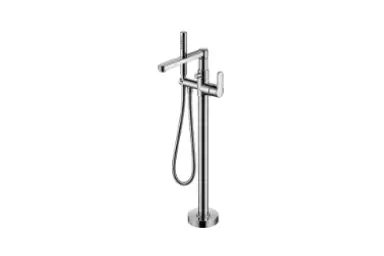 Freestanding bathshower faucets
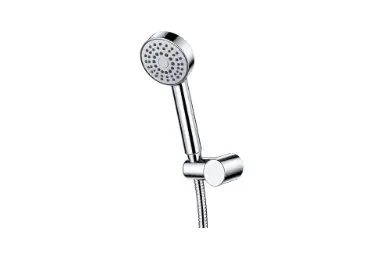 Shower sets
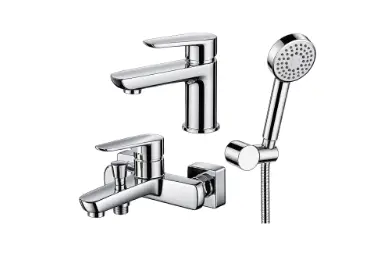 Bathroom fitting sets
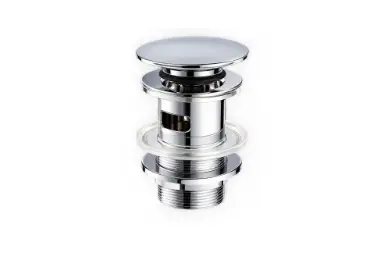 Click-clack plugs
 Spare parts - bathroom fittings
 Bathshower faucets concealed
 Bath spout
 Multi-hole bathtub faucet
 Washbasin siphons
 Consealed bidet system
 Clothes
 Shorts
 Dungarees
 Work dungarees
 Reflective work dungarees
 Sweatshirts
 Hoodies
 Fleeces
 ShirtsFlannel work shirts
 T-shirts
 Polo
 Jackets
 Vests
 Jumpsuits and SetsDisposable suits
 Underwear and socks
 Hats and scarves
 Hats
 Baseball caps
 Hats with a lamp
 Chimneys
 Reflective hats
 Clothing accessories
 Stripes
 Suspenders
 Foam inserts
 Protective knee pads
 Footwear
 Low shoes
 Work shoes
 Boots
 Work boots
 Winter boots
 High-top winter boots
 Sandals
 Work sandals
 Flip-flops and clogs
 Rain boots
 Work boot
 Low wellies
 High-top galoshes
 Shoe accessories
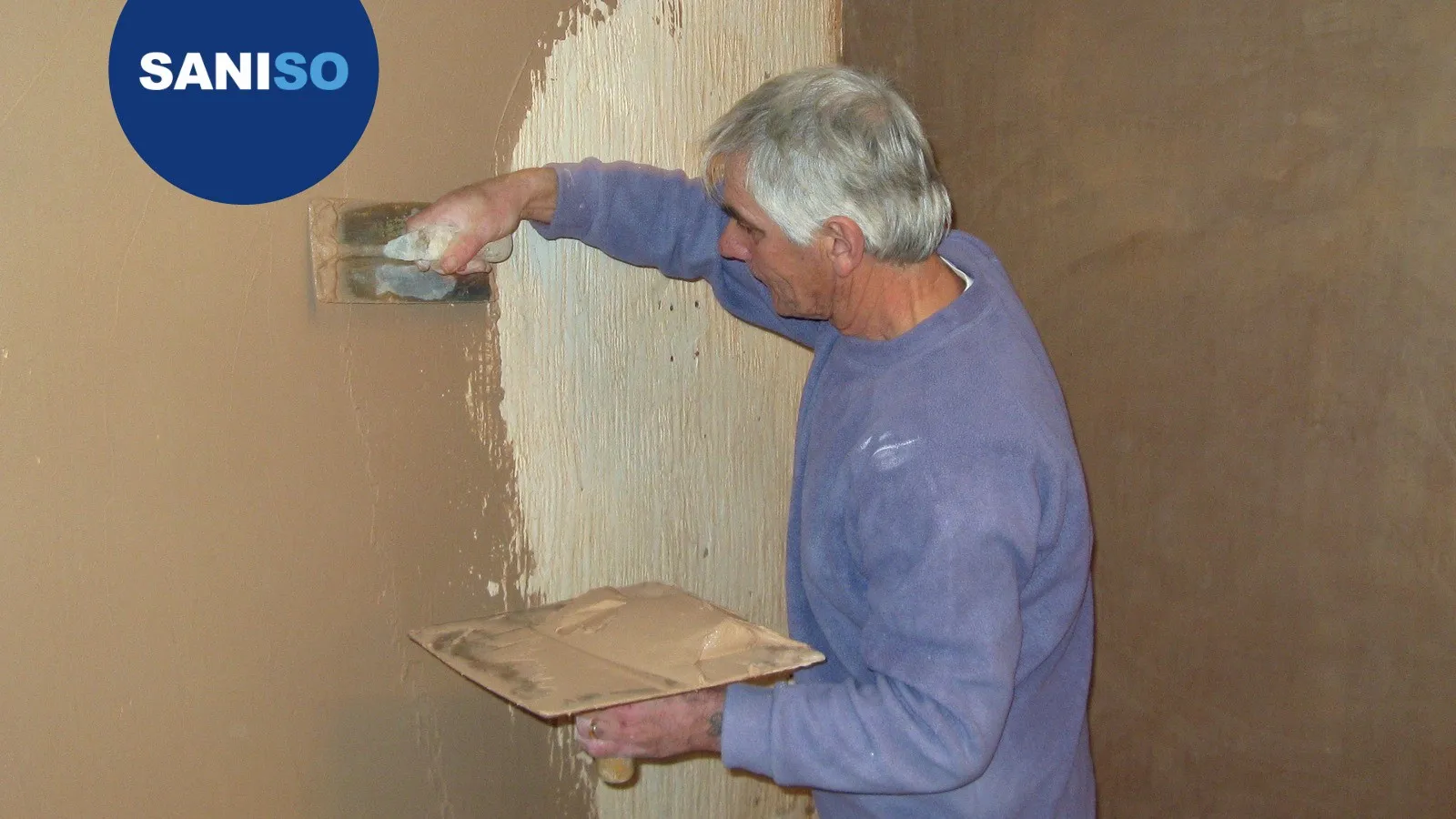
Photo: a plasterer at work, smoothing fresh plaster on a wall with a trowel and a hawk. Adrian Pingstone, Wikimedia Commons, public domain (cropped)
Building facts #9 · Every Monday and Thursday one building topic, examined in depth
Behind almost every smooth wall is a material that people have made for more than 9,000 years. Burn a stone, add water, spread it on a wall, and it turns back into stone. That simple trick gave us plastered floors in the Stone Age, painted walls in Rome, richly decorated ceilings in Dutch canal houses and the gypsum plaster of today. In this ninth edition of Building facts we look at one topic: the history of plaster, from lime plaster to gypsum, and the chemistry that makes it work. (Missed edition #8? Read the history of the spirit level and the plumb line.)
Plaster is a building material that you mix with water into a paste, spread on a wall or ceiling, and that then hardens. In English, plaster usually means the material for interiors, render is the word for outside walls, and stucco is the name for exterior wall cladding and decorative work. The Dutch use one word for both the material and the craft: stuc, and the person who applies it is a stukadoor.
There are two classic binders, and they harden in completely different ways. Lime plaster is a mix of slaked lime and sand that slowly takes carbon dioxide from the air and turns back into limestone. Gypsum plaster is burnt gypsum powder that takes up water again and sets in less than an hour. A third binder, cement, arrived much later. In short: lime hardens with air, gypsum hardens with water.
Much older than the pyramids. Around 7500 BC, the people of 'Ain Ghazal, in present-day Jordan, used lime mixed with crushed limestone to plaster walls, floors and hearths on a large scale, sometimes with red patterns painted with the fingers. Around 7200 BC they also made large human figures by modelling lime plaster over frames of reed and twine. That these statues still exist says a lot about how durable lime plaster is. In Çatalhöyük, in present-day Türkiye, the houses had plastered interiors too.
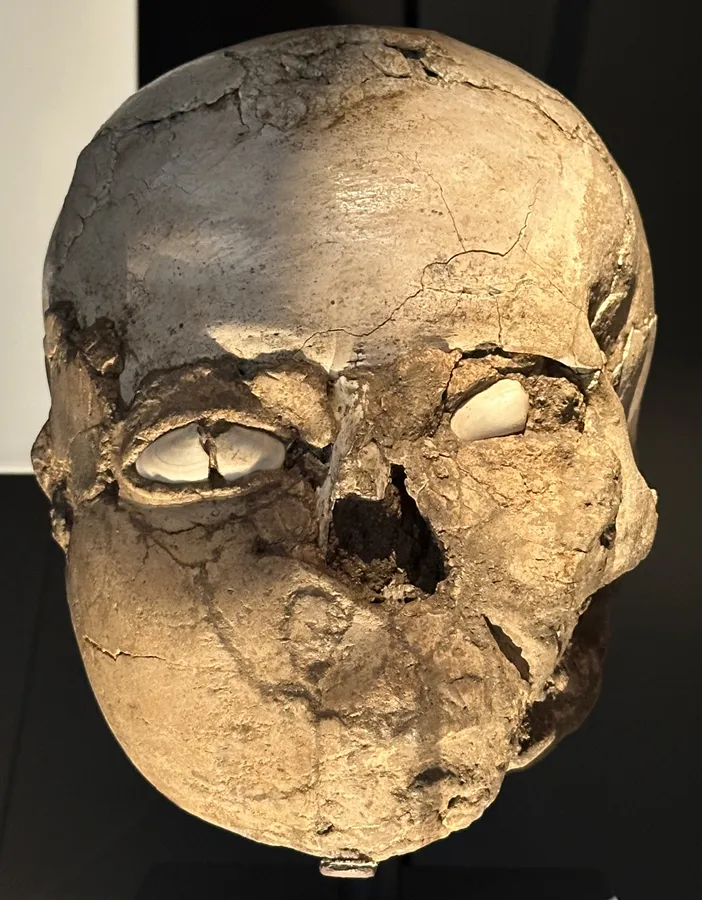
One of the most striking finds comes from Jericho. There, between about 8000 and 6000 BC, people covered human skulls with plaster to model a face, and set shells in the eye sockets. The first examples were found by the archaeologist John Garstang in the 1930s, and more by Kathleen Kenyon in the 1950s.
In Egypt, gypsum was burnt in open fires, crushed into powder and mixed with water. The Egyptians used this plaster as mortar between the blocks of the pyramids and as a smooth finish on walls. Lime was used in pyramid chambers too, from around 2000 BC.
Lime plaster goes through a full circle, from stone to stone. It starts with limestone (or shells), which is calcium carbonate. Heat it above about 850 °C in a kiln and it splits into quicklime (calcium oxide) and carbon dioxide, which escapes. Add water and the quicklime 'slakes' into calcium hydroxide. That reaction gets hot by itself; the Roman writer Pliny already noted that 'once it has been burnt, its heat is increased by water'.
Mixed with sand and water, the slaked lime becomes plaster. On the wall, it slowly takes carbon dioxide from the air and turns back into calcium carbonate, the same material as the limestone it came from. This is called carbonation. It takes time: lime plaster needs moisture to set and must not dry out for the first few days, and research has shown that carbonation is still not complete after a year.
Wet lime is caustic, with a pH of about 12, so plasterers protect their skin and eyes. Once the plaster is dry, the pH drops to about 8.6. The high pH has a useful side effect: it works as a fungicide, which helps keep mould off lime plaster. To make the plaster stronger, old plasterers mixed in horse hair, and later ox hair, as reinforcement.
With patience and many layers. The architect Vitruvius describes the work in Book VII of his De architectura. The lime had to be slaked for a long time before use. If it was used fresh, he warns, unburnt particles would cause blisters that break the smooth surface. After a rough first coat came at least three coats of sand plaster, followed by three coats of marble dust plaster. 'Thus, with three sand coats, and the same number of marble-dust coats, the wall will be rendered solid, and not liable to cracks.'
Vitruvius compares plaster with a mirror: a thin silver plate gives a weak reflection, a thick one a brilliant reflection. A thin layer of plaster cracks and decays, while thick, well-polished plaster shines. He also explains why Roman wall paintings kept their colours: 'Colours, when used with care on damp stucco, do not fade.' That is the fresco technique: the pigment is painted onto the wet lime and becomes part of the wall when the lime hardens.
A century later, Pliny the Elder wrote that the old building laws did not allow any contractor to use lime putty less than three years old. 'Consequently, old plaster work was never disfigured by cracks.' He also mentions that gypsum must be used immediately after mixing, because it sets very quickly, and that it was used for moulded figures and festoons in architecture.
Gypsum is a soft mineral (hardness 2 on the Mohs scale) that contains water in its crystals: calcium sulphate dihydrate. Heat it to between about 120 and 180 °C and it loses three quarters of that water as steam. What remains is a powder, the hemihydrate, better known as plaster of Paris. Add water and the powder takes the water back and becomes gypsum again.
That is why gypsum is so fast. Setting starts about 10 minutes after mixing and is complete in about 45 minutes, with a slight expansion. That small expansion is useful: plaster fills a mould or a gap neatly. Over the next 72 hours the crystals grow into an interlocking mass of fine needles, and the plaster gets harder and stronger. The reaction gives off heat: in large volumes, setting plaster can get hotter than 60 °C, so never put your hand in a bucket of setting plaster. Heat gypsum too far, above about 250 °C, and you get 'dead burned' plaster that no longer takes up water.
The name plaster of Paris comes from the large gypsum deposit at Montmartre, the hill in the north of Paris, where it was originally made. Plaster also turned out to be a good fire barrier: when it burns, it releases only water vapour. A year after the Great Fire of London, an ordinance of 18 August 1667 under Louis XIV made it compulsory in Paris to cover the wood of houses with plaster, inside and out, so that fire could not spread so easily. By the 18th century, thanks to its underground gypsum deposits, Paris had become the 'city of plaster'.
The Dutch words for plaster tell a story of travel. Stuc was borrowed from French or Italian stucco and is first recorded in Dutch in 1604. The Italian word itself goes back to a Germanic word *stukki, 'piece' or 'crust', the same root as the Dutch stuk. So the word travelled south and came back.
Stukadoor first appears in 1750, in a rule stating that no stukadoor or artisan was allowed to plaster flat walls, other than ceiling work. It comes from Spanish estucador or Italian stuccatore. Gips comes via Latin gypsum from Greek gúpsos, possibly of Semitic origin; as a building material, gyps is recorded in Dutch in 1573.
The oldest of the four is pleister. Already in 1285 a Middle Dutch text says that 'no plaster is found that is so white' (menne vint so witte ghene plastre). It goes back, via Old French plastre, to Latin emplastrum and Greek émplastron, a salve that you 'smear on'. That explains a fun double meaning: in Dutch, as in English, pleister or plaster is both the material on your wall and the strip on your finger.
Lime has a long history here. The Romans brought the burning of shell lime to the Netherlands around 75 AD. The first records of shell lime kilns in the county of Holland date from the 14th century, and Hasselt in Overijssel has had shell lime kilns since 1504. Shells were burnt at more than 1000 °C in kilns at more than 100 locations, mostly along waterways and the coast where shells and peat were easy to bring in. In South Limburg, local limestone was burnt instead; the last kiln there, in Ubachsberg, closed in 1969. The last shell lime kilns, in Hasselt and Harlingen, closed at the end of the 20th century.
Decorative plasterwork flourished in the 18th century. Italian stuccatori worked in Amsterdam, The Hague, Delft and Leiden, for example David Buoni in Huis Dedel in The Hague and Giuseppe Bollina in the Fundatie van Renswoude in Delft. Gradually, Dutch stukadoors mastered the craft too. Many Amsterdam canal houses have richly decorated stucco in their corridors, staircases and garden rooms, such as Herengracht 475 by Jan van Logteren. In the north, Johan Bernhard Logeman decorated houses in Groningen, among other places.
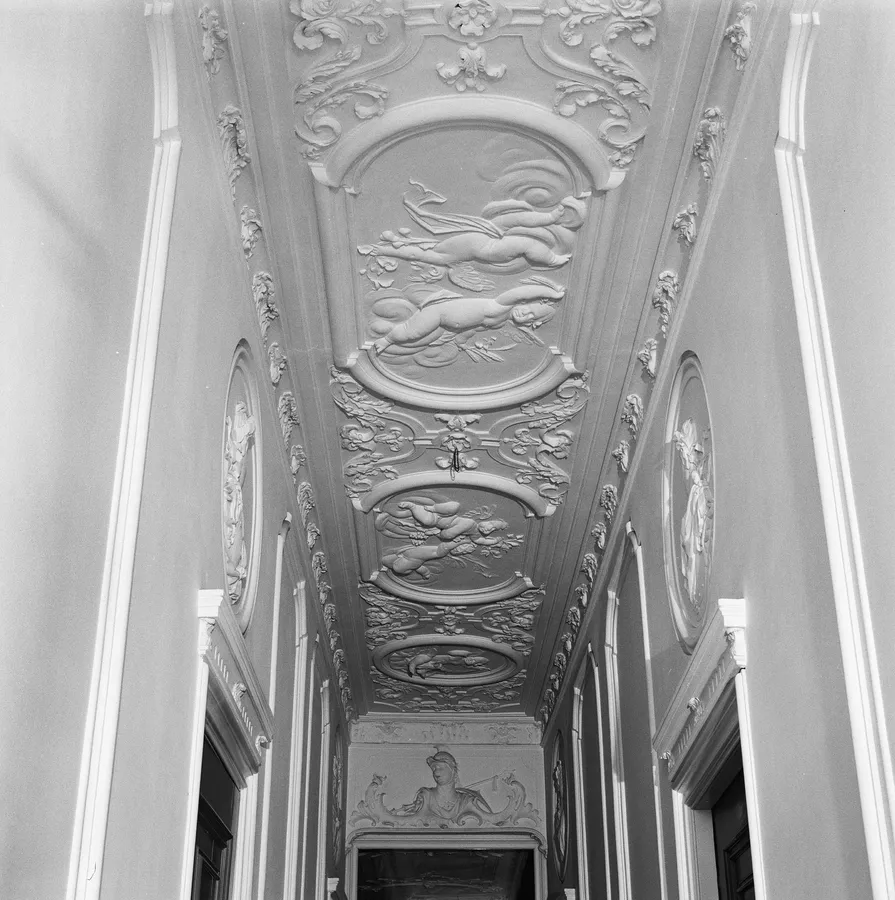
In the 19th century demand for decorative plasterwork in ordinary homes grew enormously, and from the end of that century more and more ornaments were prefabricated. After the Second World War, smooth walls became the norm and demand for decorative stucco fell sharply. The stukadoor's tools tell the same story: the raapbord (hawk), the spaan (trowel) and the rei (straightedge) are still used today. Plaster used to be mostly cement, lime and sand; now most plastering is done with gypsum and spray plaster.
Gradually, over many centuries. From the mid-13th century, gypsum plaster was used for internal and external plastering, with hair as reinforcement and additives to help it set or make it easier to work: malt, urine, beer, milk and eggs. In the 16th century, stuccoists in Bavaria invented scagliola, a mix of gypsum plaster, animal glue and pigments that imitates coloured marble.
In the 19th century, modified gypsum plasters such as Keene's cement appeared for interior walls. Outside, stucco changed too: from about 1860, most exterior stucco was made mainly with Portland cement, mixed with some lime.
The biggest change came with the board. In 1890, Augustine Sackett and Fred L. Kane invented the Sackett Board: layers of plaster between four plies of wool felt paper. Between 1910 and 1930 it evolved into the plasterboard we know, with paper facings and wrapped edges. Plasterboard also resists fire well, thanks to the same chemistry: the water bound in the gypsum crystals evaporates when heated, and while that happens, it draws energy from the fire and keeps the board at a steady temperature.
Lime didn't disappear, though. In Venetian plaster techniques such as marmorino, marble dust is still added to lime plaster for a polished, marble-like look, not unlike Vitruvius' marble coats. Working on old walls? Read lead paint and old plaster: working carefully, and for repairs, how to repair plaster.
| When | Milestone |
|---|---|
| 8000–6000 BC | Plastered skulls in Jericho, with shells for eyes |
| around 7500 BC | Lime plaster on walls, floors and hearths in 'Ain Ghazal |
| around 7200 BC | Statues of lime plaster over reed frames in 'Ain Ghazal |
| ancient Egypt | Burnt gypsum as mortar and smooth facing in the pyramids |
| 1st century BC | Vitruvius: slake lime long, three sand coats and three marble coats |
| 1st century AD | Pliny: lime putty had to be at least three years old |
| around 75 AD | The Romans bring shell lime burning to the Netherlands |
| from the mid-13th century | Gypsum plaster for inside and outside walls |
| 1285 | Middle Dutch text: 'no plaster is found that is so white' |
| 1504 | Shell lime kilns in Hasselt |
| 16th century | Scagliola: gypsum plaster that imitates marble |
| 1604 | The word stuc appears in Dutch |
| 1667 | Paris orders the wood of houses to be covered with plaster against fire |
| 18th century | Italian stuccatori and Dutch stukadoors decorate canal houses |
| 1851 | Antonius Mathijsen invents the plaster cast |
| from about 1860 | Exterior stucco made mainly with Portland cement |
| 1890 | Sackett Board: the forerunner of plasterboard |
| 1910–1930 | Plasterboard gets its modern form |
| 1969 | The last lime kiln in South Limburg closes |
| today | Gypsum plaster, spray plaster and plasterboard; lime for marmorino |
The chemistry hasn't changed: gypsum still sets with water and lime still hardens with air. What has changed is that the powder comes ready-made in a bag and the tools are lighter and more precise. Below are a few products in which you can recognise this history. Want to know the steps? Read how to plaster a wall, and for the tools for filling and sanding, putty knives, sanding and scrapers.

A gypsum plaster for applying by hand in a single layer, with fine fillers for a very smooth finish. It can be used on masonry walls and ceilings indoors, including kitchens and bathrooms in homes, and also on plasterboard. Processing time is about 20 minutes and curing time about 120 minutes; yield is 3 m² per bag at a layer thickness of 10 mm.
What is it for? Plastering and smoothing a wall or ceiling in one go: the modern descendant of the gypsum plaster that was burnt from stone thousands of years ago.
Read also: how to plaster a wall, step by step
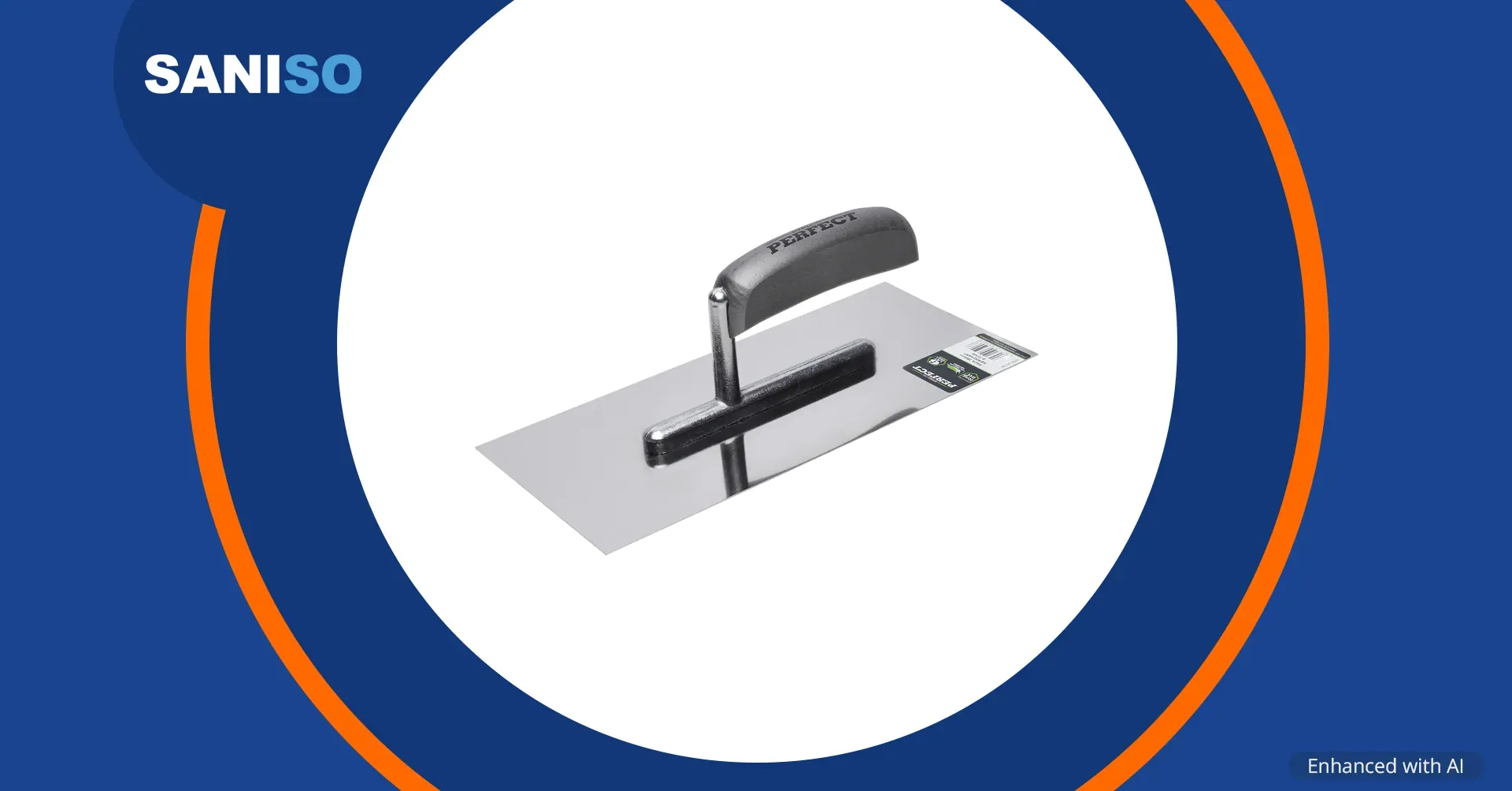
A smooth trowel of ultra-hard stainless steel that resists abrasion, corrosion and cracking, on a light aluminium bar with an ergonomic varnished beechwood handle. It is made for spreading and levelling mortar, plaster, adhesives and other compounds.
What is it for? Spreading and smoothing plaster on the wall: the steel trowel is the tool that has stayed closest to what the plasterer in the photo at the top uses.

A mixing paddle with an 80 mm E-type head, designed for gypsum-based mortars, fillers and other dry mixtures. It mixes about 10 to 15 kg at a time and fits drills, screwdrivers and mixers with a HEX 8 connection.
What is it for? Mixing gypsum plaster quickly and without lumps. With a setting time of minutes, that matters: what you mix, you need to use.
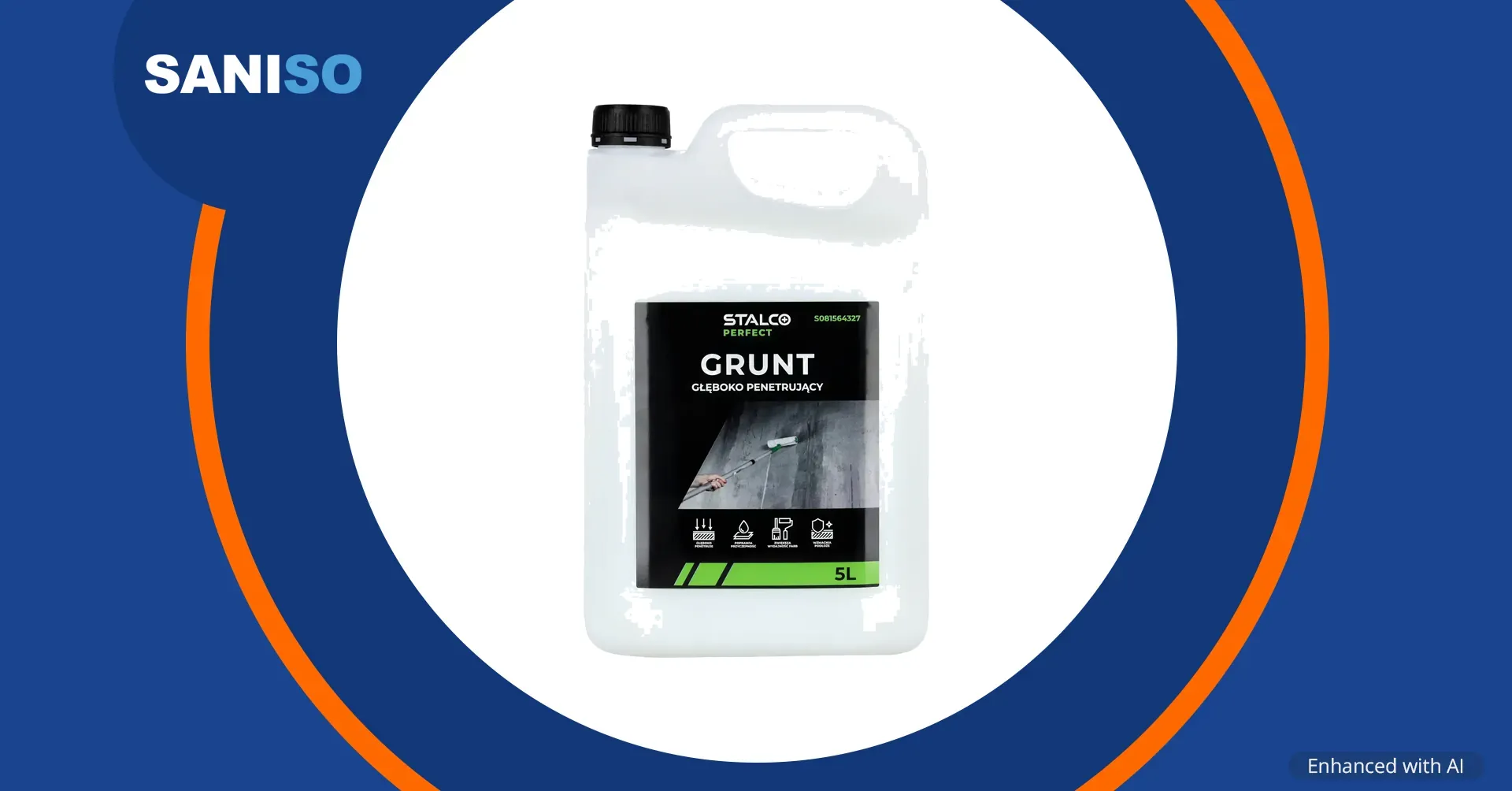
A primer with deep penetration for absorbent and porous substrates, made with two types of resin. It improves adhesion and stabilises absorbency, also on old, dusty and crumbling surfaces. Suitable for plasterboard, concrete, aerated concrete, gypsum, and cement and cement-lime plasters, indoors and outdoors.
What is it for? Preparing an absorbent wall before plastering, so the plaster doesn't lose its water too fast.

A 200 cm straightedge with a reinforced profile of hard anodised aluminium, handles and bubble vials that resist impact and UV, with a measuring accuracy of 0.0285° (0.5 mm per metre).
What is it for? Checking whether a surface is flat and even while you work: the long straightedge is the modern version of the plasterer's rule.
Read also: the history of the spirit level and the plumb line
Order on a workday before 15:00? Then your order is delivered the next workday, as long as it fits in a parcel. Pallet shipments have a different delivery time. Saniso has thousands of products in stock in the Netherlands.
Your first order is easy to place:
Want to know when there are new offers? Sign up for the newsletter: scroll to the bottom of any page on saniso.nl, enter your email address under "Newsletter" and click "Subscribe". You'll get updates on offers and discount vouchers, and we don't spam. With an account you also collect loyalty points for a discount on your next purchase.
Questions about ordering, your account, payment, shipping or returns? Find all the answers in the Saniso FAQ.
How old is plaster?
At least about 9,500 years. Around 7500 BC, the people of 'Ain Ghazal in present-day Jordan already plastered walls, floors and hearths with lime plaster.
What is the difference between lime plaster and gypsum plaster?
Lime plaster hardens slowly by taking carbon dioxide from the air and turning back into limestone. Gypsum plaster sets quickly by taking up water and turning back into gypsum.
How does lime plaster harden?
Through carbonation: the calcium hydroxide in the plaster reacts with carbon dioxide from the air and becomes calcium carbonate. It needs moisture and takes weeks to months; research shows it is still not complete after a year.
How long does gypsum plaster take to set?
Plaster of Paris starts to set about 10 minutes after mixing and is set in about 45 minutes. It then gains hardness over the next 72 hours. Ready-made plasters have their own processing times, so always check the bag.
Why is it called plaster of Paris?
Because it was originally made by heating gypsum from a large deposit at Montmartre, a hill in the north of Paris.
Why did the Romans use so many layers of plaster?
Vitruvius wrote that three sand coats and three marble-dust coats make a wall solid and free from cracks. Thick, well-polished plaster also shines, while a thin layer cracks and decays.
What is fresco?
Painting on wet lime plaster. The pigments become part of the wall as the lime hardens, which is why, according to Vitruvius, the colours do not fade.
Where does the word stukadoor come from?
From Spanish estucador or Italian stuccatore, from stucco. The word appears in Dutch in 1750; the word stuc itself in 1604.
Why is a wound plaster also called a plaster?
Both come from Latin emplastrum, a salve that is spread on. In Dutch, pleister has meant both the wall material and the wound dressing since the 13th century.
Is wet lime dangerous?
Wet lime plaster is caustic, with a pH of about 12, so protect your skin and eyes. When dry, the pH drops to about 8.6.
Can setting plaster get hot?
Yes. The setting reaction gives off heat, and in large volumes plaster can reach more than 60 °C. Never put a hand or body part in setting plaster.
When was plasterboard invented?
Its forerunner, the Sackett Board, was invented in 1890. Between 1910 and 1930 it evolved into today's plasterboard with paper facings.
What is the delivery time at Saniso?
Order on a workday before 15:00 and it's delivered the next workday, as long as it fits in a parcel. Pallet shipments have a different delivery time.
Do the prices include VAT?
This blog shows every price including and excluding VAT. At checkout on saniso.nl, prices are shown including VAT.
Building facts takes one building topic under the magnifying glass every Monday and Thursday. This is edition #9. Read the previous edition too: the history of the spirit level and the plumb line, and edition #1: the history of the brick. Fun link: for centuries, the brick wall was only half the job; then the plasterer came.
Share:
Want to hang heavy items on the wall? Learn how to recognise the wall type, choose the right plug, drill safely and hang...
Sealing gaps and joints with sealant: find out which sealant goes where, acrylic or silicone, when to use foam first and...
Do you need to prime a wall before painting? Two simple tests will tell you. Learn which walls need a primer and how to...
Building facts #8: the history of the spirit level and the plumb line. From Egyptian plumb levels and the Roman chorobat...