


Does your shower sputter or spray sideways? Read how to descale a shower head, clean the jets and check whether limescal...

Your online building supplies store for building and renovation
 English
✓
 Nederlands
✓
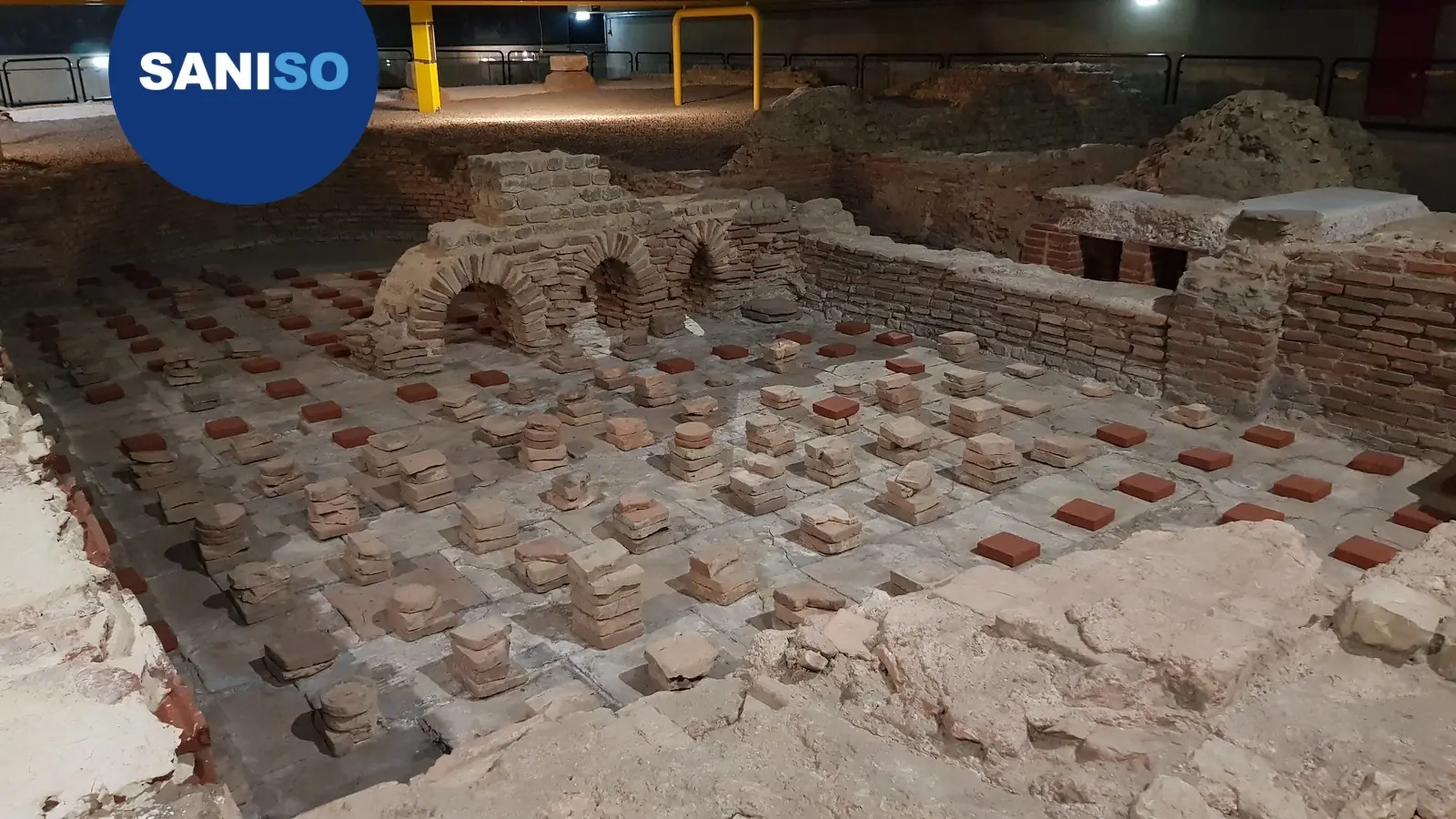
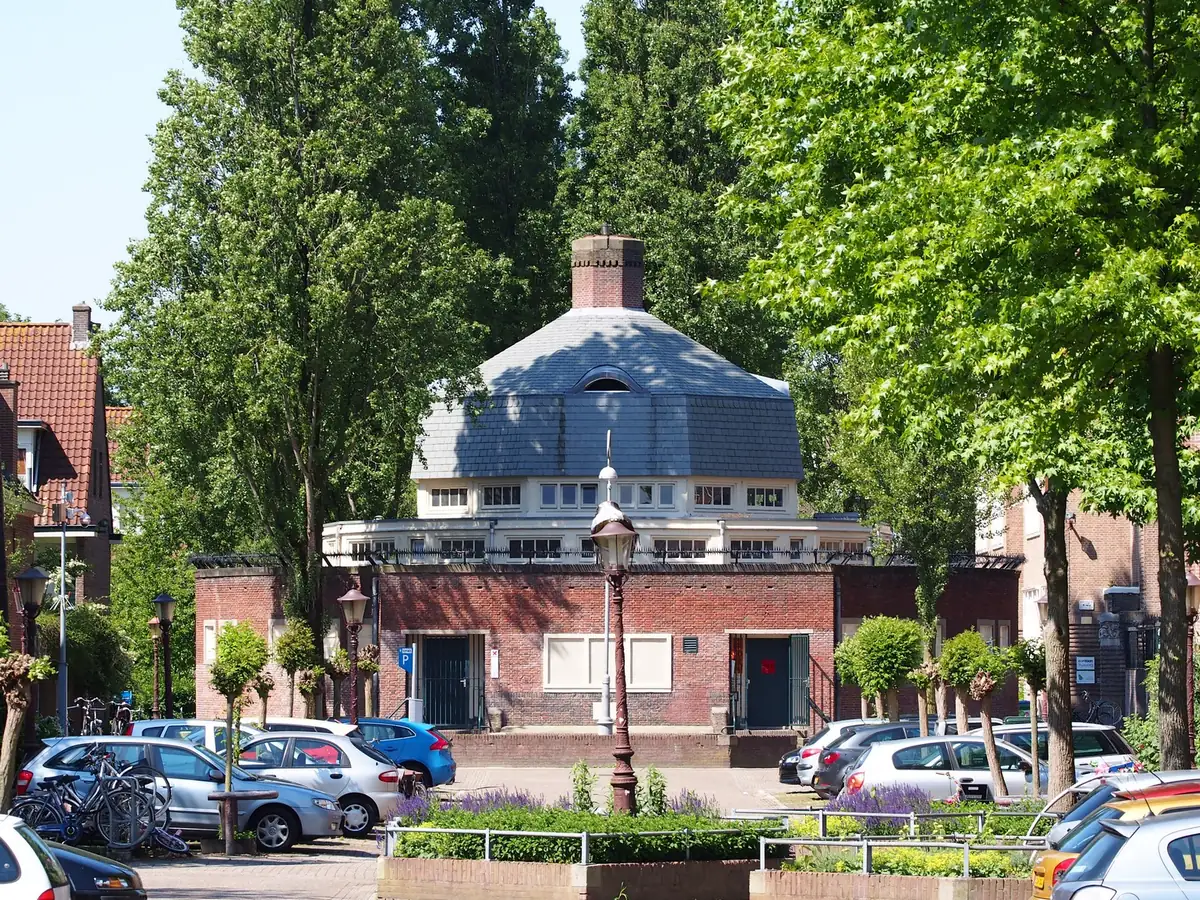
Photo: remains of the Roman bathhouse of Heerlen in the former Thermenmuseum, with the stacks of tiles (pilae) of the underfloor heating and brick arches. Photo: Romaine, Wikimedia Commons, CC0 (cropped)
Building facts #6 · Every Monday and Thursday one building topic, examined in depth
Turn on the shower and warm water falls on you, for as long as you like. For most of history that was a luxury, or simply unknown. More than 4,000 years ago the people of Mohenjo-daro built a watertight bath of brick, the Romans heated entire bath complexes from under the floor, and in Amsterdam a shower in every new home only became compulsory in 1933. In this sixth edition of Building facts we look at one topic: the history of the bath and shower. (Missed edition #5? Read the history of the tap and running water, from Roman stopcock to mixer tap.)
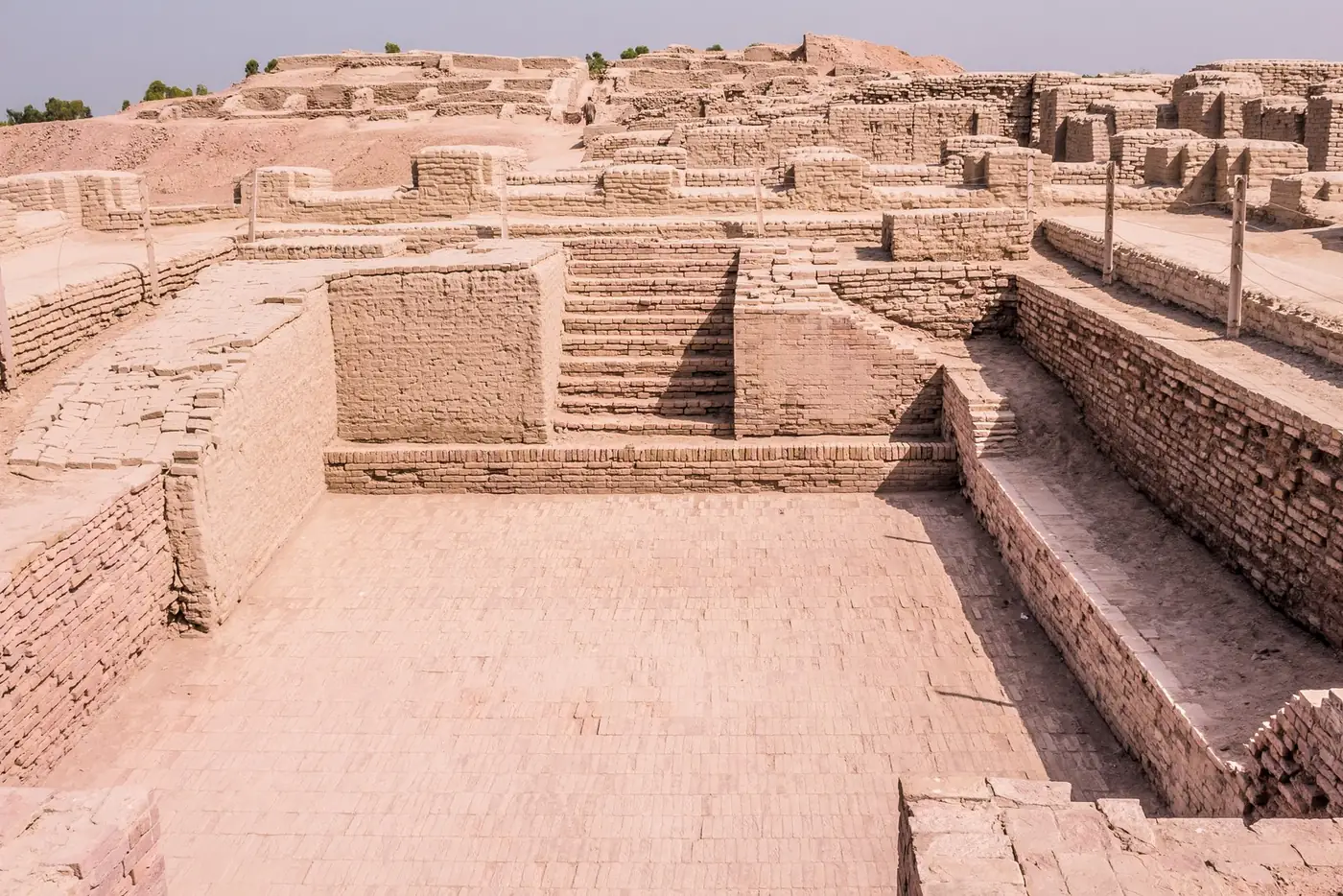
One of the oldest known baths is the Great Bath of Mohenjo-daro, in present-day Pakistan. It was built in the third millennium BC and is called the earliest public water tank of the ancient world. The basin measures about 12 by 7 metres and is up to 2.4 metres deep, with a wide staircase at each end. The builders made it watertight with finely fitted bricks laid on edge in gypsum plaster, plus a thick layer of bitumen (natural tar) along the sides. The floor sloped towards a small outlet in one corner, which led the used water to a drain. Most scholars think the bath was used for special religious functions, such as purification, rather than for everyday washing.
The ancient Greeks already knew the shower: communal shower rooms have been found at Pergamon, and Greek pottery shows people washing under streams of water, with bars to hang up their clothes.
For the Romans, bathing was a social event. Public baths were places to wash, but also to meet people and even to read, and many Romans bathed several times a week, if not every day. A visit followed a fixed route. You undressed in the apodyterium (changing room) and went through the tepidarium (warm room) and the caldarium (hot room) to the frigidarium (cold room). Many baths also had a sweating room and an exercise court, the palaestra.
The heat came from below. In a hypocaust (from Greek hypo, under, and kaio, to burn), a furnace sent hot air and smoke under a floor that rested on stacks of tiles, the pilae, and up through hollow bricks in the walls. The rooms nearest the furnace were the warmest. Running a hypocaust was expensive and labour-intensive, because the fire needed constant attention and a lot of fuel.
The best-known example is the Baths of Caracalla in Rome, inaugurated in AD 216. The main building measured 214 by 110 metres and could take an estimated 1,600 bathers at a time. Its hot room had a dome almost 36 metres across, close to the size of the Pantheon's dome. The baths were free and open to the public, got their water from a dedicated aqueduct, and their furnaces are estimated to have burned around 10 tonnes of wood a day. Where the Romans' waste water went, and how their latrines worked, is the subject of edition #2: the history of the toilet and the sewer.
Yes. The Roman settlement of Coriovallum, now Heerlen, had a large public bathhouse. It was found by chance: on 18 June 1940 a farmer's plough hit part of a column. Excavations in 1940 and 1941 uncovered the foundations, which were then covered with sand and dug out again in 1975. According to curator Karen Jeneson, the bathhouse was built around AD 40, in two phases. The bath building measured 50 by 50 metres and had a changing room, a sweating room, two cold baths, a warm room and a hot room, plus an open-air pool, an exercise court, toilets and small shops. The remains of the hypocaust are still impressive: you can see them in the photo at the top of this blog.
From 1977 the remains were shown in the Thermenmuseum, under a large steel roof. They are considered the oldest, largest and best-preserved ancient building in the Netherlands. The museum closed in September 2024; a new Roman museum around the bathhouse is planned to open in 2028.
More than you might think. Towns in the Low Countries had public bathhouses, in Dutch called stoven (related to the German Stube, room). Smaller towns such as Leuven and Maastricht had about five, the big cities of Ghent and Bruges between twenty and thirty, and they appear in the town ordinances of Amsterdam and Utrecht. A stoof offered tub baths and steam baths. In some, men and women bathed together; others had separate baths. You could often eat and drink there, stay the night and get a shave. Bathhouses were also places to hear the news: a Dutch proverb of 1550 says "In stoven, barbiershuysen ende muelenen verneemt men alle dinghen": in bathhouses, barbers' shops and mills you hear everything. The Stoofstraat in 's-Hertogenbosch is named after them.
The wealthy also bathed at home, usually in a large wooden tub lined with a linen cloth against splinters.
From the 16th century the public bathhouses declined sharply. Several things played a part. There was the risk of contagion, with the plague and the new disease syphilis. The stoven were often mentioned in the same breath as brothels, which gave them a bad name. Around the Reformation, religious objections to nudity grew stronger. And people came to believe, wrongly, that bathing opened the pores and let disease into the body. In Dutch towns the stoven had disappeared by the end of the 17th century.
The first known mechanical shower was patented in England in 1767 by William Feetham, a stove maker from London. A hand pump forced water into a vessel above your head, and pulling a chain released it. It did not catch on: there was no way to heat the water, and the same dirty water was pumped round again.
The breakthrough came from hygiene and economy. In 1872 the French doctor François Merry Delabost, chief physician of the Bonne Nouvelle prison in Rouen, replaced the prisoners' individual baths with communal showers: first six and later eight stalls, with water heated by steam. Up to eight prisoners could wash at the same time, in under five minutes, with only twenty litres of water. Under his guidance the French army installed showers in its barracks in the 1870s, and the Prussian army followed in 1879, as did prisons and boarding schools. In 1883 the German doctor Oskar Lassar presented a design in Berlin for a public bathhouse with shower cells. It was so efficient that entry could be much cheaper than at the old bathhouses, and within a few years cities such as Berlin, Vienna and Munich built simple, cheap public showers. The first shower in a public bathhouse opened in Vienna in 1887.
The Dutch word douche was borrowed from French. It goes back via Italian doccia, a jet of water, to an older doccia, pipe, probably from Latin ductus, a water conduit: the same root as aqueduct. Middle Dutch simply called it a stort or stortbad.
The first bathtubs were made of wood, which is not well suited to a damp room. Iron did better: at first galvanised, later enamelled against rust. Vitreous enamel was first applied commercially to sheet iron and steel around 1850, and around 1887 David Dunbar Buick (yes, the founder of the car brand) made his fortune with improved ways of enamelling sheet steel and cast iron. The clawfoot bath, of cast iron lined with porcelain, was considered a luxury item in the late 19th century. By the end of that century, private baths with running hot water were increasingly common in well-off homes in Britain and America.
For a long time, most bathtubs had the shape of a water trough for cattle. That only changed with thermoformed acrylic: in 1979 the American brothers James and Richard Wheeler adapted the acrylic used for outdoor spas to make acrylic bathtubs. Today baths are made of thermoformed acrylic, enamelled steel or cast iron, or fibreglass-reinforced polyester. And every bath has an overflow, so it does not run over if you forget the tap.
At the end of the 19th century, hygiene became a public cause. Many working-class homes were built without any washing facilities, so towns built badhuizen: public bathhouses where you could take a shower or a bath for a small fee. In the Netherlands they existed from around 1900 to 1980, heated with coal or town gas.
Amsterdam shows how it went. In 1883 a luxury bathhouse opened on the Amsteldijk for the well-off, and in 1890 private initiatives opened volksbadhuizen (people's bathhouses) on the J.D. Meijerplein and the Karthuizerkerkhof. Private bathhouses drew few visitors, so the city started with children: from 1891, pupils of two primary schools got a free warm shower once a week. The first bathhouse built by the city itself opened on the Funenkade in 1911, the second on the Zaanstraat in 1916. In 1920 alderman De Miranda presented a Badhuizenplan that added seven more. Posters and campaigns promoted what was called waterbeschaving (water civilisation). At the peak, in 1956, the Amsterdam bathhouses received 1.9 million visits; by 1986 that had dropped to 80,000, and the last ones closed in the 1980s and 1990s. Many of the buildings survive, now as a theatre, a restaurant or a brewery.
Slowly. Piped water came first (how it reached the tap is told in edition #5), but it took until well into the 20th century before every home had its own bath or shower. In 1933 the Amsterdam building regulation required every new home to have its own shower, and visits to the bathhouses gradually fell. Nationally, the 1971 census found that 67% of Dutch homes had a bath or shower. 19% had no bathing facility at all, and 14% had a lavet or wastrog: a large sink that also served as a bath for children. With natural gas and private bathrooms, the public bathhouses became redundant. In general, showers in private homes only became common in the 1970s.
| Year | Milestone |
|---|---|
| 3rd millennium BC | Great Bath of Mohenjo-daro, the earliest known public water tank |
| Ancient Greece | Communal shower rooms, for example at Pergamon |
| c. AD 40 | Roman bathhouse built in Heerlen (Coriovallum) |
| AD 216 | Baths of Caracalla inaugurated in Rome |
| Late Middle Ages | Public bathhouses (stoven) in towns: about five in Leuven or Maastricht, 20–30 in Ghent and Bruges |
| 16th century | Bathhouses decline: syphilis, plague, moral and religious objections |
| End of 17th century | The stoven have disappeared from Dutch towns |
| 1767 | William Feetham patents the first known mechanical shower in England |
| c. 1850 | Vitreous enamel first applied commercially to sheet iron and steel |
| 1872 | Delabost introduces communal showers in the prison of Rouen |
| 1879 | The Prussian army adopts showers |
| 1883 | Oskar Lassar presents a design for a public bathhouse with shower cells |
| 1887 | First shower in a public bathhouse, in Vienna |
| 1890 | First volksbadhuizen (people's bathhouses) in Amsterdam |
| 1911 | First bathhouse built by the city of Amsterdam, on the Funenkade |
| 1920 | Badhuizenplan of alderman De Miranda: seven more bathhouses |
| 1933 | Amsterdam building regulation: every new home gets its own shower |
| 18 June 1940 | Heerlen bathhouse discovered by a farmer's plough |
| 1956 | Peak: 1.9 million visits to the Amsterdam bathhouses |
| 1971 | 67% of Dutch homes have a bath or shower |
| 1977 | Thermenmuseum opens over the Heerlen bathhouse |
| 1979 | Wheeler brothers make the first acrylic bathtubs |
| 2007 | Loose rain shower heads of almost 25 cm |
| 2021 | 99% of Dutch people have a shower; 56.9 litres per shower, 142.4 litres per bath |
| 2028 | Planned opening of the new Roman museum in Heerlen |
Many new bathrooms have a walk-in shower: no door or curtain, often just a glass panel. English sometimes calls this a 'Roman shower'. Technically it is a small wet room: the floor needs a slope towards a drain, and the drain needs a trap that keeps sewer air out. Because the water reaches the floor and walls, the area under the tiles has to be waterproof. How a level walk-in shower is built up as one system is explained in building a level walk-in shower with Progress Profiles; the waterproof layer under the tiles is covered in waterproofing a wet room before tiling, the Kerakoll way.
The shower head changed too. In the last decade of the 20th century, heads with nozzles of silicone rubber arrived, from which limescale is much easier to remove. Heads also grew: in 2007 the largest loose shower heads were almost 25 cm across, for a so-called rain shower, and built-in versions went up to 60 cm. A thermostatic tap keeps the temperature steady; how that works is explained in the history of the tap.
In 2021, 99% of people in the Netherlands had a shower, and four in ten had a bath, usually one to lie in. A bath used 142.4 litres on average, an average shower 56.9 litres. Showering is the largest water use at home: 46.2 litres per person per day.
The shower head makes a big difference. In 2021 almost 39% of Dutch people had a water-saving shower head and 24% a rain shower. A shower with a water-saving head used 44.6 litres on average, a rain shower 72.5 litres. A water-saving shower head lets through at most 7.2 litres per minute, and according to Milieu Centraal, swapping a rain shower for a water-saving head saves 40%.
Nobody has to keep a furnace burning under the floor any more, and you no longer need a ticket for the bathhouse. A bath, a shower and a watertight joint are now part of almost every home. Below are a few products that fit this story.
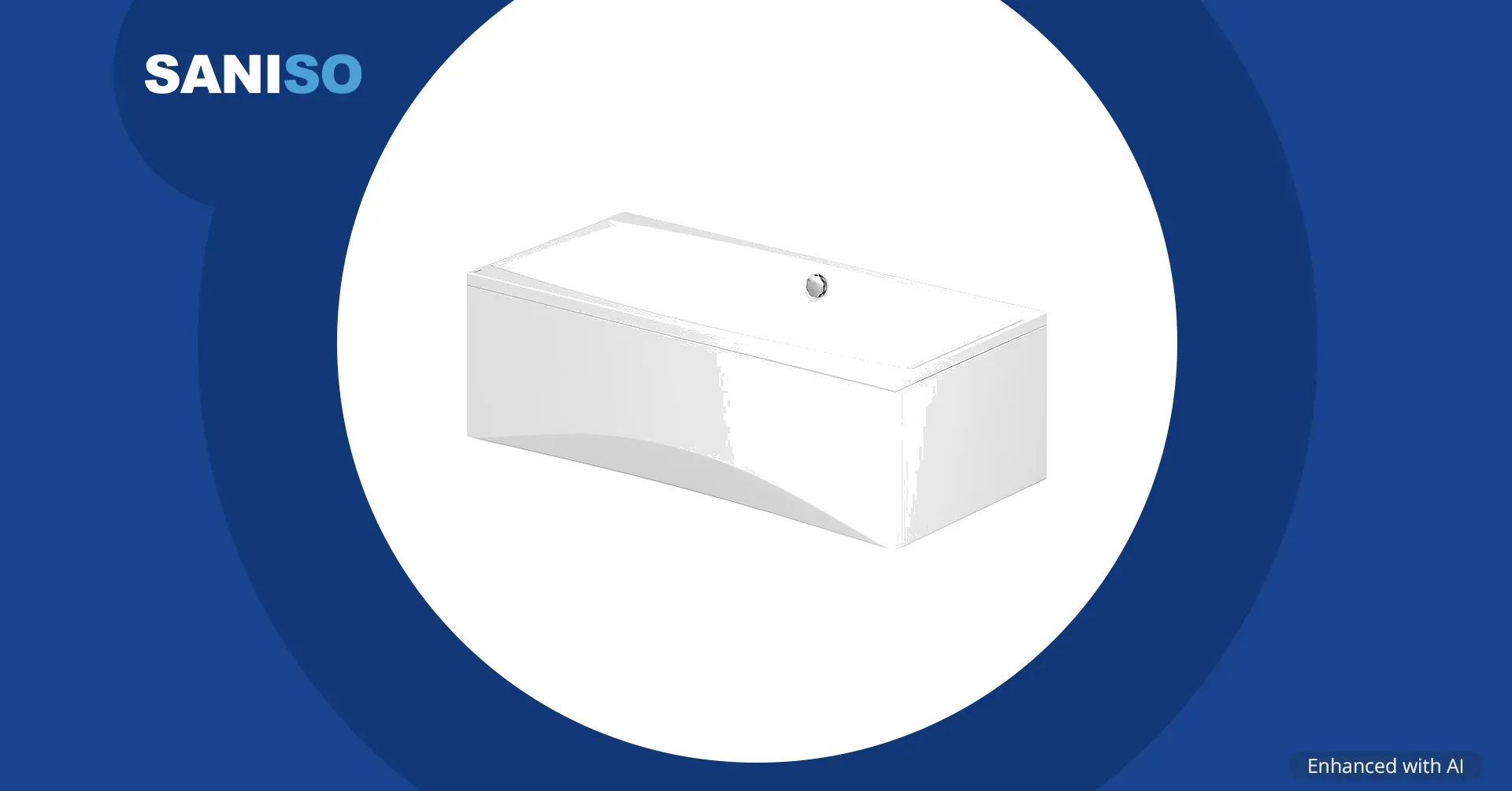
An acrylic bath, double reinforced with resin and fibreglass, with a central outflow on the long side and two gently sloping backrests, so you can lie at either end. Height-adjustable legs are included; front and side panels and a bath screen are available separately (the photo shows the bath with a front panel).
What is it for? The acrylic from this story: the material that freed bath design from the old shape of a water trough for cattle.
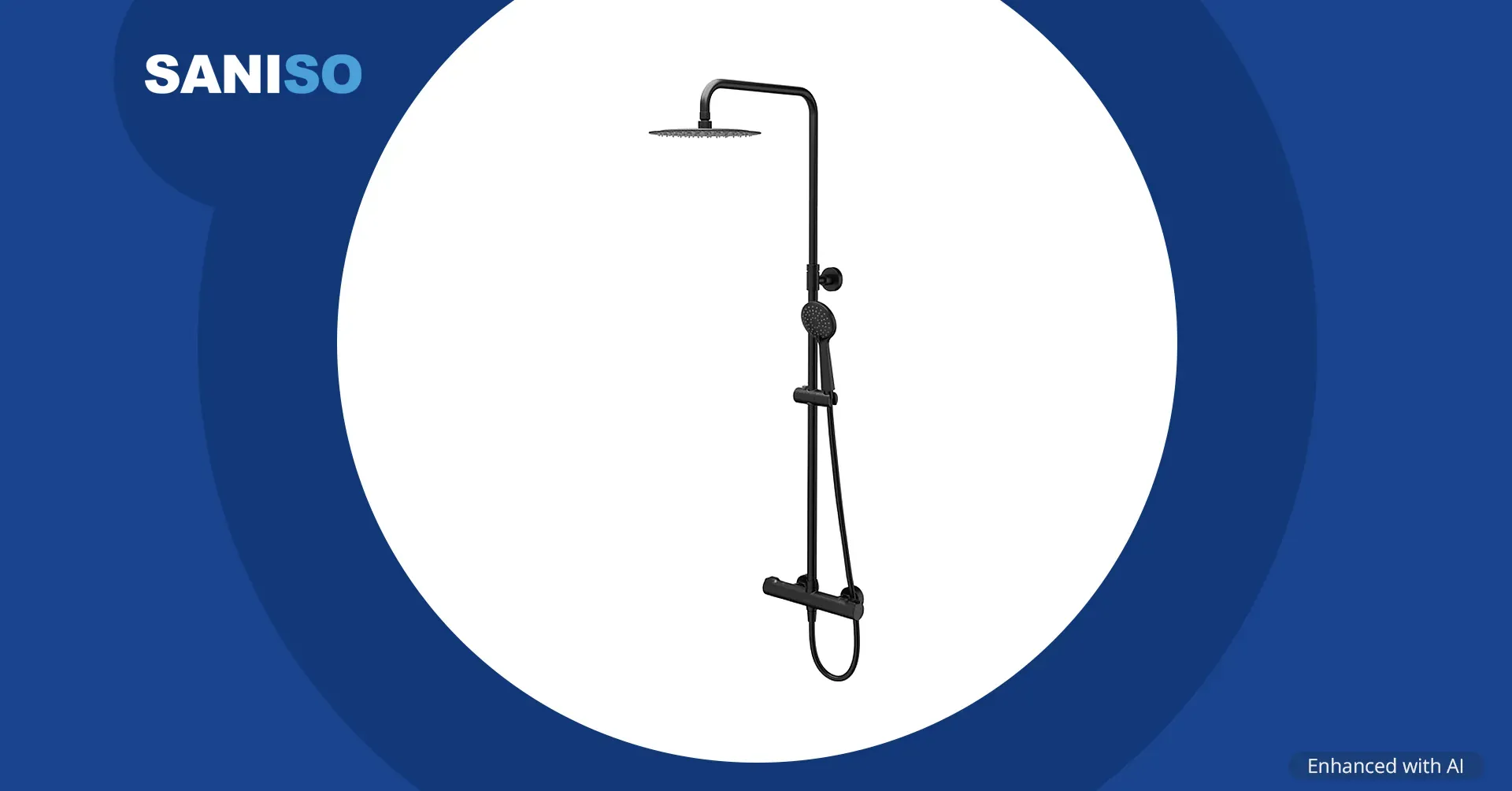
A shower column with a thermostatic tap with SafeTouch function, a slim 25 cm rain shower in stainless steel, a 3-function hand shower and a 150 cm PVC shower hose. The rain shower and hand shower have an Easy Clean finish.
What is it for? A rain shower of 25 cm, the size of the largest loose shower heads in 2007, with a thermostat that keeps the temperature steady.
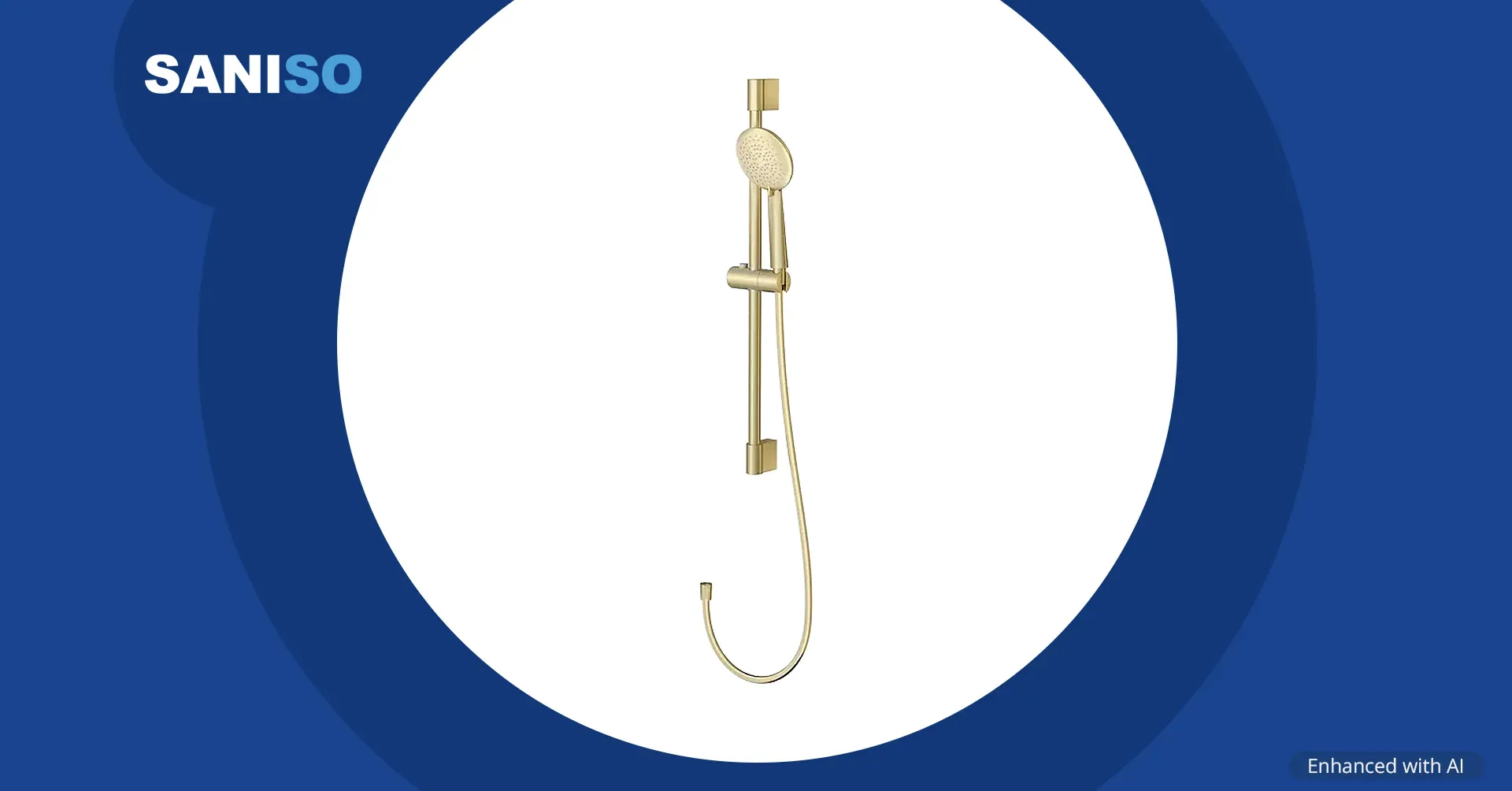
A shower set with a comfortable hand shower and practical installation parts for the shower area. The matt gold finish is easy to combine with other fittings and bathroom accessories.
What is it for? For a shower area with a hand shower in a warm, matt gold finish.
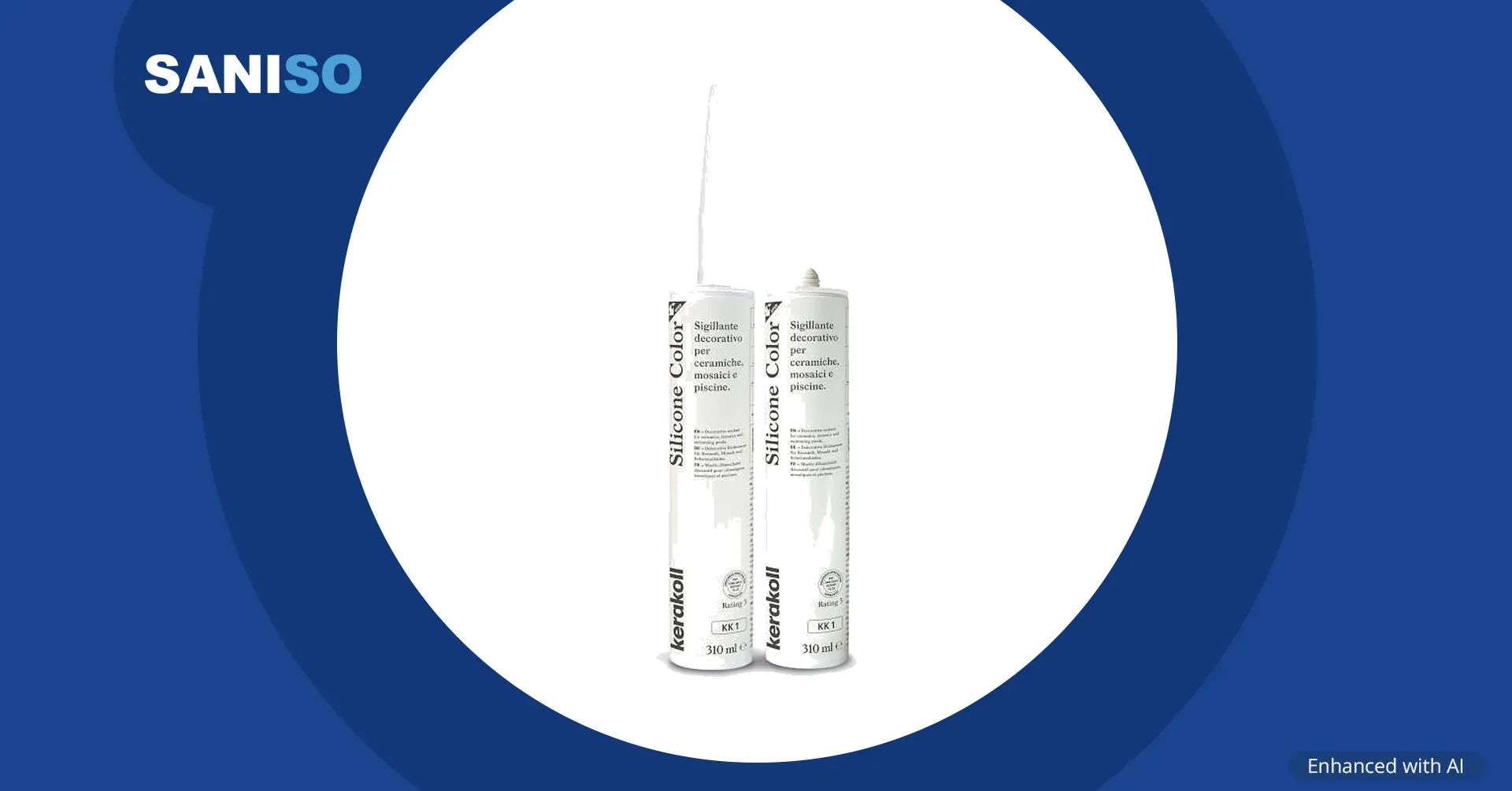
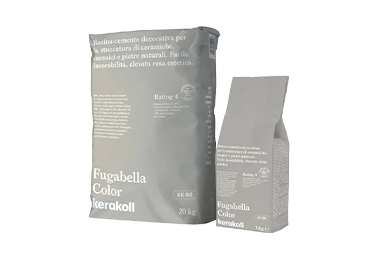
A neutral white decorative sealant for ceramics, mosaics and swimming pools, available in 50 colours.
What is it for? For the flexible joint between the bath or shower tray and the tiles, where water must not get in. How to renew that joint is explained step by step in how to reseal your bathroom with new silicone.
Order on a workday before 15:00? Then your order is delivered the next workday, as long as it fits in a parcel. Pallet shipments have a different delivery time. Saniso has thousands of products in stock in the Netherlands.
Your first order is easy to place:
Want to know when there are new offers? Sign up for the newsletter: scroll to the bottom of any page on saniso.nl, enter your email address under "Newsletter" and click "Subscribe". You'll get updates on offers and discount vouchers, and we don't spam. With an account you also collect loyalty points for a discount on your next purchase.
Questions about ordering, your account, payment, shipping or returns? Find all the answers in the Saniso FAQ.
What is the oldest bath in the world?
One of the oldest known is the Great Bath of Mohenjo-daro in present-day Pakistan, built in the third millennium BC. It is about 12 by 7 metres, up to 2.4 metres deep, and was made watertight with bricks, gypsum plaster and bitumen.
Who invented the shower?
There is no single inventor. William Feetham patented the first known mechanical shower in England in 1767. In 1872 the French doctor François Merry Delabost introduced communal showers in a prison in Rouen, the start of the shower as we know it.
How did the Romans heat their baths?
With a hypocaust: a furnace sent hot air and smoke under a floor resting on stacks of tiles (pilae) and up through hollow bricks in the walls.
Were there Roman baths in the Netherlands?
Yes. In Heerlen, the Roman Coriovallum, a bathhouse of around AD 40 was found on 18 June 1940. Its remains are considered the oldest, largest and best-preserved ancient building in the Netherlands.
Did people wash in the Middle Ages?
Yes. Towns had public bathhouses, called stoven in Dutch, with tub baths and steam baths. Ghent and Bruges had between twenty and thirty. The wealthy also bathed at home in wooden tubs.
Why did the medieval bathhouses disappear?
From the 16th century the risk of contagion (plague, syphilis), their bad name, religious objections to nudity and the false idea that bathing opened the pores to disease made them unpopular. In Dutch towns they were gone by the end of the 17th century.
What was a Dutch badhuis?
A public bathhouse where you could shower or take a bath for a small fee. In the Netherlands they existed from around 1900 to 1980, for homes without washing facilities.
When did Dutch homes get a shower?
Gradually during the 20th century. From 1933 every new home in Amsterdam had to have its own shower. In 1971, 67% of Dutch homes had a bath or shower.
Where does the word douche come from?
From French douche, via Italian doccia (a jet of water) and an older doccia (pipe), probably from Latin ductus, a water conduit, as in aqueduct.
What is a lavet?
A large sink, also called a wastrog, that also served as a bath for children. In 1971, 14% of Dutch homes had one instead of a bath or shower.
What is a walk-in shower?
A shower without a door or curtain, often with just a glass panel. The floor slopes towards a drain with a trap, and the area under the tiles has to be waterproof.
Does a rain shower use more water?
Yes. In the Netherlands a shower with a rain shower used 72.5 litres on average in 2021, against 44.6 litres with a water-saving head.
Does a bath use more water than a shower?
On average, yes: 142.4 litres per bath against 56.9 litres per shower (2021).
What is the delivery time at Saniso?
Order on a workday before 15:00 and it's delivered the next workday, as long as it fits in a parcel. Pallet shipments have a different delivery time.
Do the prices include VAT?
This blog shows every price including and excluding VAT. At checkout on saniso.nl, prices are shown including VAT.
Building facts takes one building topic under the magnifying glass every Monday and Thursday. This is edition #6. Read the previous edition too: the history of the tap and running water, and edition #2: the history of the toilet and the sewer. Fun link: the word douche probably shares its Latin root, ductus (conduit), with the aqueducts that supplied the Roman baths.
Share:
Does your shower sputter or spray sideways? Read how to descale a shower head, clean the jets and check whether limescal...
Does the water keep running after flushing? Check the flush plate and cistern first. Read what you can do yourself and w...
After repairing a leaking tap, Sunday is ideal for finishing the job: descaling the tap, cleaning or replacing the aerat...
A dripping tap is a typical job that gets left undone. With the right pliers, a few spare parts and a quiet Saturday mor...